
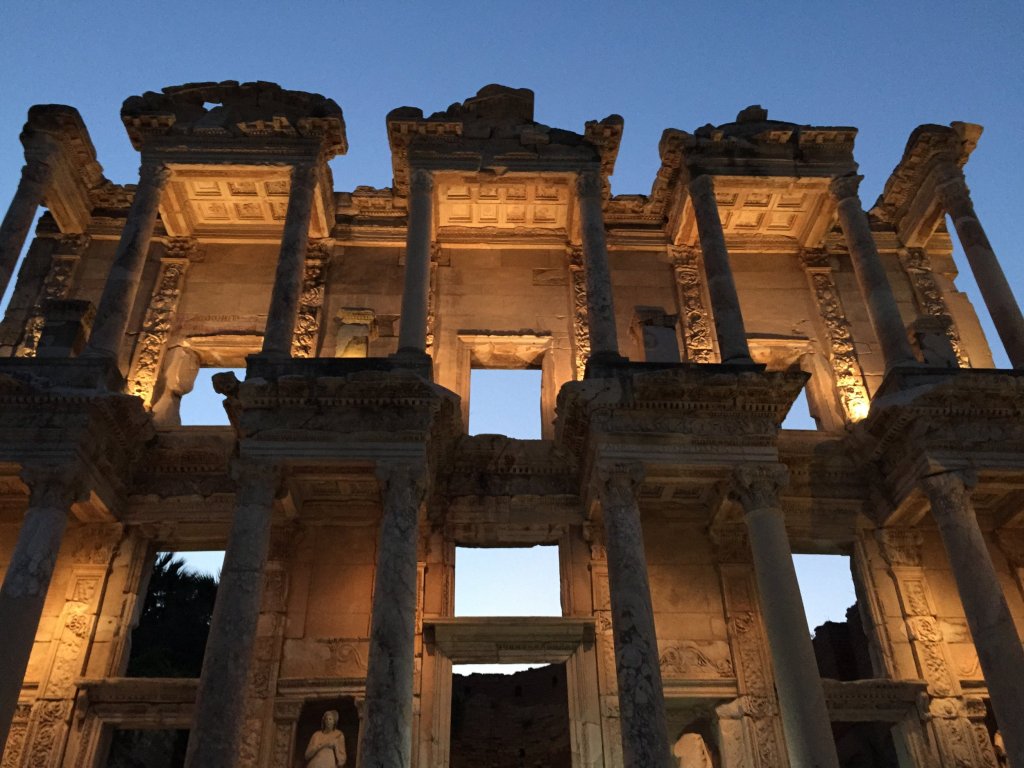
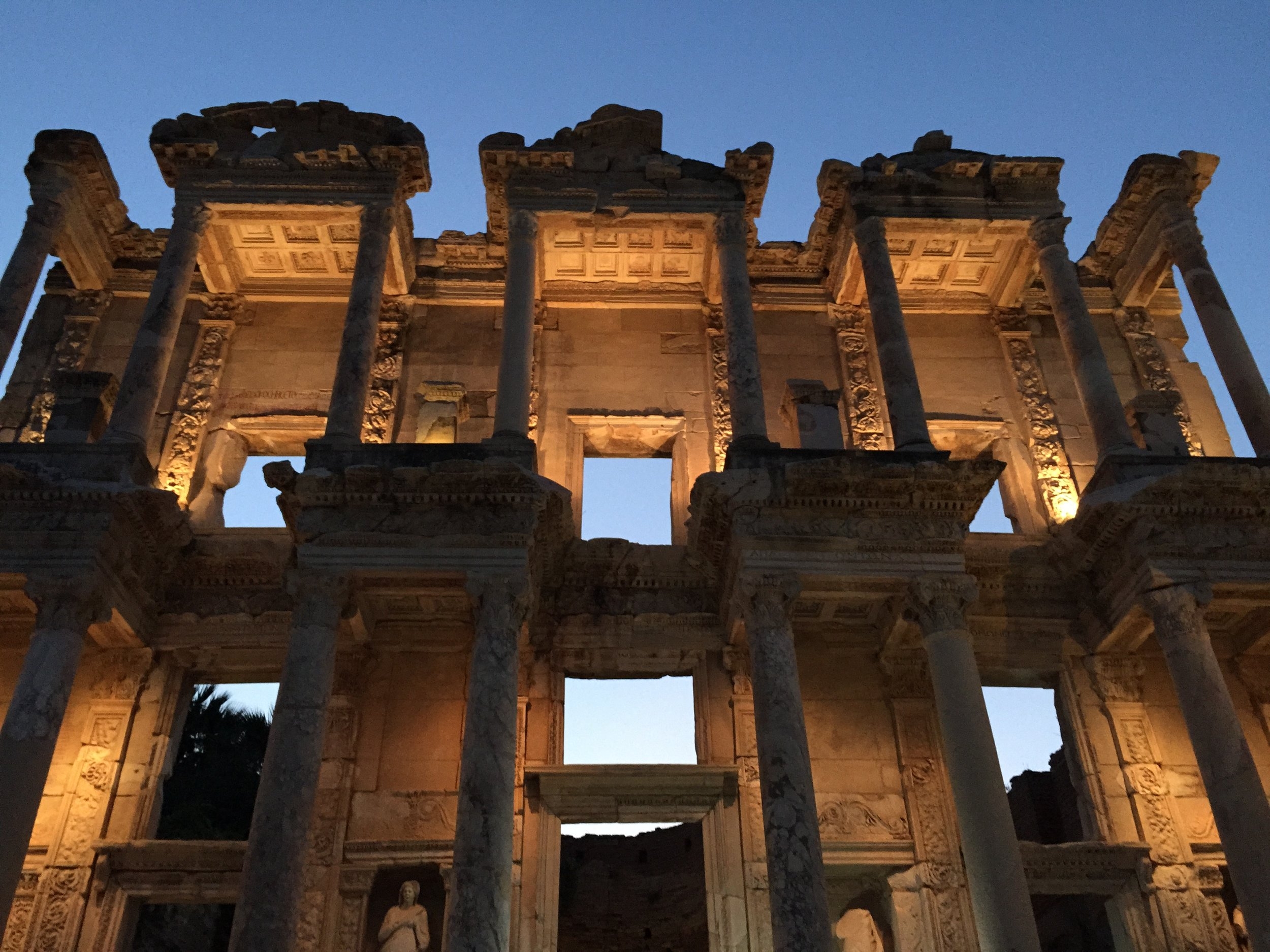
Of all the Roman ruins, Ephesus may be one of the greatest. What is unusual is that it is a coastal summer resort, somewhat intact, and bears all the marks of luxury and civilization the Romans had created; there are long rows of columns, passages through the town, that pass by smaller structures that were craftsman and traders. Unlike seeing a temple, or a coliseum, you actually get to walk through what was once a thriving capital and summer resort on the coast of Turkey.

Like all ruins, time has been cruel and kind; the cruelty started centuries earlier when the retreating sea caused the town to slowly decay and eventually be abandoned; the retreating sea left salt flat and virus-carrying mosquitoes. (It is reminiscent of ruins of Ostia Antica near the Rome airport.)
The kindness is the care that the current excavators are showing as they uncover massive summer housing complexes; all are piled on top of each other on slopping hillsides that line the valley and look down upon the greatest artifact, the library of Ephesus. The main photo is of what is left of the library — the facade — it was taken at sunset — the tour we were on had a dinner set up in the open courtyard facing the facade, the last remnant of this great library.
The tour took us through a small amphitheater — seating maybe a few hundred.I say small because nearby, they are starting to uncover a coliseum that was said to seat 100,000 people. It will take decades to excavate that as well as the Roman houses for the rich that sit on the hills; one area was covered and as we walked up the metal escarpments, we took a winding tour like any citizen of that world would past house after house, living rooms with intact tile floors and the faintest of red ocher murals on the walls, faded, but visible enough to portray a scene who’s meaning is lost in time.
 Outspoken Traveler