
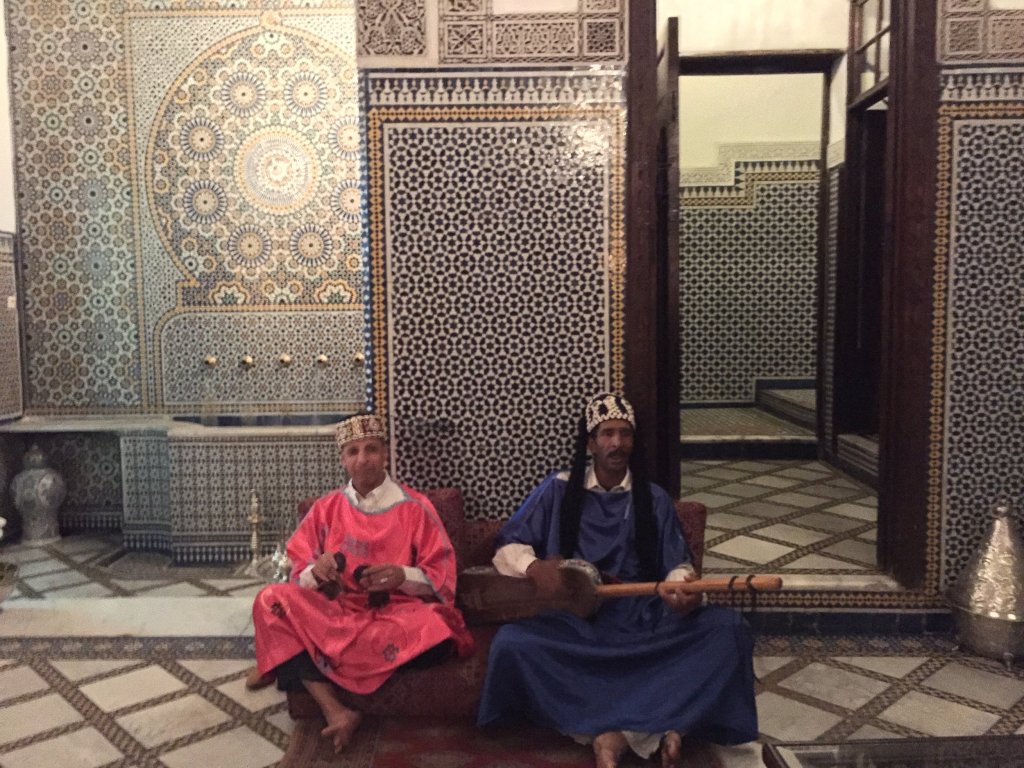
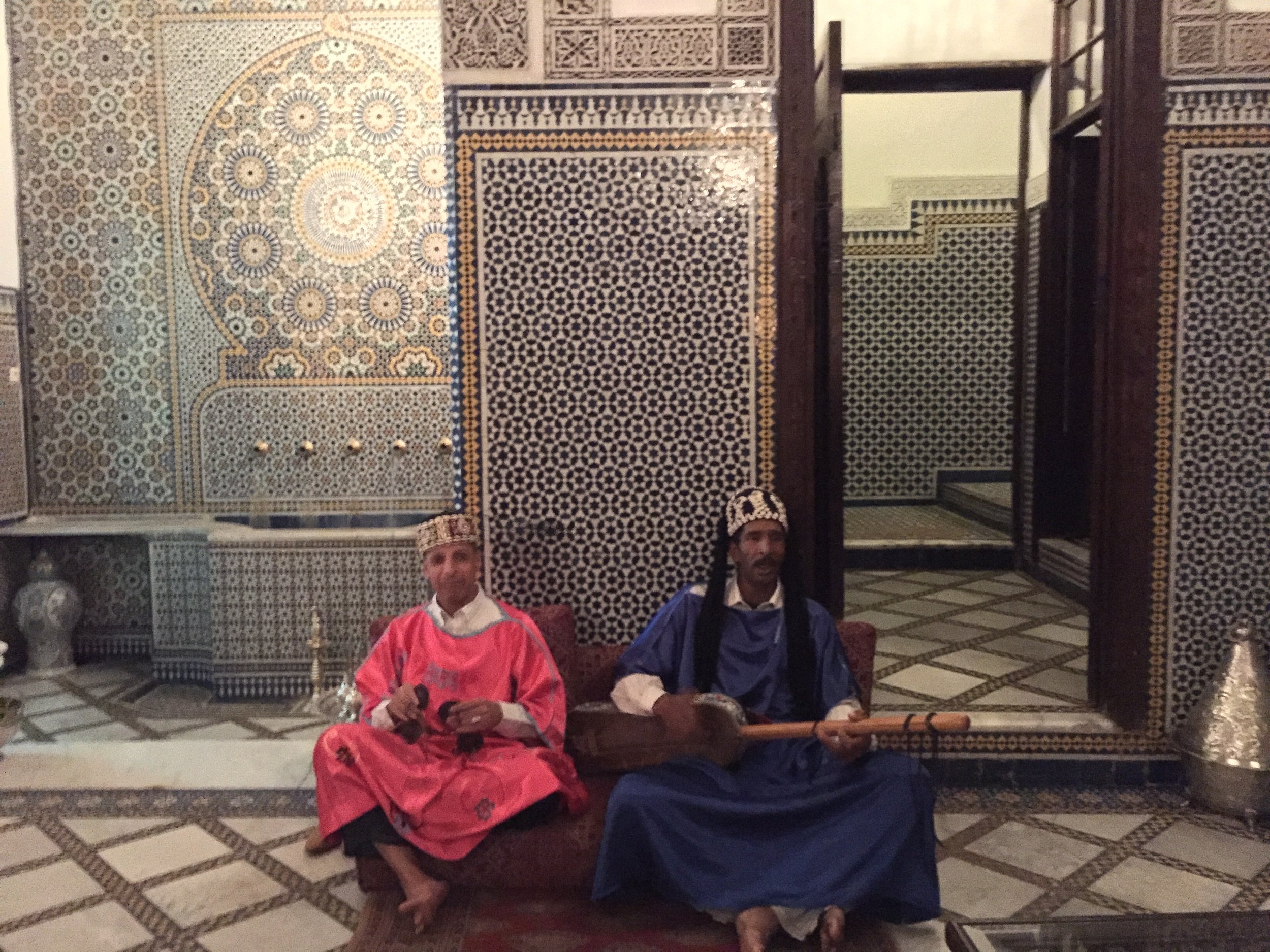
After a day in the Fez Medina, being lead while getting lost, but not since we had a guide, in the maze of stores and stalls, shouting merchants, copper-pounding artisans, passing donkey’s wearing diapers and people smiling and trying to catch your eye, we ended the day with a quiet sunset stroll to this amazing restaurant. (Actually, the tour of the Fez Media will be its own post).
La Maison Bleue
It was a converted home with winding steps, worn down with the grooves of thousands of feet, into an interior courtyard. As we got closer, the music began – Berber, tribal, desert music, said the guide. Turning a corner, passing through a doorway, opened into a cavernous inner courtyard at least four stories tall. Ornate rugs and lanterns armed the walls, separated by small plants, a large flowing fountain in the room center, with water pluming and falling into a basin of multi-colored tiles. The room an ancient, exotic look and feel; you’d look up at glimpses of dark passageways, but no people; on one side was an alcove with some older men calmly smoking a hookah. A small dreadlocked singer sat next to a very tall, turbaned Berber musician and they sang as we entered and never stopped.
A series of small alcoves with round table surrounded the interior. The music flew up the walls as we were greeted, hands extended for us to slip into the table and rustle the gold colored table covering.
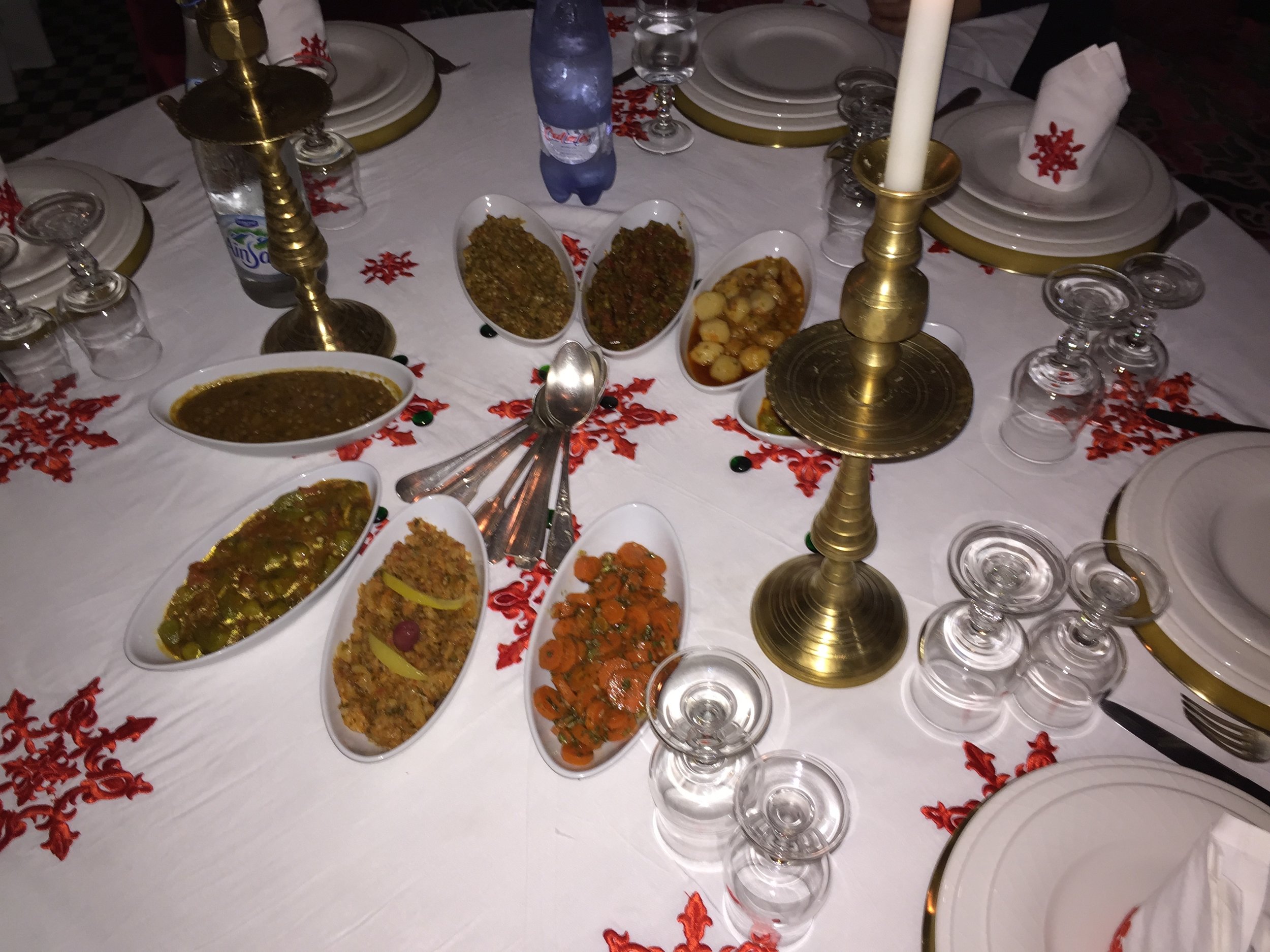
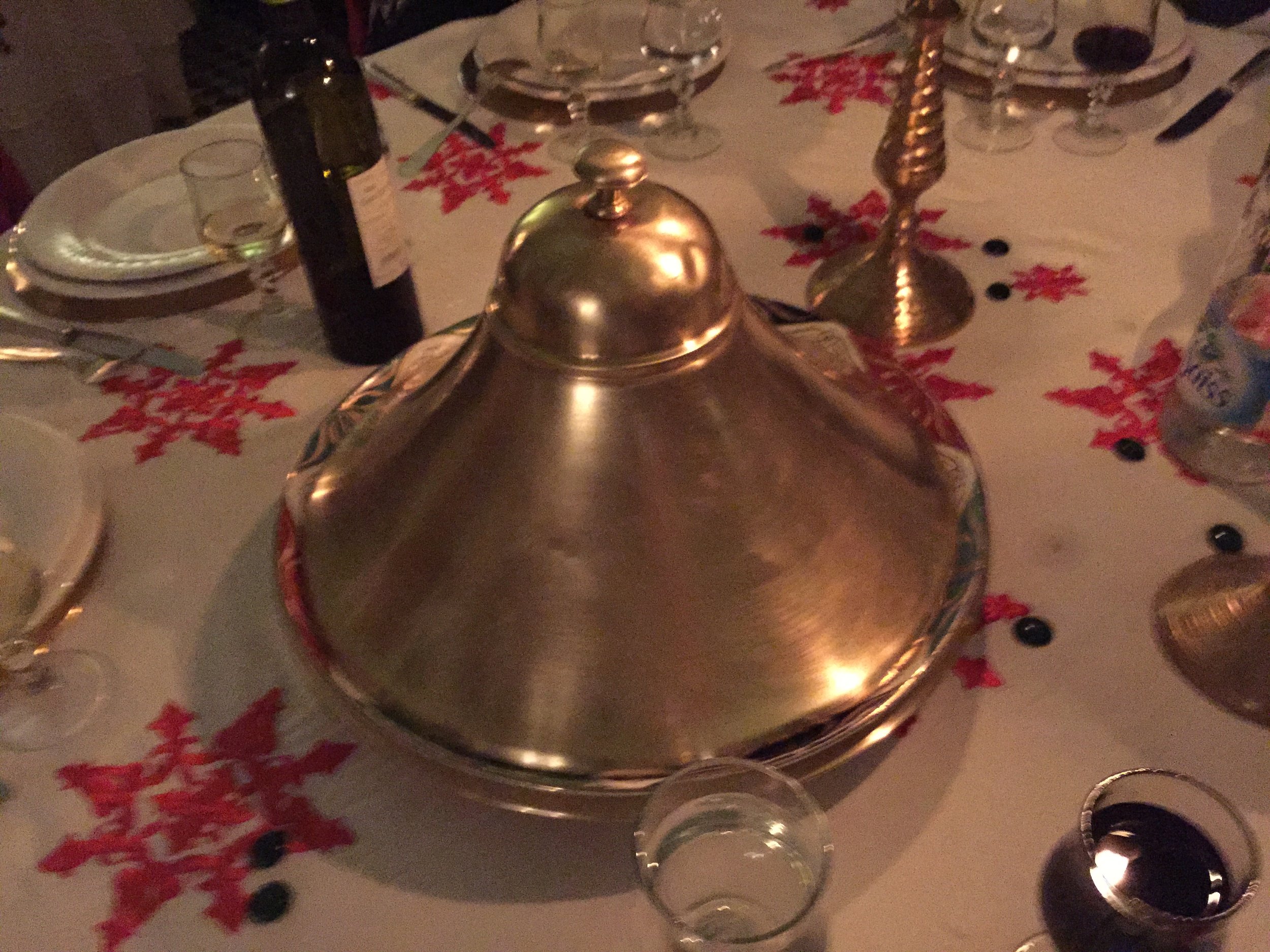
The display and presentation of the food, all shared dishes, was reminiscent of visiting a rug seller earlier that day; colors and scents, looms of mixed vegetables and meats. The half-dozen plates of appetizers were all local vegetables, with yogurts, beans, chicory, a spinach-like dish with cumin and coriander. My favorite was the fava bean on baked flat bread, but everything in the half-dozen dishes were stunningly alive in your mouth and delicious. The traditional meal of chicken and lamb shank were spiced perfectly, with cumin and coriander and cinnamon. One dish was multiple layers of what looked like filo encasing white chicken meat and with a heavy powdered sugar and cinnamon layers.
The service was so good it was almost invisible. We were with a group of eight Americans, like us. The traditional round table afforded open conversation and easy access to all the shared platters — and yes, everything was shared. It’s funny, but Americans are not used to sharing – we order our individual meals and share nibbles and discuss our individual choices; this was a collective experience and in an odd way, forced us to come closer, lean in, discuss more personal subjects.
After a bit, the musicians rose and strode to our alcove. The tall one, black, baked skin, no expression, played his ancient mandolin instrument while the shorter one danced and sang and used hand-cymbals to punctuate the strings. As he sang, he danced in place faster and faster. His voice was full of sorrow and pain, longing and loss. All of us were moved a she reached a frenzy of hand clapping and feet moving only to nearly fall and stop in hushed silence. We were stunned.
As they bowed and left, our guide, the amazing Jhalil, nodded their way and said: “A Berber song, an ancient song of those taken into slavery and shipped away, lost to their families and tribe.”
As with the Medina and all its day time glory, mystery and complexity, the nighttime meal added the bookend: the commonality of breaking bread alongside the complexity of Humankind.
In Morocco, we were blessed with 10 days of unforgettable food, and perhaps the final dinner in Marrakesh was the best (another review!). But this transcended a meal; if there were one restaurant I would want to go back to, one place to taste the food, the air, the music, the culture, were all served together, it would be here.

 Outspoken Traveler