
Summary: 5 nights in Vienna, Austria. A great trip. Easy, full of rich experiences. Holiday cheer and wonder on every corner.
The structure of this post will be:
-
Overview (#vienna #viennachristmasmarts #viennaatchristmas)
-
The people
-
Christmas marts
-
Monuments: St Stephens cathedral, Schoenbrunn palace, Albertina museum
-
Food
-
Tips (Especially visiting a city in winter)
Overview, the city of Vienna:
Vienna has always been high on our list of cities to visit and explore. We always had a troika in mind — Vienna, Prague, Budapest. But for the holiday season, Vienna rose to the top. Unlike the #outspokentraveler post on a beach vacation like Bermuda, this was all about culture — history, art, music, wrapped in the gauze of Christmas and the trappings and traditions of a very old European empire. (#austria https://en.m.wikipedia.org/wiki/Austria-Hungary #vienna).
So, for a variety of reasons not worth going into, we, at the last minute, decided to explore Vienna, and more specifically, it’s much heralded Christmas Marts.
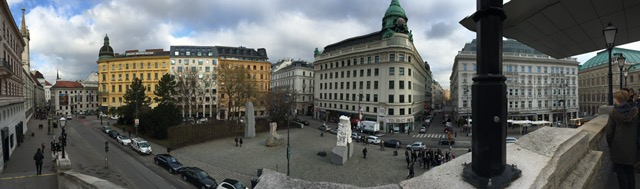
Vienna is classically European, a true capital. Regal. From the Outspokentraveler perspective, cities are not buildings, nor traffic or places to tour and read the placards. They are organic, living places of history. And like so many in Europe, Vienna was equal to having equal share seeming modern, while never letting forget the rich history of Vienna, the Austrian-Hungary empire, the Holy Roman Empire, and the glories of the past. An amazing balance of being incredibly modern and incredibly old.
As I said, we did little research about the city or the Christmas Marts, we just knew they were well known. What we found was 16 in total, which after some long discussions with taxi drivers and the hotel concierge (they don’t use the word cab) we chose 7; a few that were tiny, holiday retail huts squeezed into pocket parks, and a few were on a grander scale, outside the “outer ring” the wide boulevard that circled the “Zentrum”or older city center.
The people: (#viennnesepeople)
Let’s discuss the nature of seemingly gross generalizations; when you visit a place for less a week or less, but want to get the best from that time, you have to try and connect with the locals. Yet, in the end, you end up with broad strokes, generalizations, yet true. Seek it and accept it.
Because some people like their travel cocoon and keep the locals at arms-length; but the fact is, as a traveler you are not a citizen of the places you visit; but to truly get the most of your trip, you need to be almost almost an anthropologist. You are not in the city long enough to really know it, but if you make the effort, you can feel it. If you engage with as many people as you meet, spend the extra few minutes to hear their story or have random banter, you do get the broad swath of the essence of a people as a group, even as superficial as it may seem.
That is why it is so important not to just travel and to never be a tourist, but to be a visitor, someone with endless curiosity and willingness to seize the moment, pivot from the disappointing to make it a magic of the unexpected; let yourself be seized by it. This requires a mix of letting go and holding onto the vibrant thread of different people as they flow through their days in the place they call home.
For Vienna, which has the lumbering presence of Germany always at hand, it was pretty clear from the start: they were like Germans but with a sly and openly irreverent sense of humor. So it was easy to engage, easy to create the small talk moment that spoke volumes in minutes. If you go? Engage, chat, ask directions, make queries, do not just float through in some Made in America travel cookoon, you will be doing yourself a disservice and miss so much of the magic of what exploration is all about.
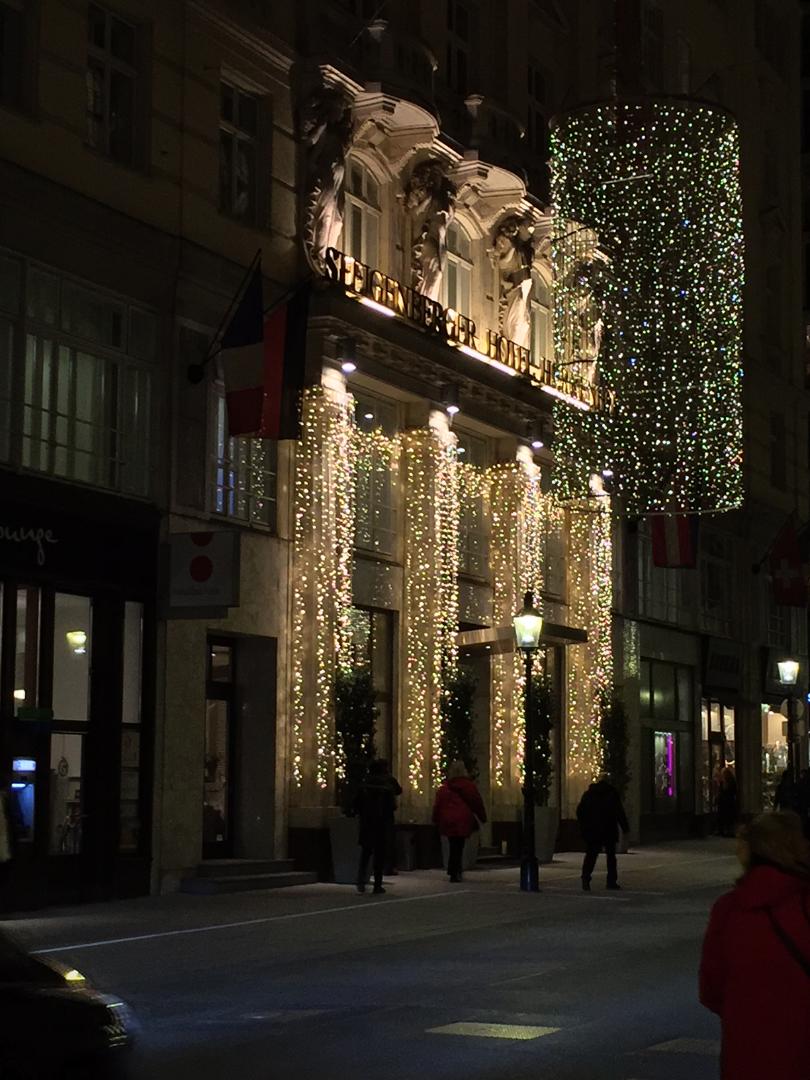
For us, it was the concierge of the Steigenberger Herrenhof hotel who wore lederhosen on Friday’s — “You have casual Friday’s, here we have traditional Friday’s.”
To the store owner who took time to share the story of how his shop, across from the magnificent Winter Palace, was opened as the royal apothecary by Empress Marie Theresa in 1768.
Or the 5th generation antique dealer, Dieter Elder, (#antiques) who among a ordered clutter of exquisite antiques, spent time describing his collection of 300 small, gilded and bejeweled Christmas trees, all made in the 1950’s, he had acquired when he had purchased the belongings of an entire house. (www.antiquitaeten-elder.at). The oldest antique store in and worth a visit. 5th generation, can you imagine?
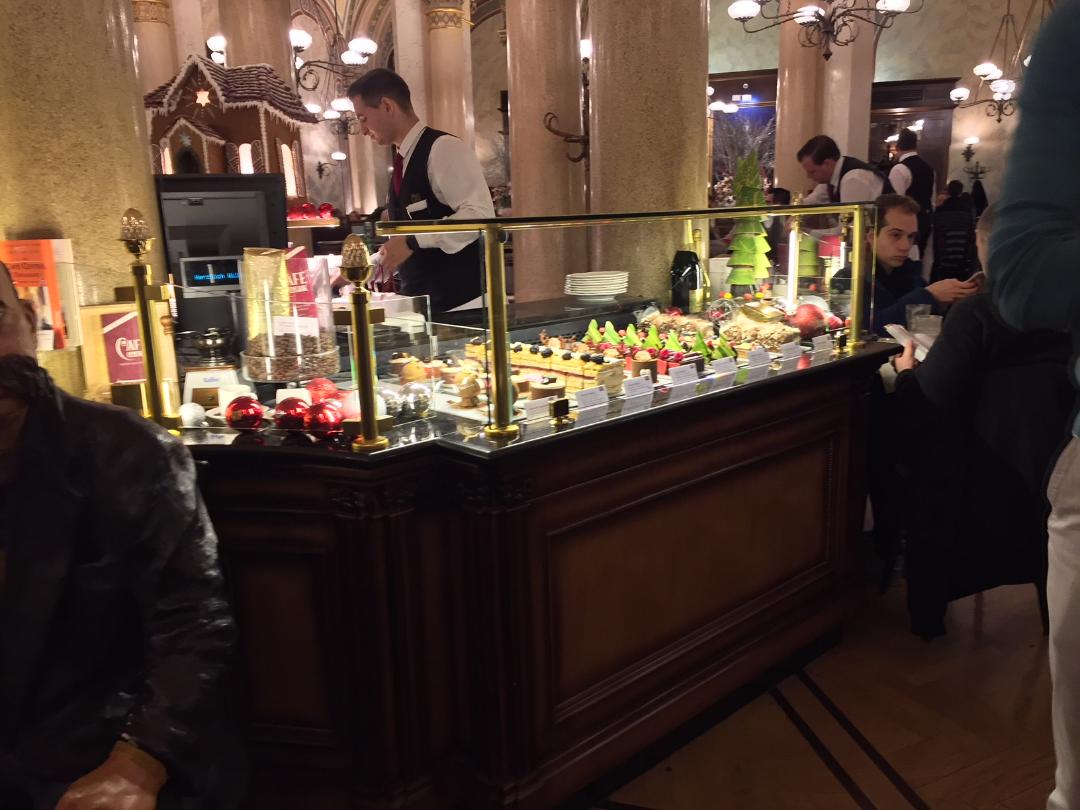
Or, last, the waiter at the famously delicious and famously busy Cafe Central (#cafecentralvienna) in Herrenhof Wien street, who when we commented how we had waited nearly an hour to get a table for tea and desert, laughed, pulled out his iPhone, flipped on a video and showed us a line that went far down the block, “Now that is busy!” He declared and we all laughed.
A few minor observations…
As I mentioned earlier, I was trying to get done the key words needed to get around — hello, good day, good night, goodbye, please, thanks, how much, and given it was so crowded I asked the concierge at the Steigenberger hotel to tell me how to say “excuse me”; he tried, I tried, I failed. And for the next five days I was bumped, jostled, skirted, nudged, along every street we walked, especially in the crowded marts. No one ever said excuse me. No one was rude — we have seen plenty of that. But they seemed indifferent, as if such slight bumping was just the way it was and thus ignored. And frankly, given how polite and mannerly And funny the people we spoke generally were, it seemed odd. Who knows.
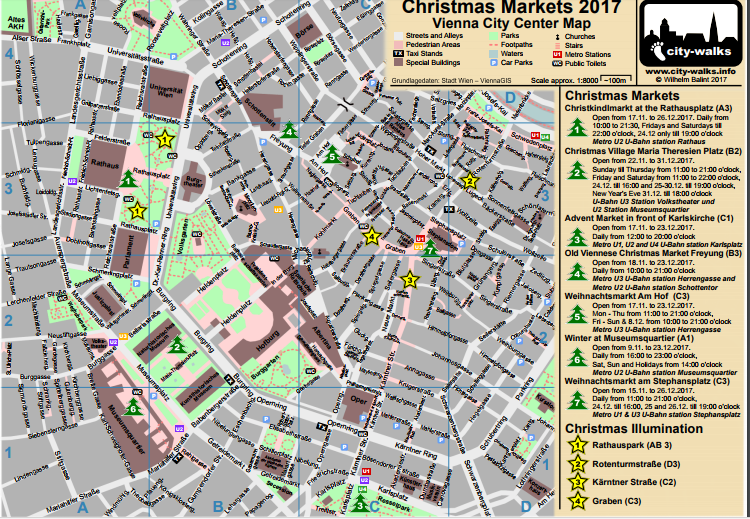
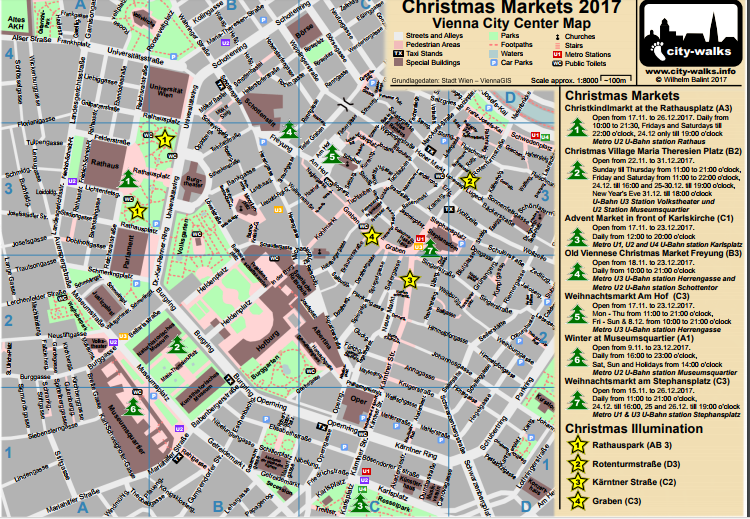
The amazing Christmas Marts…here’s a good map: http://city-walks.appspot.com/pdf/wien/Vienna-Christmas-Markets-2017.pdf
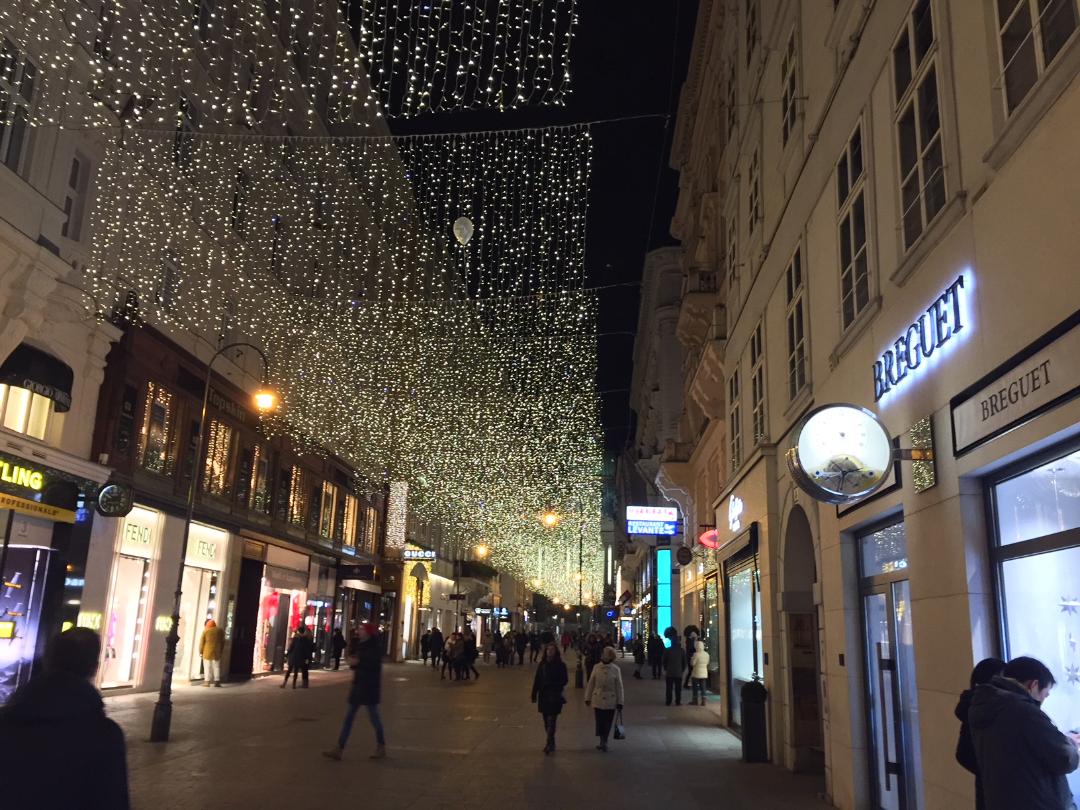
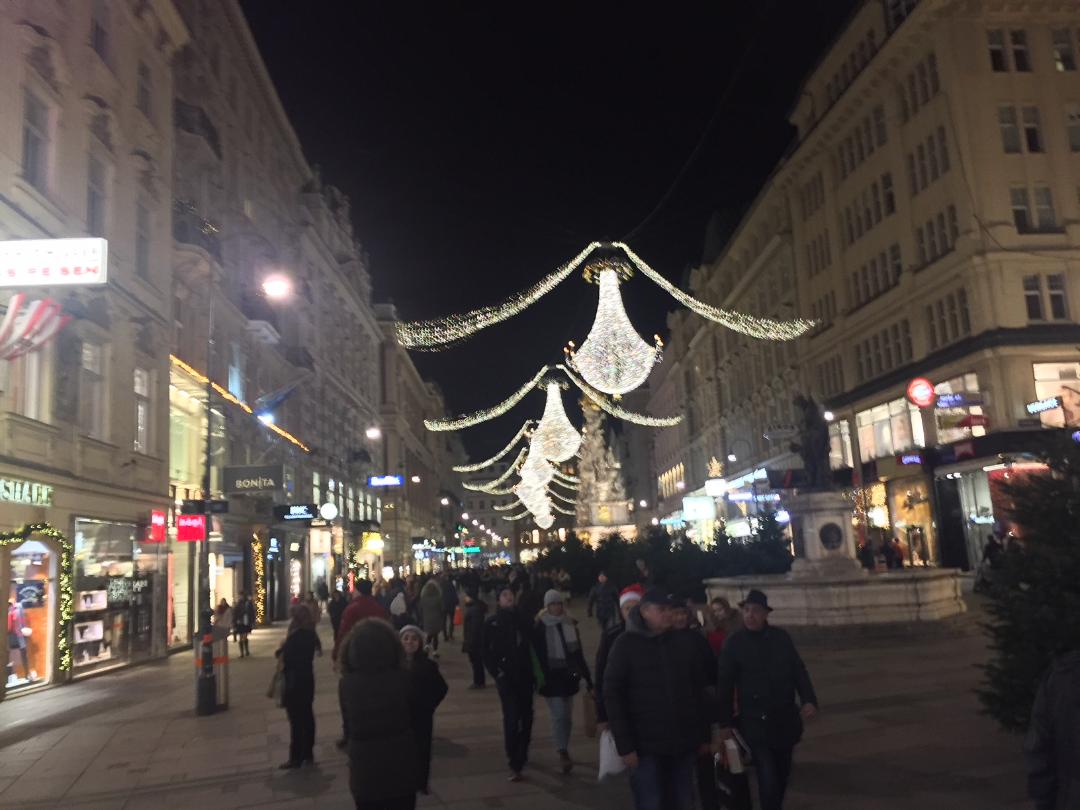
The part of the city center we stayed in, nearly every street, along with the incredible number of pedestrian walkways like the boulevard wide Kaerntnerstrasse that went past St. Stephens (#ststephenscathedralvienna) had holiday lights strung across the road, of all shapes, sizes — endless strands of gold or white color lights. It was visually stunning, emotionally moving and warmed the heart. Their nearly ubiquitous presence was like a festive reminder to never forget what holiday was about to happen. It was like a giant visual advent calendar.
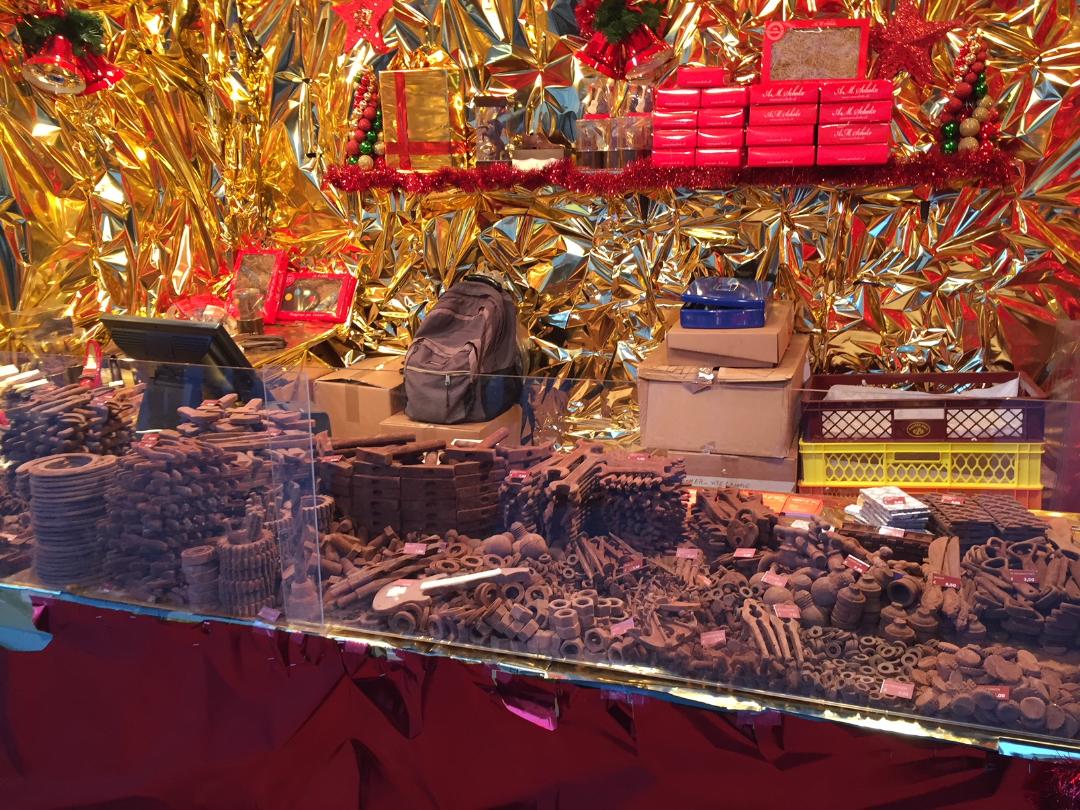
Use your hotels map and concierge to review what each offers. Review them? Cut to the best? Fruyeg, (number 4 on the map) was atiny pocket park, only a block from the famous Cafe Central pastry restaurant. And the much larger one at the Schoenbrunn Palace. One was very intimate, and the crowds of people shopping and drinking their gluhwein, cider, got chocolate at tall stands, with the flow of shoppers, just had a certain warmth. Later we were told this was a “traditional” mart, and that many had themes. The very large one at the Palace was also traditional, though we did get me at a Robbie the Robot toy right out of the classic sci-fi movie, “Forbidden Planet.”
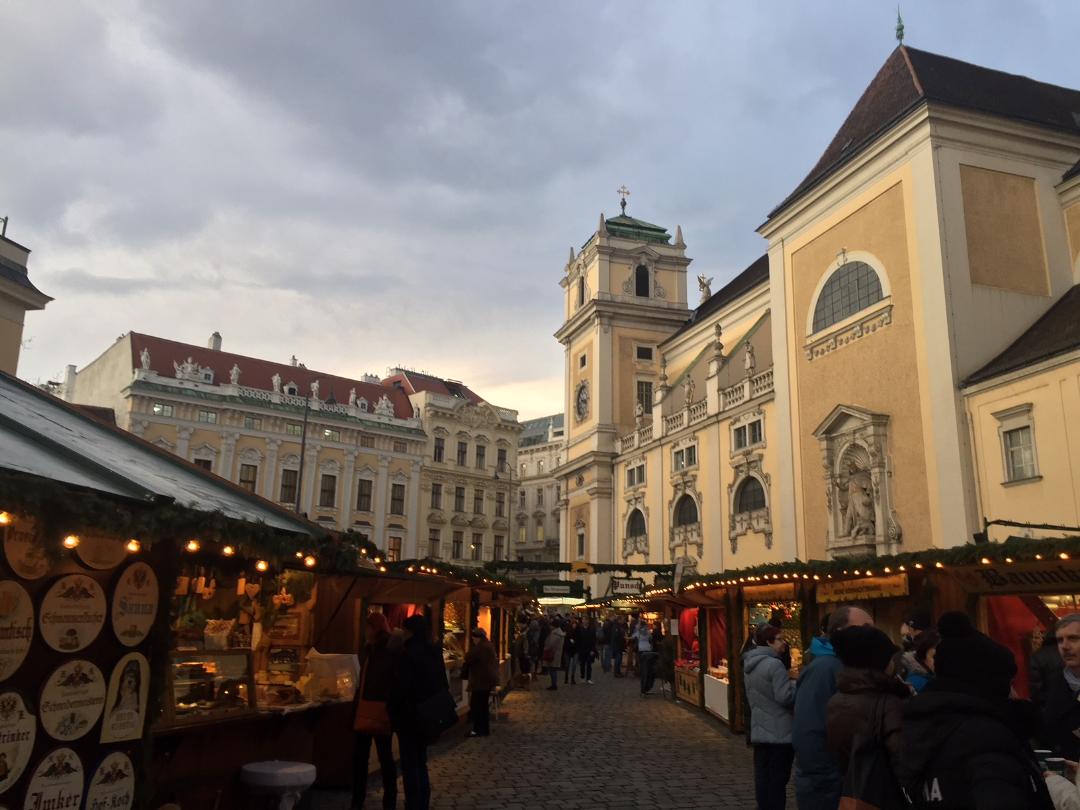
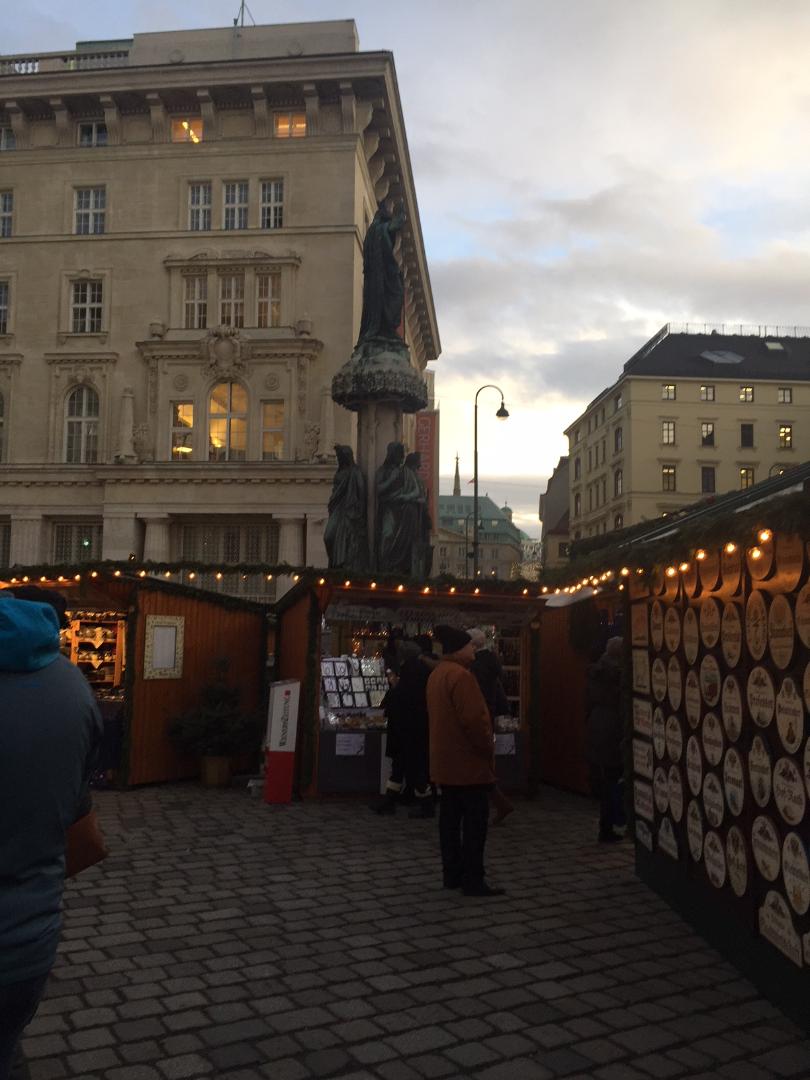
One block past the Fruyeg, in line of site, at the door of the Park Hyatt hotel, crafted from a beaux Arts bank, was another small mart, almost as nice.

The biggest disappointment though worth seeing (a quick circuit and you’d get the best of it) was the oldest and largest, at city hall, which in itself was a spire-laden, grim, huge and beautiful 18th century building. This was the Vienna Mart opened in the 18th century. But sad to say, it was the noisiest, most crowded, way too many random clusters of aimless teenagers and the wares were rather…commercial. It lacked the authenticity of the others we visited.
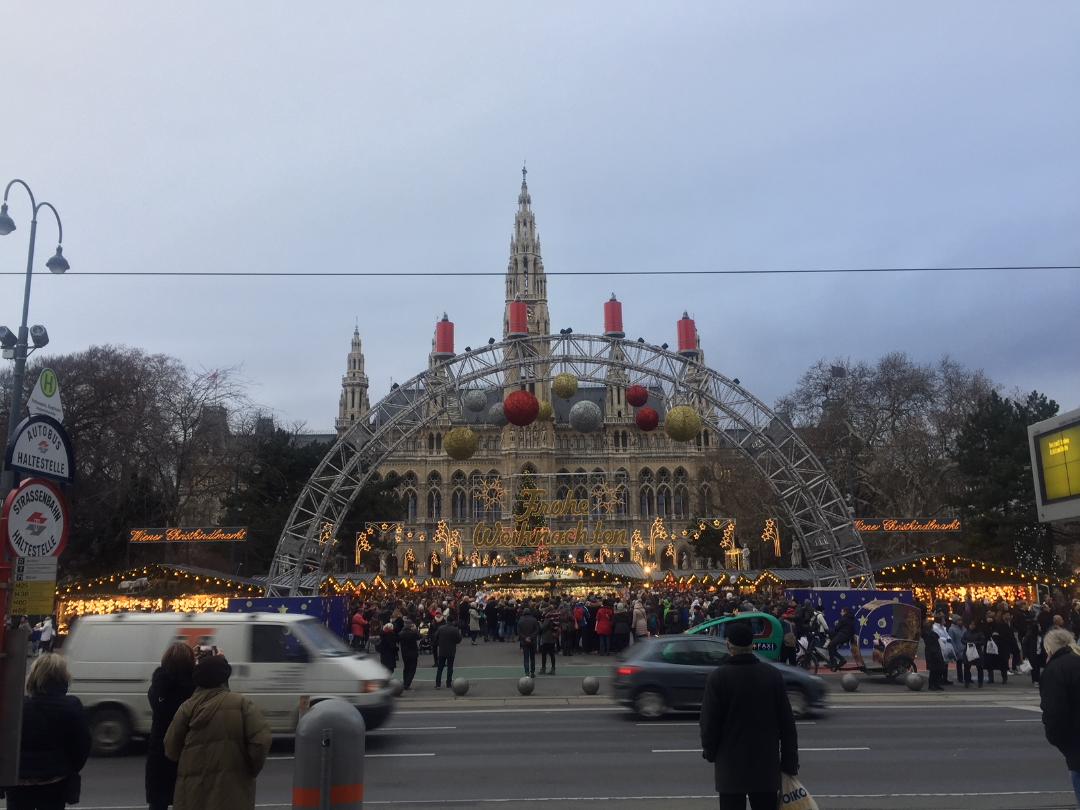
For the Christmas Marts, part of it is where your hotel is. They litter the entire city. But try and catch the few we mentioned, they capture the holiday and have great gifts for everyone — including yourself! (“Never see that in the States,”can be a constant refrain).
St Stephens Cathedral:
The central spire of this massive, gothic cathedral is like a beacon for never getting lost in the city center. Since no buildings were much taller than five stories, if you got confused, you could arch your neck, or pull out your GPS, and St Stephen’s would anchor you. We chose not to visit it during the day, but rather to go to a Saturday night Advent concert of Mozart and other composers, with a chamber group, a soprano and a baritone.
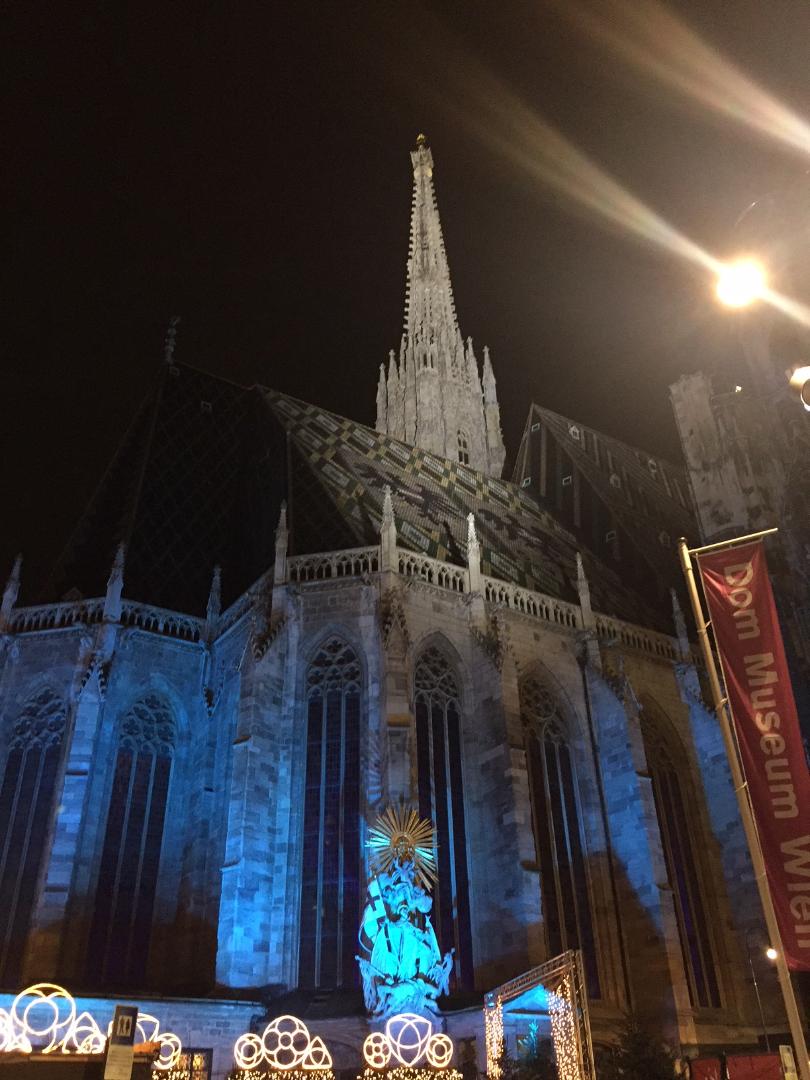
First impression? From the outside and in, it was like the Viennese had felt compelled to build their own Norte Dame; it was on that giant scale, though around two hundred years younger than the Paris landmark (begun in the 10th century). A major difference was the style — while Notre Dame is legend for its armies of gargoyles this was more straightforward gothic, grim, cold, meant to engender the awe of of God and Christ. Where St Stephen’s outdid itself was in the seemingly endless rows of spires outside. And the odd green and black tiled roof with the Hapsburg royal family crest.
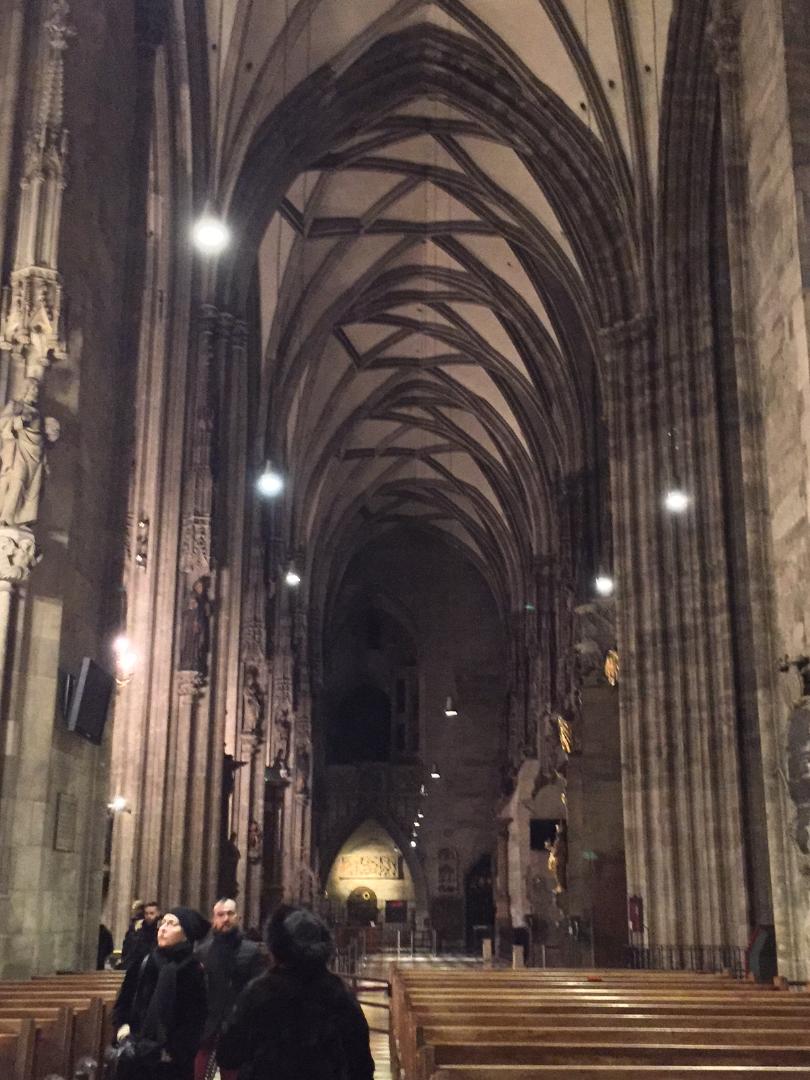
Inside, the two cathedrals are similar in their stark granite pillars. The central focus was a three story high black alabaster altar at the front, framing a huge painting of the Turks and Viennese battling. The tragic and about to die figure of St Stephen being stoned, was the focus at the center of the painting. Not romantic nor religious, it bore the pain of sacrifice and Christian martyrdom. It was meant to evince awe, and it did.
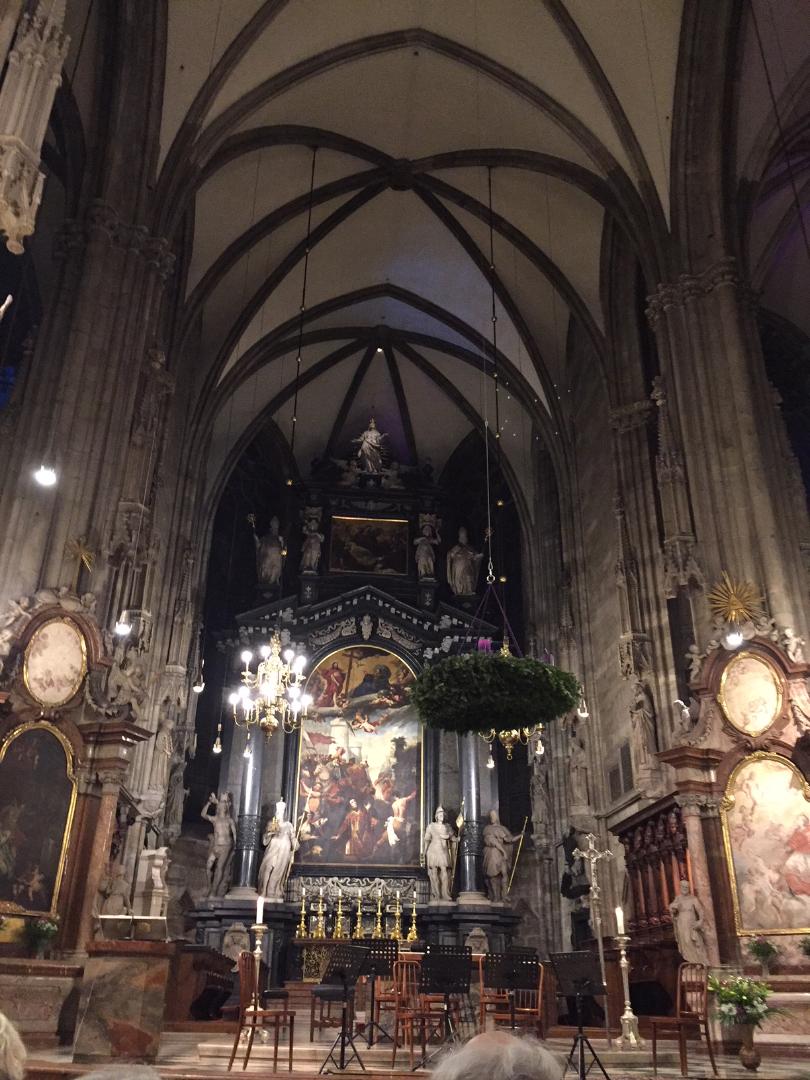
And like all cathedrals of this type, in age and size, it reinforced the mightiest of the Catholic Church for the generations of villagers, peasants, city dwellers, and royalty.
Lucky to be seated near the front — yes, we had paid the highest ticket price — we had an hour of soaring instruments and voices. When the soprano hit a high note, it seemed to float like frankensence to the dark ceiling above. The program was dominated by Bach and Mozart. The mix of chamber and song kept it celebratory and stood as a reminder of how utterly beautiful classical music can be, and what genius resides in the scores of these two composers.
Despite the seasonal Advent theme, one would imagine such concerts happen all year round; this is an experience of high recommendation. For us, the only downside was there was no interior heat and it was very very cold by concerts end. The crowd poured out on the side pedestrian plaza and accompanying Kaerntnerstrasse, which held all the cliche global brands but housed in one regal building after another.
Schoenbrunn Palace (#schoenbrunnpalacevienna)
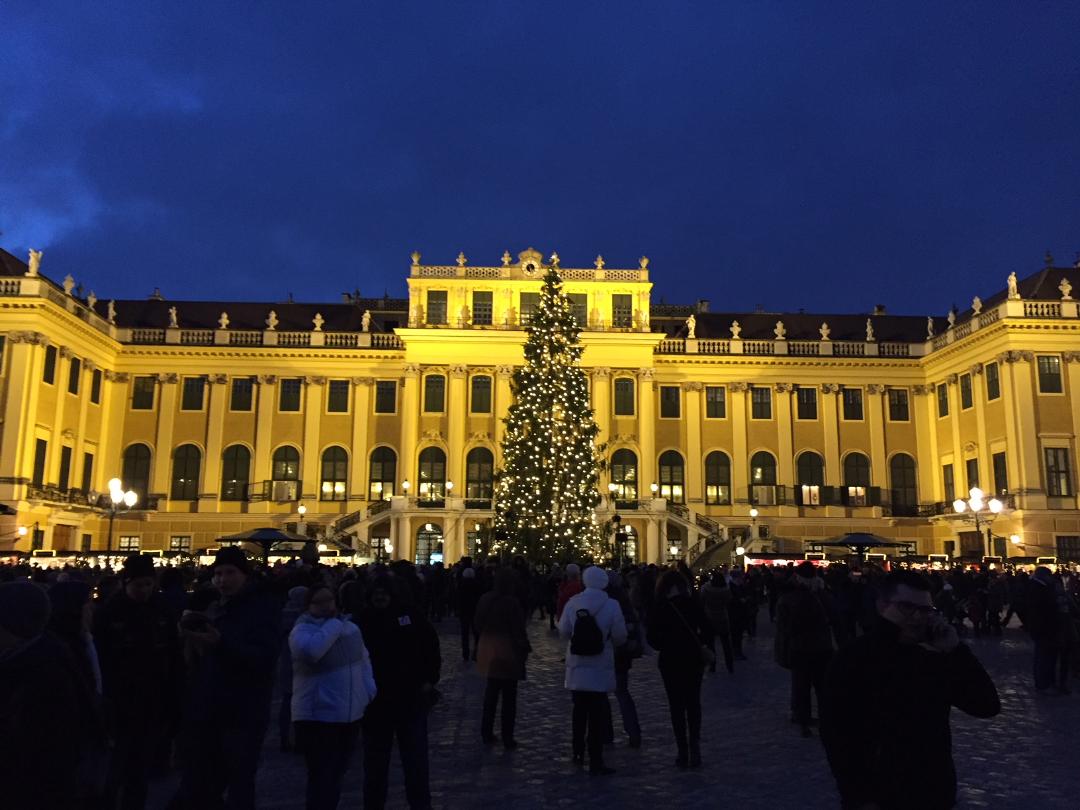
About a 15 minute taxi ride from the city center, this massive, sprawling pale yellow palace and its gardens took your breath away, even in the freezing cold. A giant Christmas tree adorned the front and anchored a large, probably 70 or so, Christmas Mart retail stands in a circle.
We had decided to dedicate most of a day and night there. In the scant research we had done before leaving, a few people had mentioned a package tour, which we decided to do; it included a palace Grand Tour (40 rooms and worth it, even for guys who don’t do the “palace thing”), a dinner and then a concert in one of the external wings called the Orangery, where Mozart himself played.
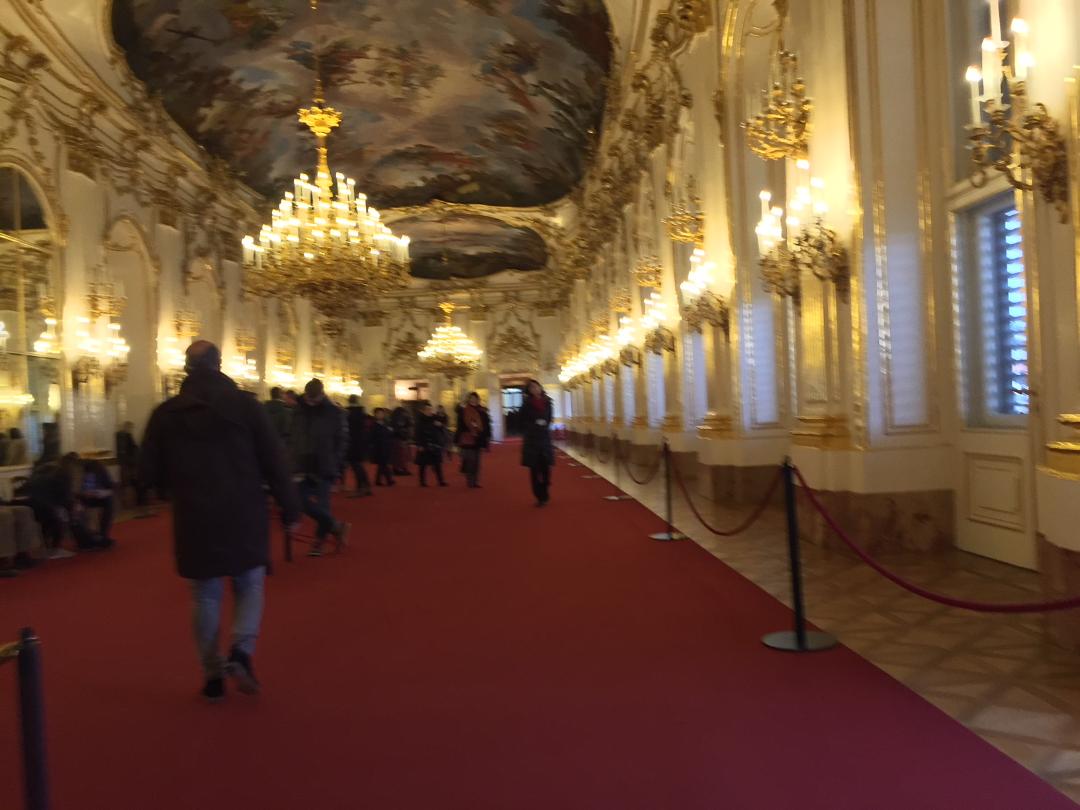
Starting with the tour, we were amazed at both the ample mixture of frugal (Emperor Frank Joseph who ruled for 68 years had a tiny bedroom, prayer stand and desk where he worked 15 hour days)) and the outrageously opulent! As in one room, called the million dollar room, made of shiny rosewood with cut panels revealing Indian illustrations from the time of Akbar the Great. It was odd, but stopped you in your tracks.
Two other rooms have to be mentioned. One, a small room used for recitals for the royal family, was where Mozart(#mozart #mozartinvienna) played for the first time at age six, where upon finishing, he jumped into the lap of the Empress and kissed her.
The last was a gilded, blood-red carpeted ballroom where Khrushchev and President Kennedy met — it’s where the Soviet leader determined Kennedy was weak and thus began what led to the Cuban missile crisis.
Pouring out of the gift shop, into the dark cold, the Palace Mart was directly in front.
First stop was for the hot chocolate, with the mug you could keep or return and get back your few euros. Having arrived at sunset, a grey wintry one, the mart was jammed with people, families, strollers, browsers, buyers, drinkers; yet it felt, as cliche as it may sound, authentic. it seemed like every third stall was dedicated to Christmas ornaments — many glass tree decorations, but also wood carved, soap stone, room decorations, glittering and sparkling in the onset of night.
As we moved around, we heard a loudspeaker announce something, and soon the acapella songs of Austrian traditional sounds floated through the air, peaking over at the stage stood a dozen men in traditional Tyrollean hats, with the pins and feather sticking up. We didn’t know the songs, but after being barraged with American songs nearly everywhere else (still cannot figure that one out) this was warming and lifted the spirit in the cold.

Completing the complete circuit of the mart, we decided to head to the palace cafe to warm up, then off to please…nearby Courtyard Marriott for dinner before returning to Orangery, hall which served as the main musical venue for the royal family, and once again an evening of Mozart, Bach, Strauss…a baritone and soprano who were excellent — It. Just be said, even for those who do not enjoy it, opera done right is both anachronistic and sublime to tears.
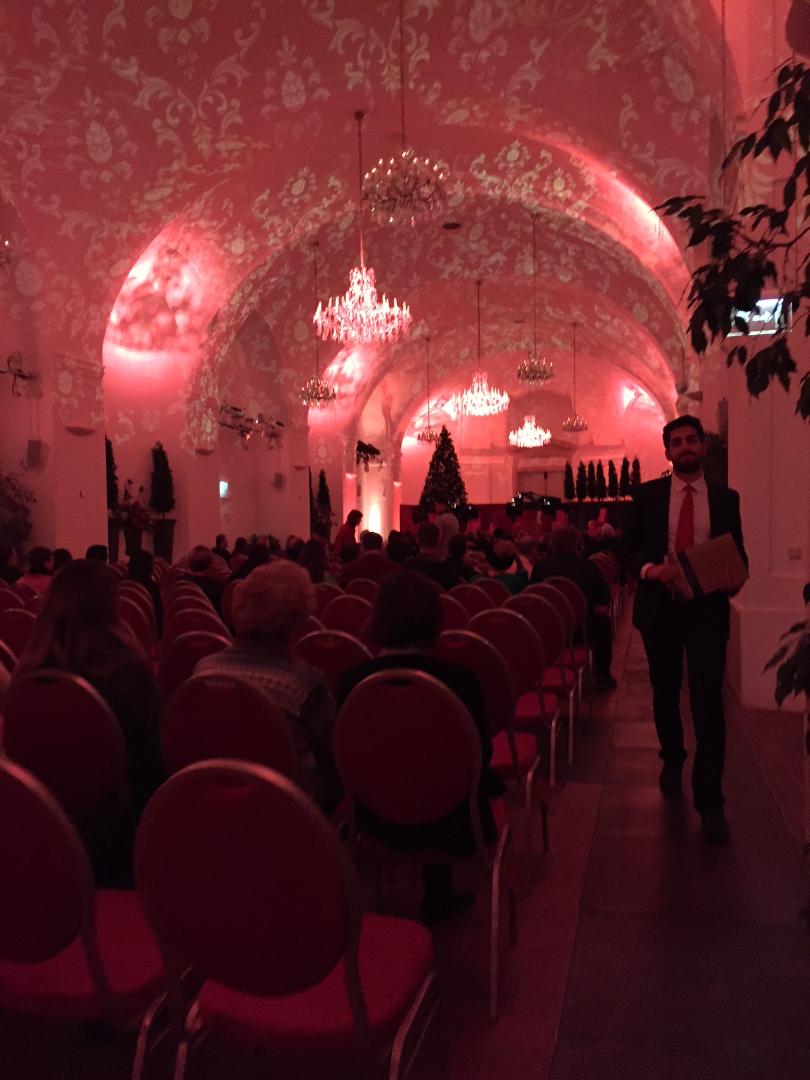
As for Mozart…Vienna is called the city of Mozart, though he was born in Salzburg. Music is everywhere.
Albertina museum (#albertinamuseumvienna)
Our only regret is not going to the famous opera house. But that for a different season and another visit. But we were smart to do the Albertina museum despite other lures on our short itinerary.
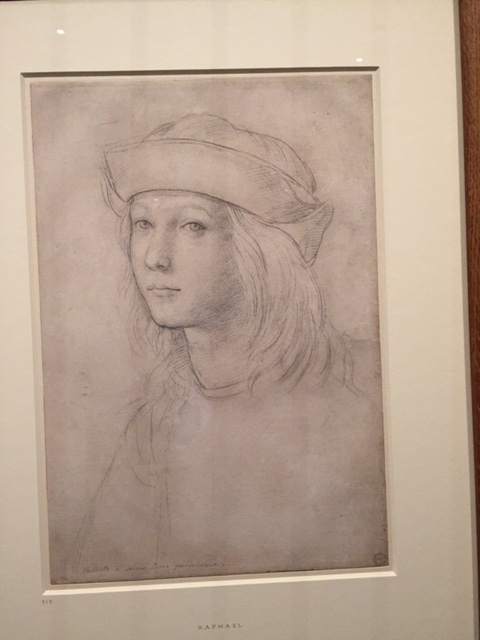
The Albertina is worthy of note in any season; it may be considered one of the worlds great museums and we would agree. The traveling exhibit was of the renaissance painter, Raphael. I had never studied his work, for me easy over shadowed by Michelangelo and da Vinci, but more fool me. The work was visual rhapsody, the strokes like musical notes, up and down, forming patterns and music to the eye. I have had always had great disdain for people who use their phones to snap great masterpieces, it is obnoxious and stupid. Ok, so maybe I was wrong. One drawing, of a young man, some supposed a slightly disguised self-portrait — I dug out my phone and snap.
Moving through the palace, and that is what it started as, were long, wide, white marble stairs, with black and gold gilding on the bannisters.
One floor below, Always a favorite, they had a permanent exhibit that began with the Impressionists. In fact, they had organized the floor by the evolution of art from the Impressionists through modern art. Some very classic paintings you’d look at and say, “Wow, that’s here. “
And who doesn’t like a great Monet waterlily.
The City:
All the buildings were the same height, five or so stories. All, whether business or retail or apartments, bear the mark of 18th and 19th century architecture with a constant refrain of the regal, of Empire. Large buildings were framed by reproduction of famous Greek and Roman statuary; smaller buildings on side streets had doorways framed with cherubim and fluer de lis. Like Paris, many buildings had large wooden doors which opened to courtyards for business or apartments. It created this aura of something beautiful and hidden, forever regal.
Food:
Being last-minute, we did a poor job investigating restaurants, and our concierge as delightful and informed as he was, fell down on the restaurant front. He sent us to the same Austrian traditional restaurant twice, Weibel’s Wirsthaus, a sin for being there only five days. This has never happened to us, and share the blame. Perhaps we were blinded by the lights. Yet, we would recommend it.
Weibels was cramped but had red seat cushions on each bench seat. The wiener schnitzel was very good, especially with a splash of lemon. The soups were excellent. But like Ireland, it seemed Austrian fare has an absence of green on the plate. The lamb shoulder and basmati rice was a hearty and tasty affair.
Another meal was on the Kaerntnerstrasse, near Aida the tourist pastry shop. Firenze. A truly 2nd class meal with a sad excuse for a salad and overcooked spinach ravioli. (#firenzevienna). The staff were very nice, tables a bit tight, but no excuse for the subpar food. Don’t go.
Last meal was at the Park Hyatt hotel restaurant called The Bank(#parkhyatthotels), in the former central lobby of a beaux arts masterpiece of architecture and design…yes, near a very good Christmas Mart. The food was good, salad good though not memorable, and the lobster delicious…and tiny. For 35+ Euro, you’d expect more.
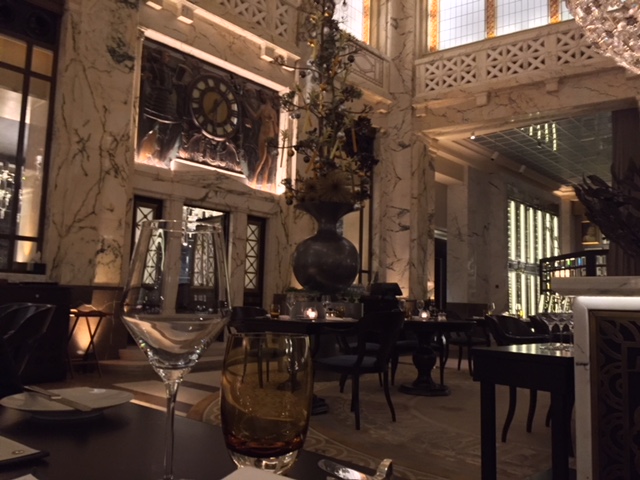
Of course, the fantastic, historical and highly touristy but highly worth the wait, Cafe Central. If you have to wait, as did we in the freezing cold, it is worth it for the vaulted ceilings,live piano and delicious pastries.
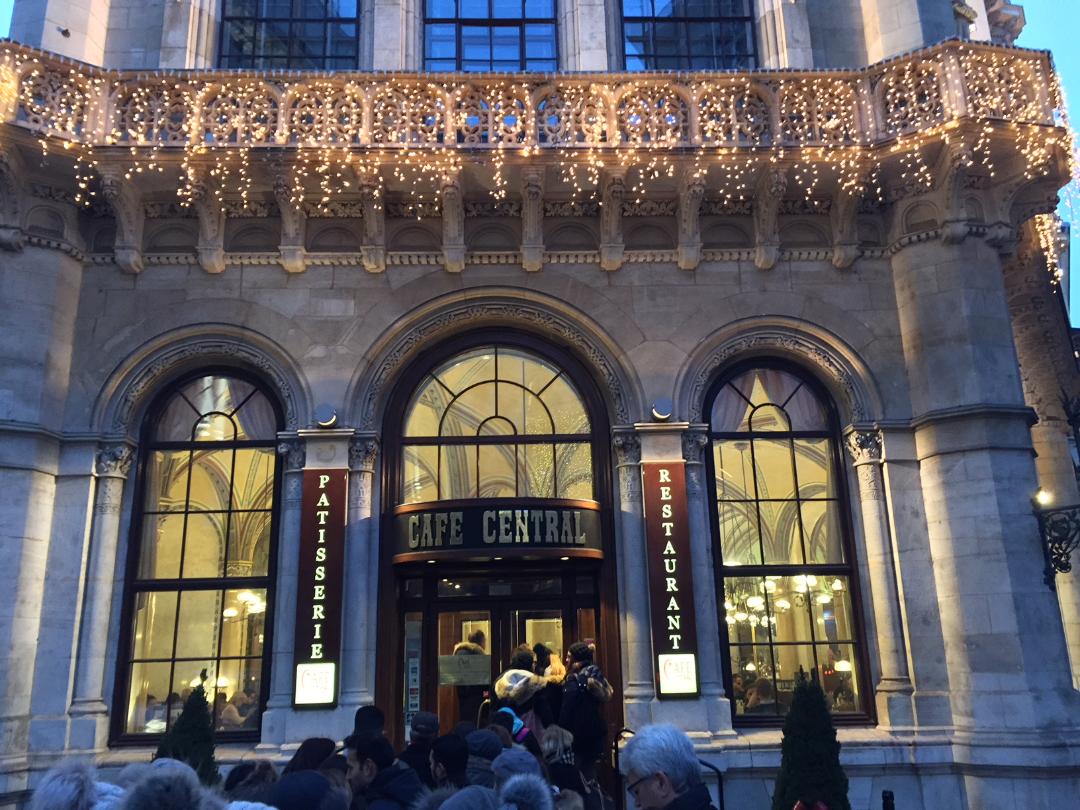
#cafecentralvienna
Tips (Especially visiting a city in winter):
Vienna in December is cold, as you would expect. Given the heart of the visit is city-walking we went to REI (#rei) and bought a very warm winter coat and wool socks. Heavy gloves, scarf, layers. Make it easy to get your coat off for stores or food.
Try hard to know basic terms of hello, goodbye, please, thank you, good day, good night, can I have the bill, and how much. Less English was spoken than I had assumed, but being polite and starting with a few local phrases always is a good start.
Conclusion: if you want to supercharge you spirit of the holidays with Christmas traditions, then you must go to Vienna.
 Outspoken Traveler
Leave a comment