
In this post, we will cover the start of a June journey to Italy. Not Florence, or Venice or the lake region, or other famous areas. But some lesser, and perhaps completely unknown to most, even the most experienced traveler.
A week in Abruzzo.
A week in Puglia.
Drove back and two days in Rome.
Over 2400 km.
Italy is stunning. Having done the major cities (for the most part) we decided to venture to lessor known areas of Abruzzo and Puglia, two regions attached to each other, each sharing the east coast and the azure Adriatic ocean.
The structure will be chronological, with some detours.
The first detour?
HOW THE ITALIANS DRIVE
This was a rental home and road trip. If you are going to drive in a foreign country, you need to know the rules, written and cultural. No, not “how to drive in Italy,” that would be presumptuous. No single style can be attributed to an entire country, too simplistic. But suffice to say, the highway driving can be heart stopping. One major piece of advice: do not show any fear, but do not be arrogant or angry. No American ire or road rage is going to get you anywhere, just in trouble. Second, understand many Italians may drive small cars, but they act as if they are all Maseratis.
Everyone goes fast, probably faster than we Americans may be comfortable with; and when they change lanes they cut your fender close and then for reasons I have yet to understand, ride the middle line of the highway. When you drive over 2,000 km, and see this behavior on every highway and major road, even country roads, no matter the degree of analysis, we could not make sense of it. So be aware. Don’t get angry.
One other item…the on ramps for the highways are half the length of those in the US; we build speed then launch into our highway. The Italians just throw on their signals and go, often slipping between a truck and a car with abandon. In cities and towns, best to stay in the left lane and suffer the fact that some cars may ride your back bumper, just slip back into the right lane once the town or city is passed.
While it may seem crazy, there seems to be a communal contract too
Many people in different places shared the same behaviors — for all this, no rage, horns, no angry drivers. Go figure.
Second detour…
HOW THEY LIVE
The Italians are crazy (by American standards their passion is over the top). And they are an ancient people who once ran the world and now know they may be diminished but own the secret of good living, la dolce vita.
In many ways this philosophy is envious to the point of heartbreak; with afternoon siestas, shops that simply close whether there is business or not, the slow method of service and casual, almost indifferent lack of urgency, it is so opposite the American Way. This was extremely evident the more rural we went. Yet while we now play our role in Empire, as they once did, the price we pay for “winning” gives one pause when seeing how happy, or at least contented and relaxed they are as a people.
Abruzzo? Mountains, oceans, back roads to make both your head and your Google Maps spin, and as always food and people. But it is also a vacation of patience both lost and found, frustration, disappointments, joys and wine and laughter and the blessed magic, all of which strikes to the core of why we travel, and for some why we obsess with travel. It is the magic of being outspoken, embracing the moment and telling it like it is.
When you take a long vacation — by American standards — and rent houses in two very different and unknown locations, always intending to think of them as “base” for touring the surrounding region, you take on a lot of experiences both planned, but mostly unplanned.
This, of course, is the magic of travel and the measure of ones character; to be flexible in the inevitable bad surprises and embrace fully the magic of surprise and finding treasures, both tangible, like a place, meal, store, smile, frown, a right turn a wrong decision.
Third? HOW THEY SPEAK
I mean this as going beyond mere language. Many, many Italians speak English. All the famous and touristy places, towns, restaurants, shops, gelleaterias, speak English.
Not so for Abruzzo and Puglia, though there were major differences.
My wife’s father and mother were both Italian immigrants, and she could do fairly well, and got better every day, with the rapid fire words that flew out at every moment of our days. But it should be noted, in Puglia, only two people spoke any, and barely, any English. Actually, the best English was in the medieval town of St Stefano di sessasatina.
So come prepared. The good news, generally, the Italians will work very hard to make themselves understood; there is no resentment or condescension or impatience. You get the feeling almost every time they genuinely want you to understand what they are saying. But a language app or even better, a phrase book and some basic studying before you go to either of these regions will get you far. Don’t let your lack of Italian — or any language — ever deter your journeys, or else we all end wait for for Facebook of Google to VR them and become ignorant lazy slugs.
ABRUZZO / CIVITELLO CASSANOVA
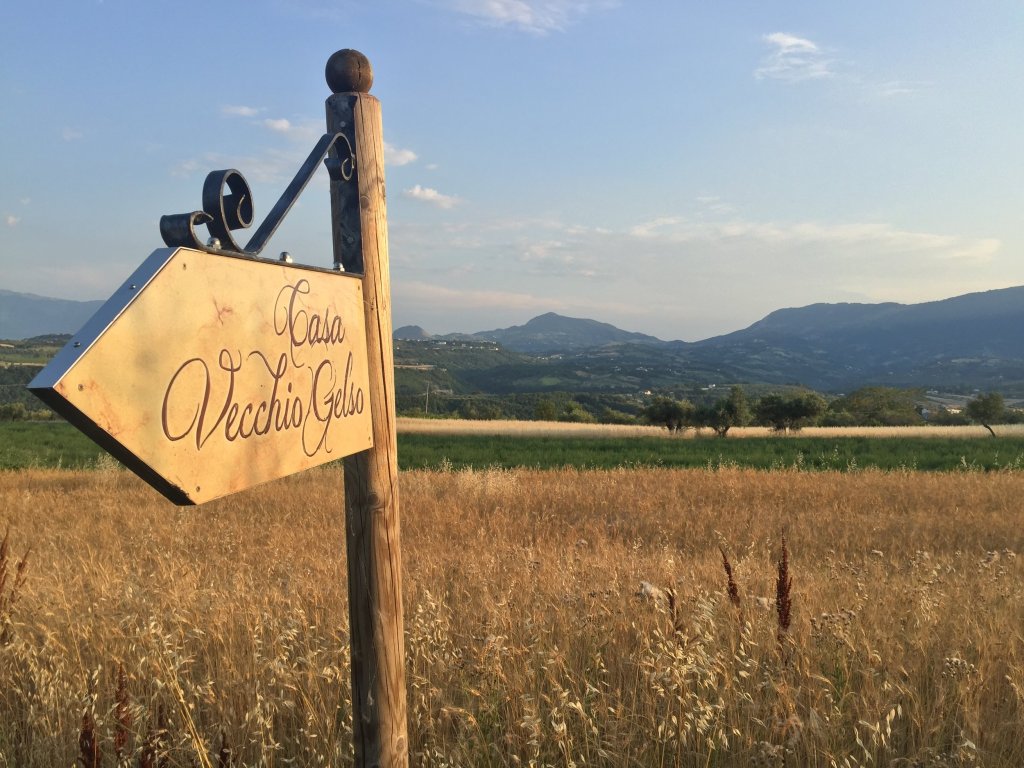
Abruzzo is way off the tourist beaten track (and for good reason). We rented a house on Homeaway.com, the photos of the house looked plain and unadorned, the pool area stunning. Knowing it would be hot — it stayed between 85 and 95 the entire time with low humidity and stunning blue skies — the pool was a great lure.
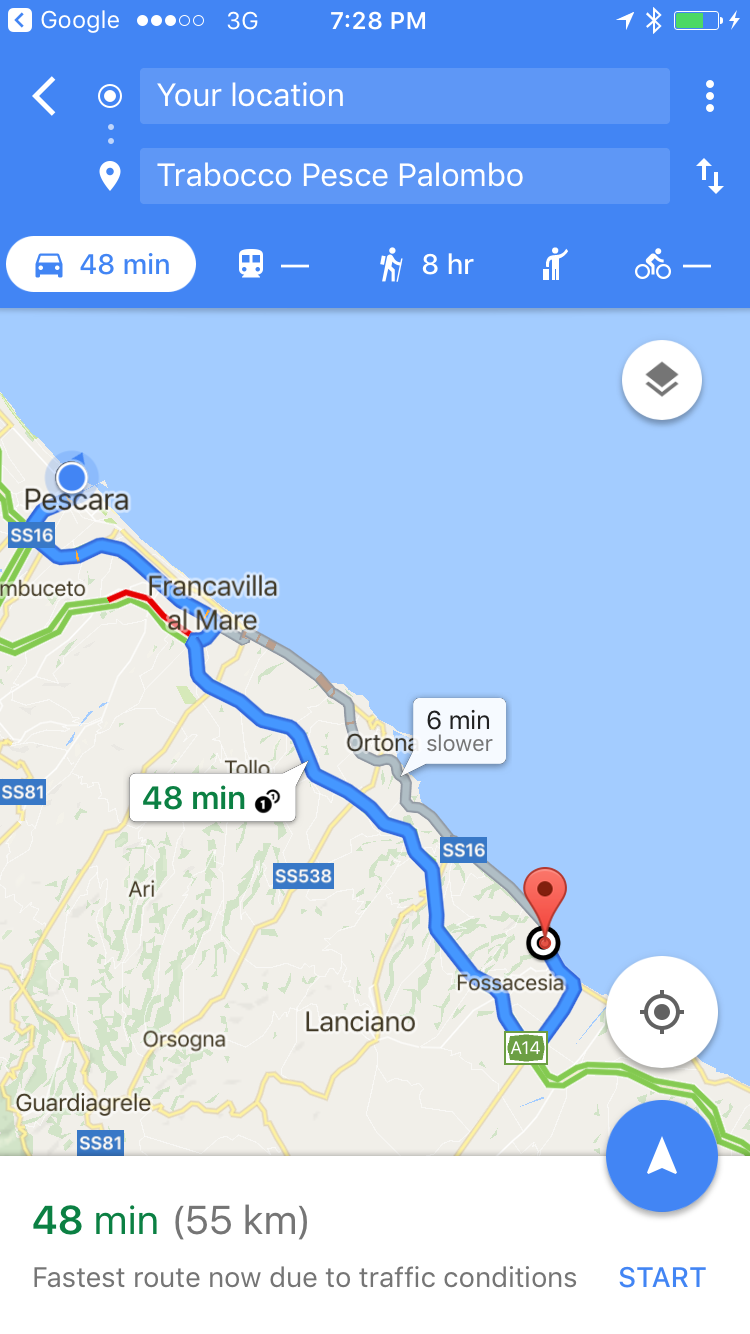
It starts with the drive to Abruzzo. Straight across Italy, SS 14, a two-lanes highway with many gas stations and the charming Aquagrill with the wealth of food, drink, and often it seems, provisions that make you wonder if they are the local markets; the road and crazy driving went from the coast of Rome, into the Gran Sasso mountains and their granite magnificence. Snow could still be seen on some peaks. They are part of the Appinne’s mountain chain that runs down the center of the boot of Italy like a run in a sticking, jagged and full of holes — I lost count of the number of tunnels we went through to cross the chain to the east coast to Pescara. #pescaraitaly
This region is known as one of the least touristy and poor. And clearly both were true. But poor means having less in things, not less in life or character.
More in a week
 Outspoken Traveler
Leave a comment