
While Santa Fe gets all the focus, touring New Mexico is a trip you need to make time for. It embraces and unifies all the elements of any great tour of America’s grand Southwest– nature’s glory, amazing Indian cultural highlights and their conqueror’s history.
This trip was to Santa Fe but we decided to take the time, rent a car, and drive. Taking what they call the “low road” to Taos was the best decision we made. There was only one highway heading north, until at a junction called Espanola, it broke off onto a dirt road that went for what seemed forever of sage and flat brush land. At one point, we stopped at a bridge that crossed the Rio Grande and wandered the dozens of peddlers shopping both trinkets, art and knives, etc. Some of the items were beautiful, some grotesque or crude — but it was the people who were outstanding. Each was friendly, decent, smiling, and not a phony retail smile, but that of a person who has little, lives the life they want, and does ok by the big bridge and its traffic.
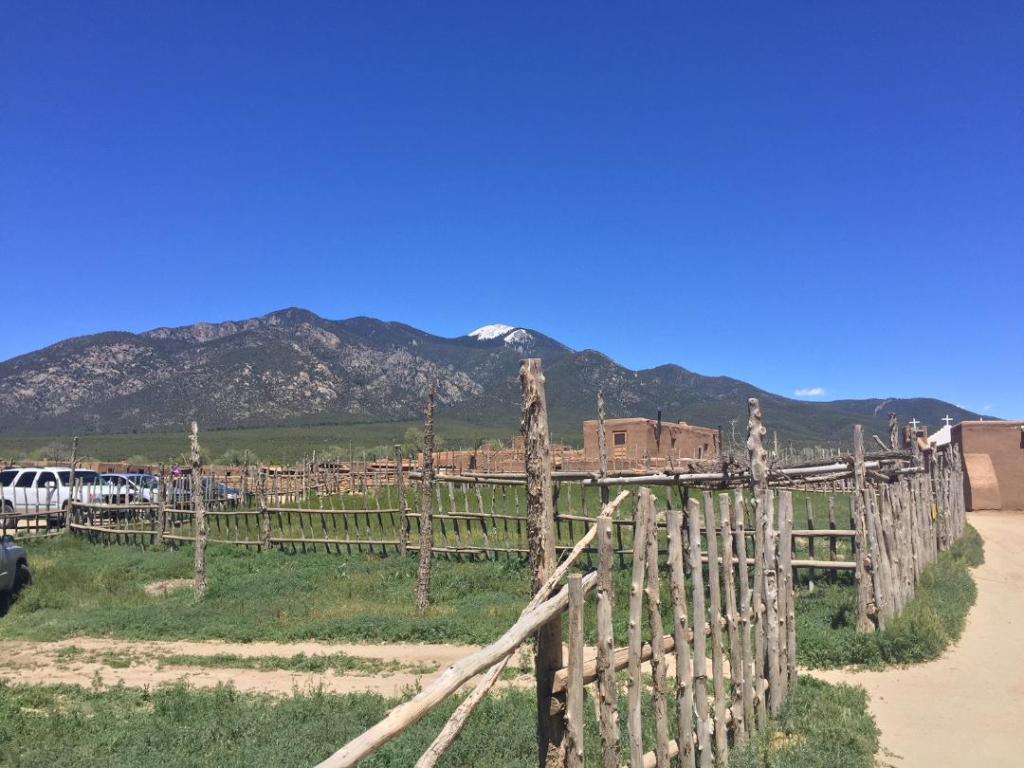
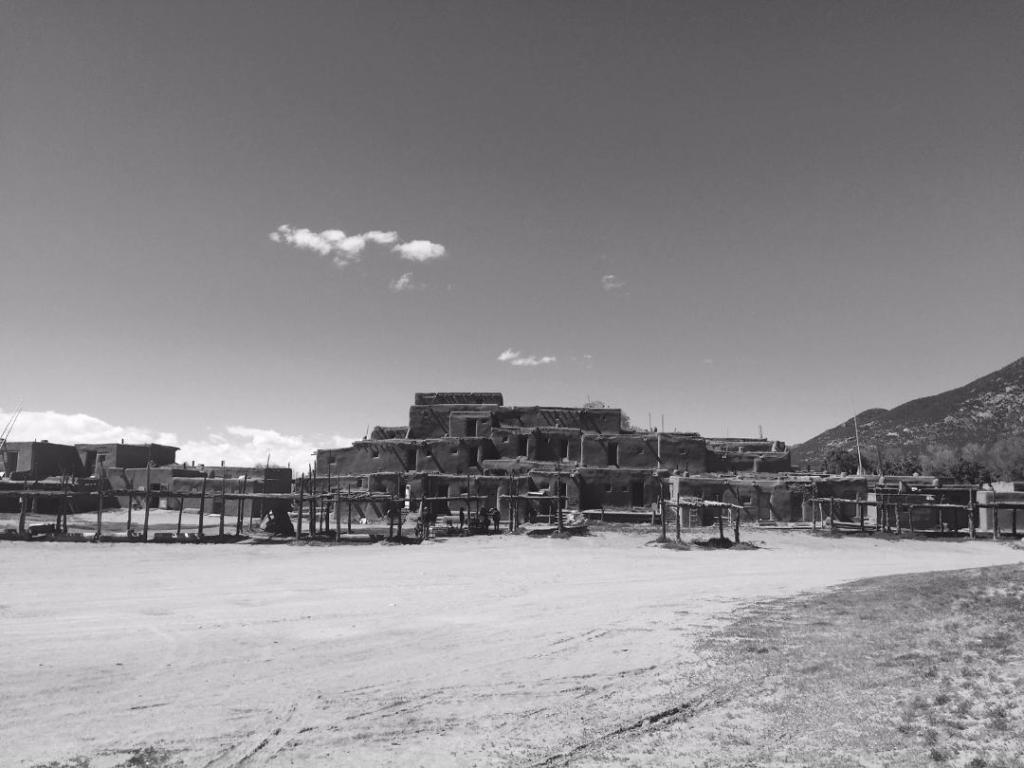
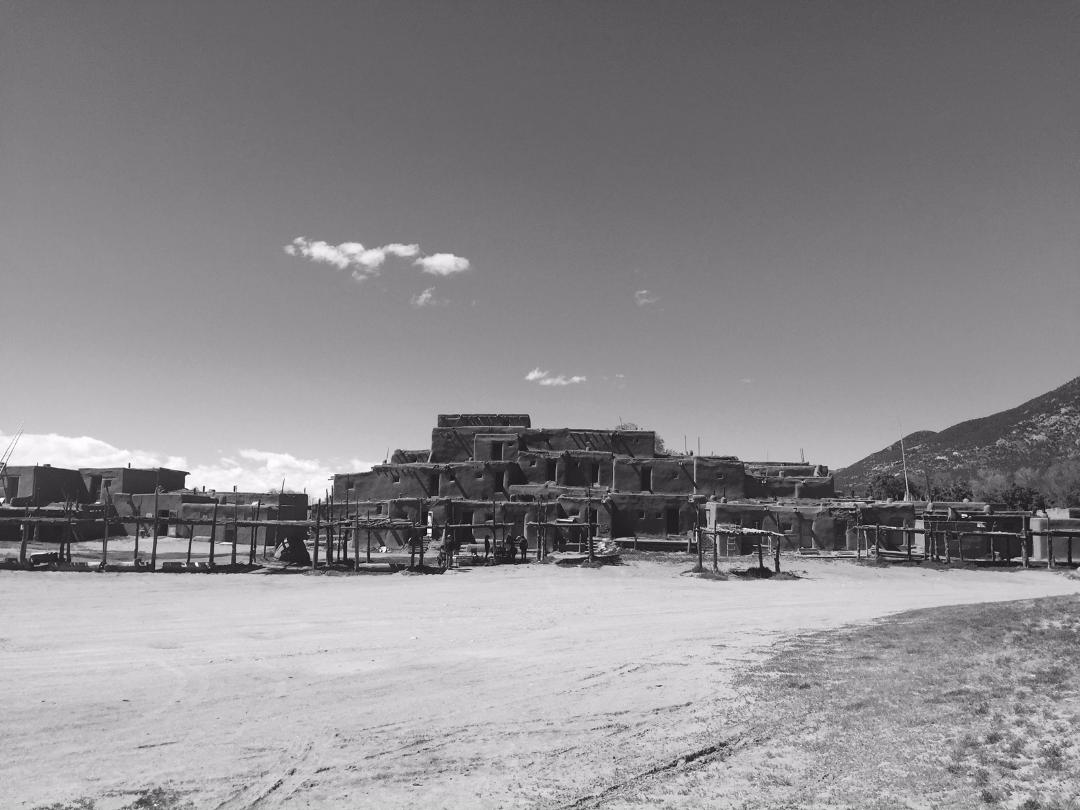
Coming into Taos from the north allowed us to go to the 1000-year-old Indian Pueblo without seeing many signs of the town.
As you crossed a small bridge, thick with mud due to spring floods, you knew you had lost Western civilization behind and was in the presence of something very old and very sacred.
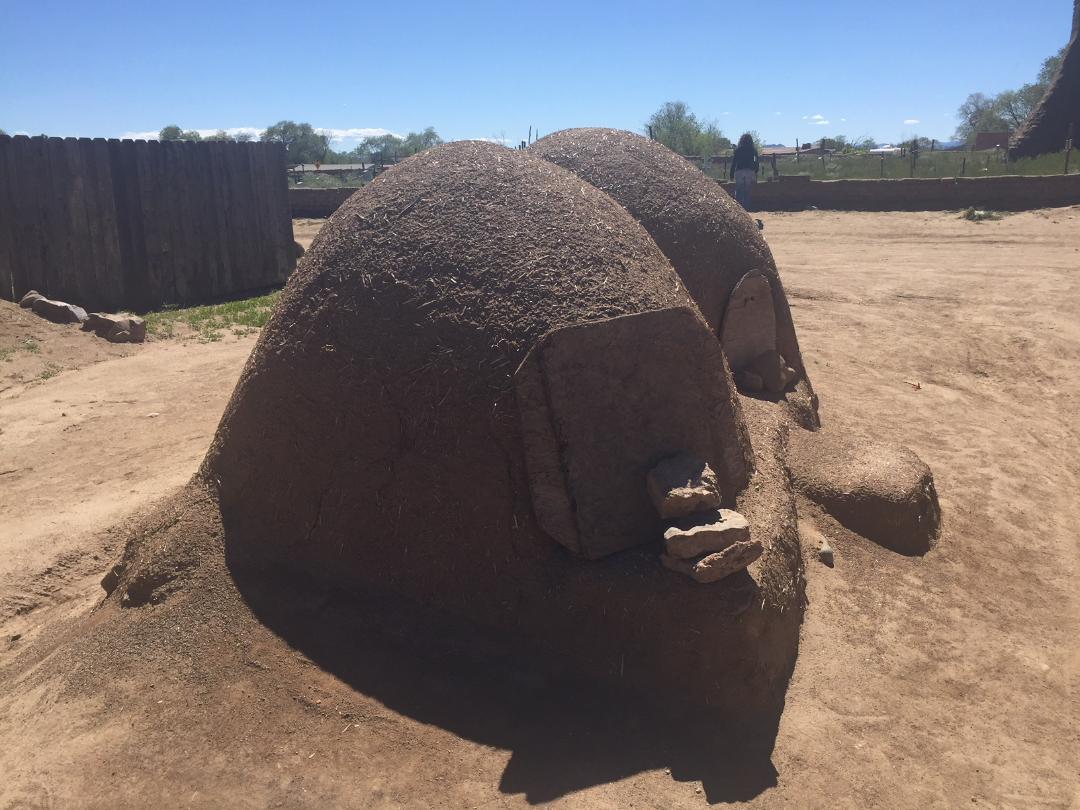
We took the tour, given by this tall, bulky young man who spoke in gentle but firm tones. The story he told was one of ancient ways given over to struggle, pain, rich traditions, near slavery, all of which had befallen them. At the age of one-thousand, it is considered one of the oldest continuous lived-in communities in North America, the Pueblo started the village made of mud and straw long ago; they tiered the houses over time.
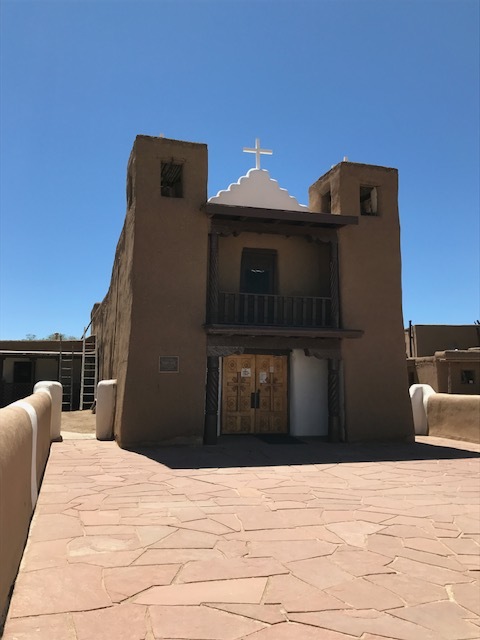
One tiny, almost fragile chapel stood near the town center; we went in and were told the complex history of a pagan people forced to convert to Christianity.
After the tour, we wandered around the small side streets, dusty but well swept, oddly deserted; occasionally, from a small doorway someone would wave you in to see their crafts and wares. A few items were obviously of local design, so we purchased those. Others were touristy. It’s worth visiting them all, you may find a craft treasure.
Do you realize it is the top 10 of poorest states in the U.S.? I didn’t. But once you know something like that, your focus changes. You pick up the signs of poverty and disuse. You see junkyards near small gambling casinos. Bottom dollar stores in every strip mall.
At one corner we realized we were hungry and there was a woman baking something outside with a table next to her looking ready for customers. We introduced ourselves and ordered her one meal — an Indian funnel-cake. That may sound stupid, but it’s the only analog I have to what she made; fried dough, thin, then sprinkled with powdered sugar. It was delicious. She had canned lemnade and with the dust and sun, it felt great. We sat on rickety chairs on the unever grond.
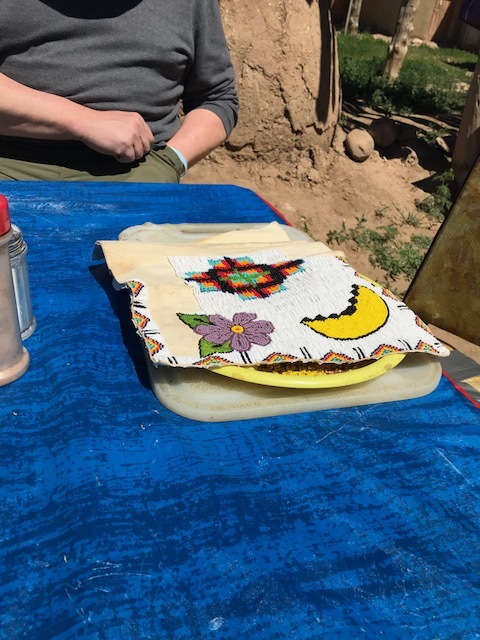
As we ate, she sat with us darning a beautiful, traditional piece of leather with bright beads: my granddaughters outfit for a tribal festival, she told us. The little girl ran by and she pointed her out. She laughed like any child in the bright blue sun should, and as she ran away with a friend, the old woman bent forward, kitting, and told us quietly of her daughter, a heroin addict, and how the granddaughter was hers now. What was hard was not just her story, but the casual ways she delivered — it just was, this was life. And sadly not uncommon to where we were.
Finishing our food, licking our fingers and trying to catch the flimsy napkins as they blew in the blew away, she put down the half-done the yellow and red beaded leather piece and we just spoke lightly. Of the world, of things large and small, of life, marriage, death, tradition. Our words blew dry in the New Mexico wind.
#newmexico, #travel, #outspokentraveler, #pueblo, #taos, @aes_oneill,

