
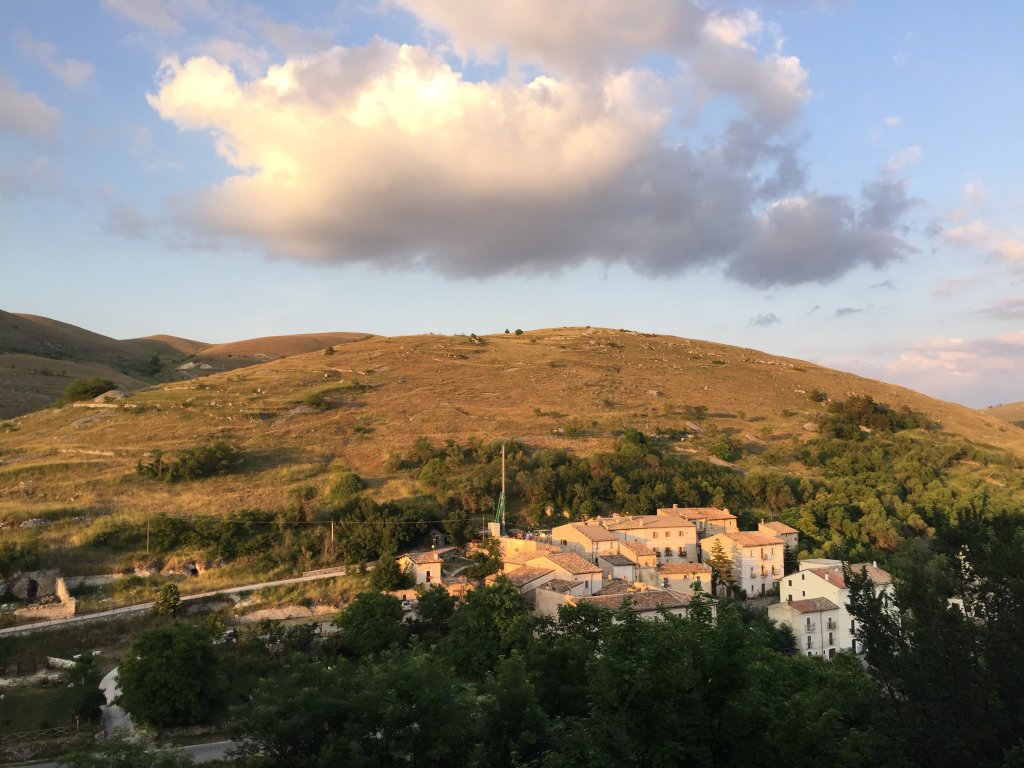
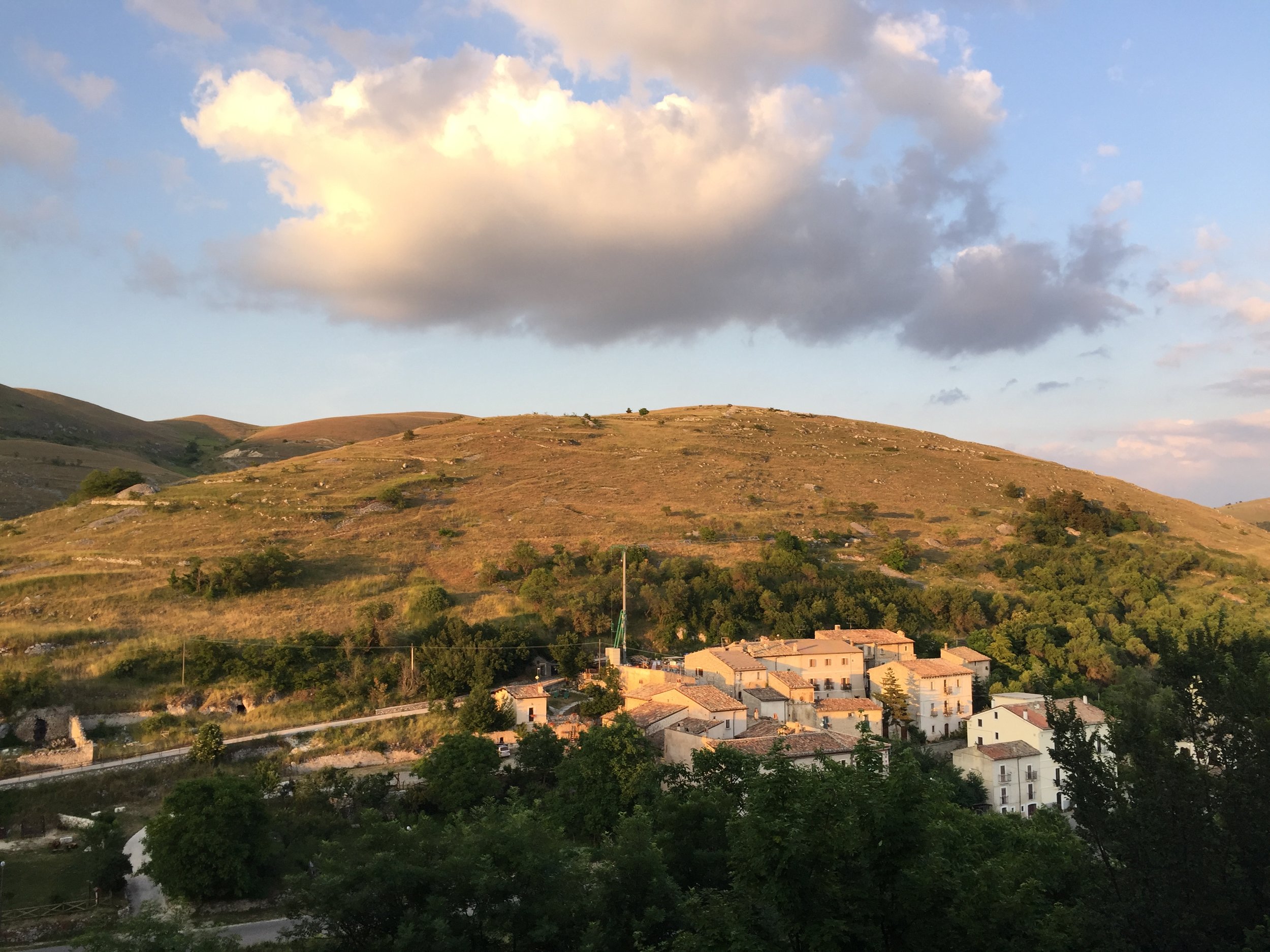
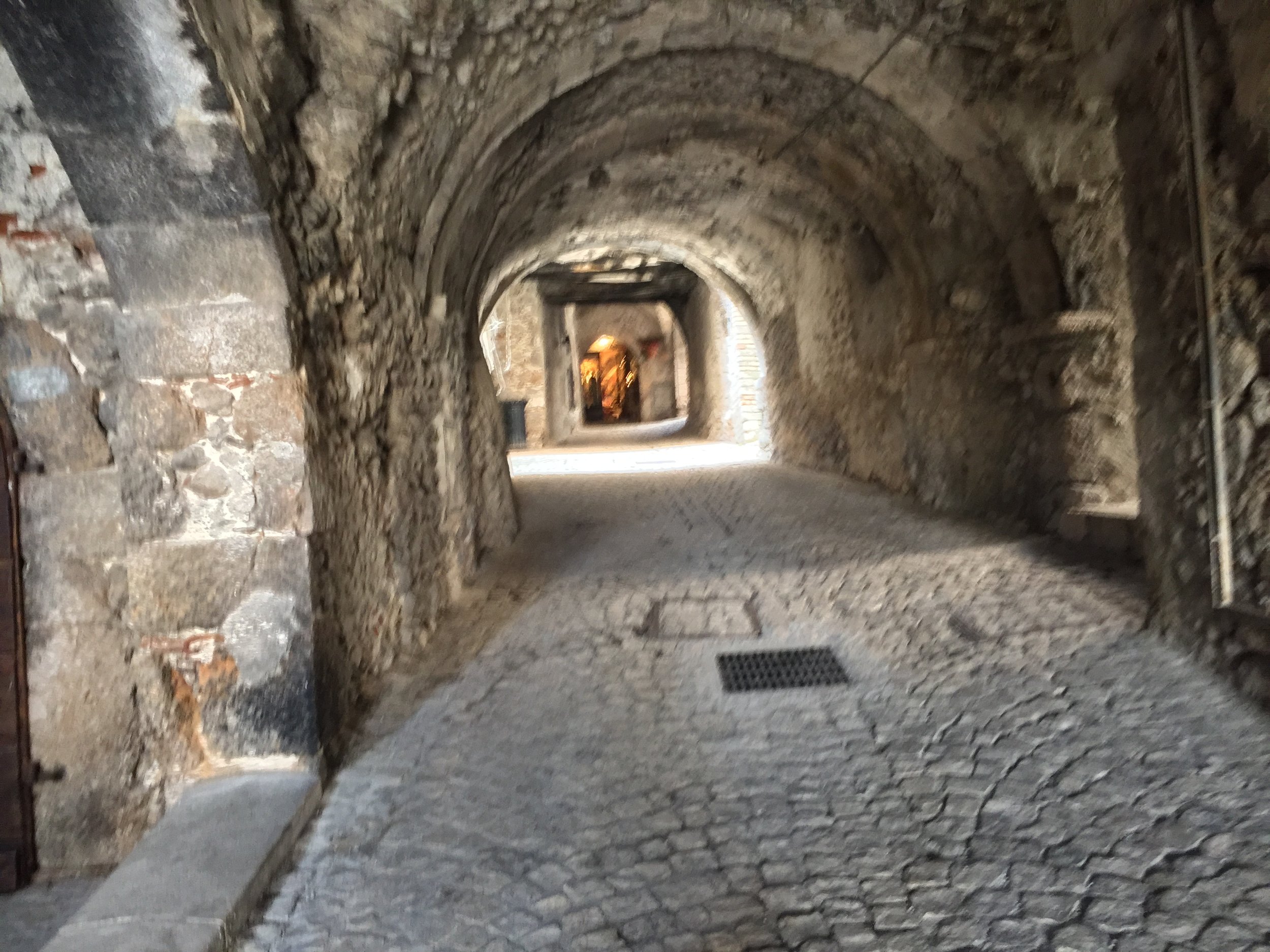
Another unforgettable UNESCO site: San Stefano di Sestina: truly medieval, mysterious and fun. If you have ever visited Europe, it would be hard to say you did not see at least one medieval village, ruin, or site of some sort. But few, if any, can match the beauty and the odd renaissance of the mountainous town of San Stefano di Sessanio, in the region of Abruzzo; In fact, it has been called one of Italy’s most scenic villages. Most other towns or communes of that god-awful era only have only their bones to show — skeletons of buildings and churches. Such is not true of San Stefano di Sessanio. Leave the 21st century far, far behind you as you walk these streets so worn the cobblestones lines have blurred.
When looking for information about rural Abruzzo region, a restaurateur in Ft Lauderdale was from the region and said: you must visit and stay one night. And he was so right! Especially now, after being deserted, it is being reclaimed, rebuilt, reinvigorated. Yet, all this done without defying the ancient medieval beauty, so strange to us now.

For touring perspective: Off the main tourist track, this town lies at the foothills of the Grand Sasso mountains 3 hours west of Rome in the raw, untraveled region of Abruzzo. Near L’Acquia.
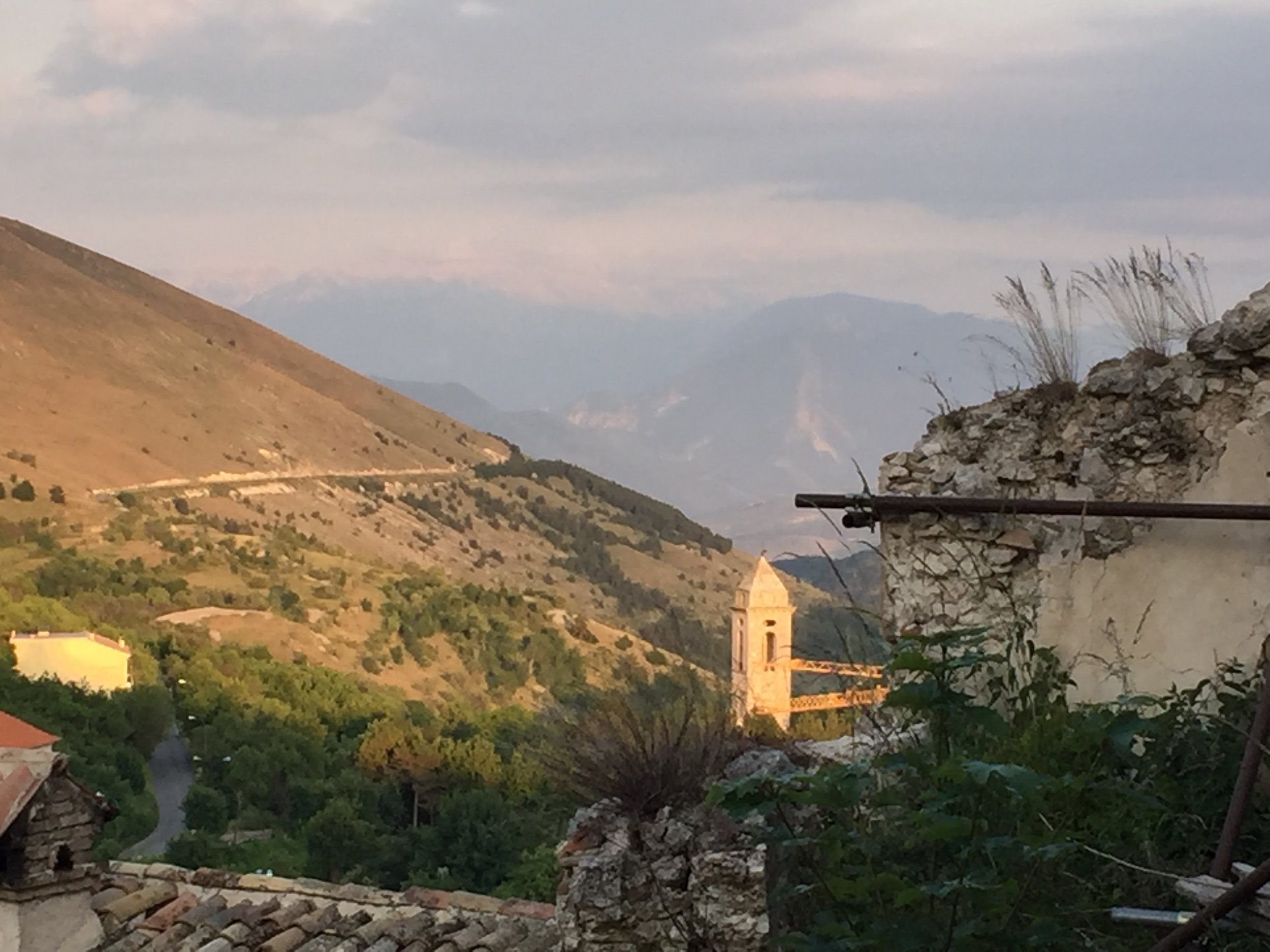
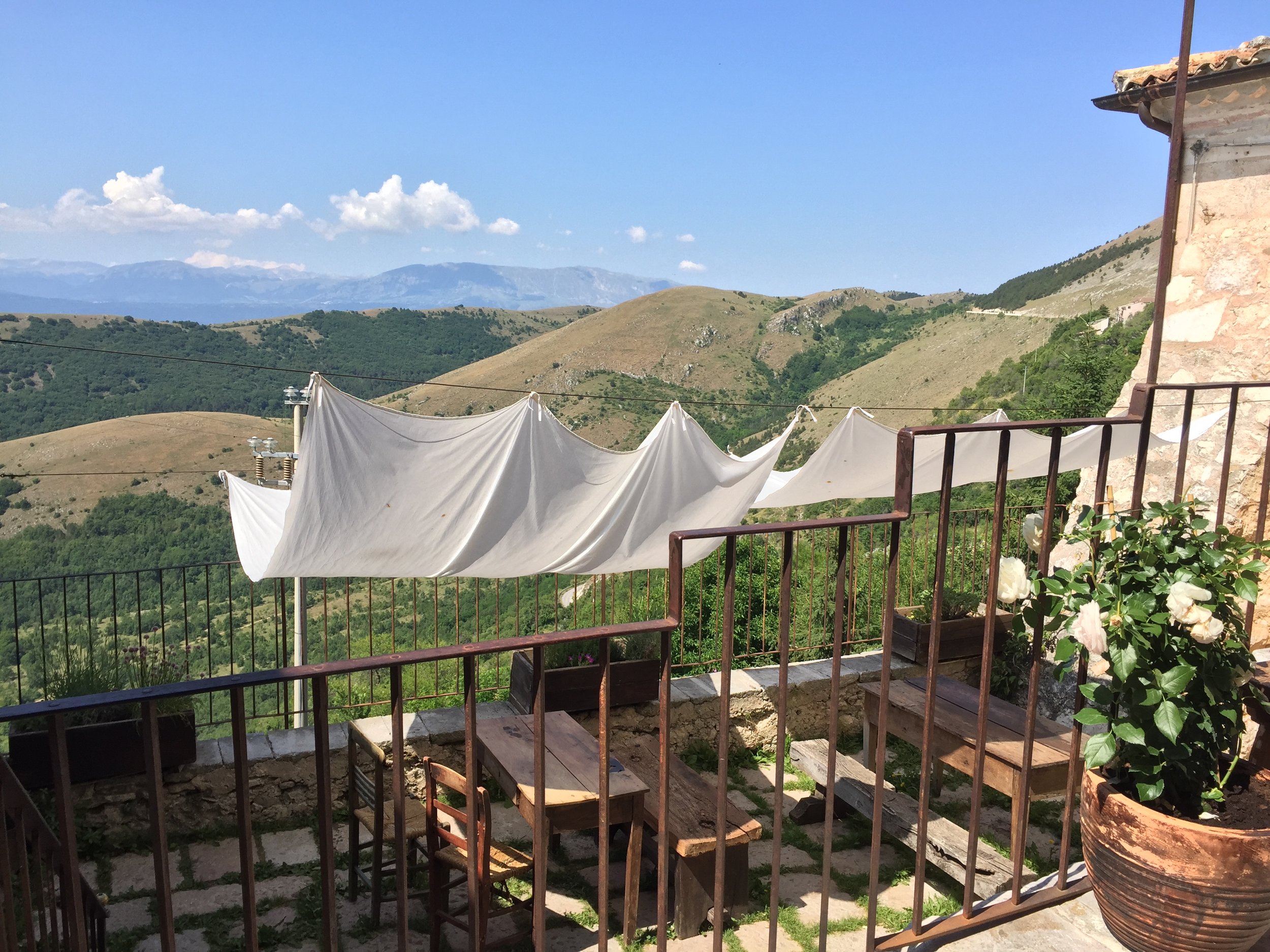
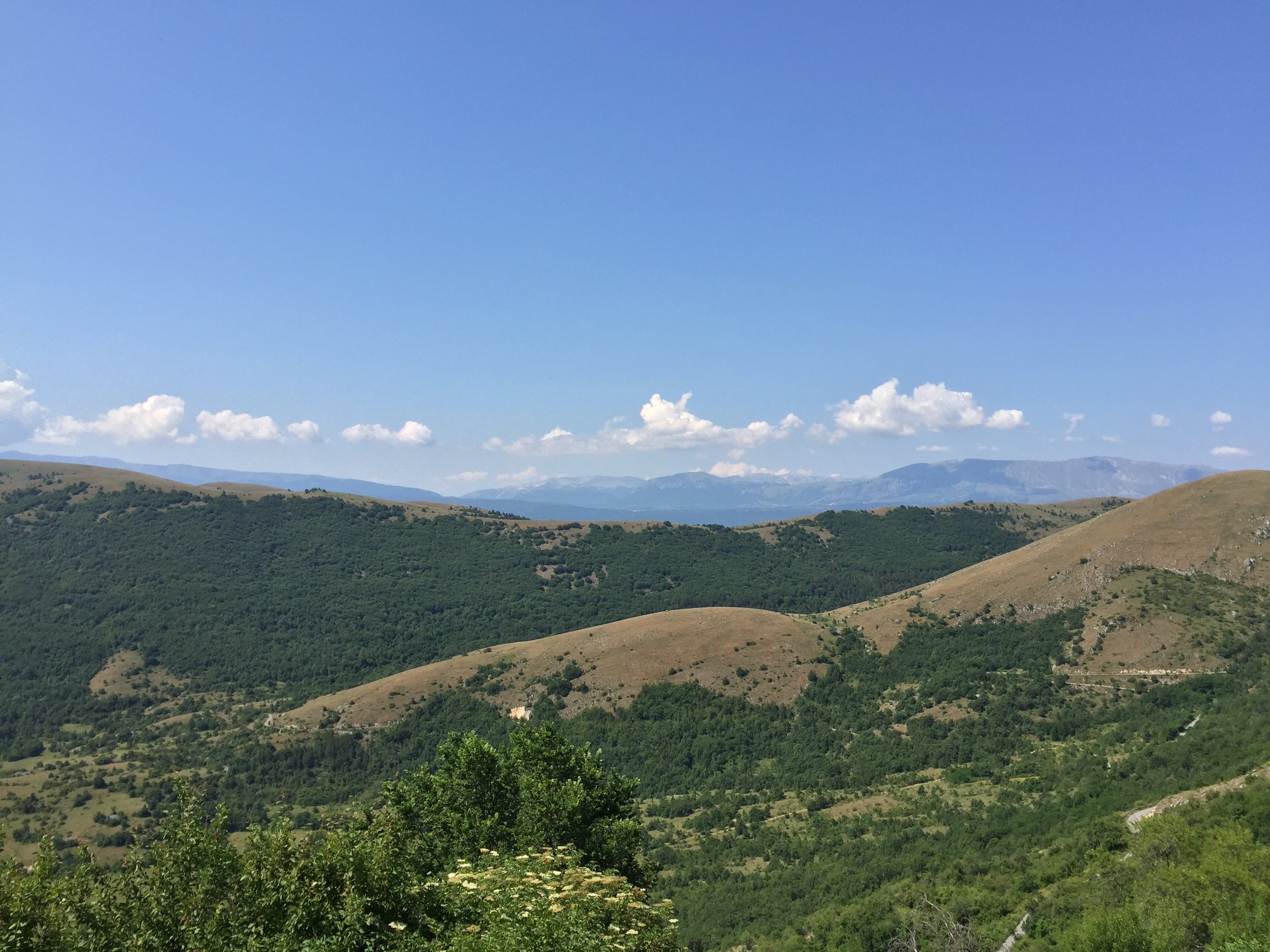
This tiny, oval mountaintop village has a toehold near the base of one of the glorious chiseled granite mountains of the Grand Sasso, that point where the massive spine of the Apennine mountain chain runs through the length of Italy; this particular area is known for its earthquakes, evidenced by the one in L’Aquila 2009 that killed 600 people and destroyed the two main ancient church monuments in the interior of the skytop village. The views are dramatic, you can almost picture the guards watching the distant plains for enemies.
While it is easier to come from the east and pass through L’Acquila, with an easy drive up the mountain, we took the far more difficult yet almost magical path through the mountains. We maneuvered tiny roads the GPS could not find, through villages where you wondered how they survived, to the ruins of one of Europe’s most intact castles, Castel Del Monte, and the amazing, octagon-shaped Chapel of the Madonna perched on the precipice, from which you can see the massive valley and the small mountain town in the distance.
Why this village? Why visit? Because unlike so many others, this village was plagued by earthquakes and finally nearly abandoned for many, many years. Even today, with its being reclaimed and re built, even as a tourist stop, as of 2016 it had a permanent population of 111.
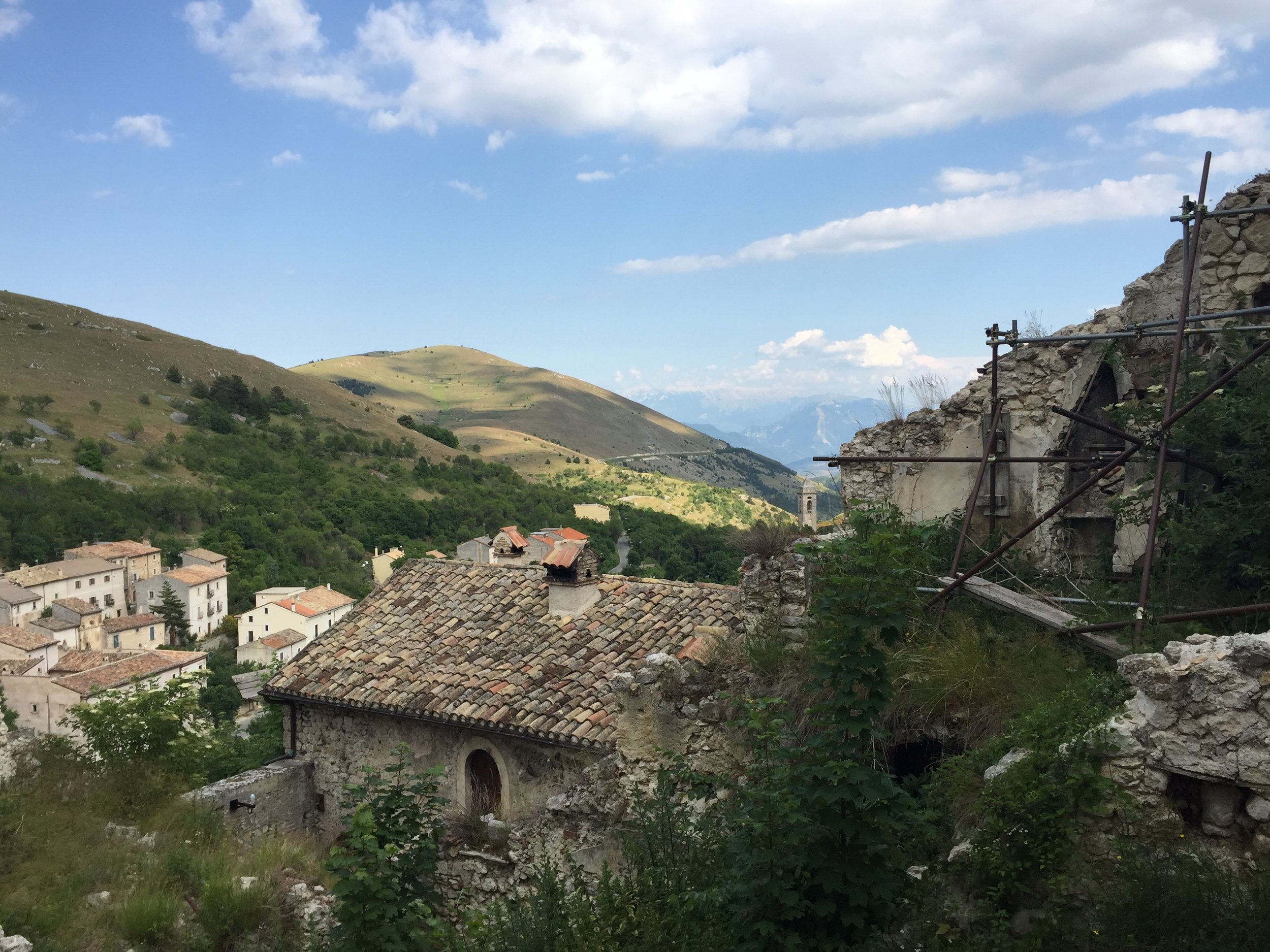
But even that is not reason enough. It is very simple: it is completely and truly authentic. There is simply nothing like it.
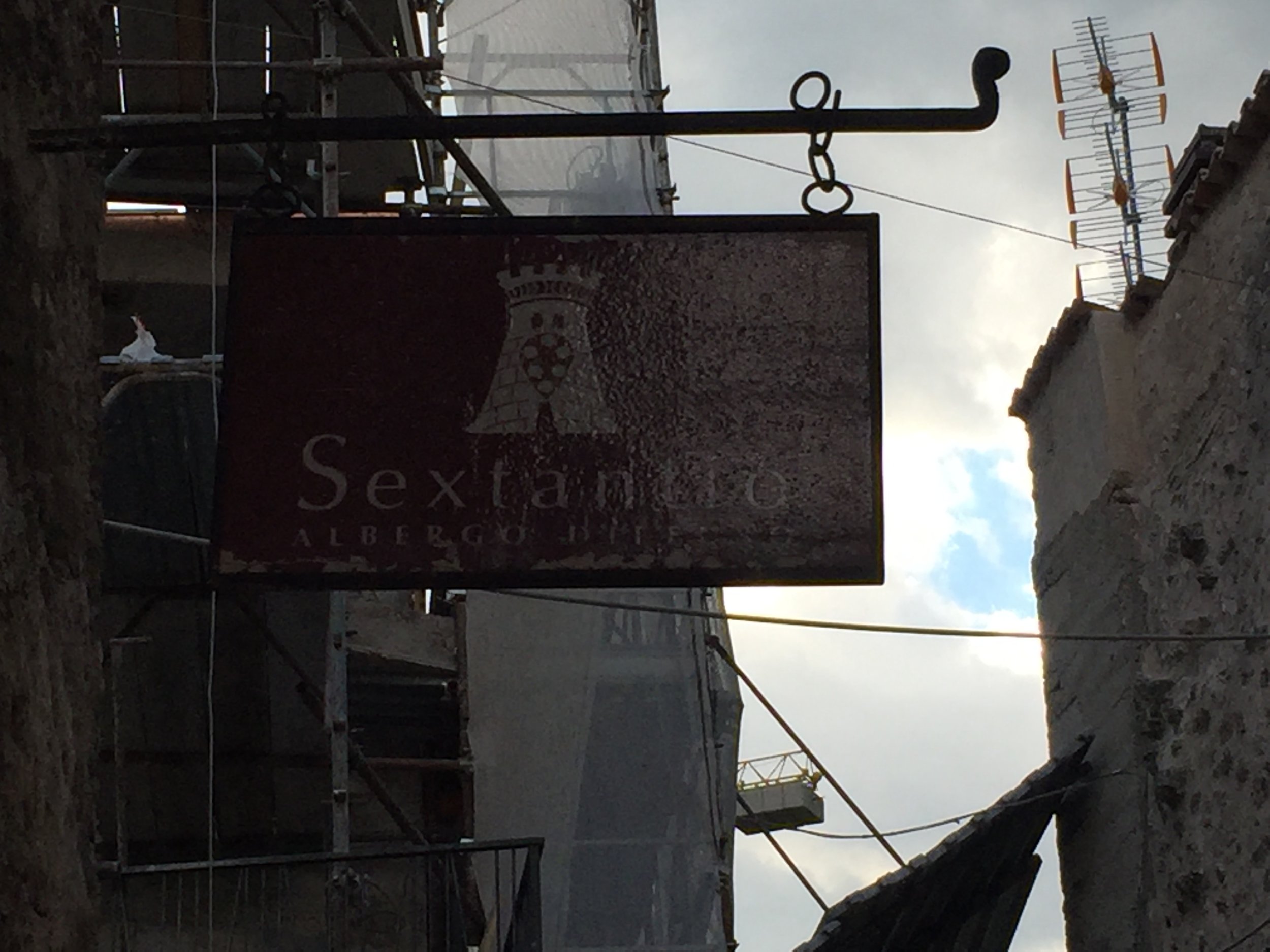
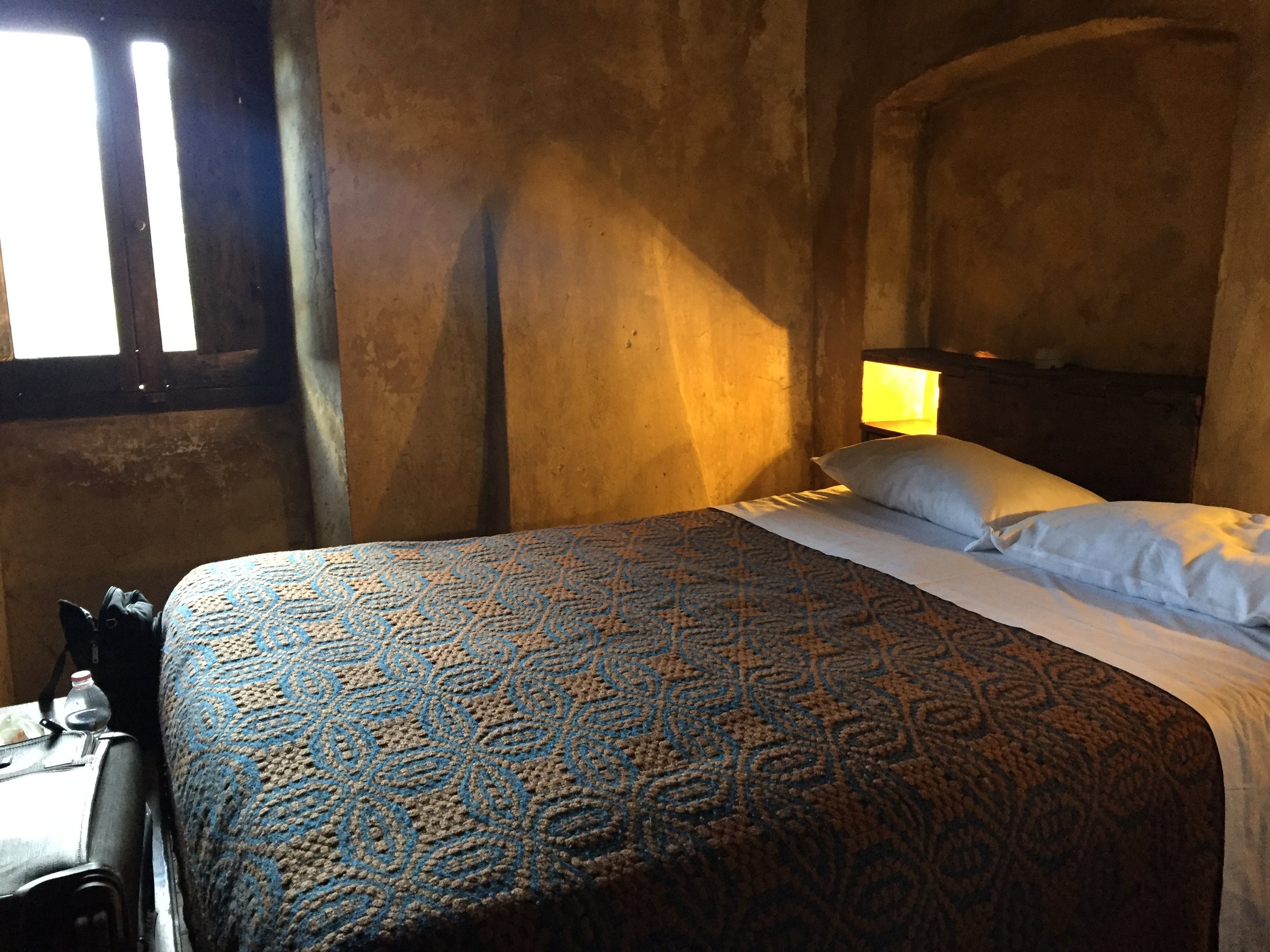
And the hotel, Sextantio, probably the dominant source of revenue, has rooms that are still the original stone cut rooms, creaky windows and low, soot colored ceilings. While the plumbing may be new, everything else was truly of its original age. It truly feels medieval. Everything bears the mark of a 1,000 years of man; the stones are worn to the angles of carts and processions, of workers and craftsman; the stairs of every building, though made of rough hewn stone, bear the grooves of every human who ever passed. All those feet, all those people, all those generations.

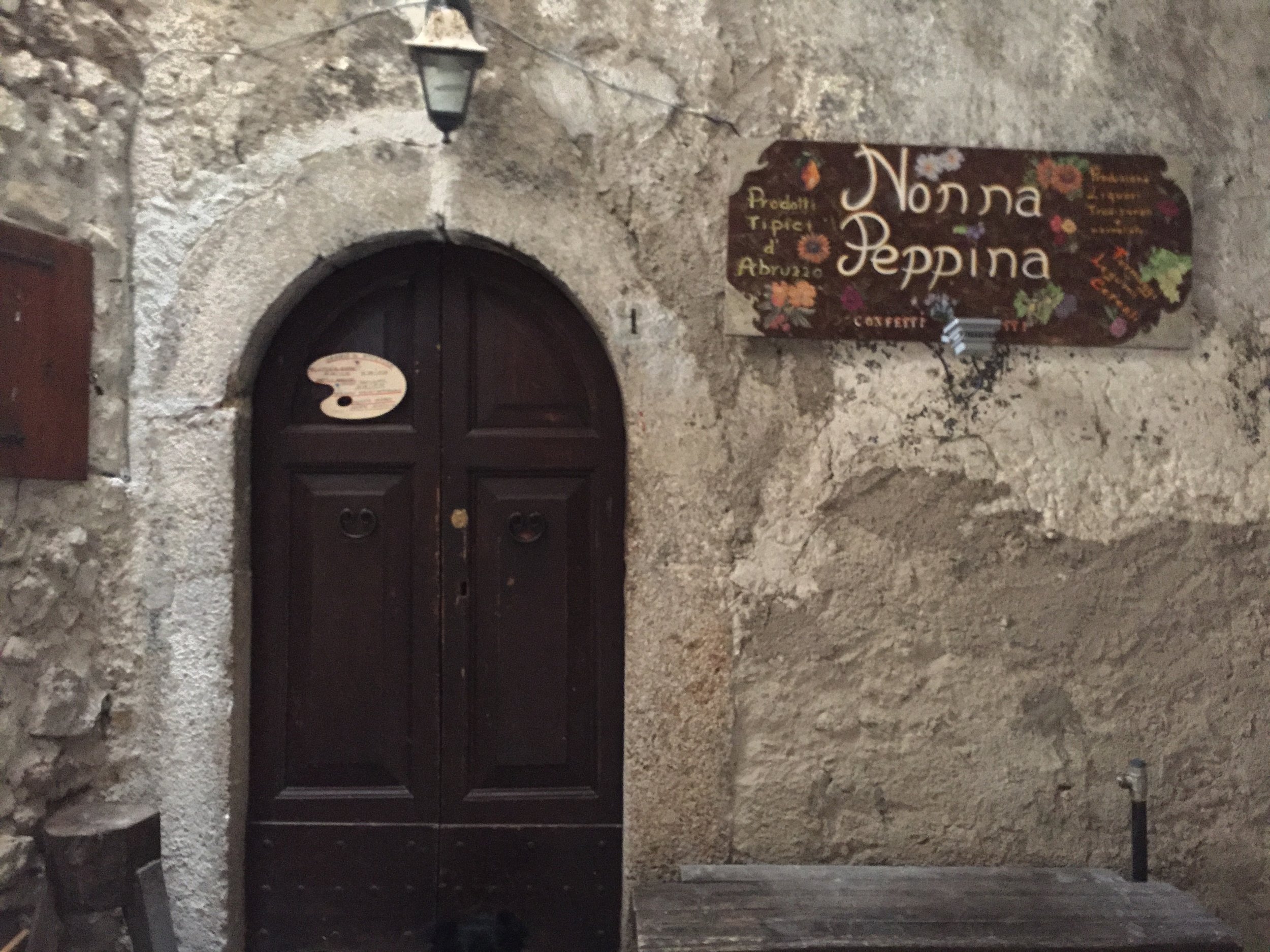
As you approach the town, like many, you have to park on the outskirts, usually a town square, or public area, and walk the rest of the way in. As all towns of 5his era are covered in cobblestone, dragging the suitcases with the bumpity-bump was annoying. But we got over it quickly as we passed through the first, semi-demolished arch. Although mid summer, the tiny passageways (they simply did not qualify as streets) were nearly empty. The buildings were atop one another and it felt immediately as though you had been transported to a true, intact medieval town. The signs were all tiny wooden plaques, hung on flimsy metal spikes embedded in the stone. The first archway bears the royal coast of the Medici.
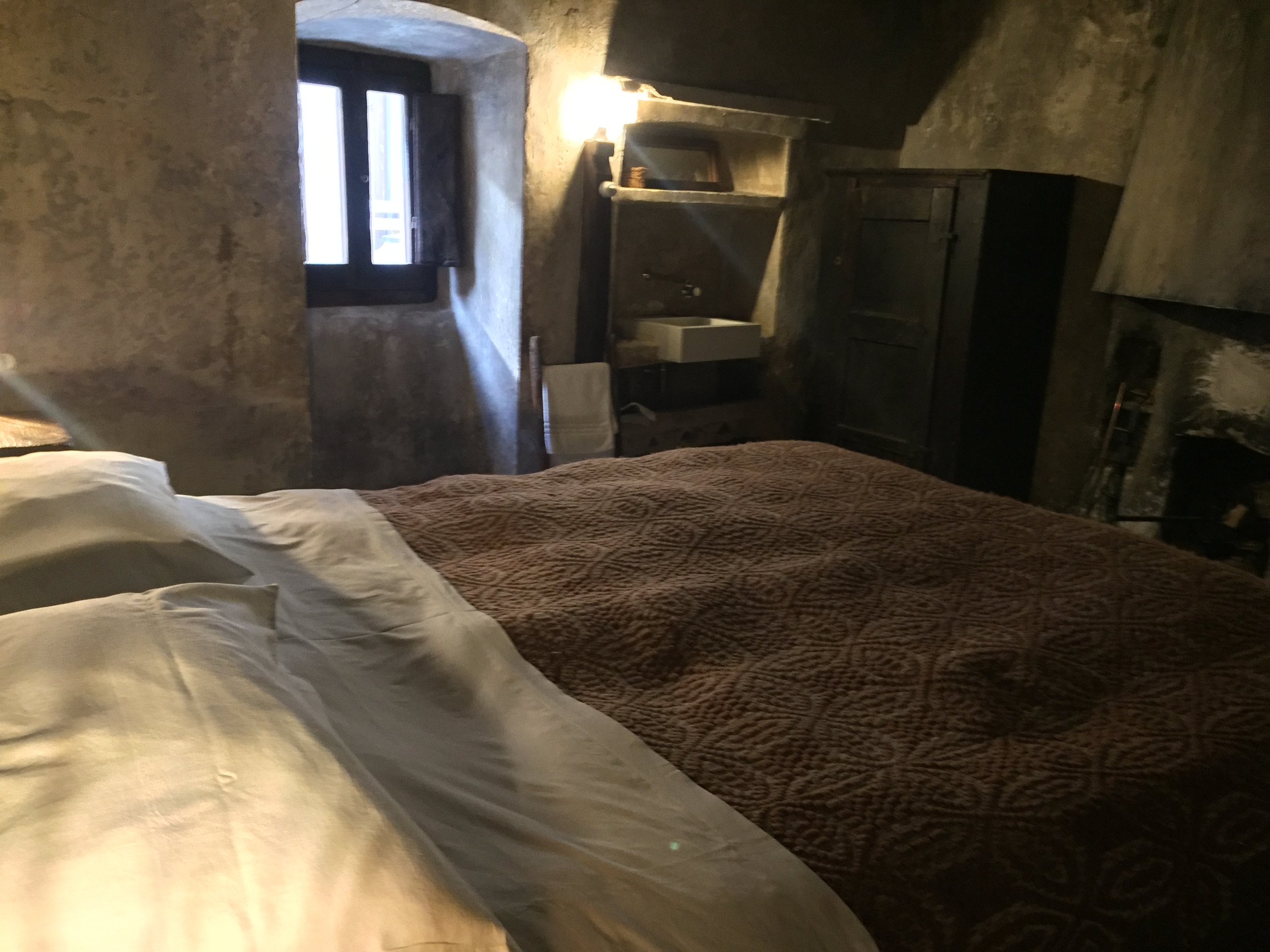


One of the first stops was the hotel — actually, as we soon learned, this was just the lobby. The hotel itself was spread throughout the entire town, in fragments of rooms redone, re wired and wedged between earthquake created ruins and building so old they simply had tumbled.

The vistas are dramatic, lush and green, forests of pine and bare patches of rock strewn land.

As a side note, the Castel Del Monte, may be known to you because it has appeared in several movies, and although driving to the top of the mountain on which it perched, overlooking a massive valley for approaching enemies, it is worth it.


 Outspoken Traveler
Leave a comment