
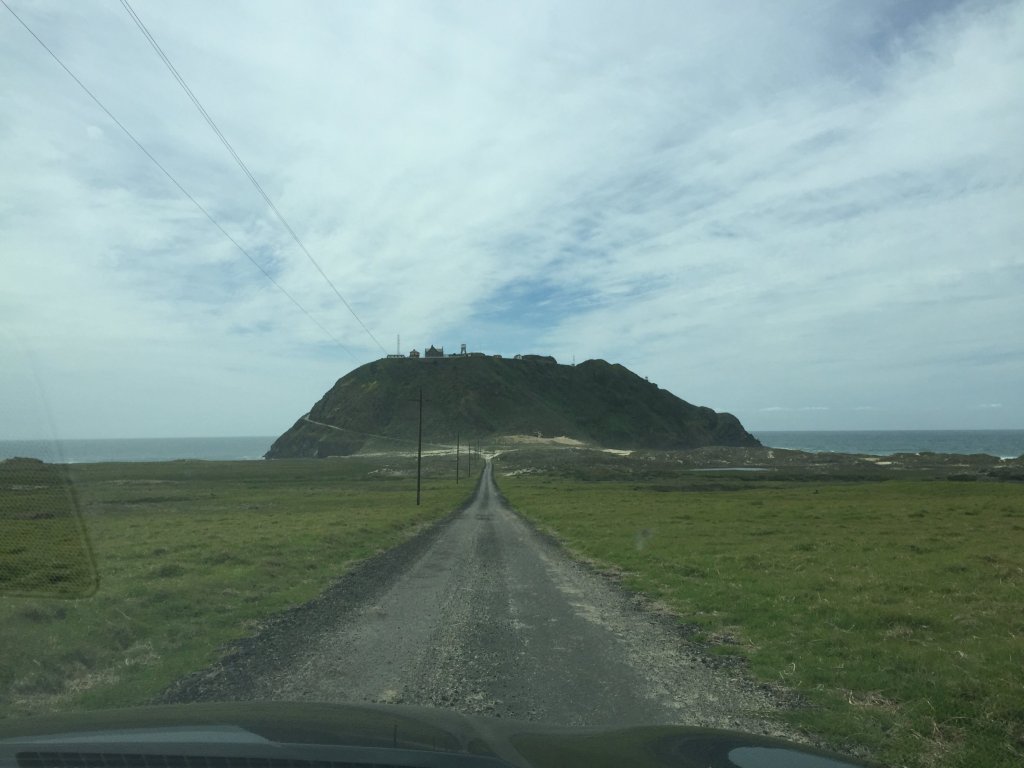

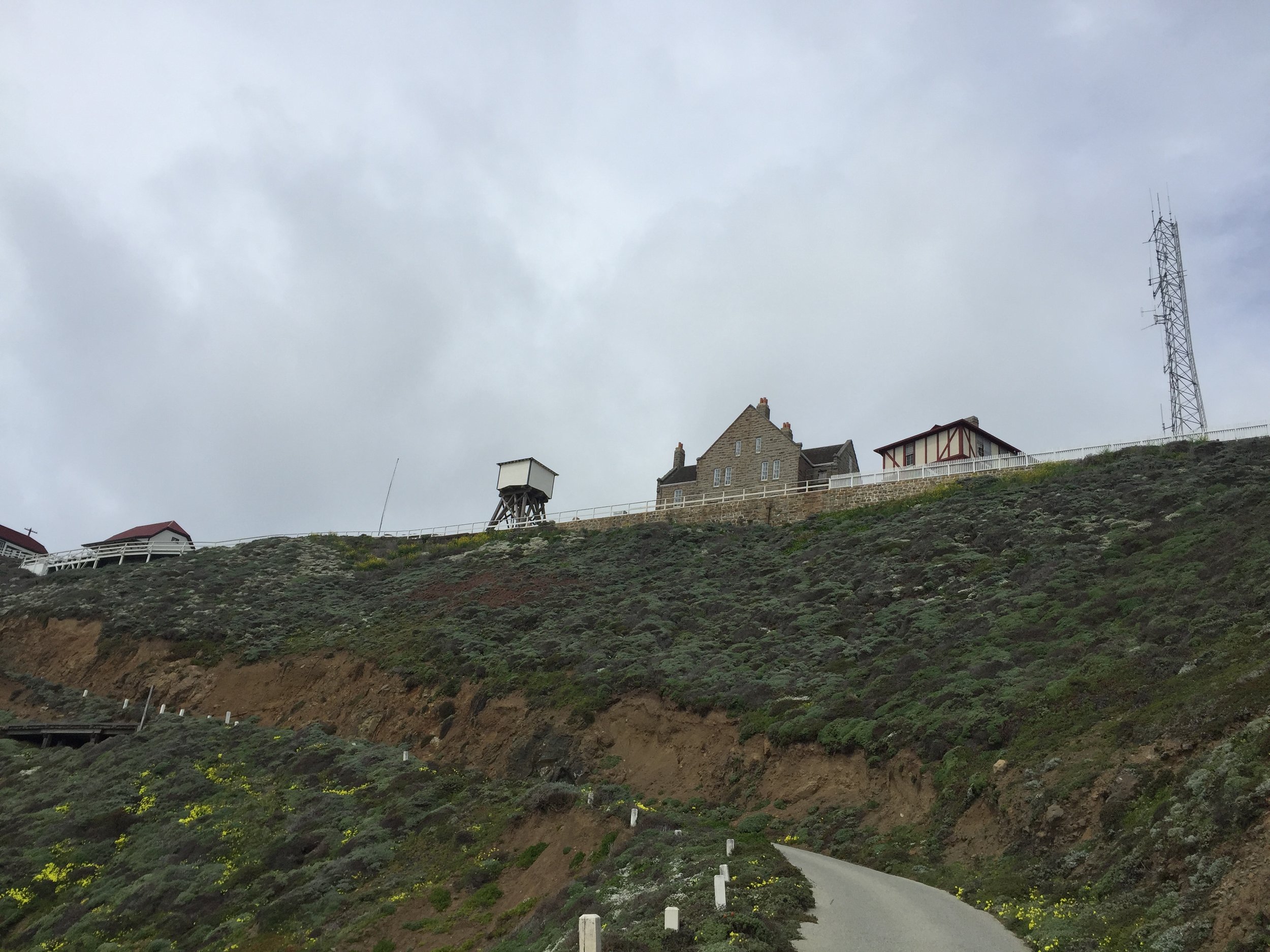
Point Sur lighthouse has been closed for decades, but unknown to me despite my many visits to Big Sur, the lighthouse was open for occasional visitors. Having driven past it for decades on our way to Big Sur, it seemed eerie and like some aberatino rising from the sea, with distant buildings dotting the peak.
When I say occasional tours, I mean occasional. Open a few days a week, and very limited hours, getting inside the cow fence to the long road and the steep, peculiar rock formation, was truly going back in time. Occasional in also the docent, who drives the long winding dirt road from the base of the rock to highway 1 and the cow gate, stops and slowly counts the cars and people — more than 7-10 and that is that. Luckily, there were only 7 of us; he waved his arms as we drove through the gate and made us follow him to the tiny parking lot with it’s johnny-on-the-spot, looking like last stop for a last stop.
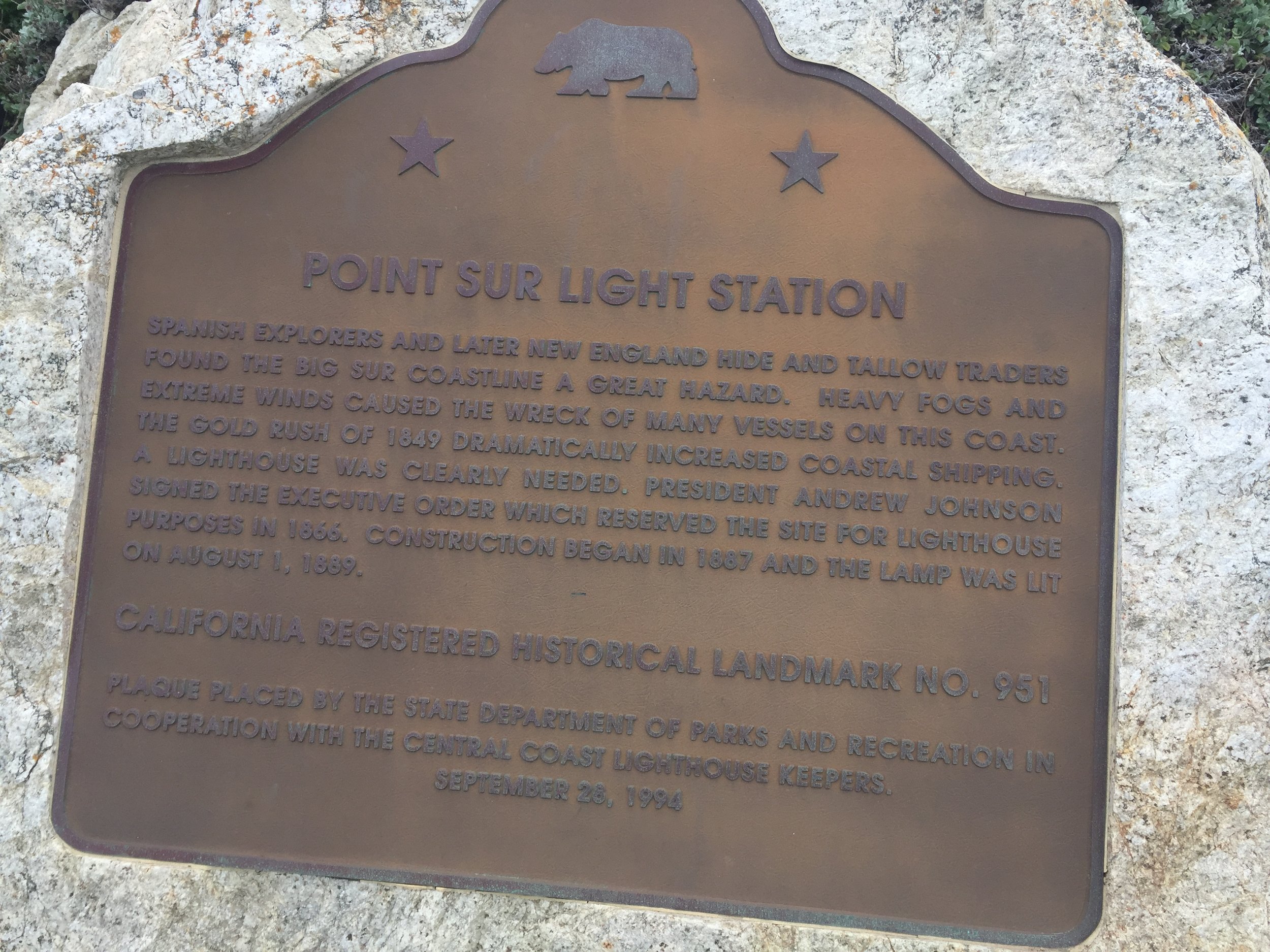
The docent, in his yellow rain slicker and official designation on a string hanging around his neck. He was a bit stern at first, especially about not going near the road’s edge to the sea because of erosion. The other two, clearly less senior docents, made it a slow walk up the long hill, pointing out nearly a dozen different forms of flower or vegetation and why it was unique or special the area.
The 1,000 foot climb was slow. And yes, we clung close to the rock wall as we saw that indeed, the road edge was crumbling and falling sharply to the sea.
You have to actually Big Sur to drove towards Carmel, through the grassy flat cow pastures that ended at the sea. Black Angus dotted the landscape of vibrant green. And unlike the pure, overwhelming natural force of Big Sur, the lighthouse rock was a talk, lonely, isolated place…and if haunted, it was so by history; the several small buildings housed exhibits to its history.

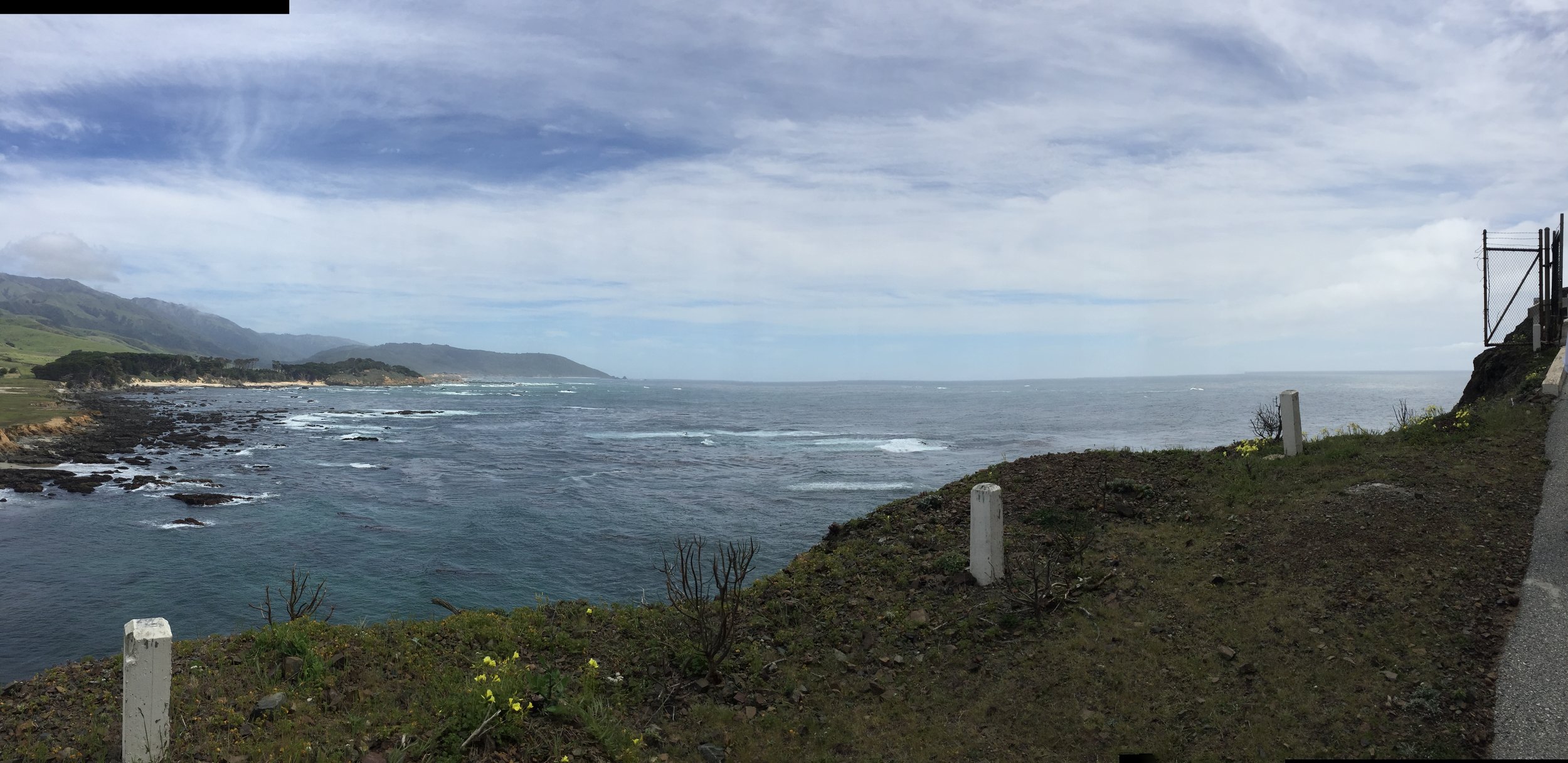
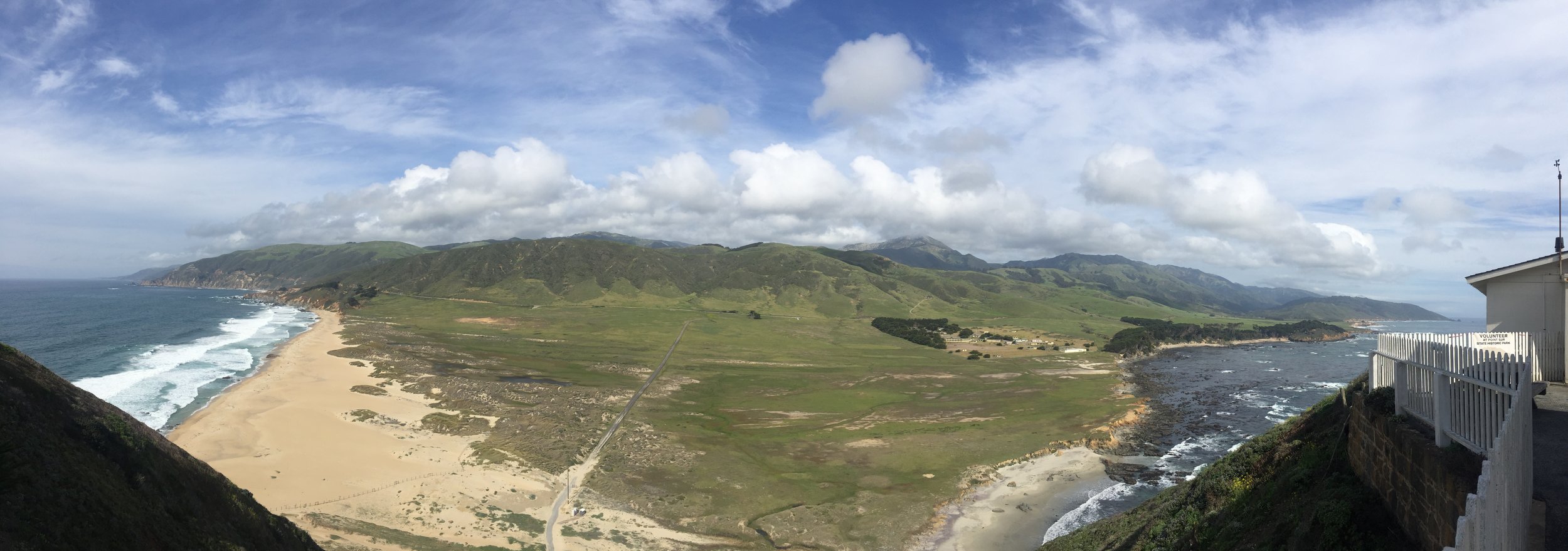

The Point Sur Lightstation originally contained a first-order (the largest) Fresnel lens. The lens was in use until the 1970s when it was replaced by a modern aero beacon mounted on the roof of the fog signal room. The lens remained in the lighthouse tower until 1978, when it was disassembled and transported to the Allen Knight Maritime Museum of Monterey for display. The aero beacon was later moved into the lighthouse tower.
The Fresnel lens was invented by Augustin Jean Fresnel, a French physicist. Fresnel’s invention revolutionized lighthouses world-wide. Within a short time his lenses were accepted as the best available. Many are still in use today.
The first-order lens apparatus that was once a part of Point Sur is 18 feet tall, with the optical portion being almost eight feet tall and over six feet in diameter. The optic alone weighs 4,330 pounds. It consists of 16 panels of prisms, each with a “bullseye” in the center surrounded by concentric rings of prismatic glass. Each ring projects a short distance beyond the previous one. Additional reflecting prisms are located above and below the center. As the cylinder of prisms turns, each panel “collects” and “bends” light into a single focused beam. Light from Point Sur’s Fresnel lens was visible for 23 nautical miles.
Thank you, Wikipedia.
The final comment goes to the main house, where the families who lived on the rock spent their daily lives. The entire house was a well-crafted homage to the 1940-1950’s…so many every day collectibles. Every room a still image. Despite the howling winds outside, you expected to turn a corner and bump into the family member running off to the kitchen for dinner.


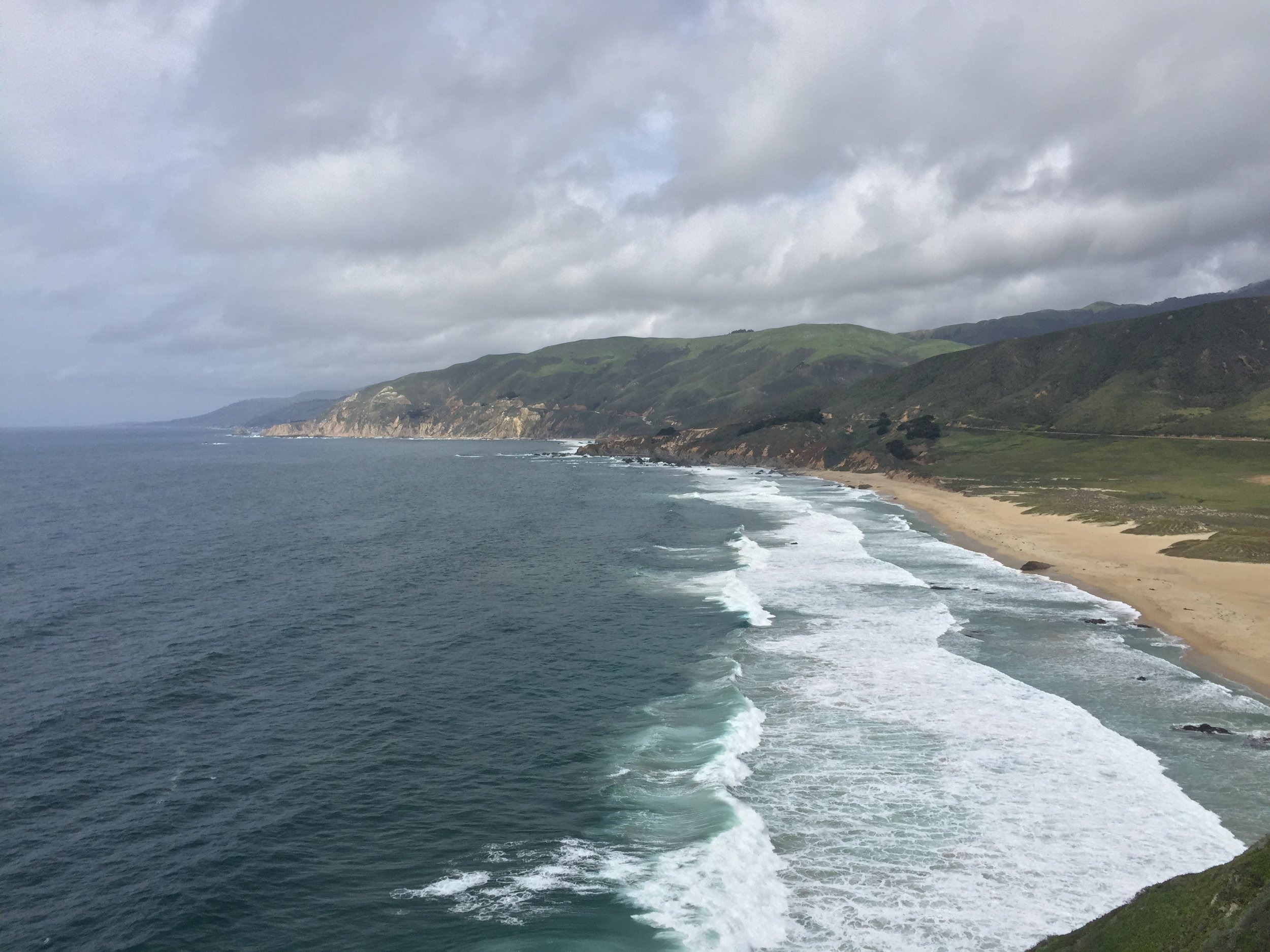

Visiting here is not really part of the Big Sur experience of today, with its magical Redwood forests, little nook-and-cranny places, seascapes and cliffs. This is a trip through a part of nautical history and how dangerous it was to sail the West Coast.
#Bigsurcalifornia
#Californiatourism
#lighthouses
 Outspoken Traveler
Leave a comment