
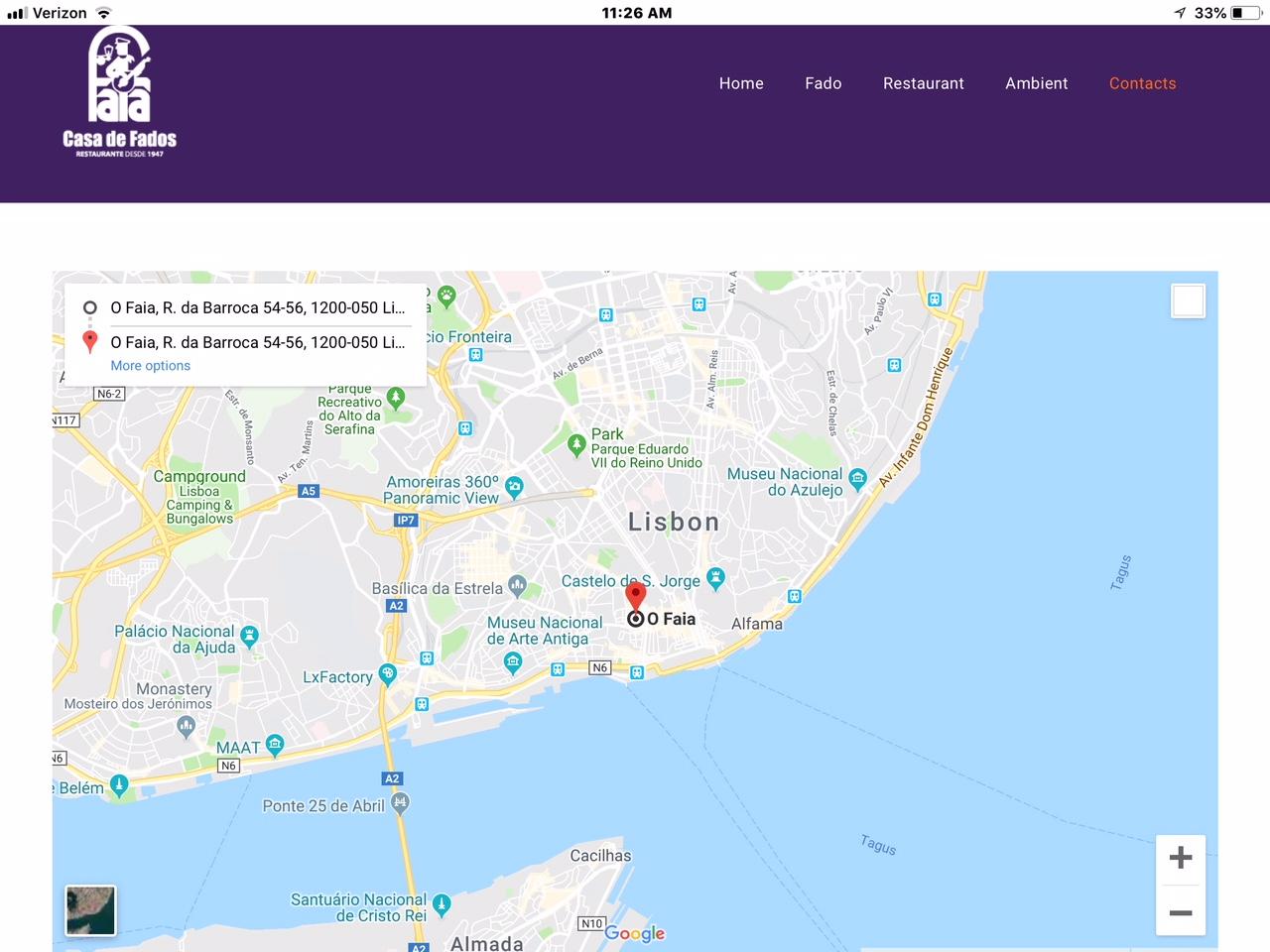
Fado and Lisbon. To see it, to embrace it is to get past language and cultural barriers to the shared human experience of a culture and its pain. Created around 1800, history has the city and music inextricably linked as the expression of the fisherman’s soul at the soul of this great capital. We researched several venues, including one near the cathedral of Se, we saw on a poster taped to a light pole.
Finally, we asked the (amazing) concierge, Hugo, at the Lapa Palace and our culinary guide from Grape, Olive, Pig. Hugo won out. Faia it was. It was like flipping a coin. And what a great experience. From the moment we walked down the narrow stairs to the basement, nearly overwhelmed by the closeness, the arched low ceilings, the noise and crowds already filling the room.
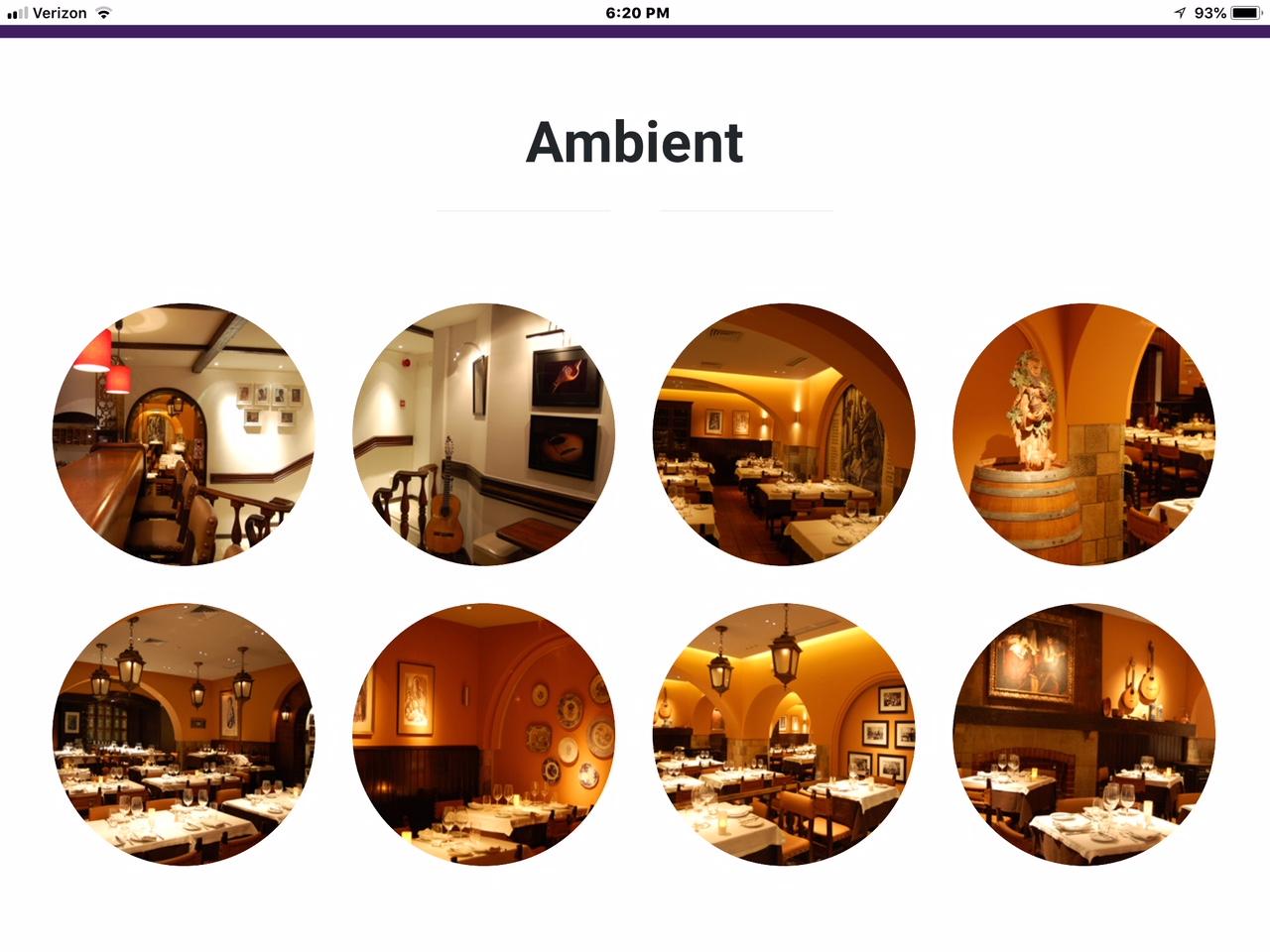
But a man stepped from out of the controlled chaos, shook our hands and placed his trained eye on the room. “Hugo sent you,” he said with a smile as he seated us. His blue jacket fit him with great style, a modern touch of class to a venue founded in 1947. We learned later he was the son of the owner and was a gentleman, coming to our table to even take our order, escorting at the end, back into the bustling night to wait for a cab.
The show included dinner, slightly rushed so the plates and silver do not clash with the music.
Calling Fado “the blues of Lisbon” as I have read is a very limiting analogy. Yes, they are outstanding originals of their respective cultures, but beyond that, forget it. Fado is…of the soul saddened by loss, remorse, love. The Blues are complex, but can also be joyful and upbeat…not so Fado.
Some good tidbits from Wikipedia:
-
Fado’s roots can be traced back to the early 1800’s and originated in Portugal, but only appeared in Lisbon after 1830.
-
The word Fado comes from the Latin word fatum, from which the English word fate also comes from.
-
Fado was added to UNESCO’s Intangible Cultural Heritage on November 27, 2011.
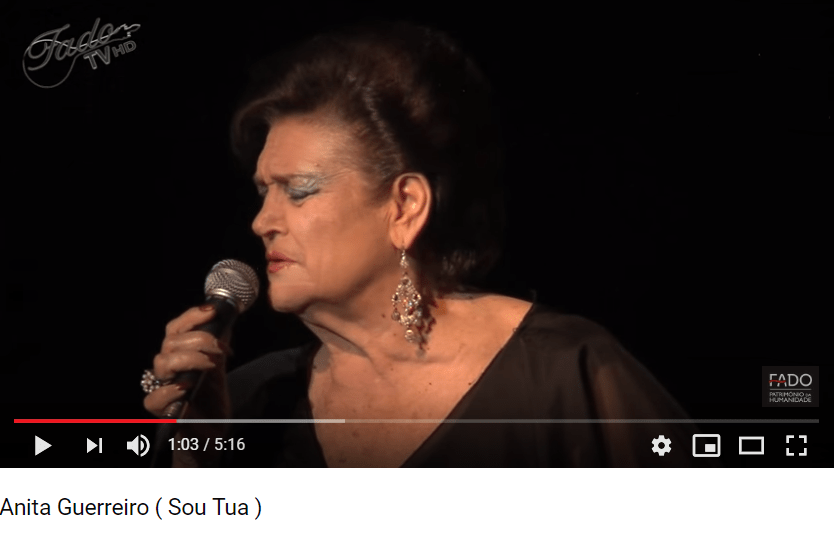
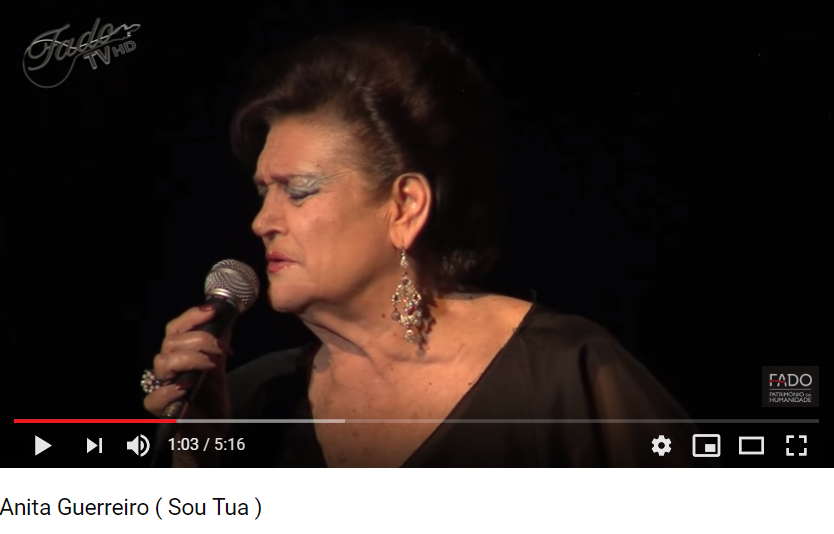
The venue was very rigorous about taking film or video. Besides, somehow it seemed tacky and almost disrespectful. So, this post will show only photos from O Faia web site photos and a YouTube clip of one singer of the three we heard, a true classic of the decades, Anita Guerreiro, who stole the show and the night.
Waiting for the performance, the dinner was quite good. Yes, more baccala, their love of cod pervasive but not uniform; although every preparation is different. The shrimp in garlic sauce was so marinated and strong as to take over the palette in a delightful way.
As the plates cleared, two men took chairs in the restaurant center, one with a guitar the other with a what looked like a mandolin. There were three singers who each sang for about twenty minutes, two men bookending a woman. The woman, Anita, was in her early 80’s and a legend; this was a form of song that transcended language…one does not need a translation for matters of the heart. While the men were rough, sad, hewn from the rocky path of the heart and soul, she was smooth, but jarring, moody but sad — her emotions were her words.
Anita…she sang, she moved the audience, she lowered and lifted her chin with the lilt and tone, the push and inhaling of words and remorse. I almost cried at her songs, not quite sure why. The words and husky tones went past language and just tugged at my soul.
When she was done, we made our move to leave before the crowd. The owners son personally ordered a cab, and as we waited, Anita sat at the bar. “She is so talented, yet insecure because if her age…but when she starts…” and he waved his hand and let the thought end there, we all shared the realization that what we had seen was beyond mere words. We decided to introduce ourselves, her not knowing English, us not knowing Portuguese, but she felt the praise and honor we communicated.
Capping off his sense of pride and class, the owners son escorted us back to the street to wait for the cab, leaving behind the crowded restaurant. He spoke English and we were incredibly thankful of his generosity, attention — and still somewhat taken aback by the music.
If you go to Lisbon — and frankly, I’d go back before any of a half-dozen other European capitals — make time for an evening at O Faia in the Barrio Alto district.
Rua da Barroca, 54-56
Bairro Alto 1200-050 Lisboa
Tlf: (+351) 21 342 67 42
Fax: (+351) 21 342 19 23
Email: info@ofaia.com
#lisbonportugal #portugesetourism #fado #soulfulmusic #lisbon #ofaia

 Outspoken Traveler
Leave a comment