

New Year’s Day on the Danube Express:
After brunch, which we were taken to after a horse drawn carriage ride through Vienna, we boarded the usual large tour bus. Andrea, the excellent tour guide for the trip, set our expectations and handed the microphone over to our guide through the Cistercian Abbey Stift Heiligenkreuz, translated “Holy Cross”, founded in 1133 a.d.
Abbeys, monasteries, holy European residences proliferate across the continent. This was unique is several amazing, — haunting, ancient, and practical, ways.
These monks, living in silence, were a splinter group on Benedictine monks, who during the Catholic Church scandals (the “Indulgence” — where they went through Europe offering people to pay the Church to absolve them of sin) this order broke off to return to a more pure form of Christianity that was about piety, hard work and thus, serve God and Christ. “Pray and work,” was their core mission.
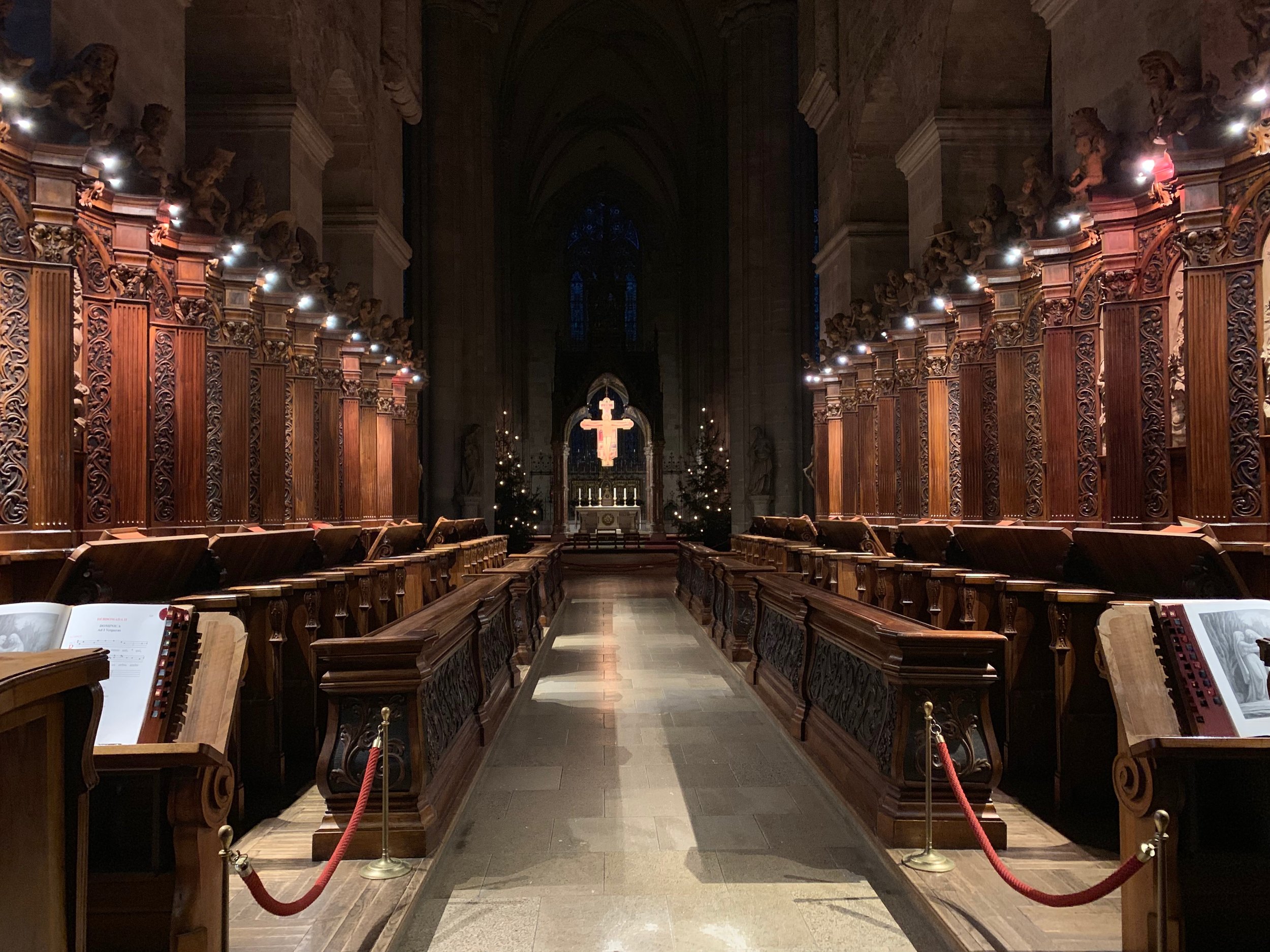
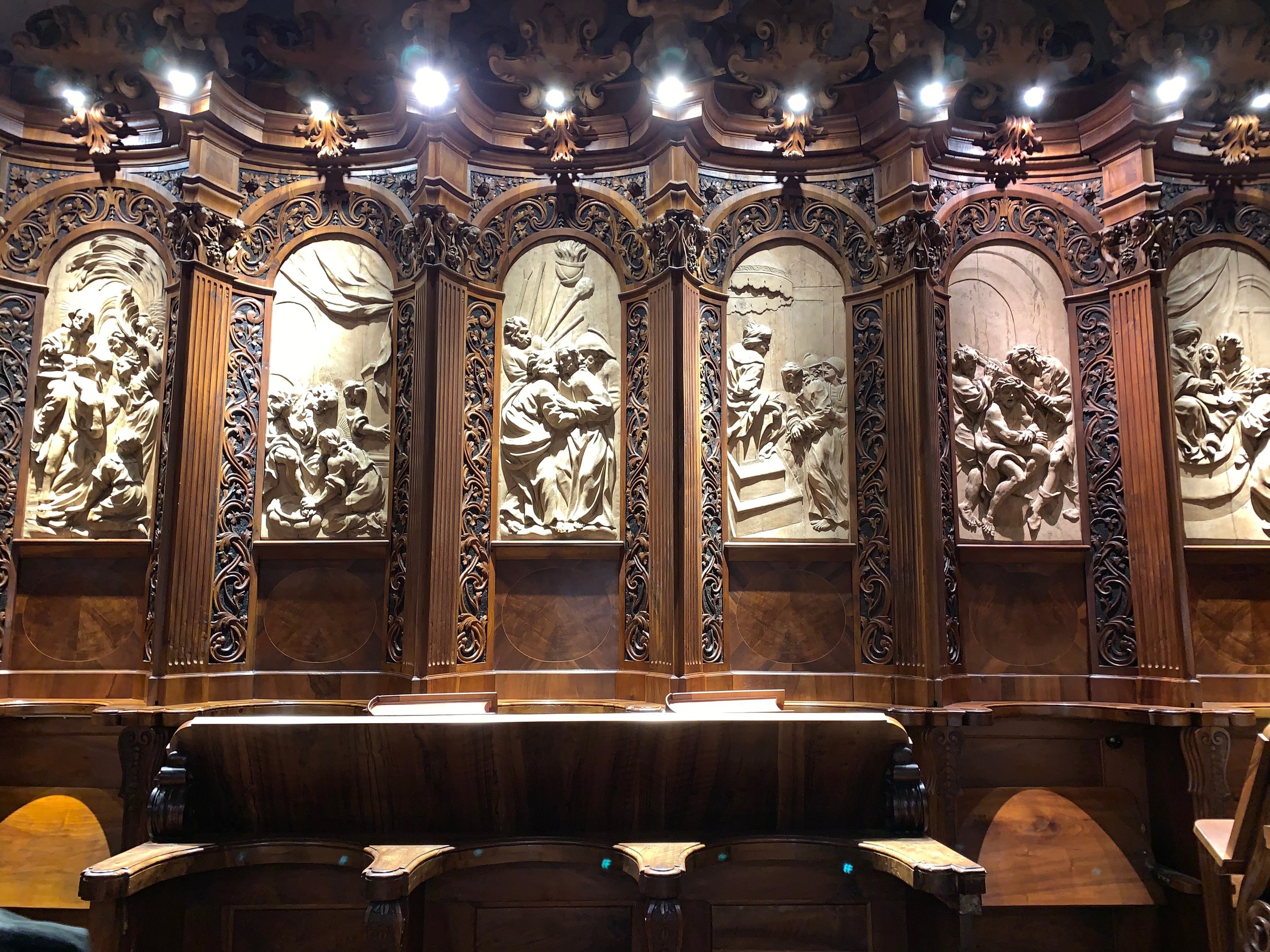
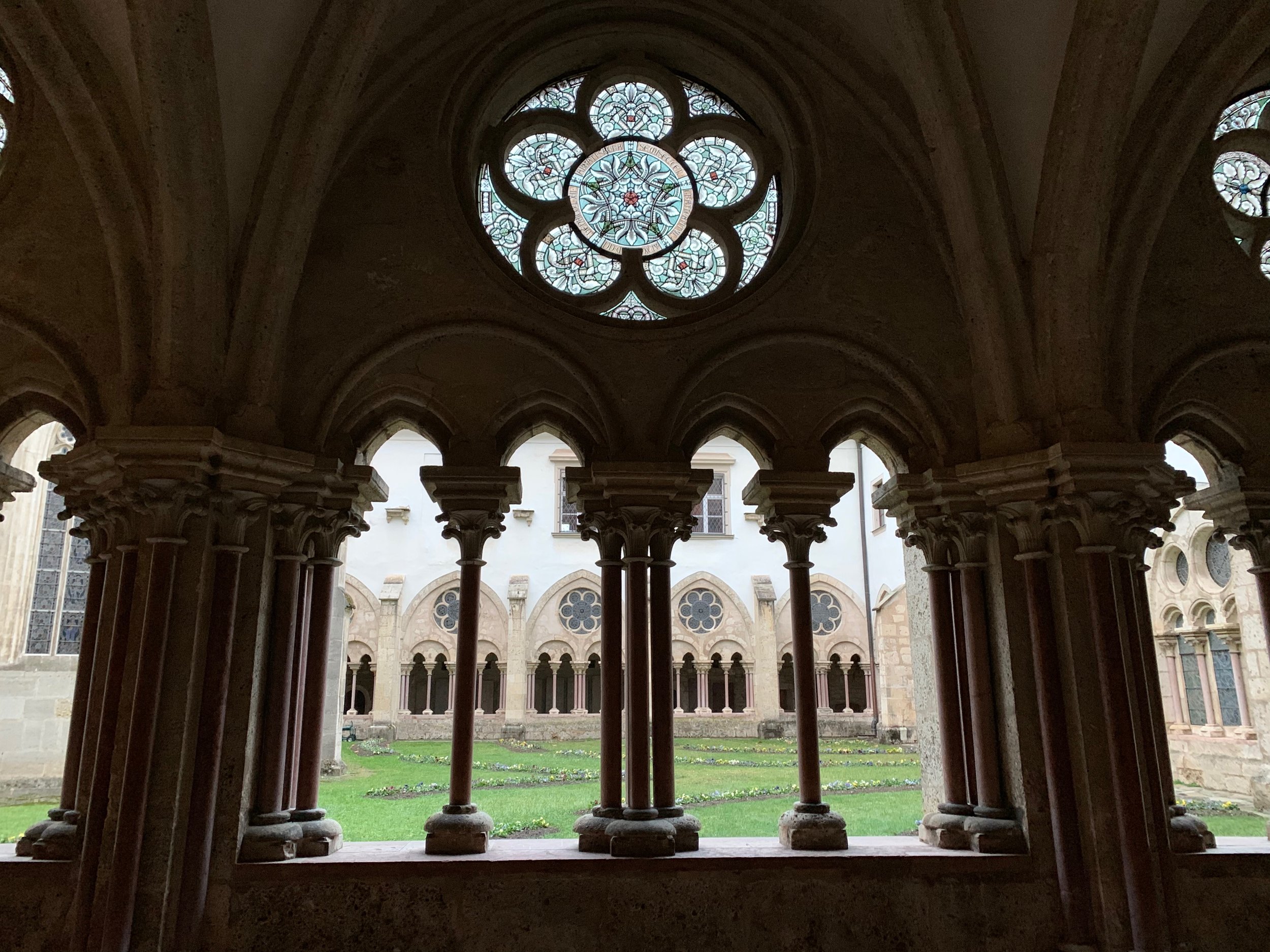
Let’s start In the present. First, it is oldest, active monastery in the world. Going back to 1133 a.d., its most recent, 17th century design is gothic — vaulted ceilings, dark stained wood, long hallways and spare of adornment; in fact, one unusual detail we noticed was that in the center court area, much if the stained glass was in black and white, devoid of the cascade of rich colors so ubiquitous in other churches, cathedrals, monasteries. The master artist, Giovanni Giuliani, joined the monastery as he shaped its final design in 1683; the mark of his genius is felt in nearly every gothic detail, especially the sculpture.
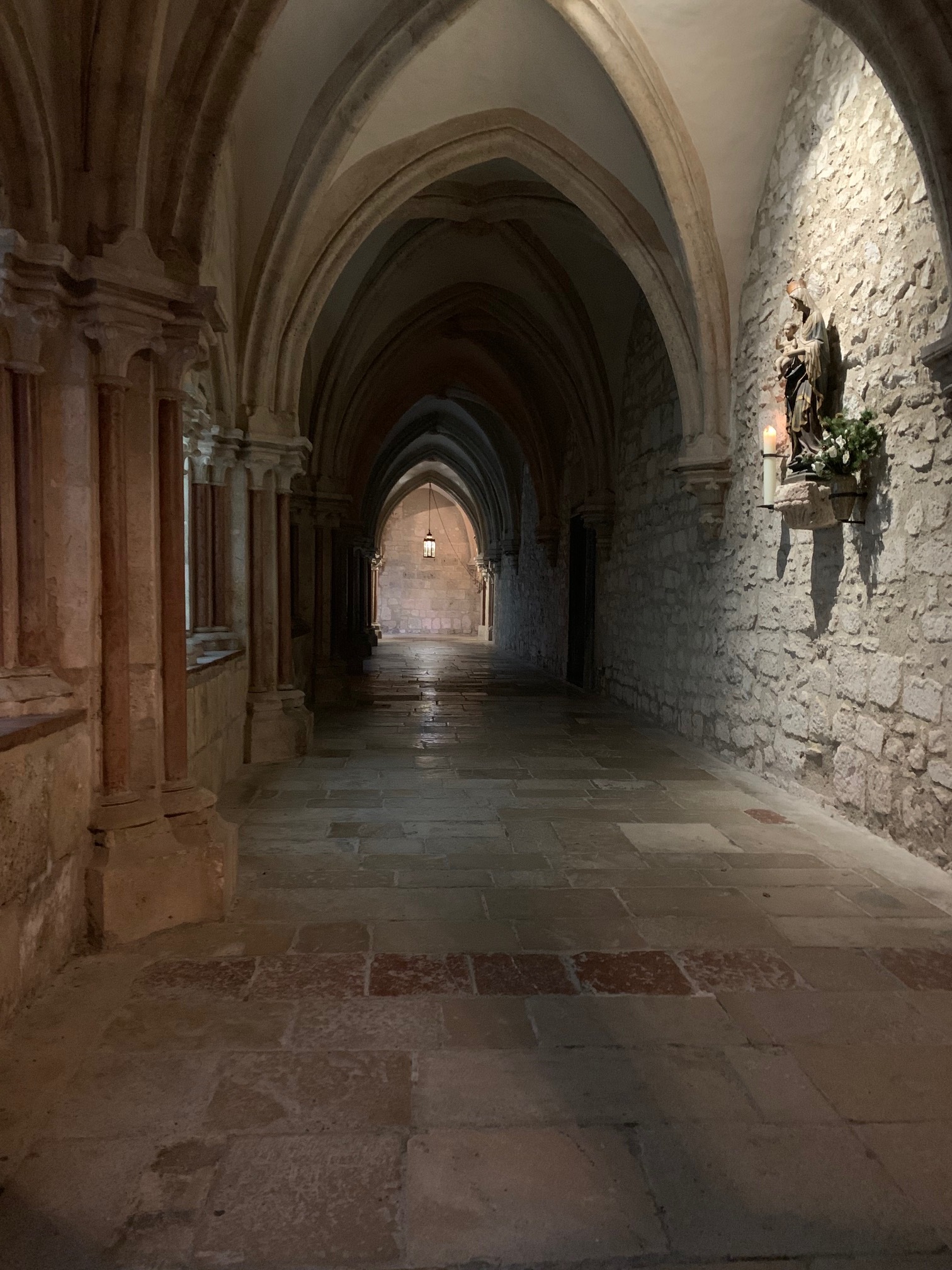
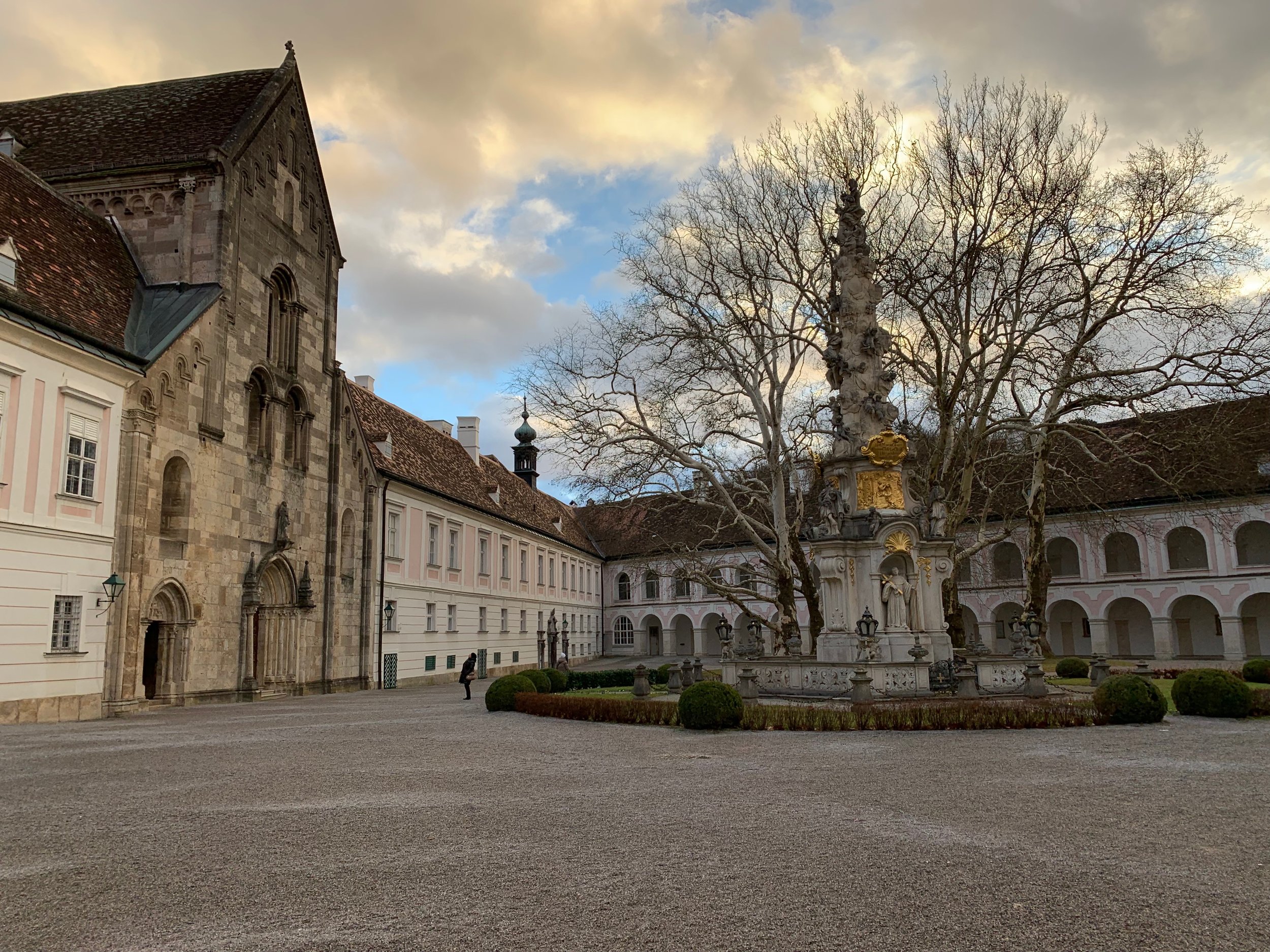
This is a very large monastery, nestled in the woods outside Vienna (20-30 minutes from the city center). We came upon it in winter, an hour from sunset. This only reinforced the gothic nature of the architecture and the grim, spare nature of the design. In the center of a large open court was a very old, enormous plane tree near an ornate column.
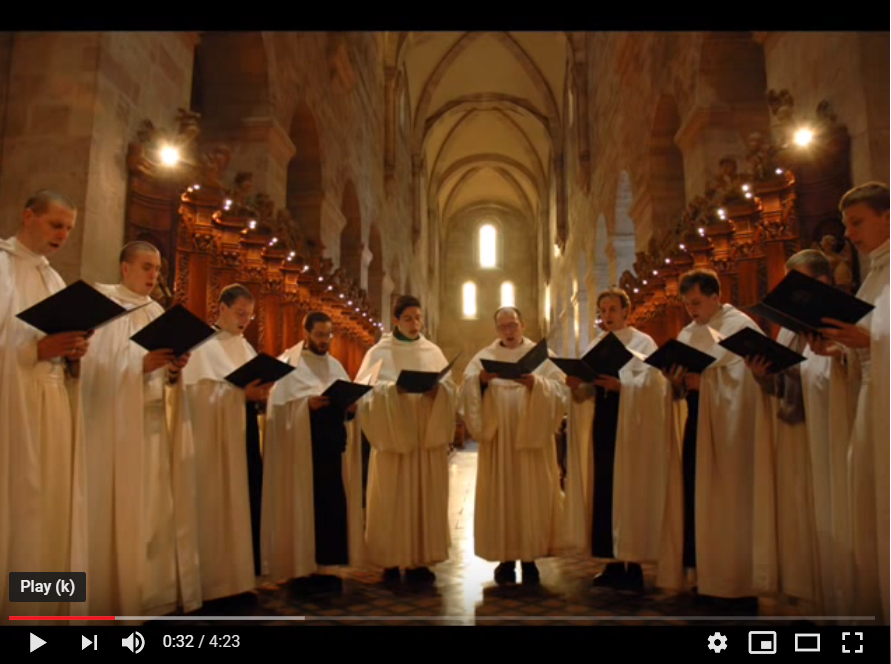
To show its relevance in present times, unlike so many religious orders, its has grown, and several years ago, the monks produced a CD of European Benedictine monks, those dedicated to silent contemplation but also owning a rich heritage of medieval music, singing the deeply mystical Gregorian chants, which became quite popular. Eerie, evocative, even the hardhearted or the atheist would find it difficult not to be moved by this song in Latin…more tha n a song it is a sound. If you have never experienced Gregorian chants, do so, it is moving, uplifting, slightly grim with its deep male tones and very spiritual. Every Sunday at 9:30 a.m. they sing Gregorian chants. We are sorry we missed this. We saw such an event once by accident in Provence, France, and I was moved to tears by the sheer power and lift to the high rafters of the male chorus.

Having visited many European monasteries, conveying the atmosphere of a such an ancient religious holy place, with so many centuries, so many stories and lives lost, so much darkness and dogma, you could really feel the weight of religious piety and its sacrifice as you walked through the dark stone halls.
In fact, while the photos may tell a better tale, certain themes rise above others. First, death. Given the average age of death in the majority of centuries preceding this one was 25, for these monks their reality was: death is inevitable yet it only it the gateway to a new and better life in Heaven. Such it is in so many religions. The lure of the afterlife frames the actions of the living.
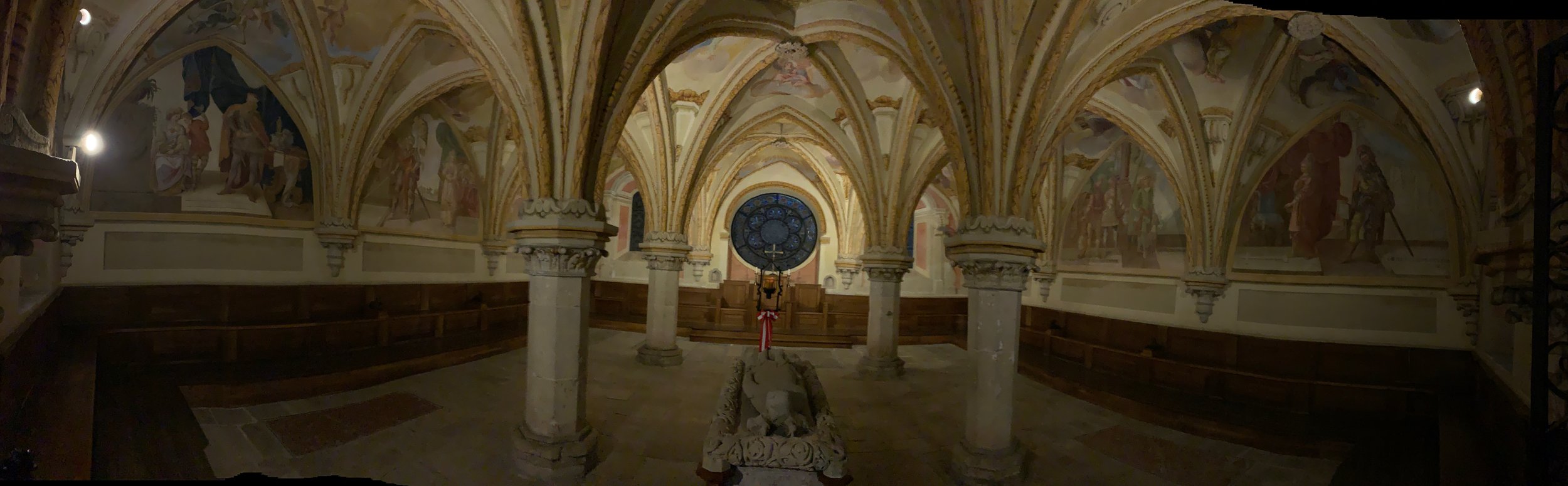
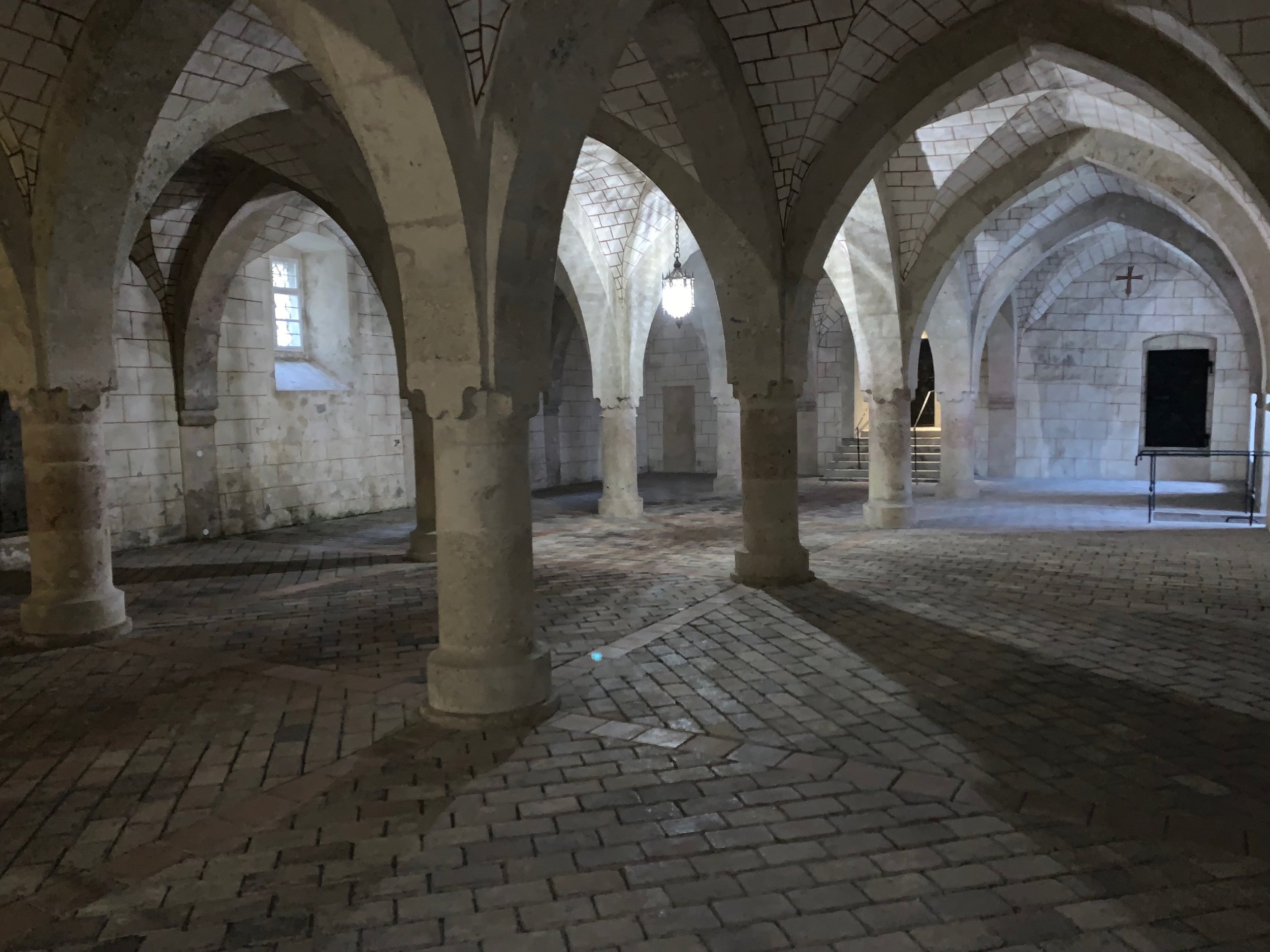
Another? The beauty of every detail — the black-and-white stained glass, the moss-laden washing fountain, the crypt, the room in which they worked, the pews of the church, on and on…
Last, was the silence…even walking through on a guided tour, silence seemed to saturate the air. Our small group seemed swallowed up in the austere gothic atmosphere. The silence is what still lingers, an aura of it hangs over the memory of this visit.




 Outspoken Traveler
Leave a comment