

Day 4: a long drive to one of Italy’s great caves, Grotto Di Stiffe; descending down from the foothills and farms and onto SP50 highway — not a long ride, but a bit hard to locate due to lack of signage and the fact that the cave is in the mountains, which is a bit remote. Then again, much of Abruzzo feels remote, certainly to English-speaking tourists, which is a major part if its charm that in turn enhances its beauty.
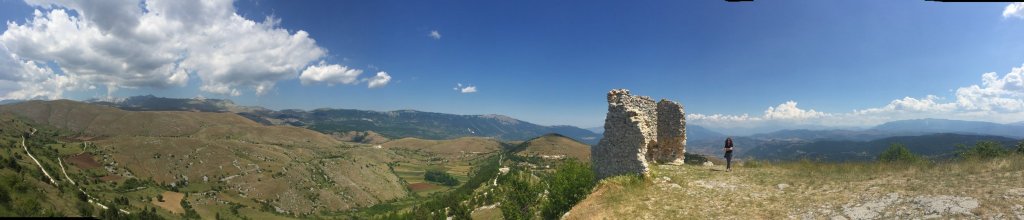
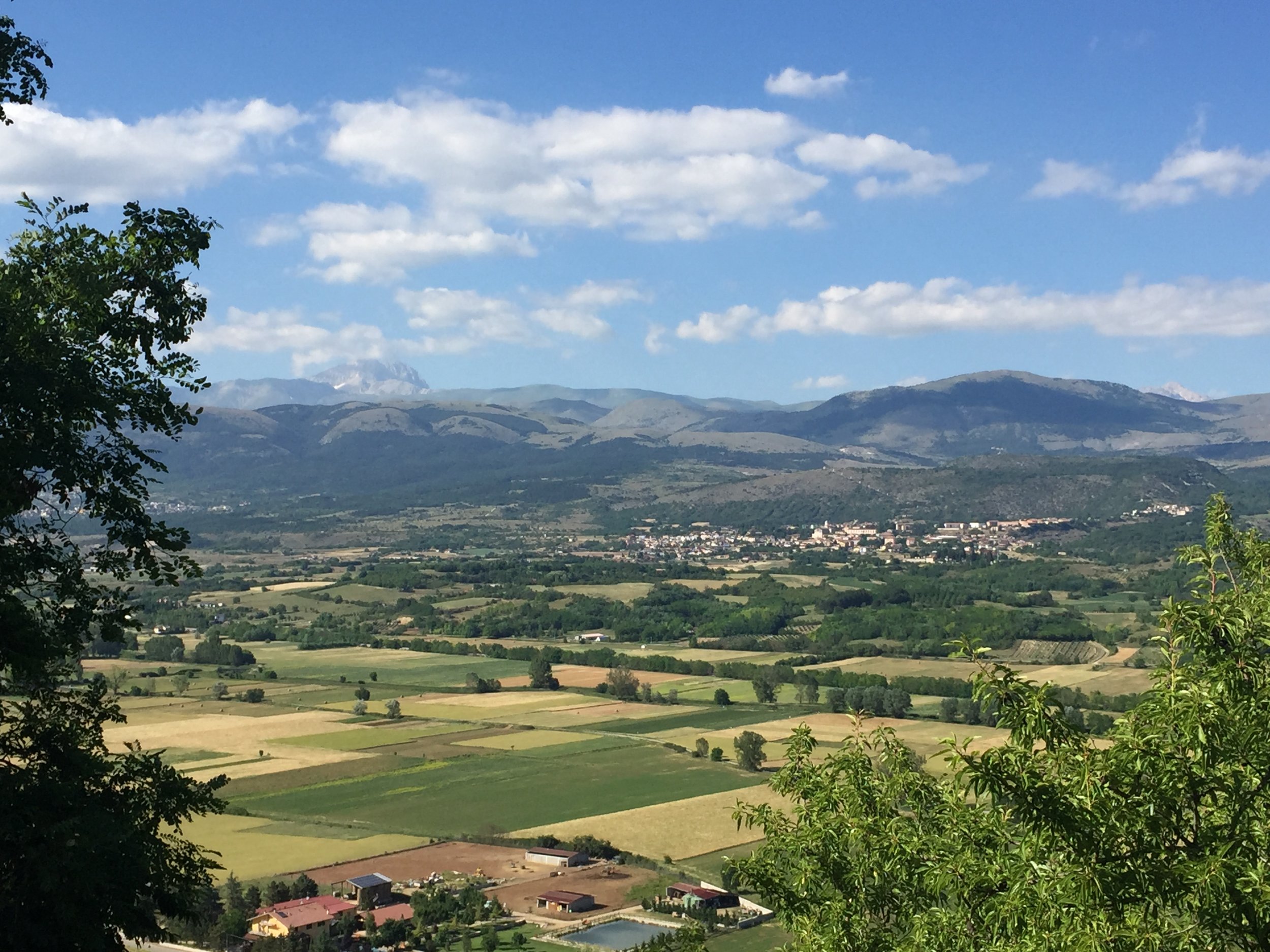
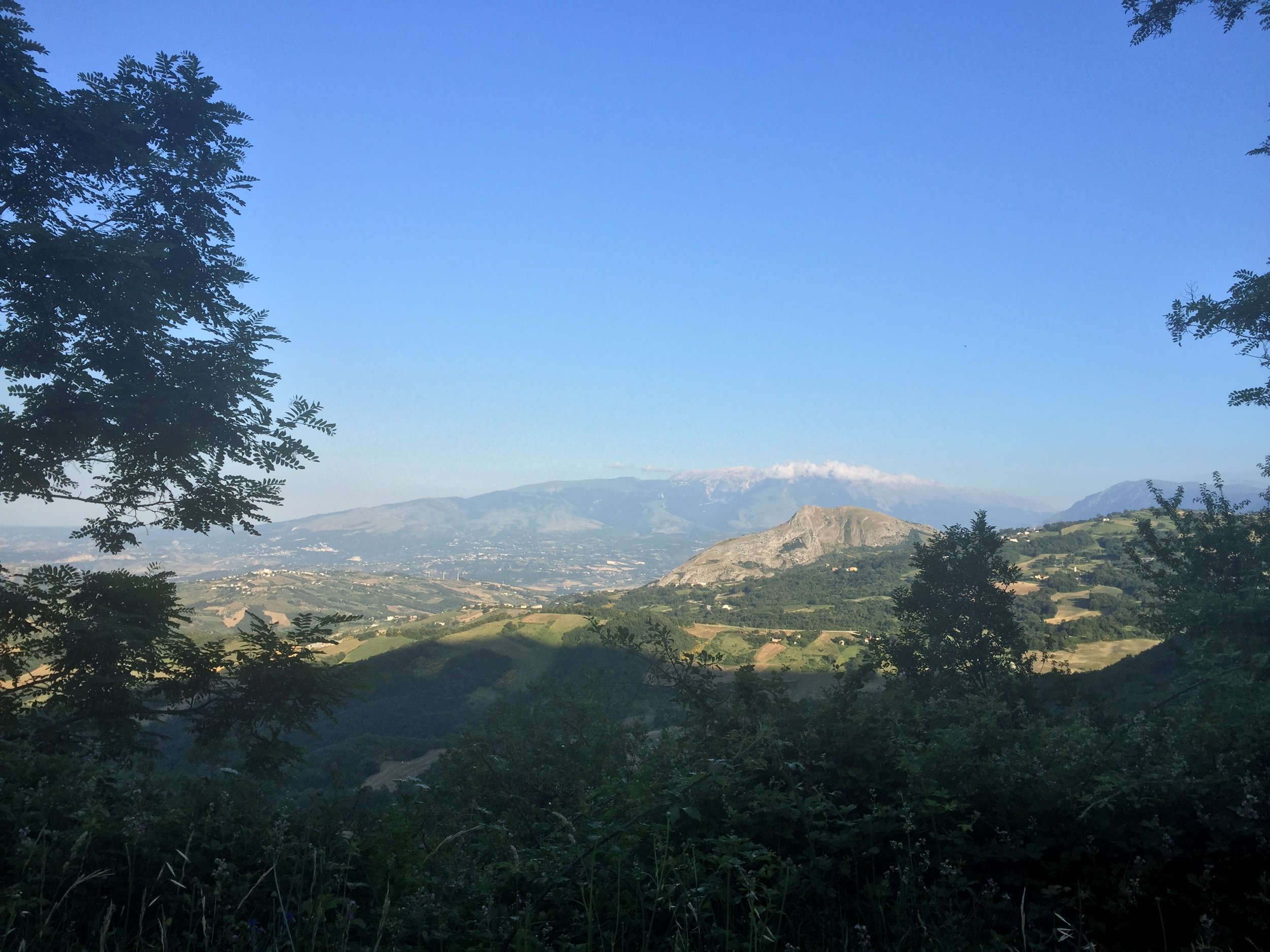
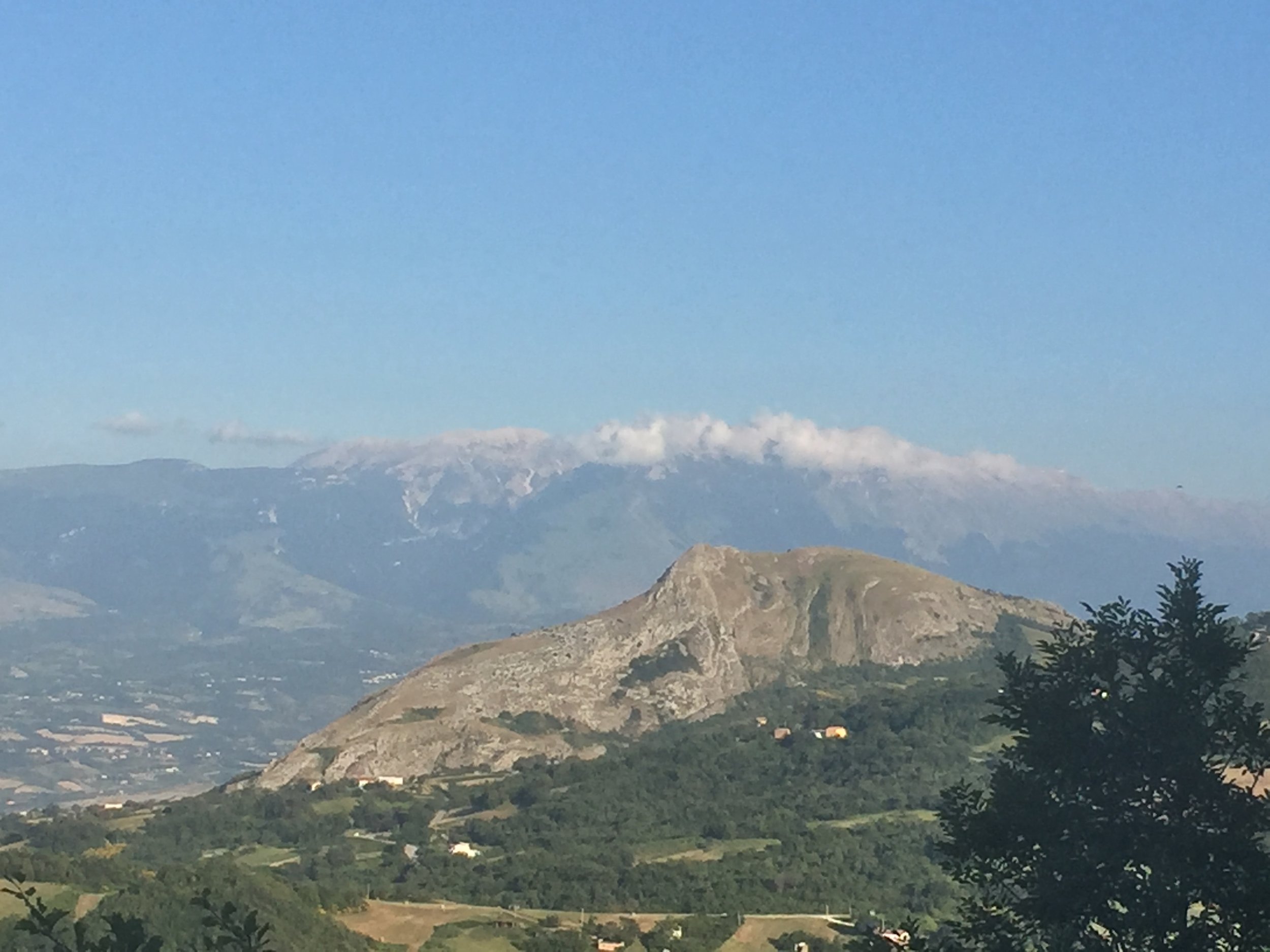
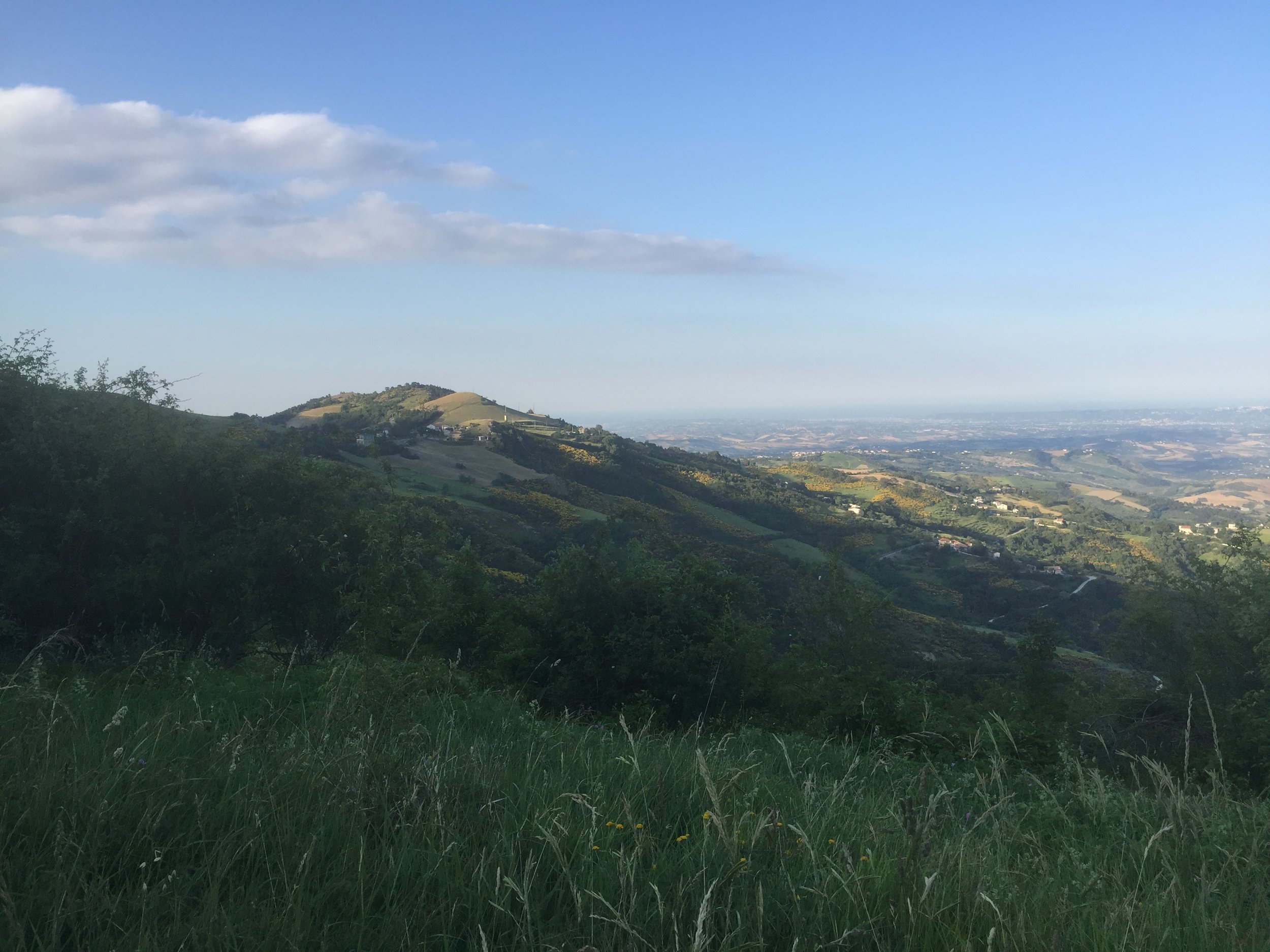
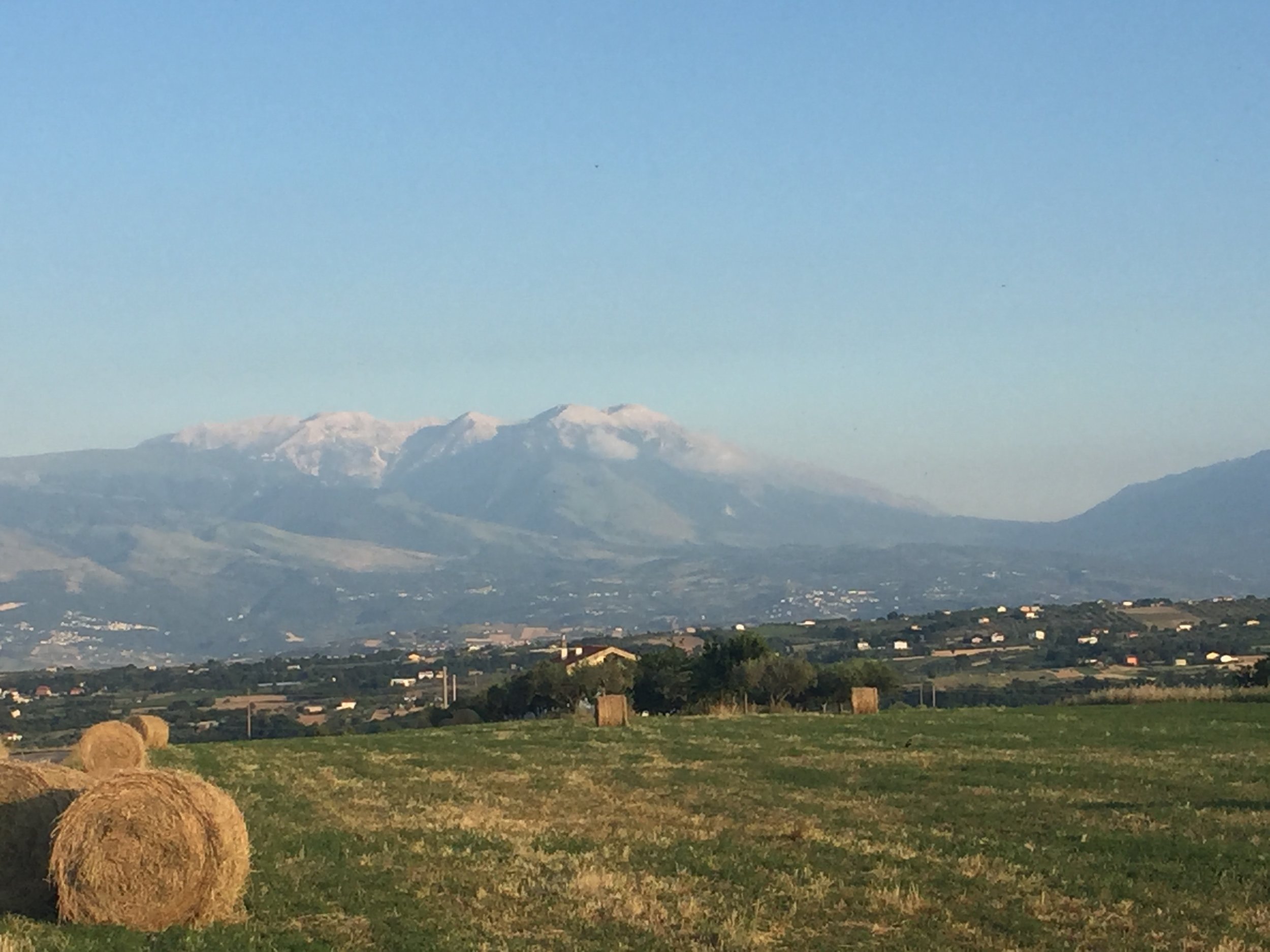
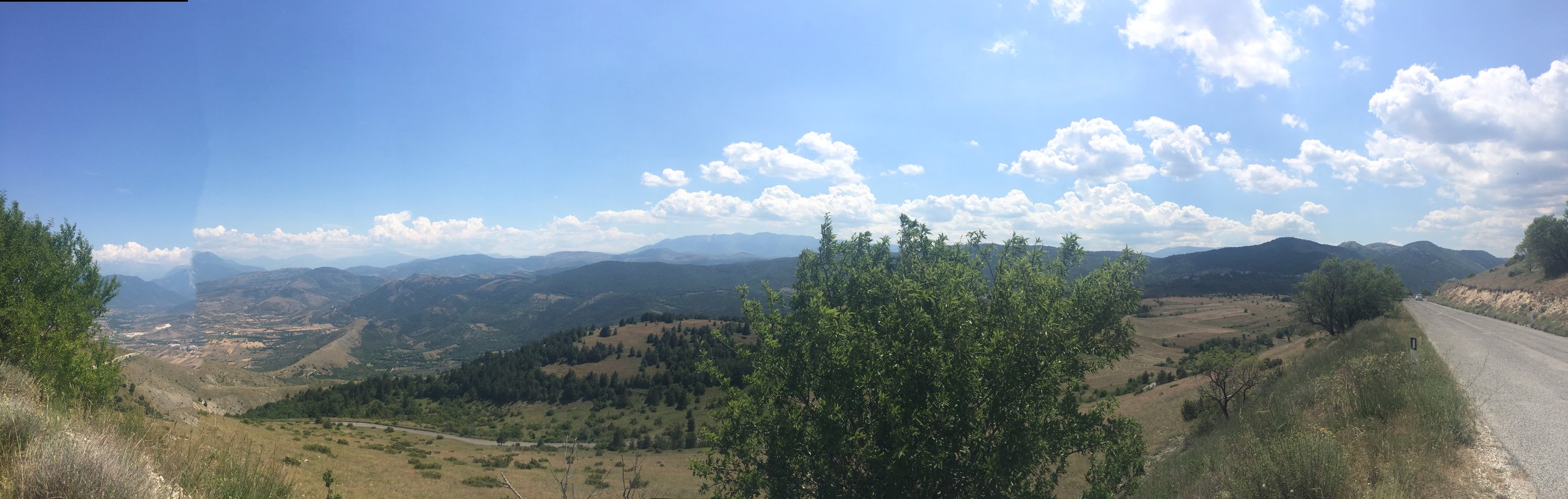
The ride, like so many, is a kaleidoscope of hills, mountains, flat plains and an occasional small village, remnants of fortresses on hilltops, tiny villages that seem empty. Surrounded by the Gran Sasso mountains, there are spectacular view after view, each a head-turner.
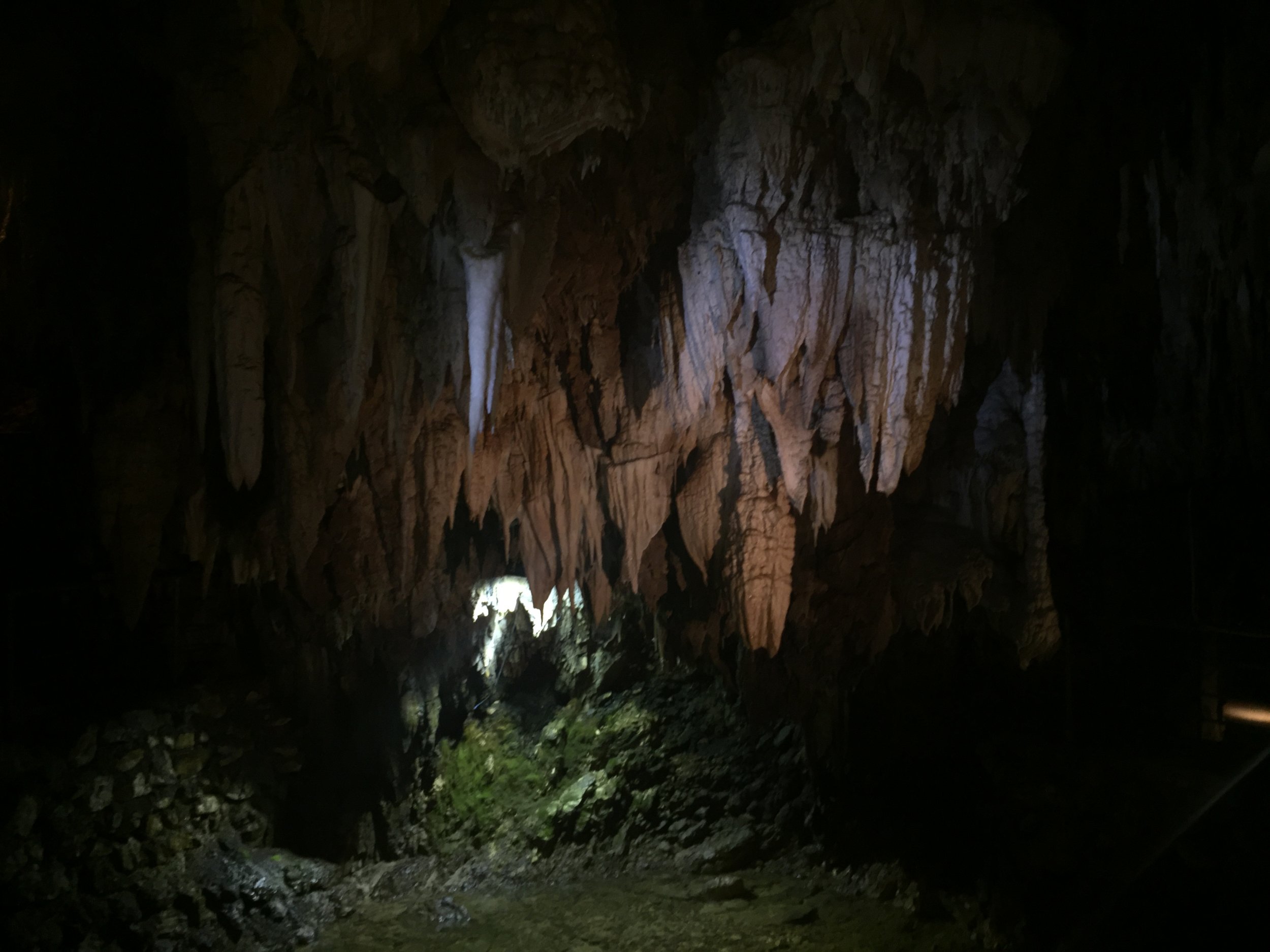
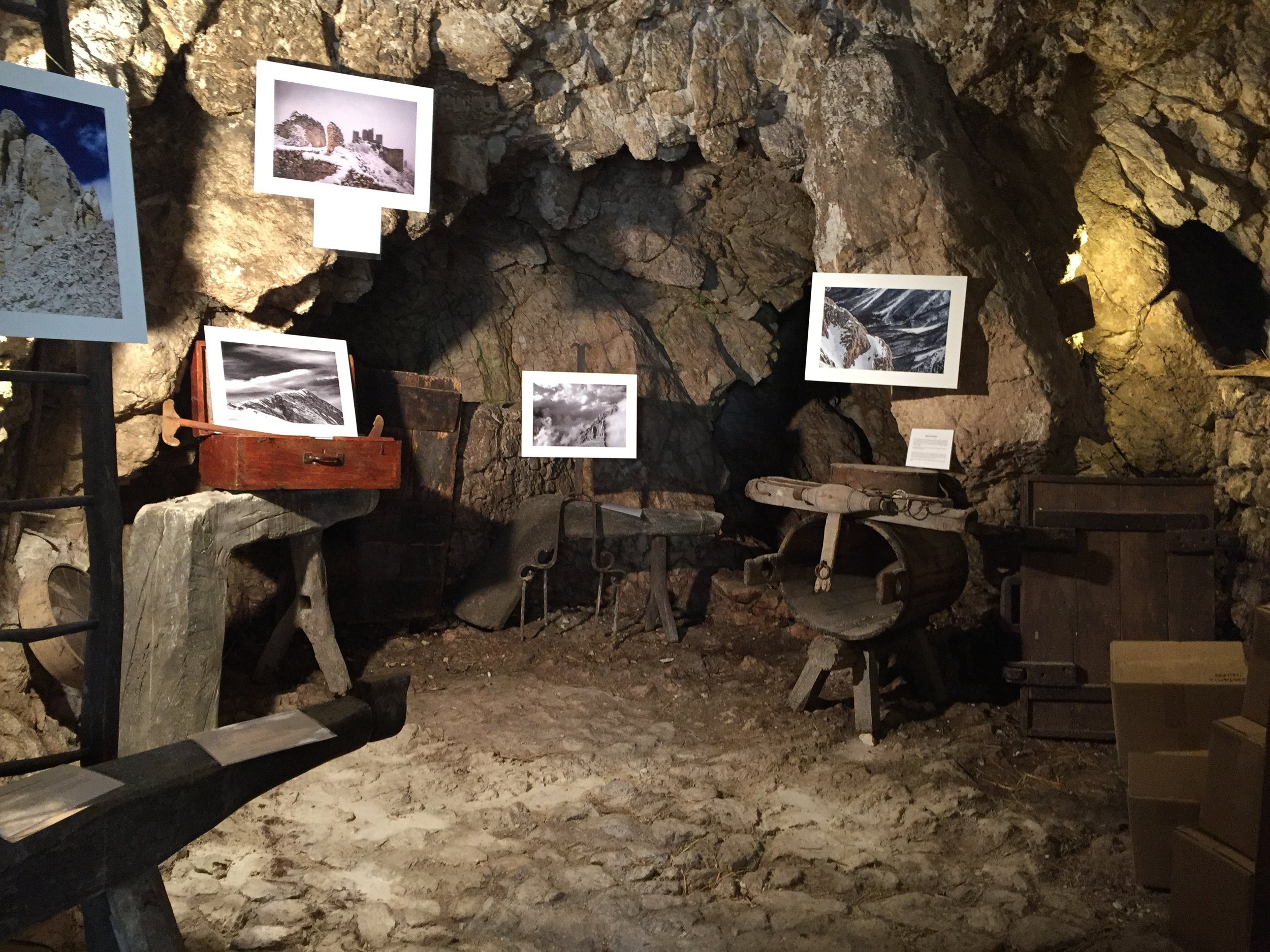
The Grotto Di Stiffe does not disappoint; stalagmites, stalagmites, the constant roaring sound of rushing water from the mountains like veins of water making the interior feel like a living being, not a stuffy underground cave; pools of water reflect an odd green glow; the path wet and slippery, the interior of the cave rather crude and holding true to its natural beauty, not yet ruined by too many visitors; one way in, one way out; it ends on a large pool of water and a waterfall.
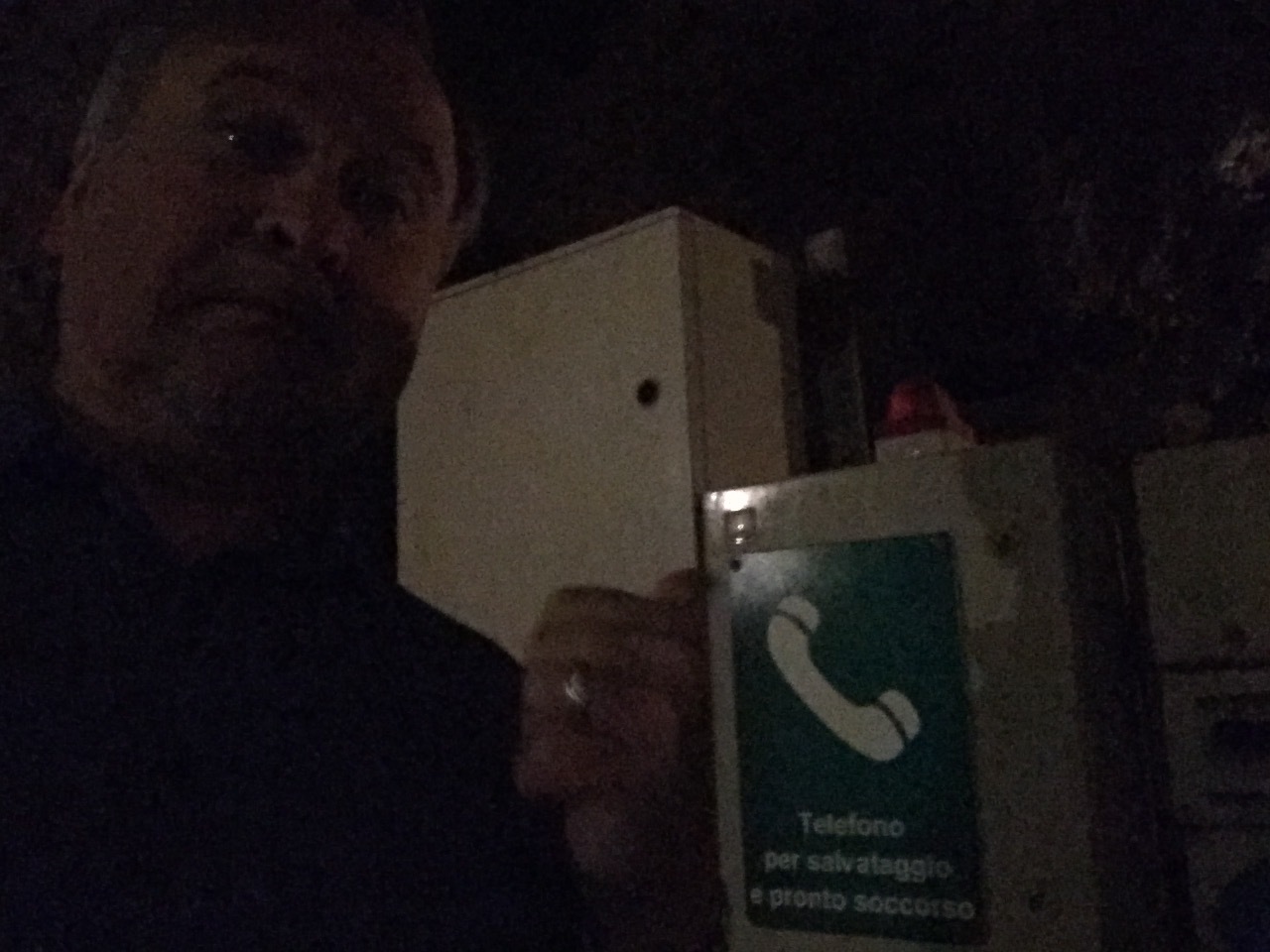
Given the recent earthquake activity in the region, the idea of being in a cave was a bit disconcerting. The site of the emergency phone in the dark seemed comforting, but wasn’t.


On the drive back, we decided to take the chance and use different roads — always a chance of getting lost, but there was a thrill to getting lost in such beauty. So, we got lost, then found, then a little lost, then back to the farmhouse and the bee-laden unusable pool area.

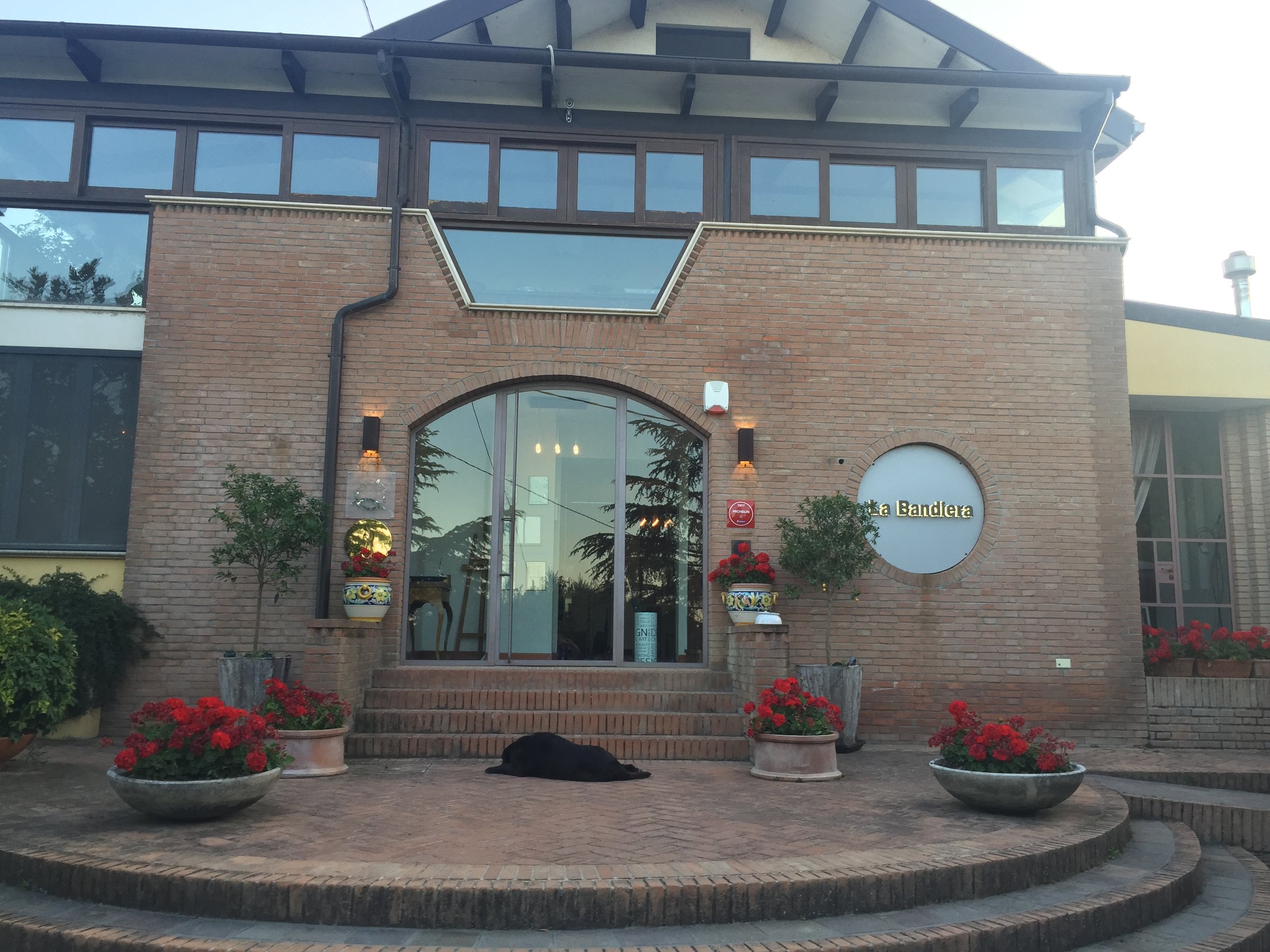
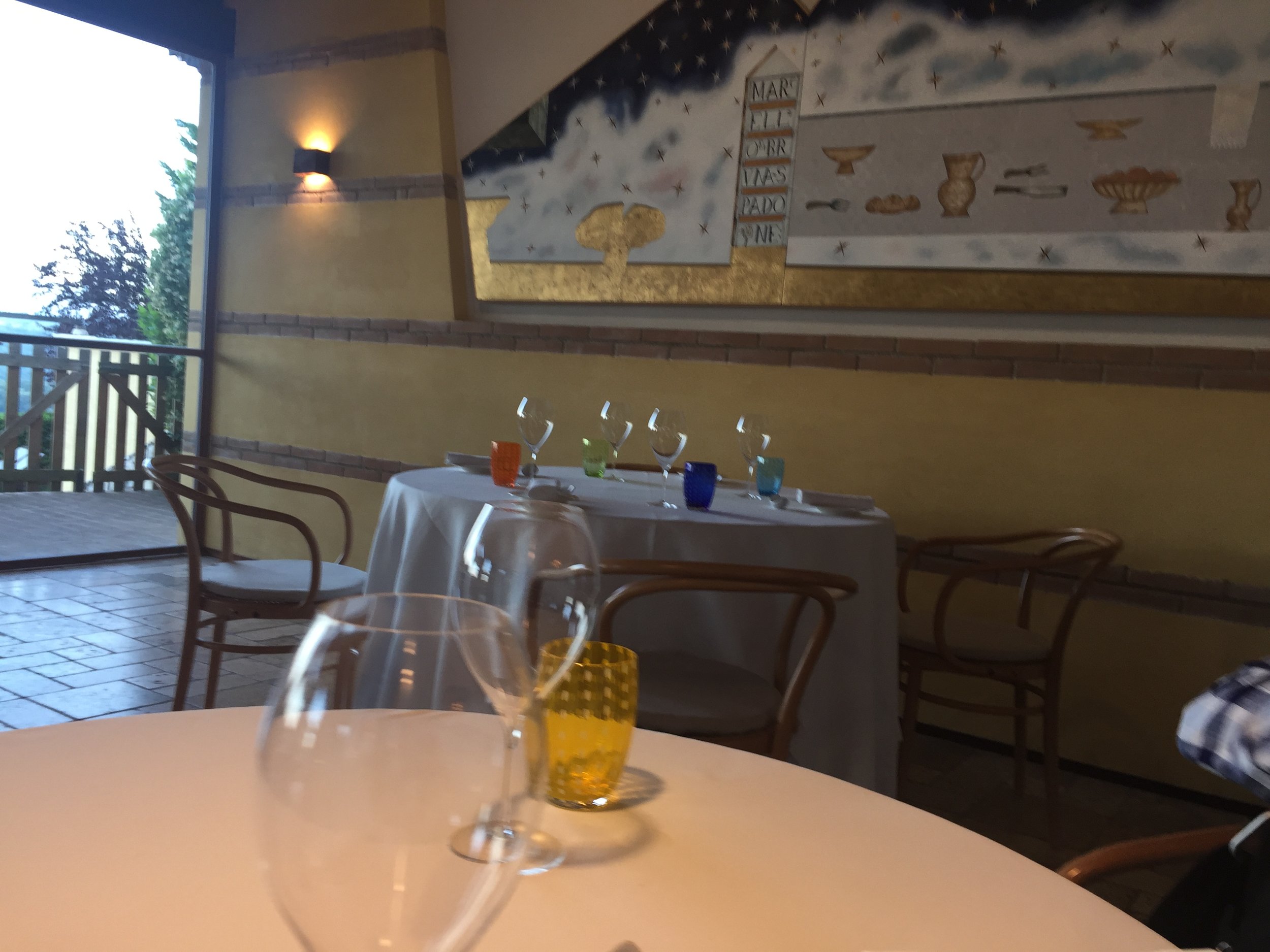
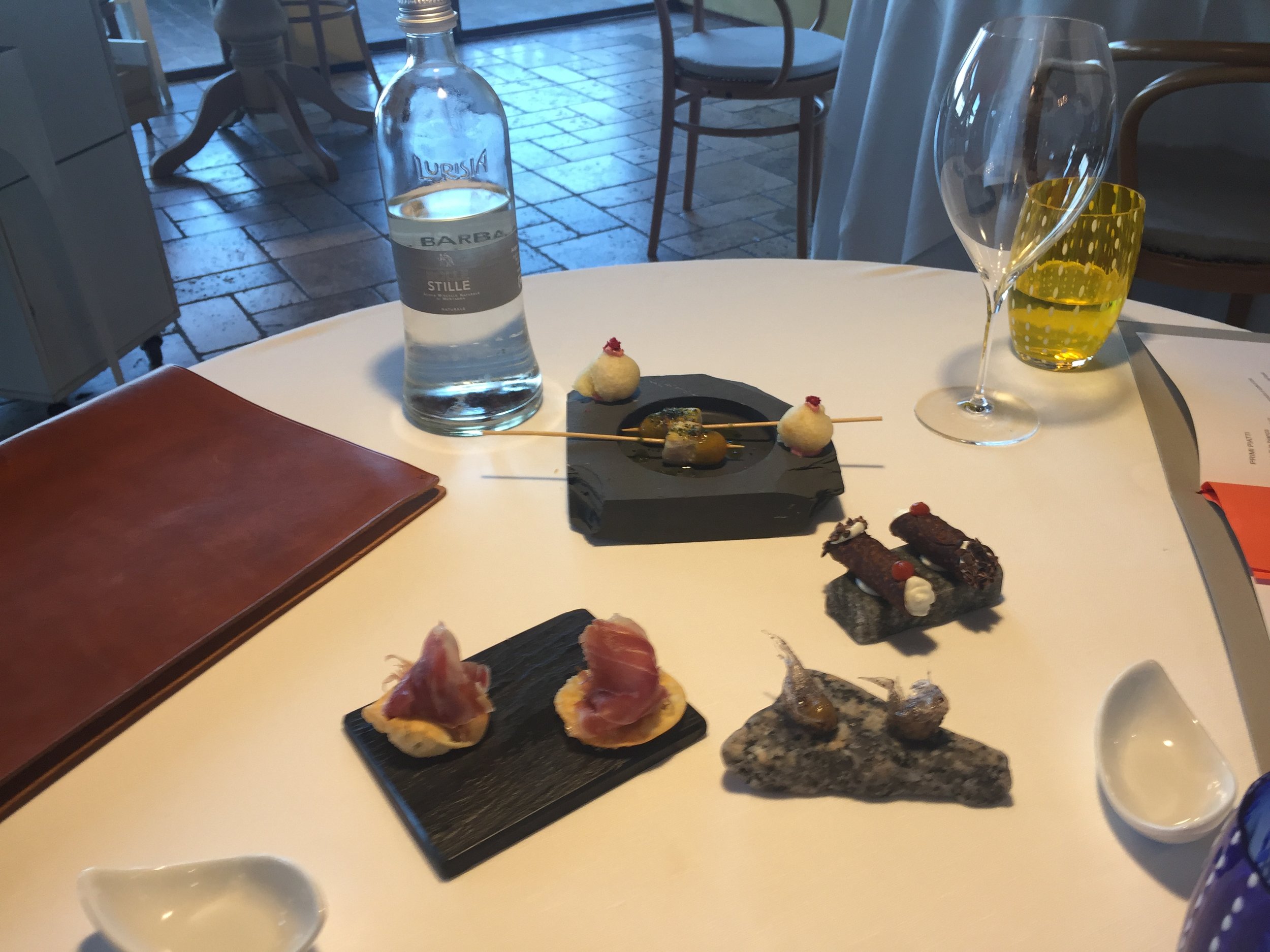
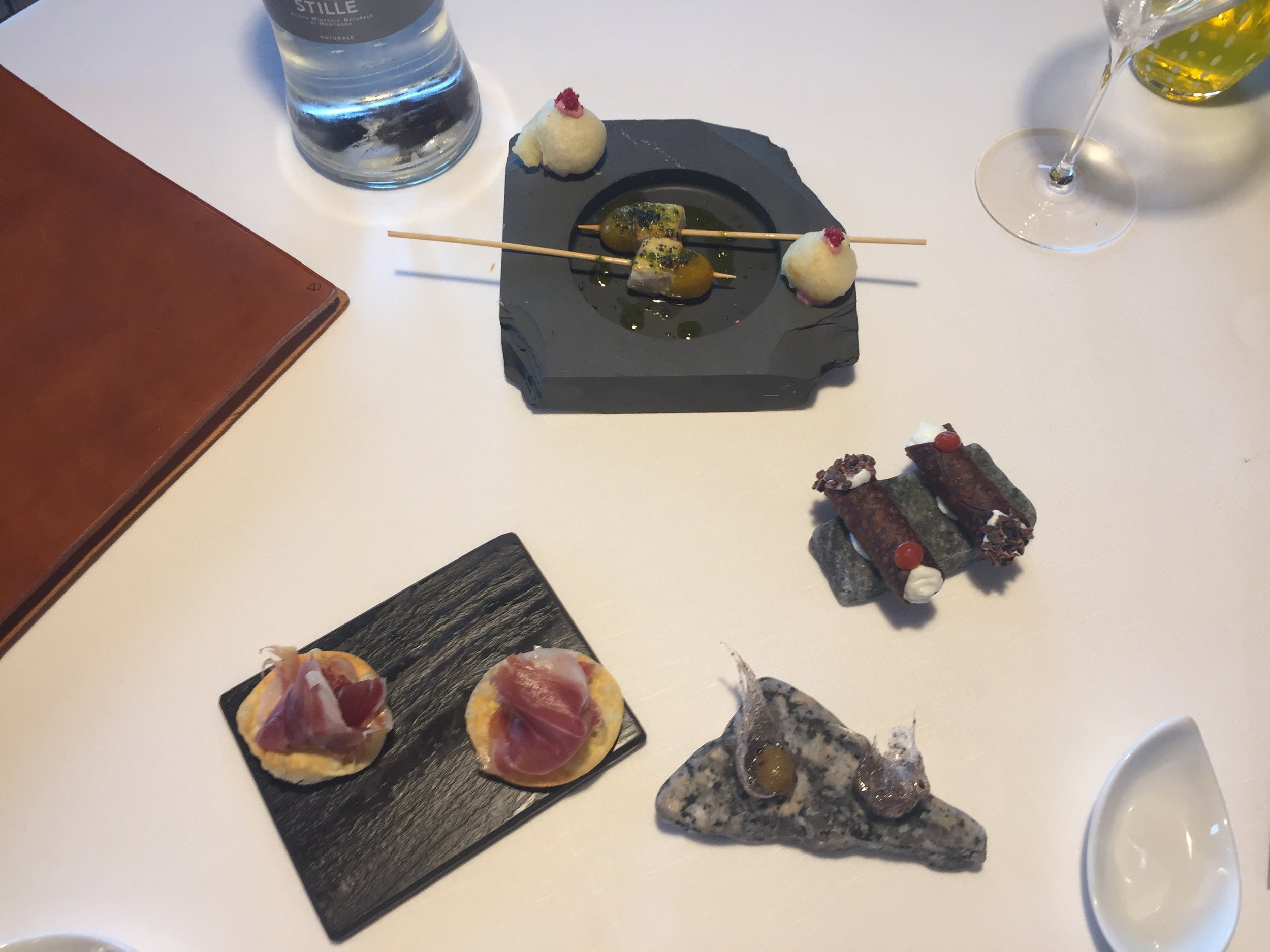
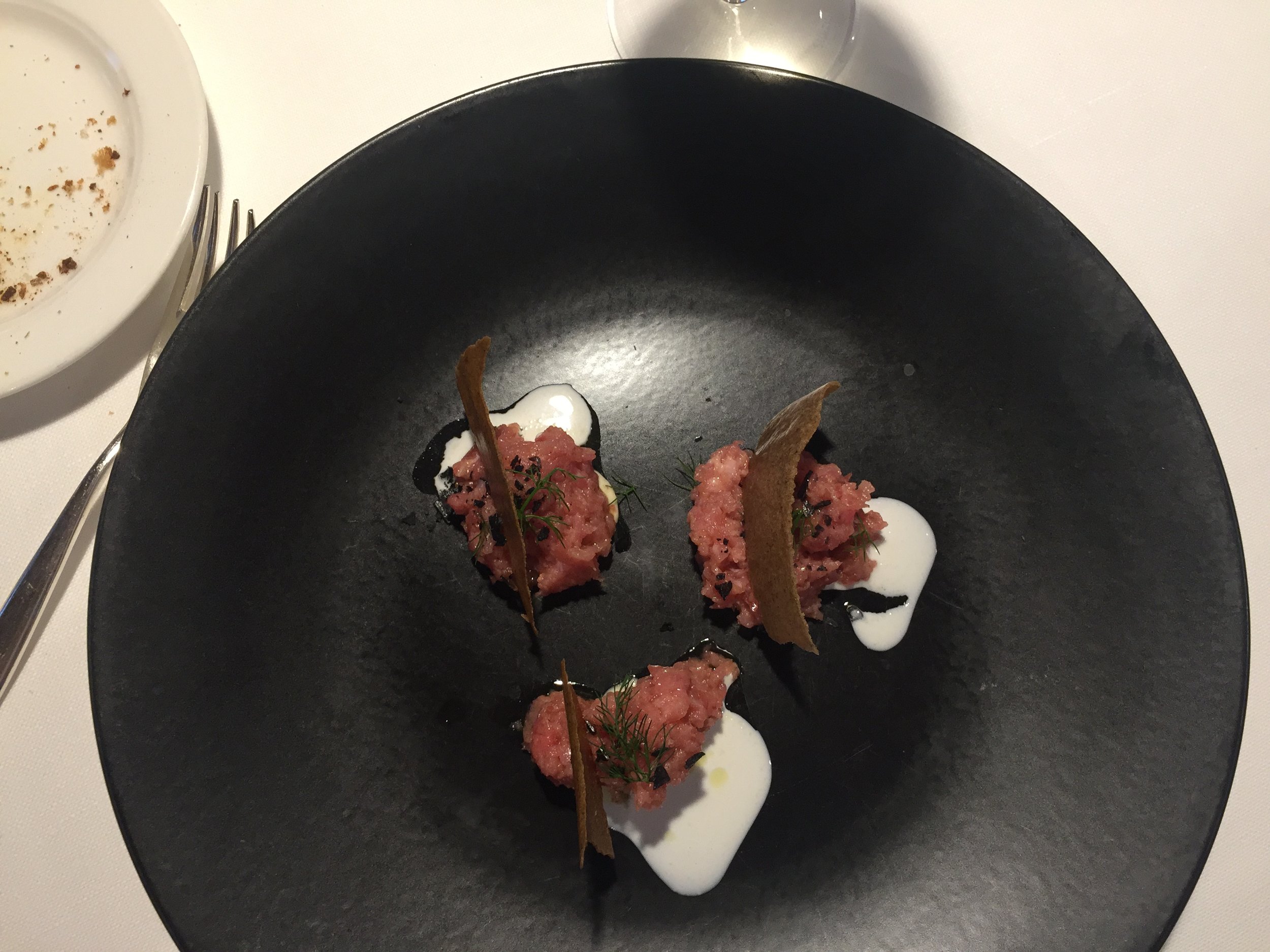
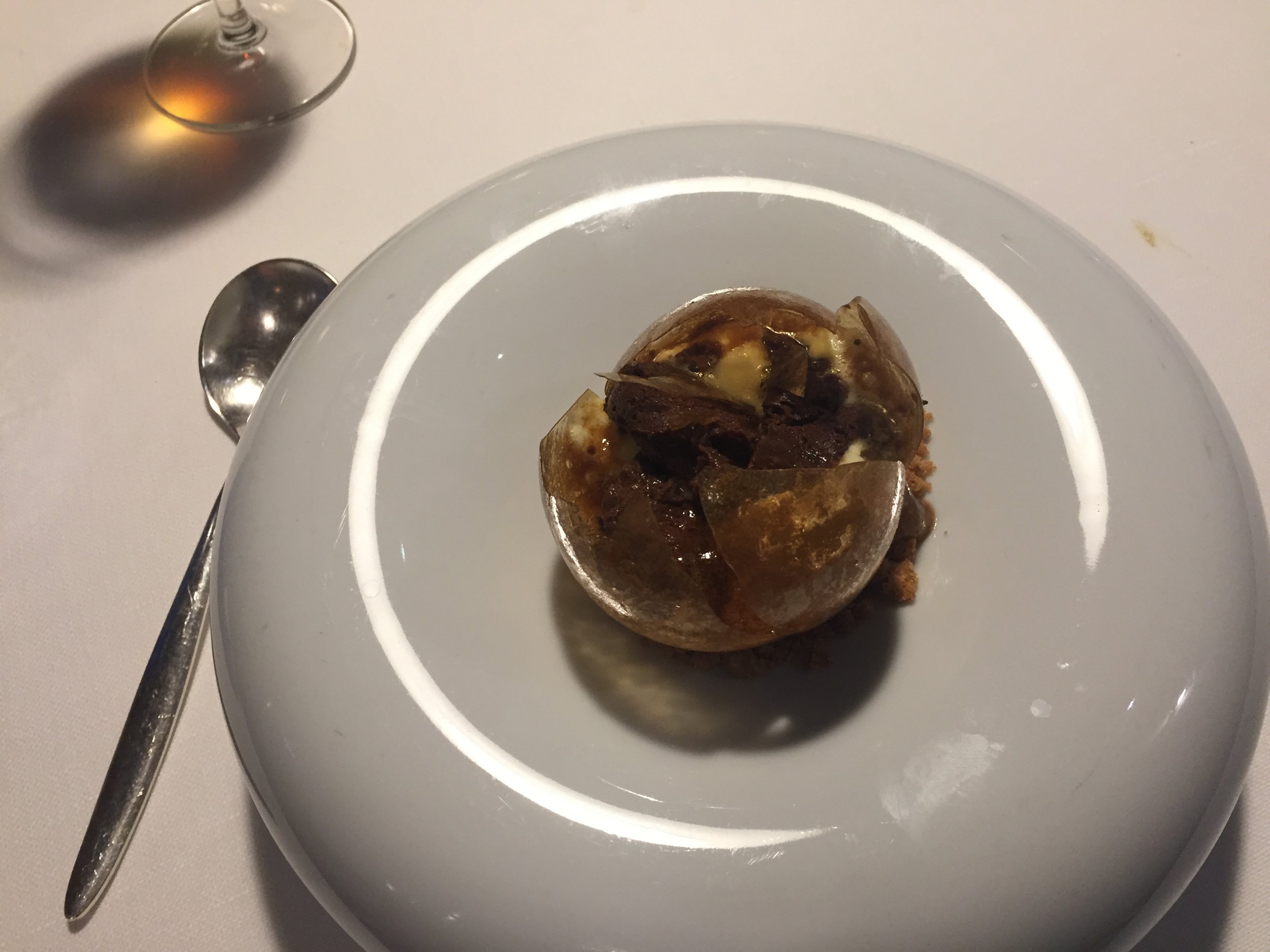
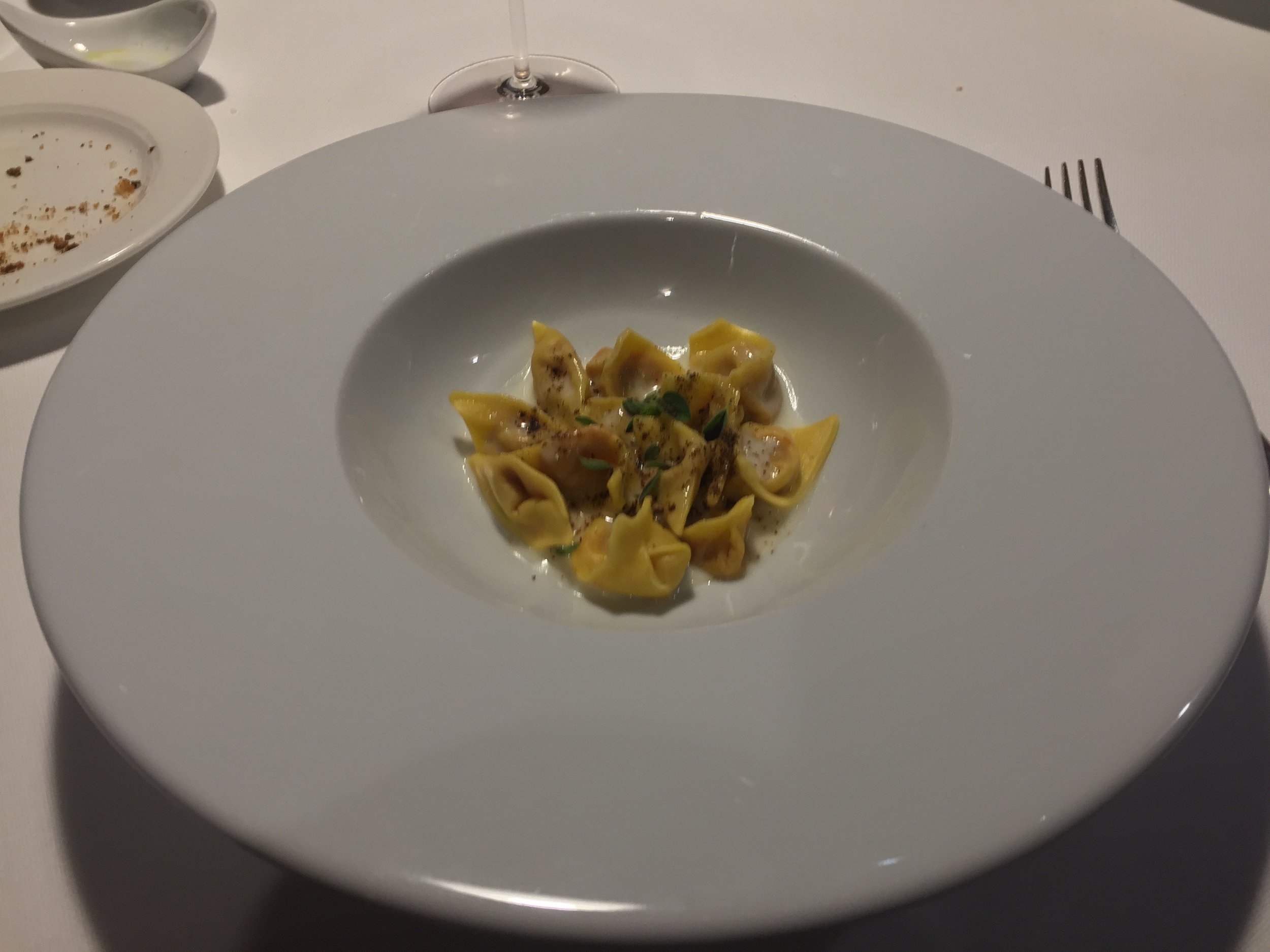
The day ended at the the 5-star restaurant, truly in the middle of nowhere, called La Bandiera. With only two tables seated in this wonderful, airy, white and blue decor fine dining restaurant, you wondered how they stayed in business. The food (and service) was…incredible. Sparing the reader any poorly described Italian dishes, especially those which were regional, would be a waste, so instead we leave you with a photo of the menu and the dishes themselves…
Internet reviews name this restaurant as the Number 1 in Civitello Casanova area. Frankly, it would be great cuisine with its many fine details in any great city of the world. It just felt odd being so good to be so far away from…anything.





Day 5: Road trip. We knew the owner (Fabio) of La Dolce Vita, a truly excellent Italian restaurant in Ft. Lauderdale, and being from Abruzzo; he had many tips but made one strenuous point: if there is one place you should visit and stay overnight, it is San Stefano Di Sestanio, the medieval town. “But only stay one night!” He exhorted dramatically and would say no more.
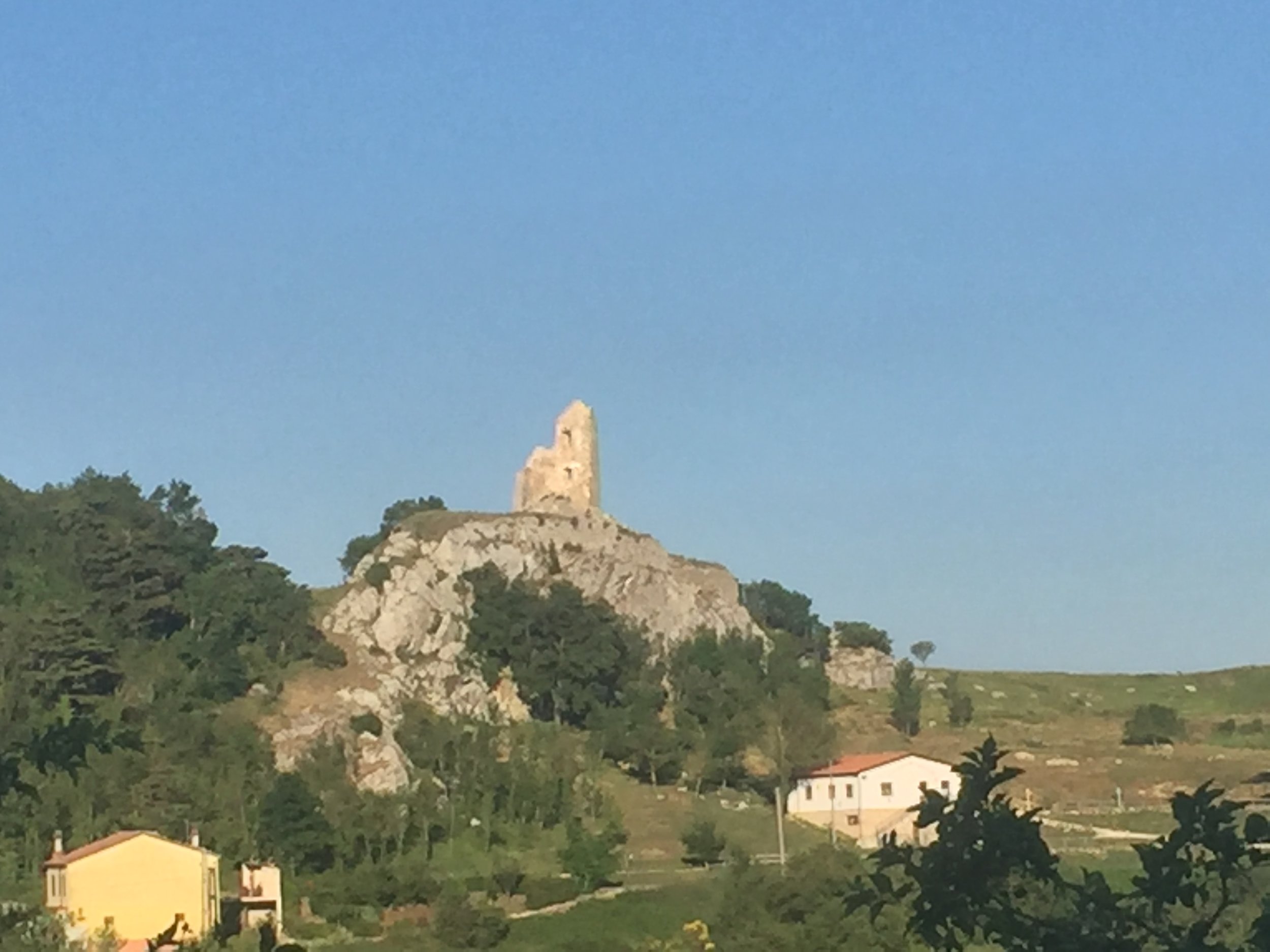
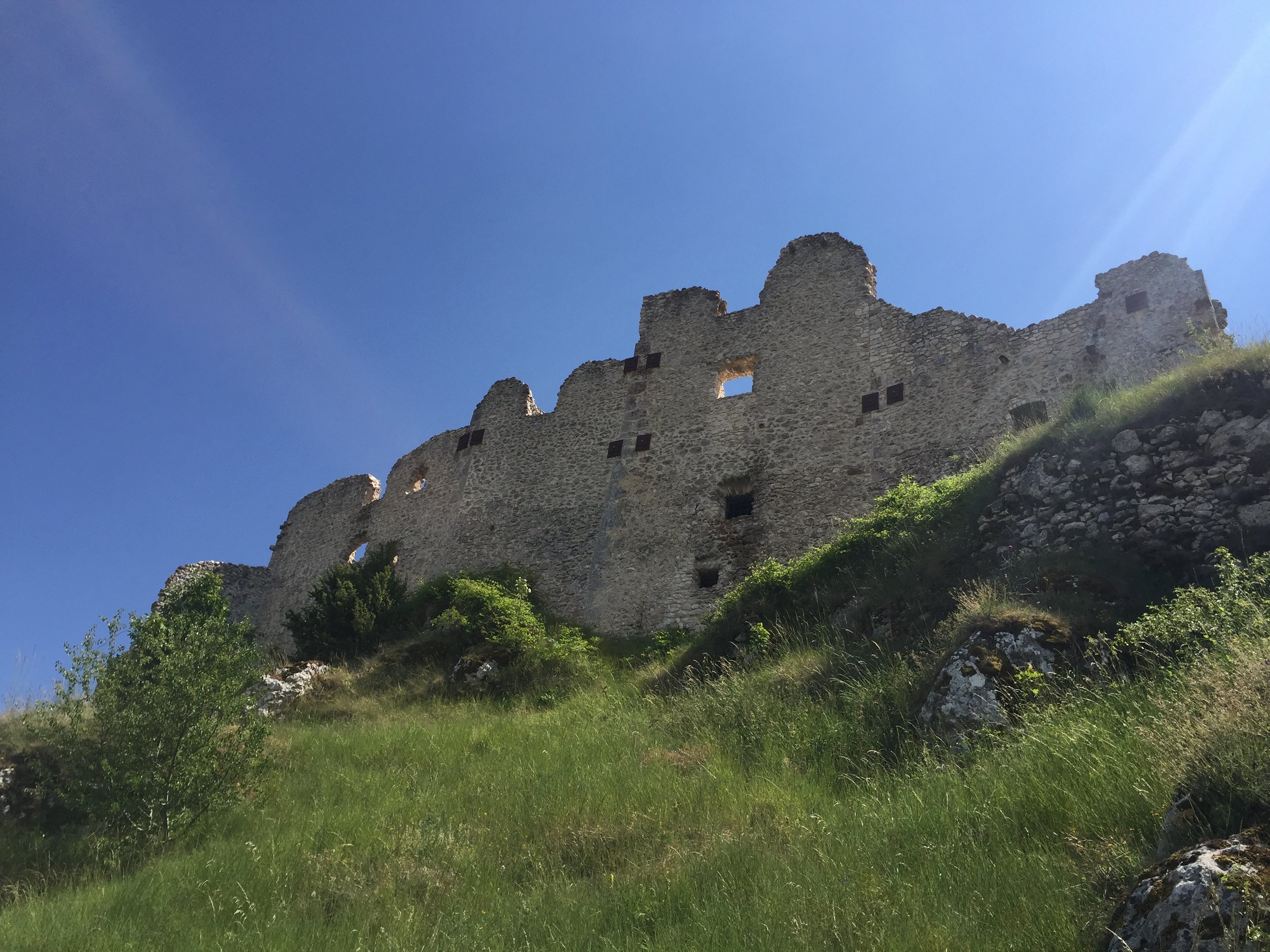
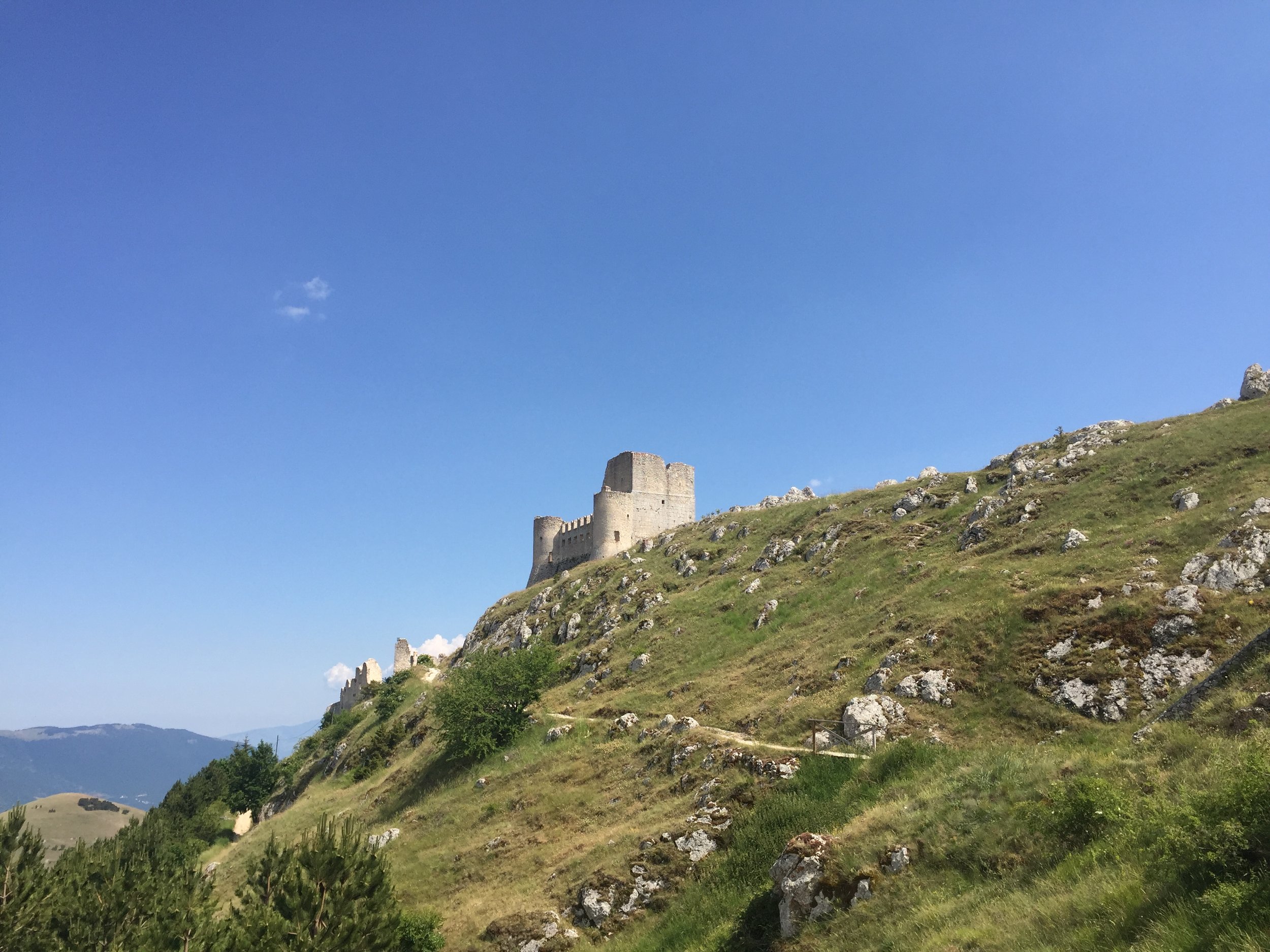
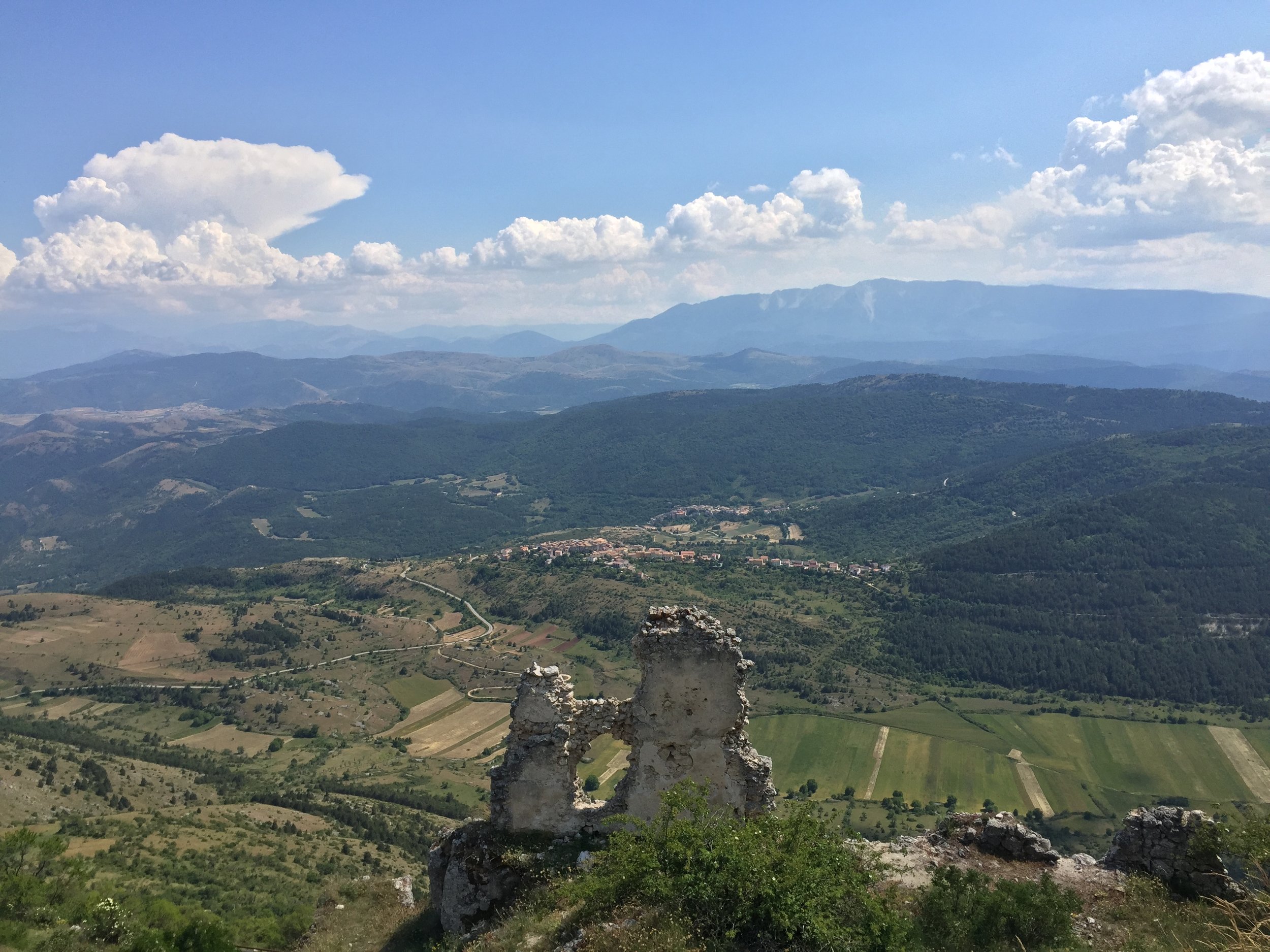
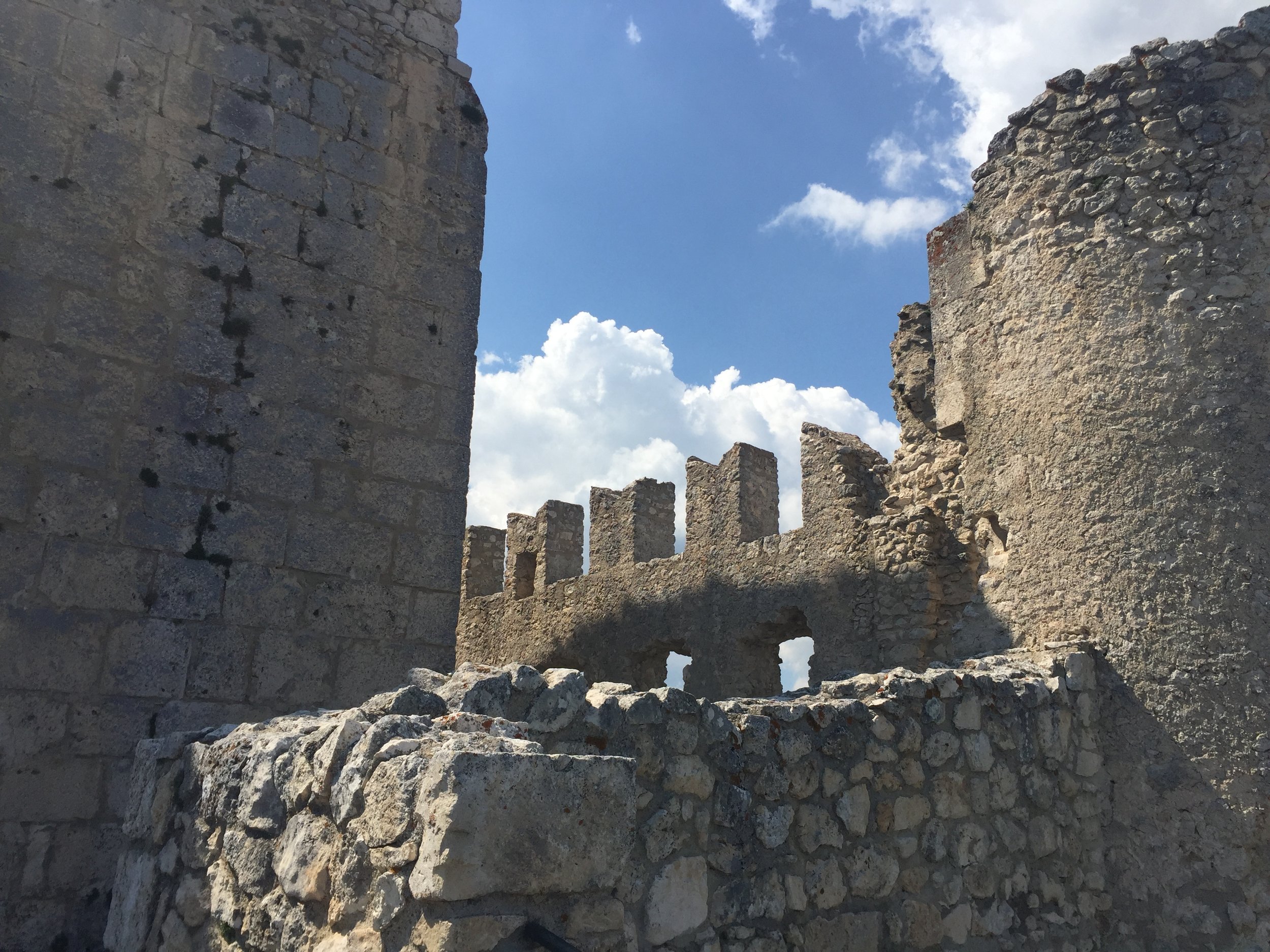
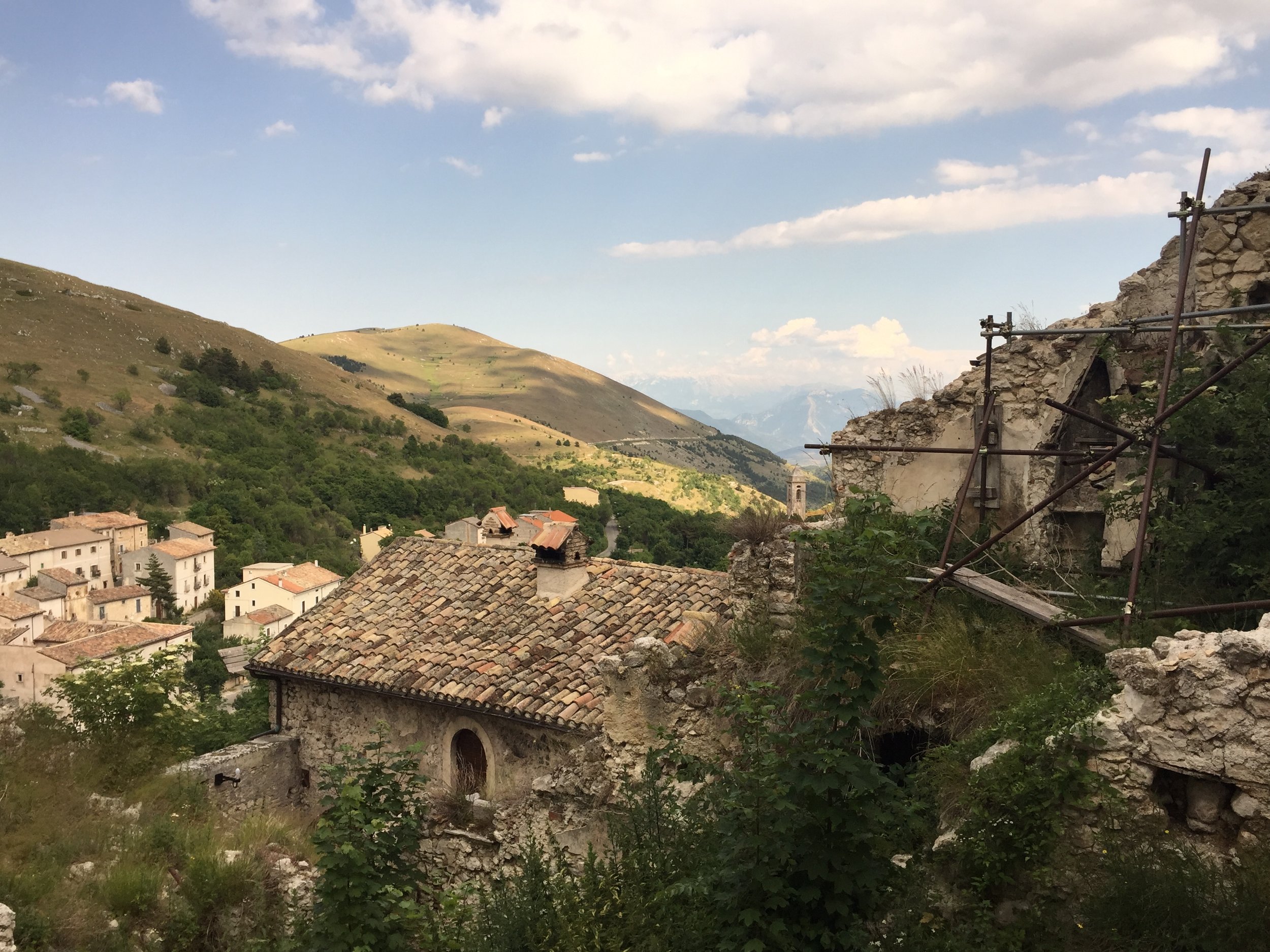
On the way to this town clinging to a hill, we had to climb the mountains, get lost several times (“I don’t think this goat path is an actual road”) but eventually unfold the stunning views into the great castle, Rocca Calascio. This somewhat intact ruin requires a bit of a goat climb through bushes to get to the top, but once there, you are at the apex of a mighty mountain overlooking a vast plain.


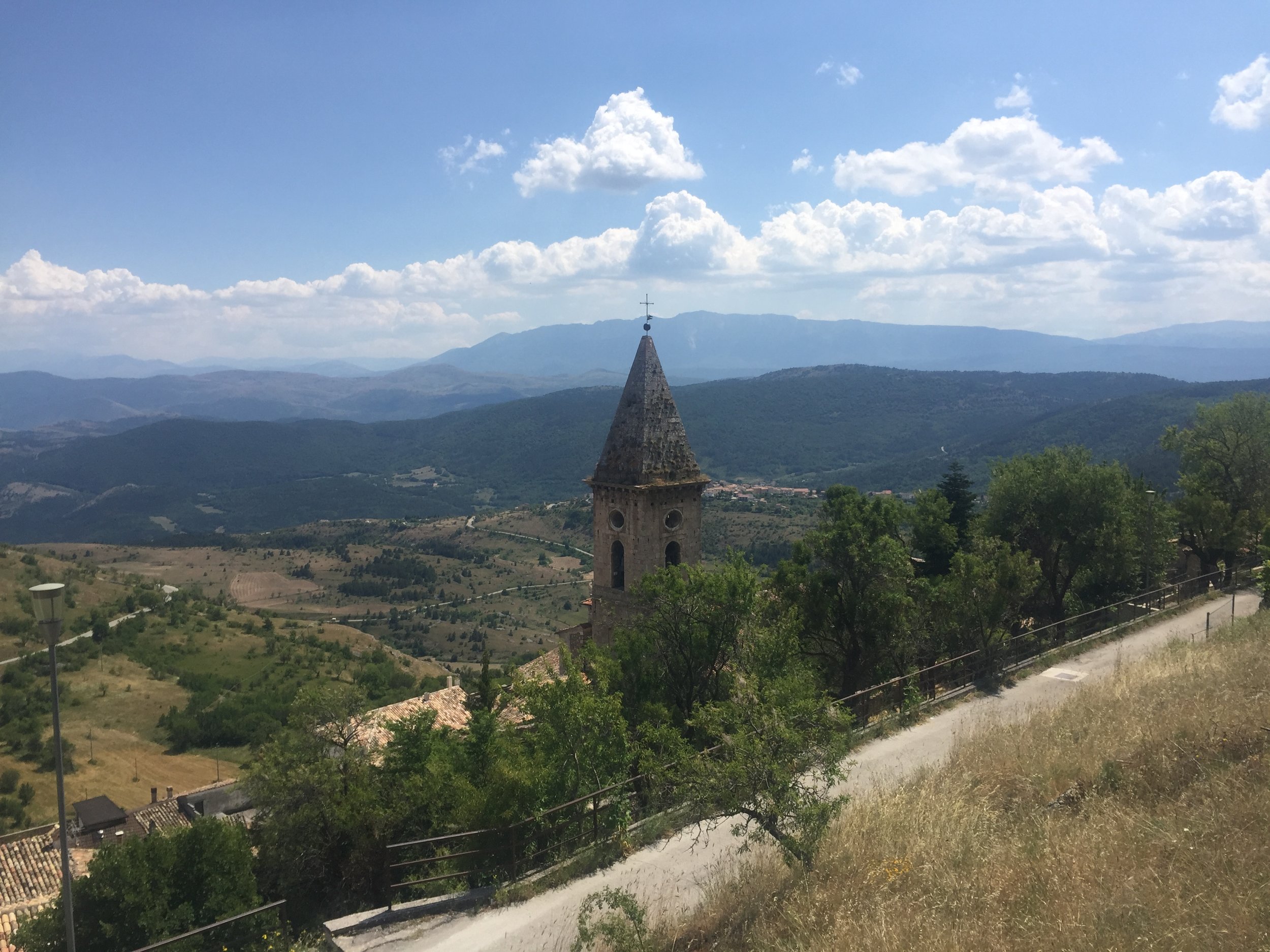

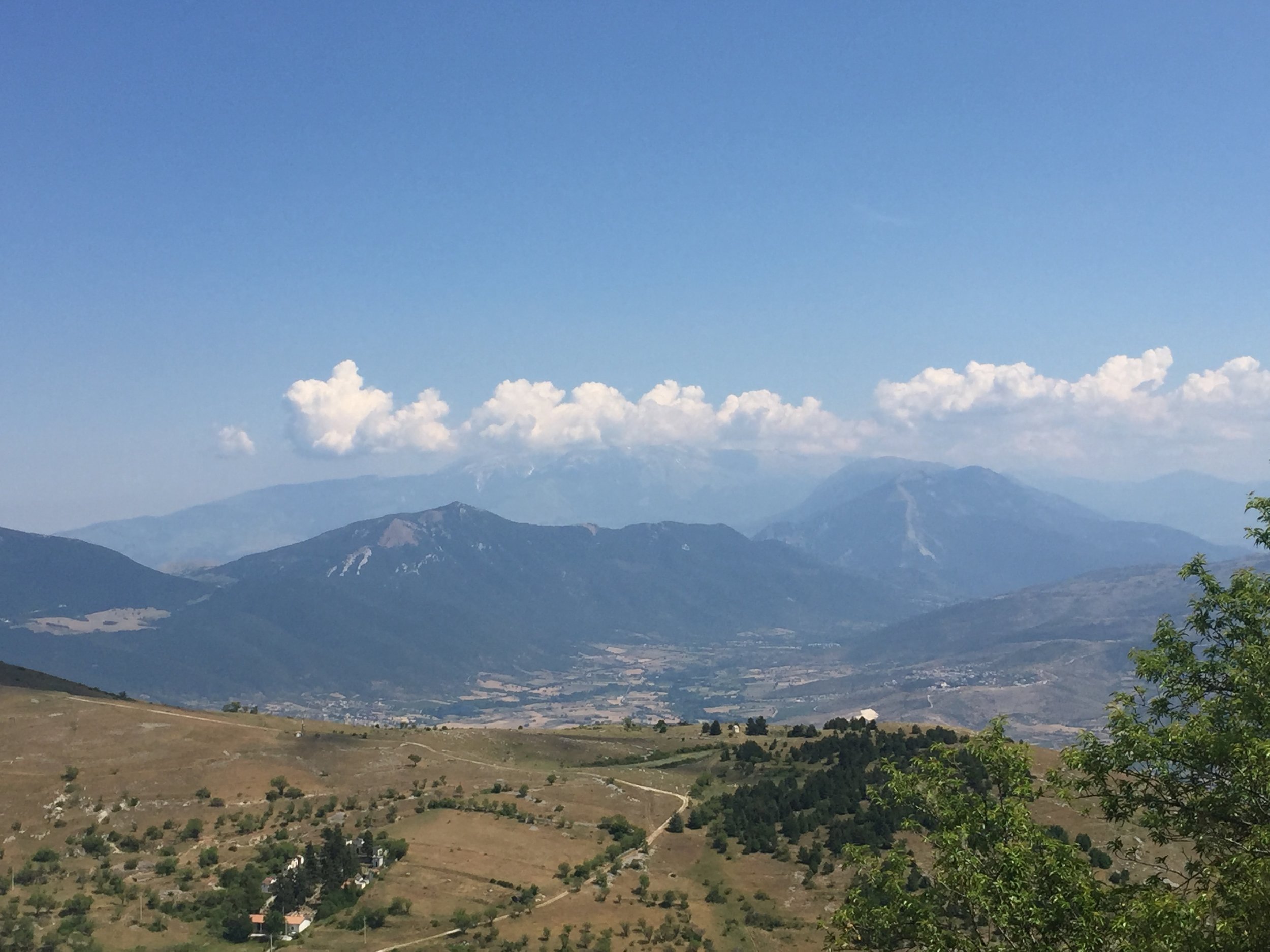
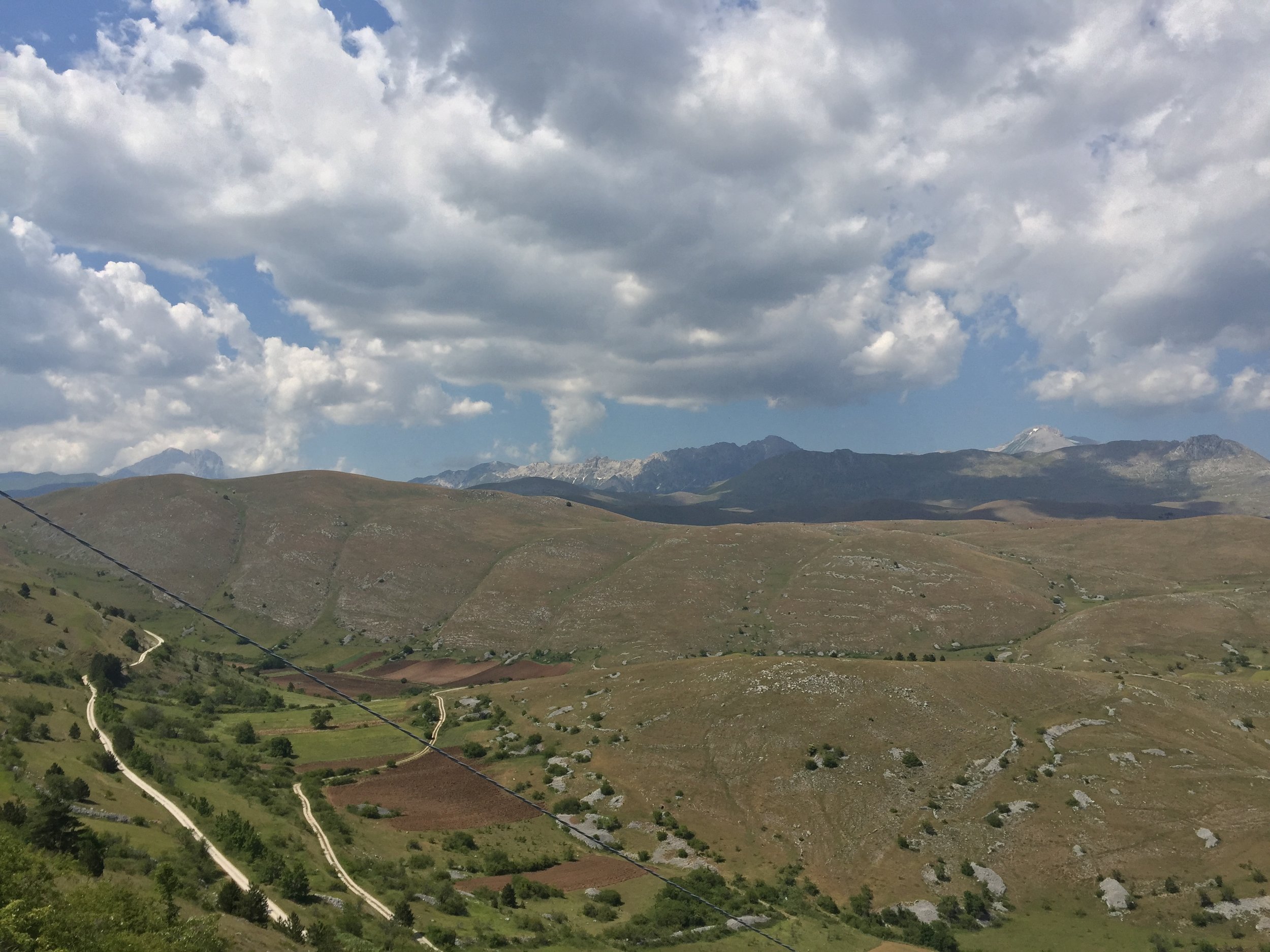

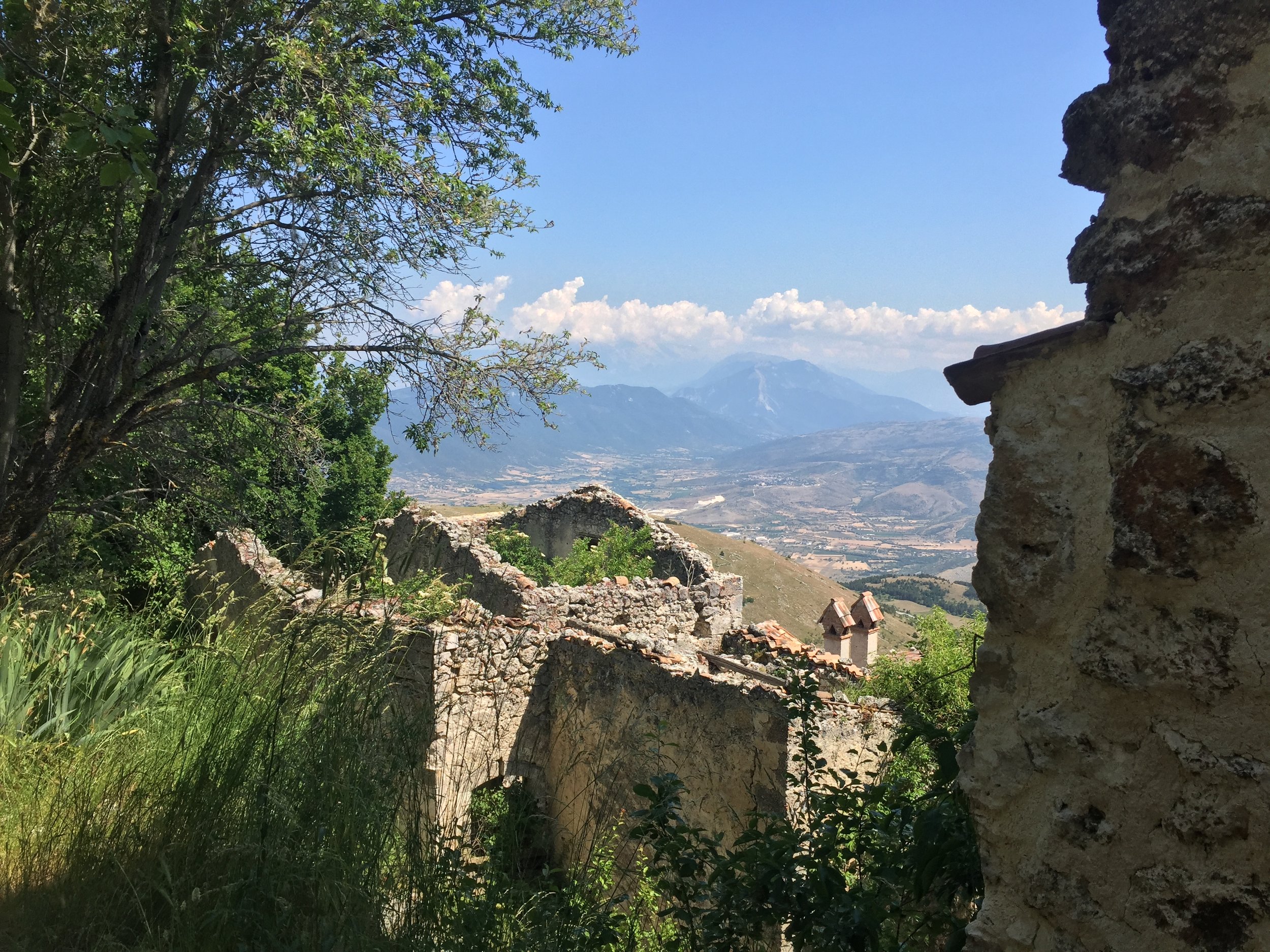






Day 5-6: San Stefano Di Sestino. We arrived late in the day; the sun was setting and the parking was hard to find and like many such villages, outside the walled town.
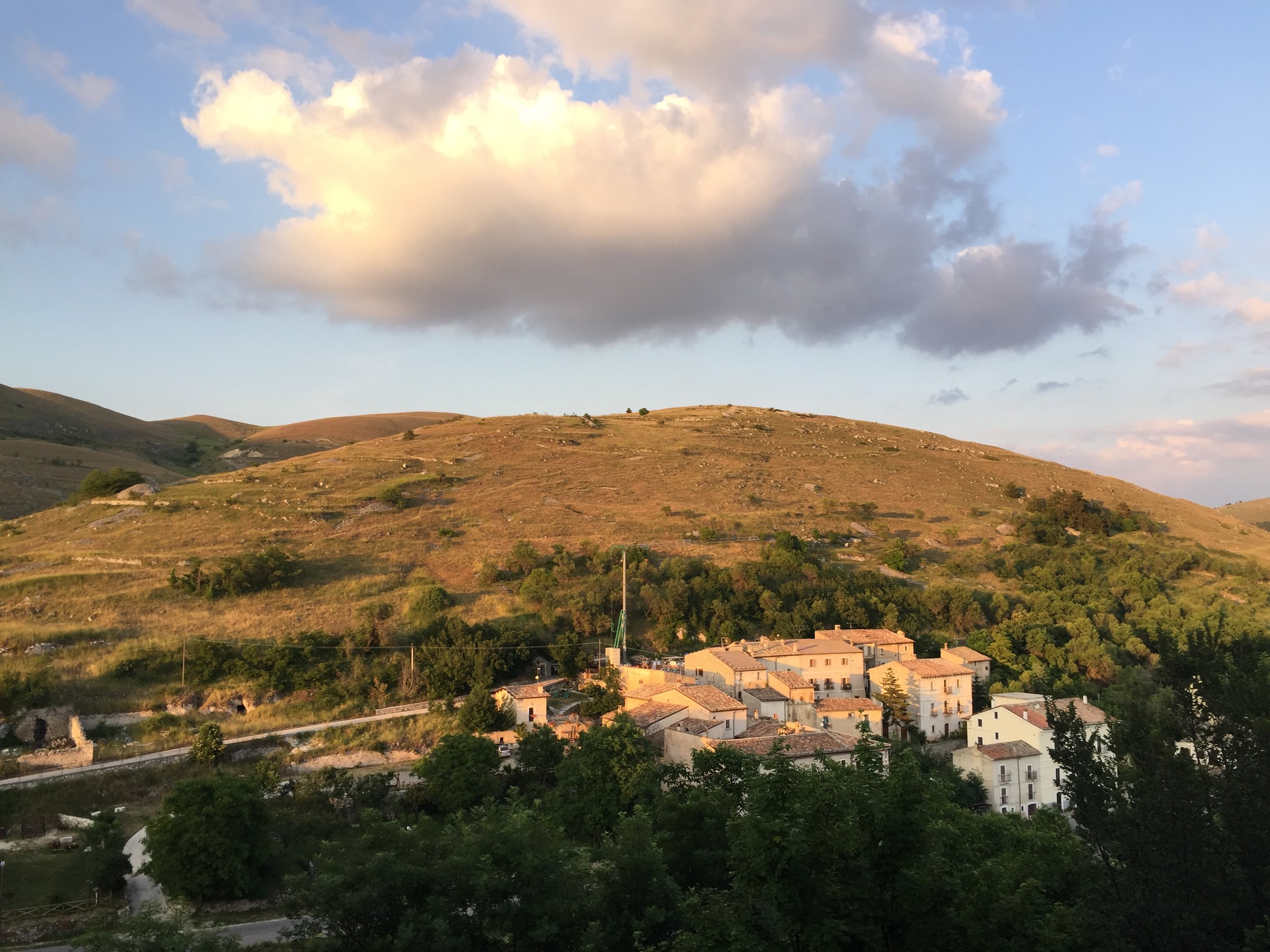
For touring perspective: Off the main tourist track, this town lies at the foothills of the Grand Sasso mountains 3 hours west of Rome in the raw, untraveled region of Abruzzo. Near L’Acquia.

Another unforgettable UNESCO site! San Stefano di Sestina was truly medieval, mysterious and fun. If you have ever visited Europe, it would be hard to say you did not see at least one medieval village, ruin, or site of some sort. But few, if any, can match the beauty and the odd renaissance of the mountainous town of San Stefano di Sestina, not far from the major city of L’Acquia. In fact, it has been called one of Italy’s most scenic villages. Most other towns or communes of that god-awful era only have only their bones to show — skeletons of buildings and churches. Such is not true of San Stefano di Sestina. Leave the 21st century far, far behind you as you walk these streets so worn the cobblestones lines have blurred.
Fabio was so right! Especially now, after being deserted, the village is being reclaimed, rebuilt, reinvigorated. Yet, all this done without defying the ancient medieval beauty, so strange to us now.
This tiny, oval mountaintop village has a toehold near the base of one of the glorious chiseled granite mountains of the Grand Sasso, that point where the massive spine of the Apennines mountain chain runs down the length of Italy; this particular area is known for its earthquakes, evidenced by the one in L’Aquila 2009 that killed 600 people and destroyed the two main ancient church monuments in the interior of the sky top village.
While it is easier to come from the east and pass through L’Acquila, with an easy drive up the mountain, we took the far more difficult yet almost magical path through the mountains. We maneuvered tiny roads the GPS could not find, through villages where you wondered how they survived.
Why this village? Why visit? Because unlike so many others, this village was plagued by earthquakes and finally nearly abandoned for many, many years. Even today, with its being reclaimed and re built, even as a tourist stop, as of 2016 it had a permanent population of 111.
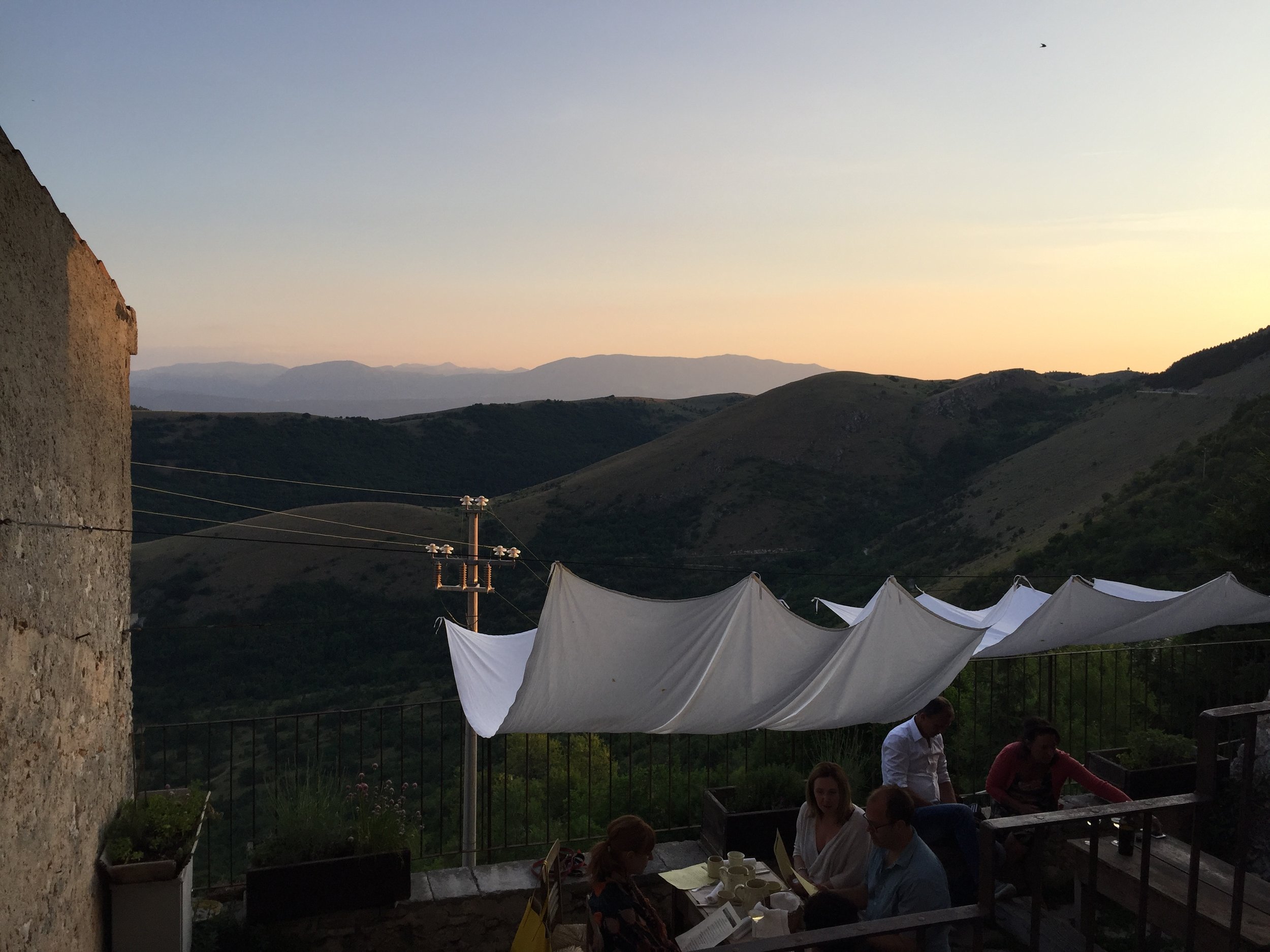
But even that is not reason enough. It is very simple: it is completely and truly authentic. There is simply nothing like it. The views are dramatic, you can almost picture the guards watching the distant plains for enemies.

Given the dearth of people and retail, the hotel, Sextantio, was probably the town’s dominant source of revenue; the rooms are scattered across the town, all from the original stone cut buildings pressed next to each other. While the plumbing may be new, everything else was truly of its original age. It truly feels medieval. Everything bore the mark of a 1,000 years of man; the stones are worn to the angles of carts and processions, of workers and craftsman; the stairs of every building, though made of rough hewn stone, bore the wear of human feet, grooves of every human who ever passed. All those feet, all those people, all those generations.
As you approach the town, like many, you have to park on the outskirts, usually a town square, or public area, and walk the rest of the way in. As all towns of this era are covered in cobblestone, dragging the suitcases with the bumpety-bump was annoying. But we got over it quickly as we passed through the first, semi-demolished arch. Although mid-summer, the tiny passageways (they simply did not qualify as streets) were nearly empty. The buildings were atop one another and it felt immediately as though you had been transported to a true, intact medieval town. The signs were all tiny wooden plaques, hung on flimsy metal spikes embedded in the stone. The first archway bears the royal coast of the Medici.
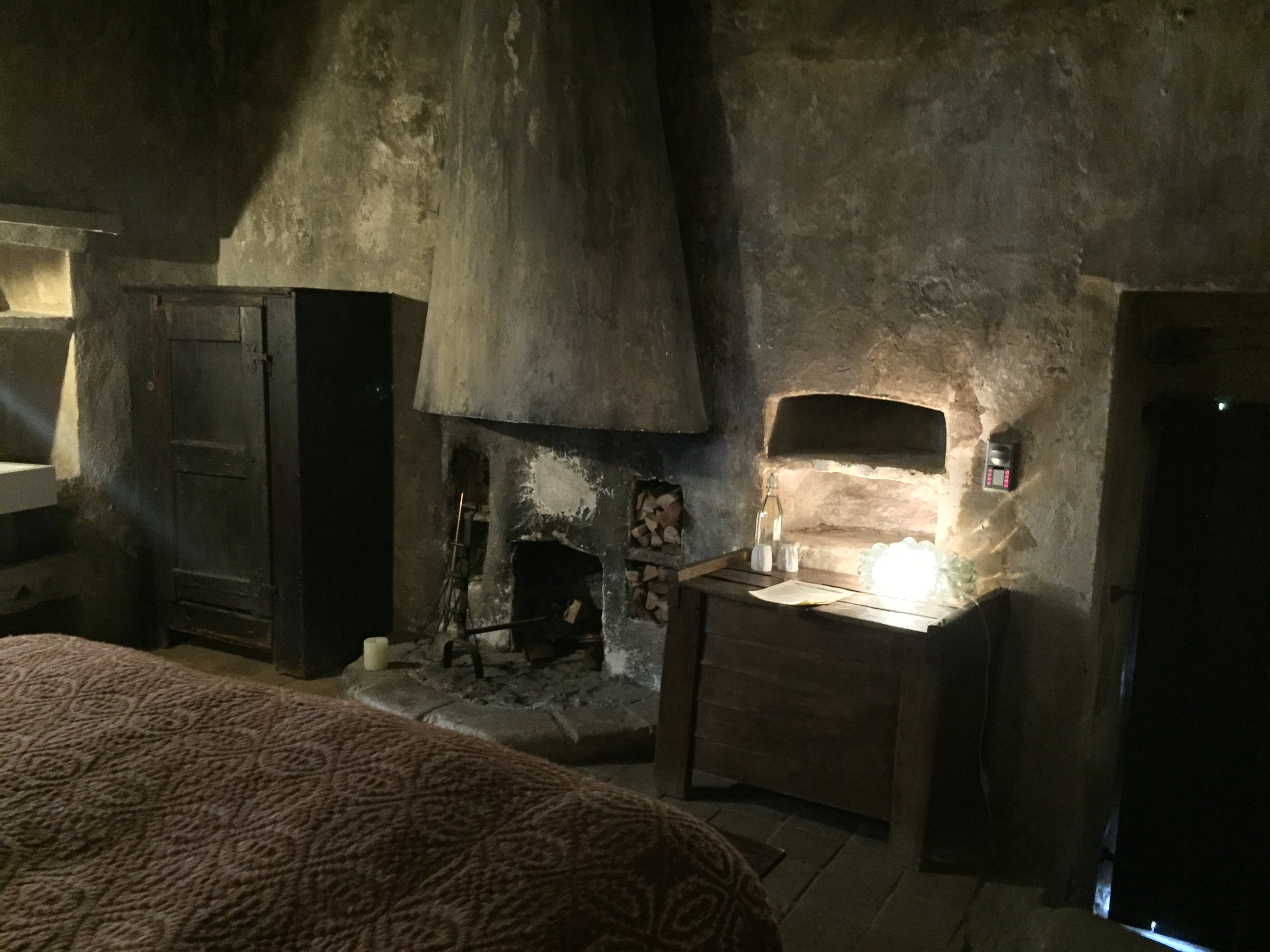
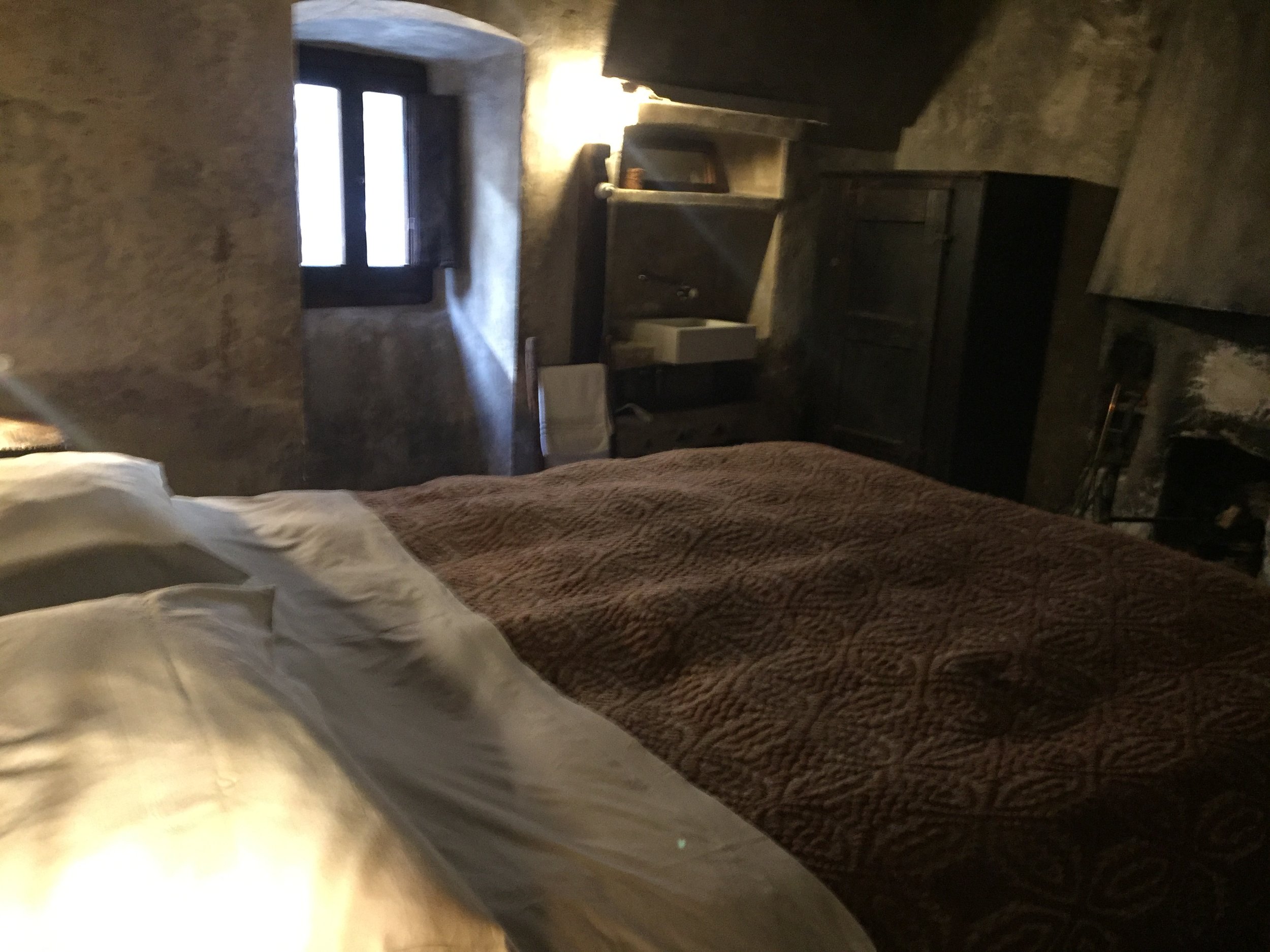

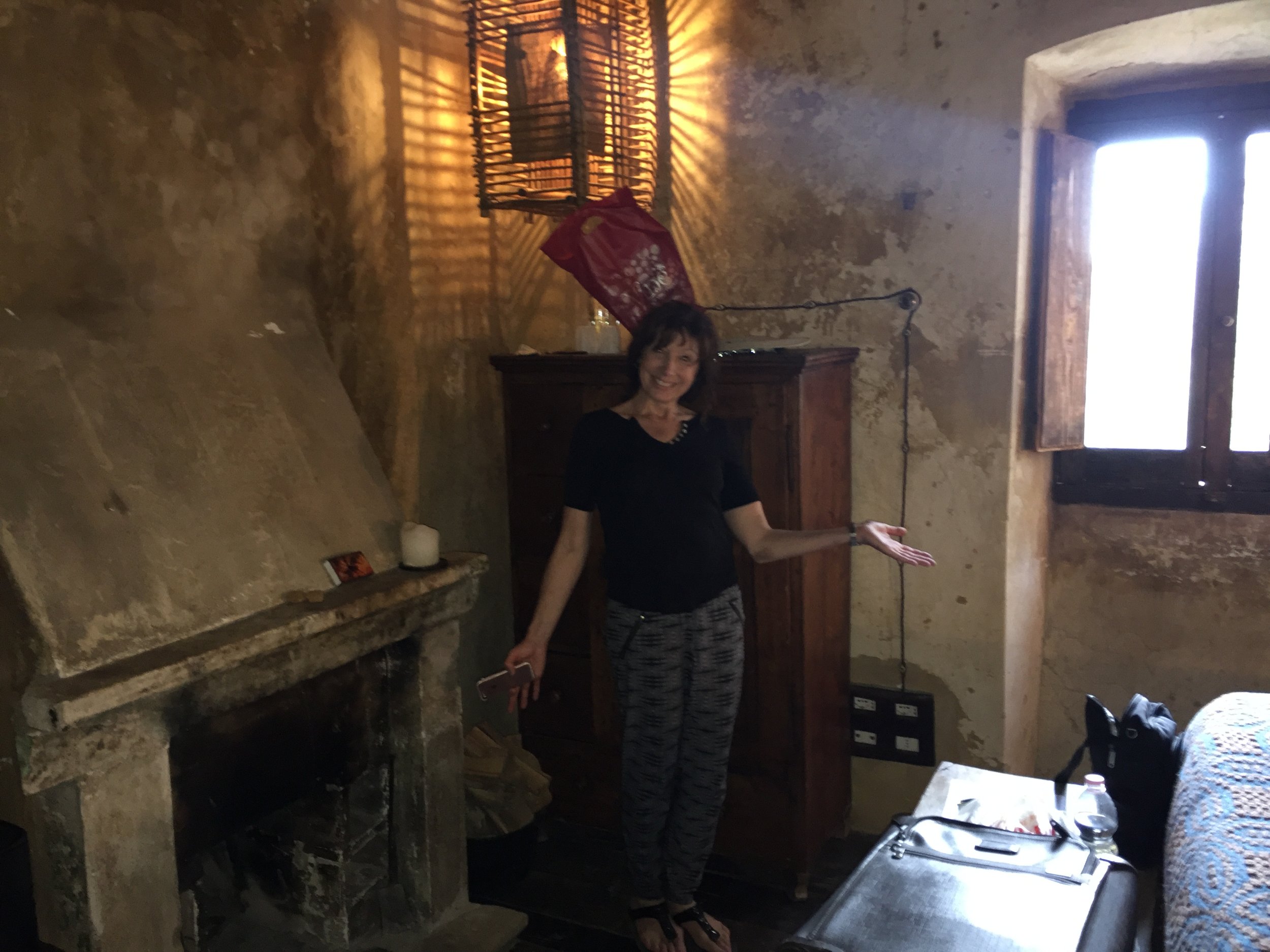
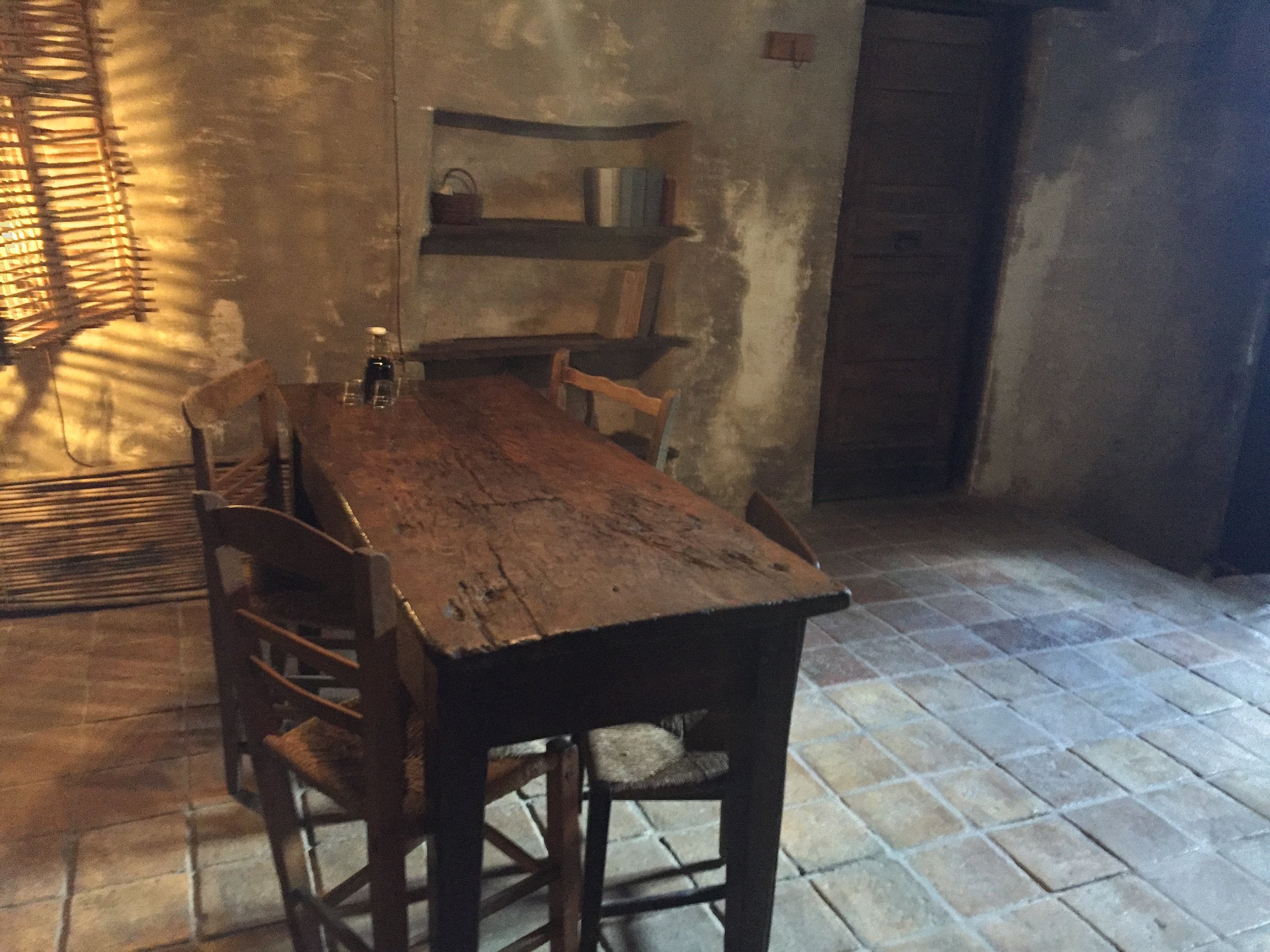
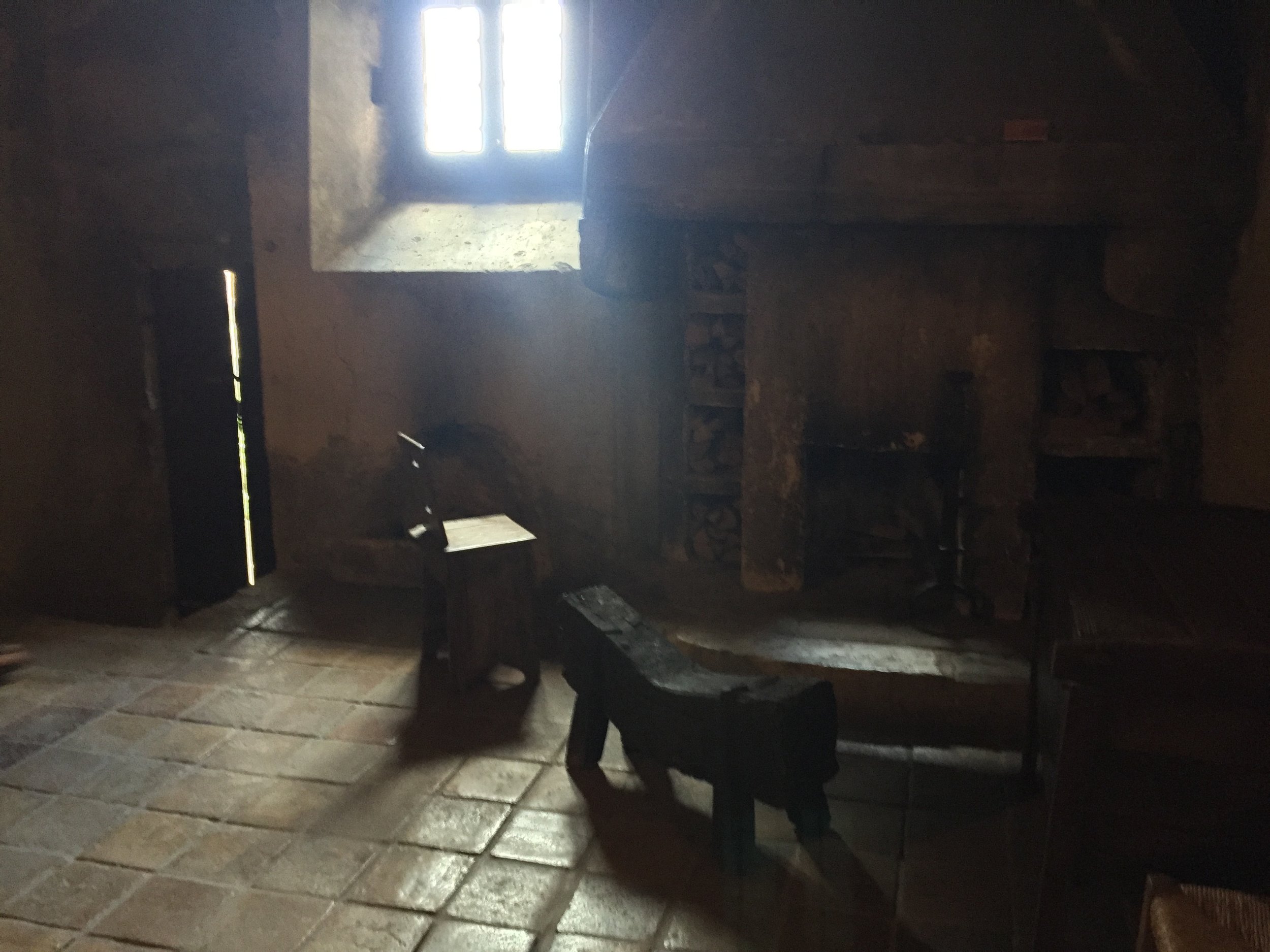

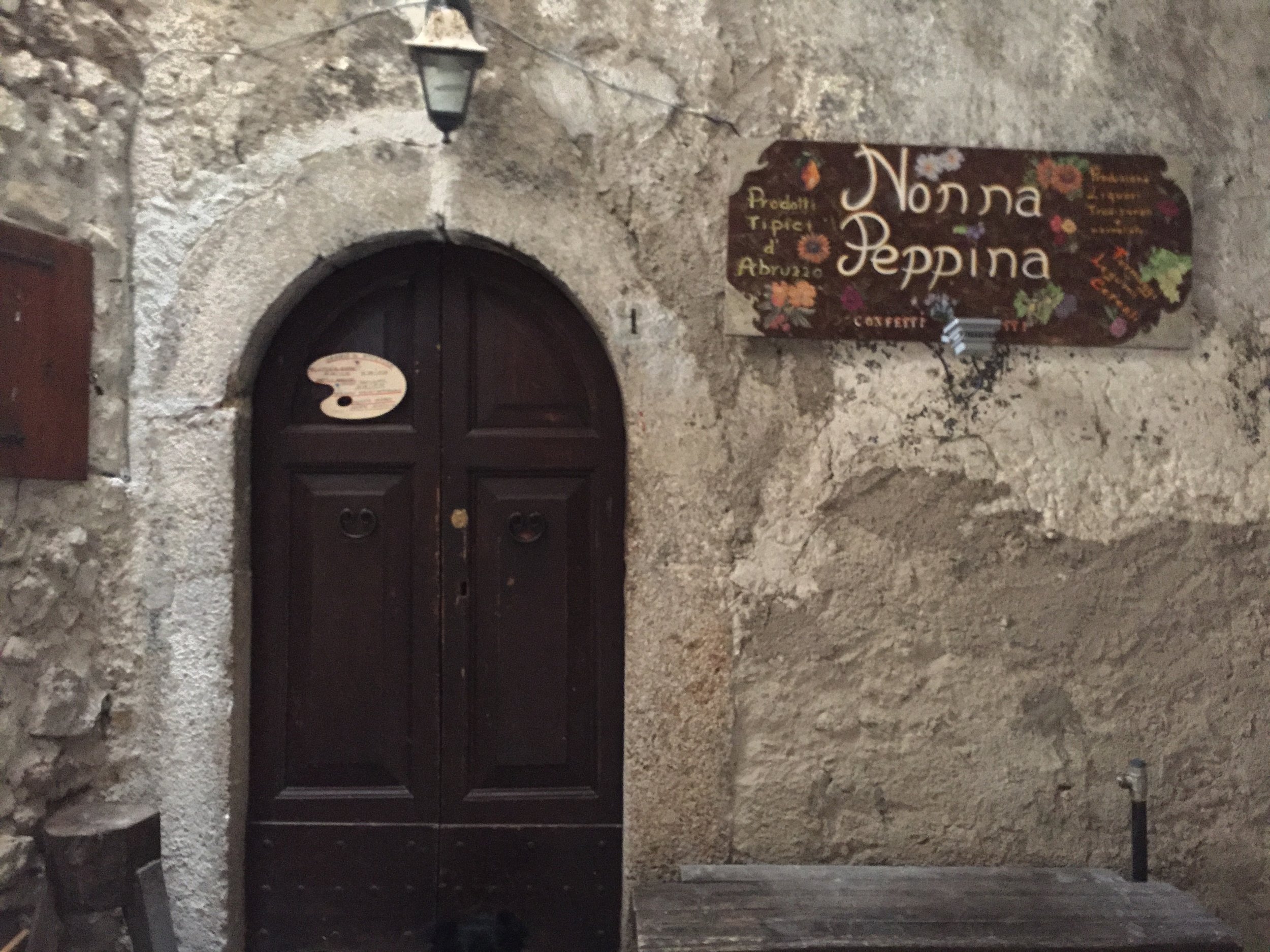


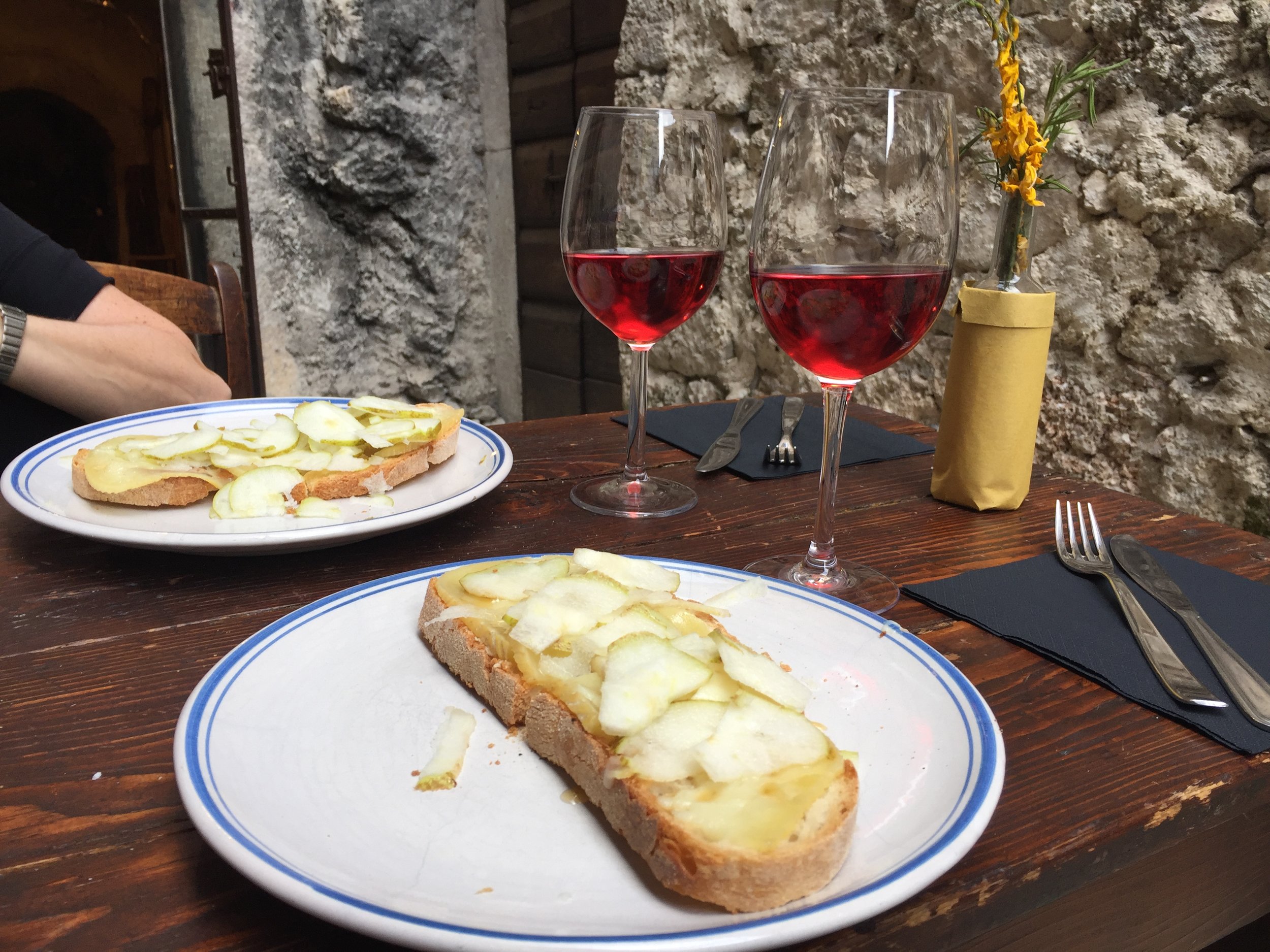
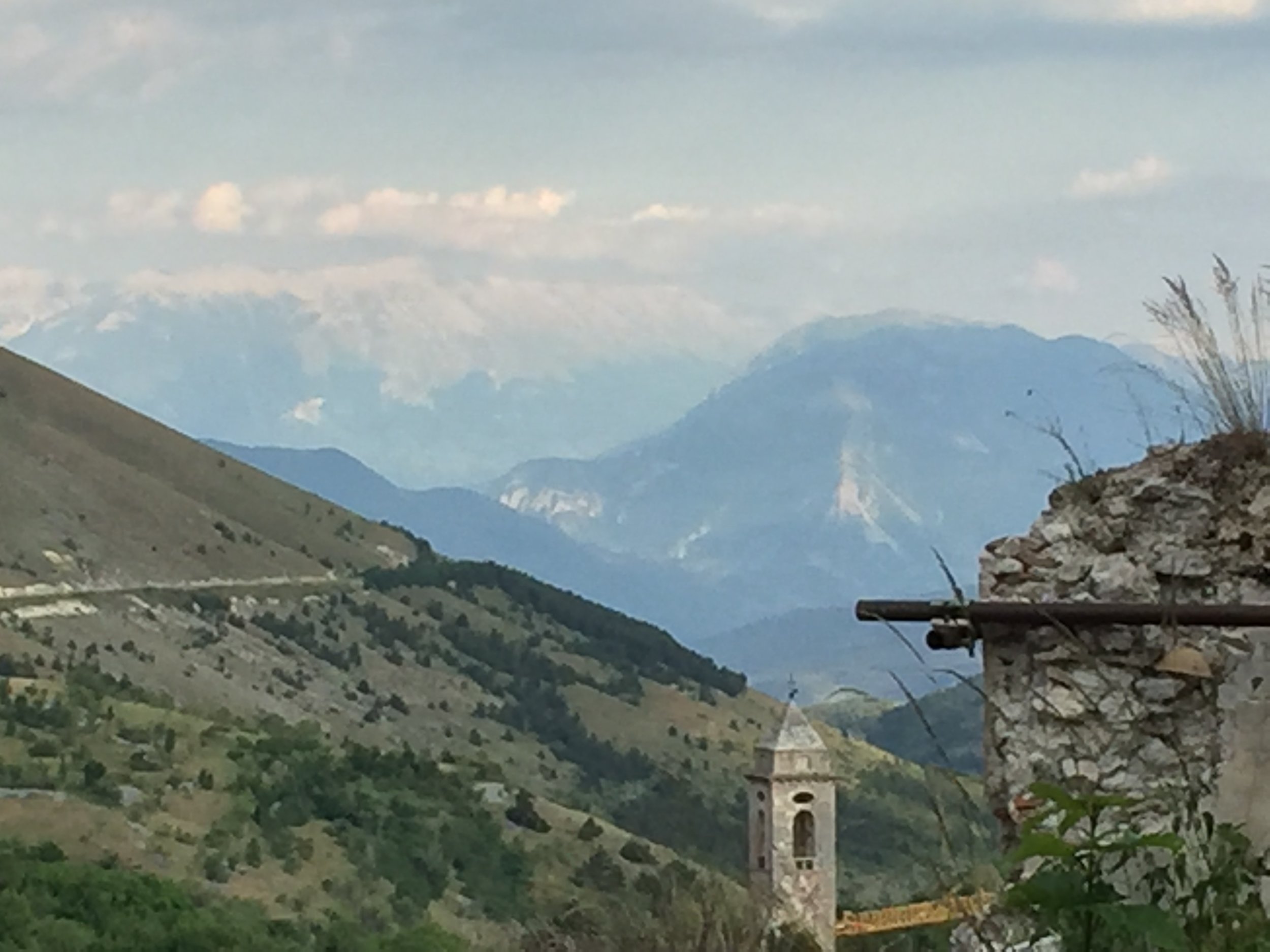


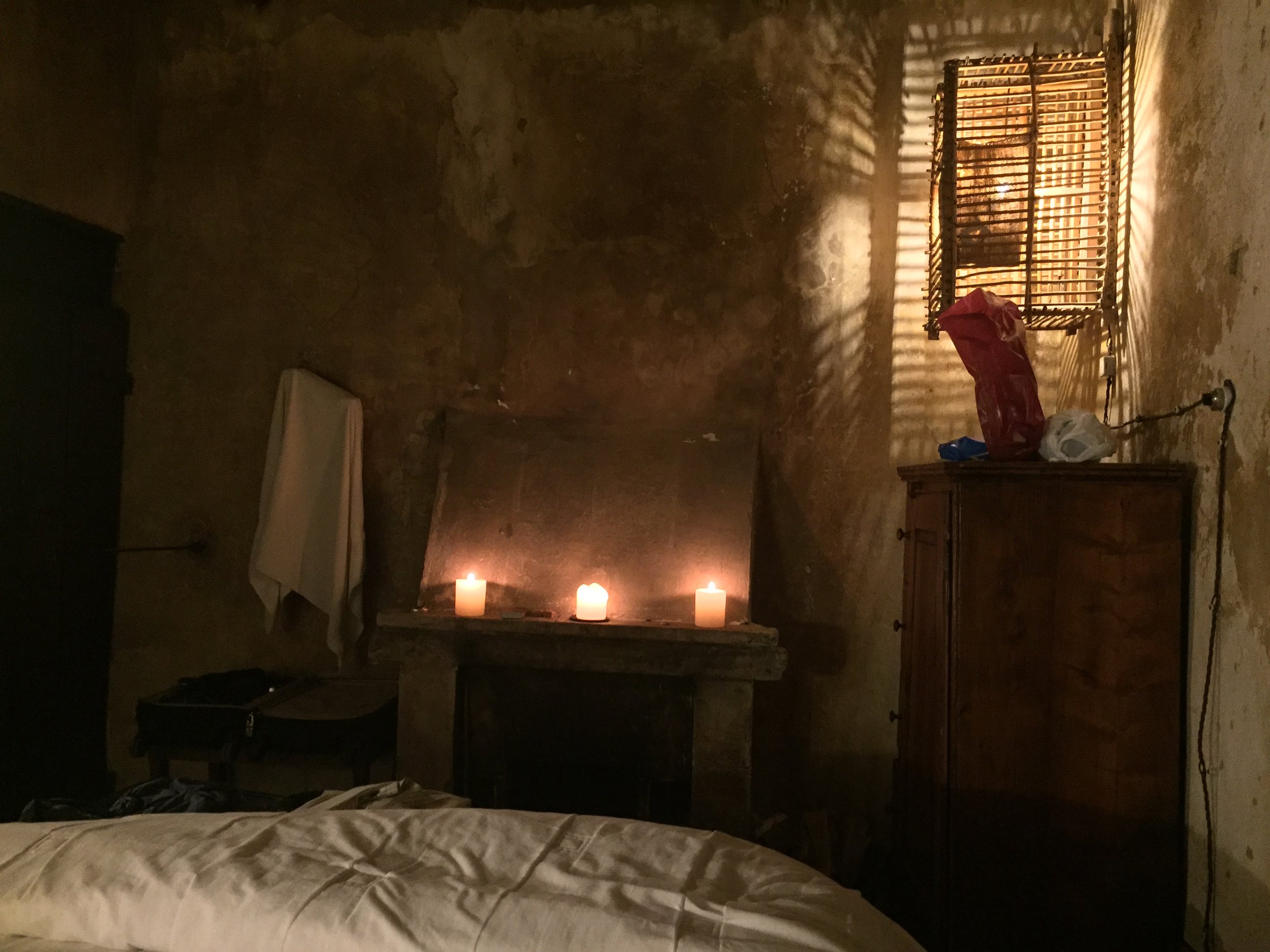
The hotel had rooms scattered throughout the tiny town. And while the rooms were medieval-looking — walls stained of passage of time and smoke, a slightly cracked glass window that had a expansive view of the mountain and hills below — the plumbing was as modern as one could get, which while an odd contrast was a relief. Medieval times weren’t know for their hygiene! (Photos above).
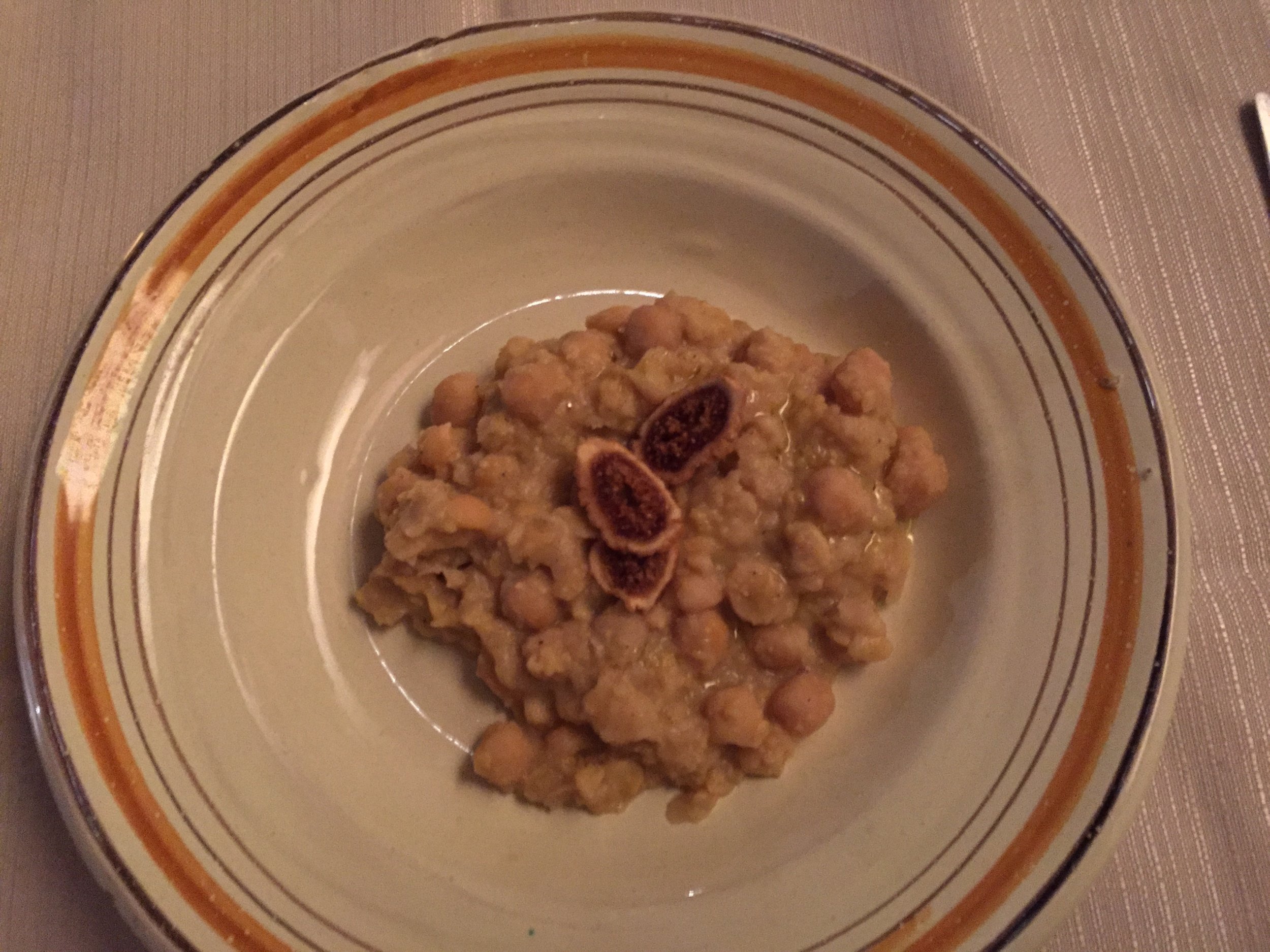

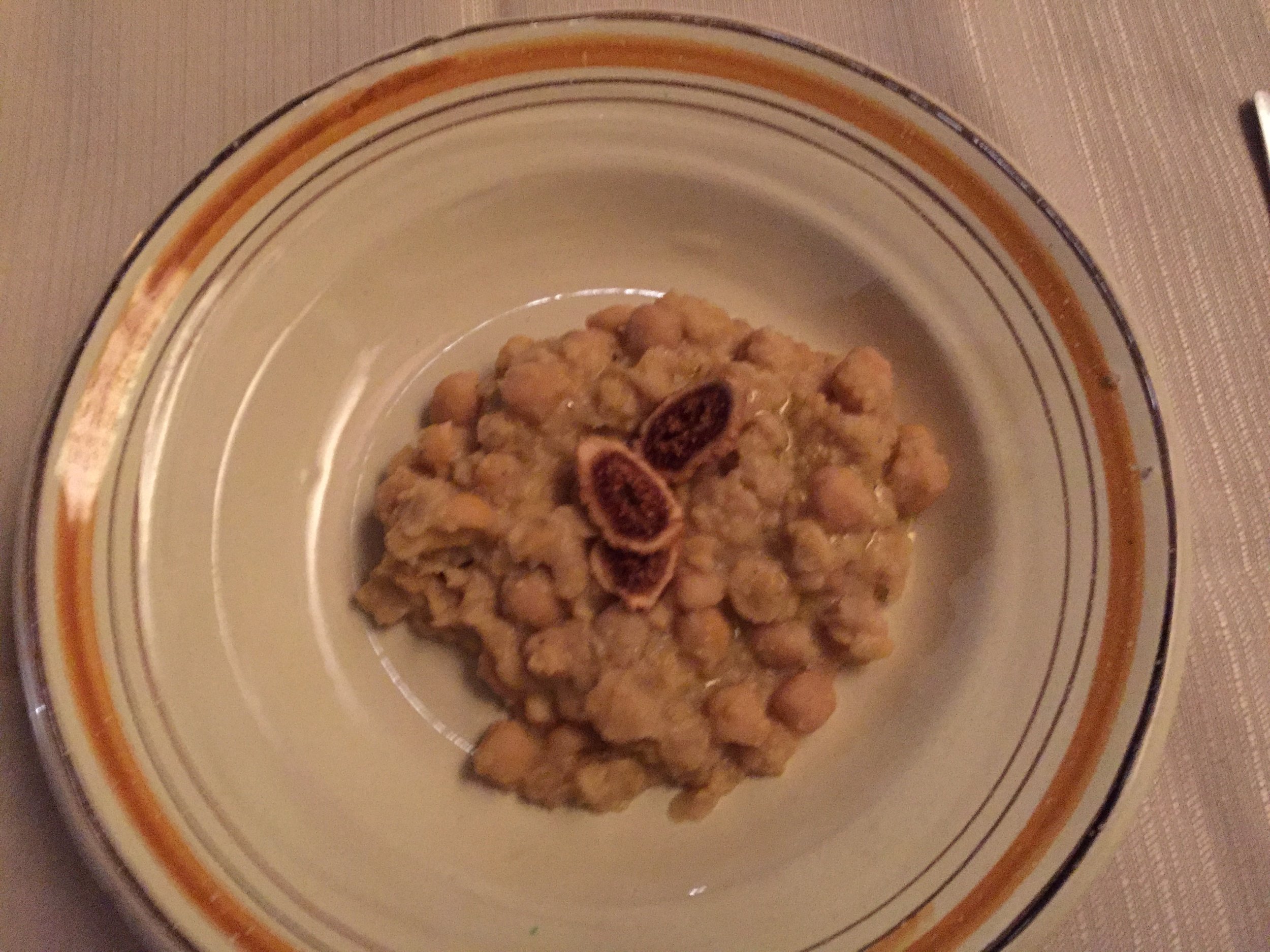
Our one night had one dinner so we strolled the half-circle of the town to the recommended restaurant — ok, the only real restaurant Locanda sotto gli Archi. Truly, of the ancient era; big wooden tables and great attention to details. The owner met us at the door, very friendly and could speak English, and told us with pride it was one of the highest-rated medieval restaurants in Europe.
As we sat, menu photo here, only reinforced a big question: were the medieval era really known for fine dining?
The food was fresh, plain, good, an worth a try — if you’re going medieval, you have to go all in!
Being the “best” seemed a dubious achievement. But for authenticity, you couldn’t beat it.
If you are in Abruzzo, this is a long and difficult drive. But if in Rome, it is worthy of a visit — for, as our friend, Fabio, said: one night.
But what a night!
Day 7…the last of the trip before we left for a week in Puglia, coming next.
 Outspoken Traveler
Leave a comment