A classic A 7-day trip on a private train; the epitome of luxurious travel, civilized company, and of another era. Except you can have it now.
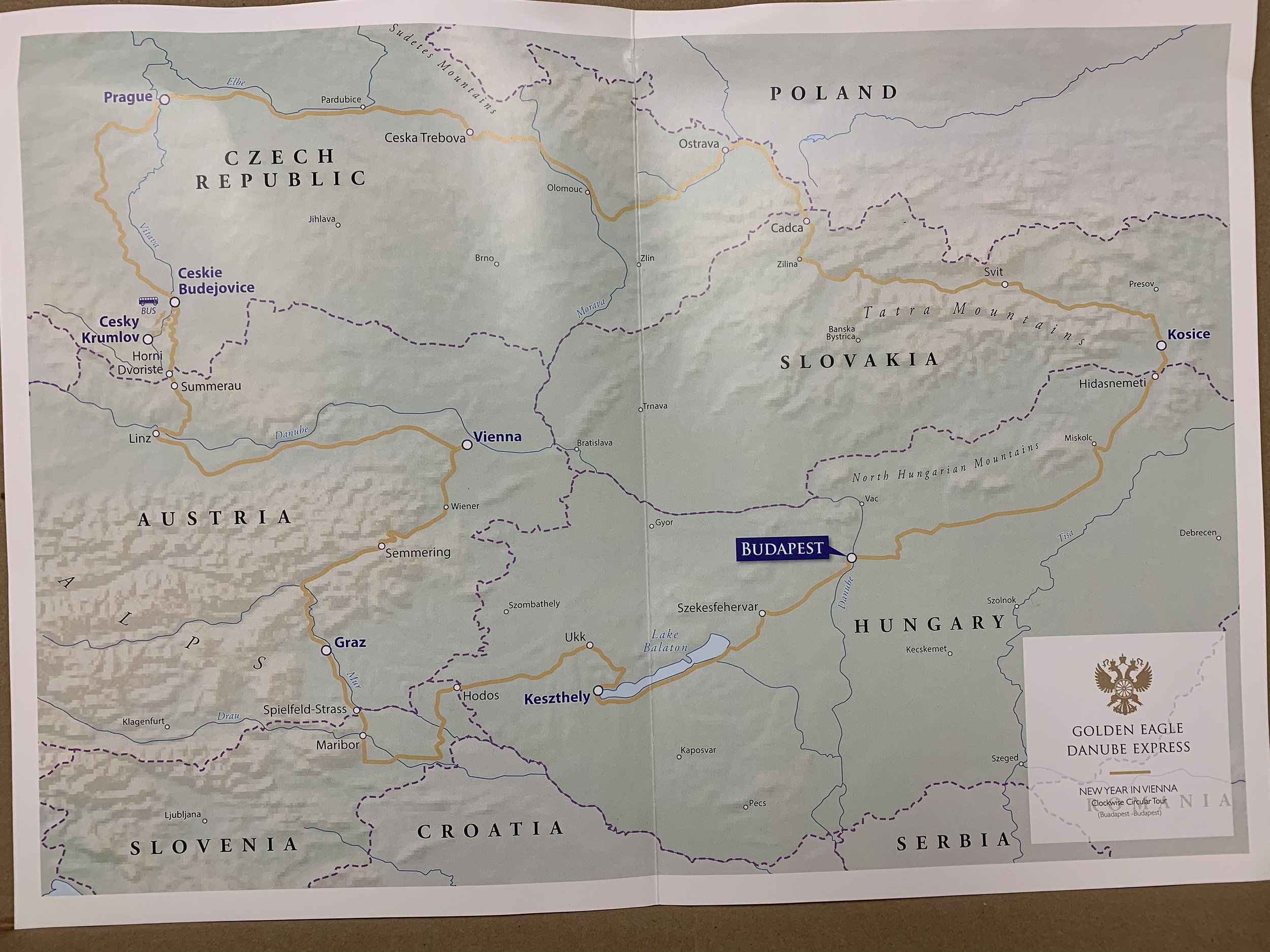
New Year’s in Vienna: The Golden EagleDanube Express. A tour unlike any other. Unique is a poor choice of words — classic is overused but perhaps better because the majority of the trip was by private train most likely built in the 1930’s. White gloved service. Staff for every sleeping car.A red carpet rolled out from the train steps as you left or arrived. A piano player in the bar car.What is old is new again.
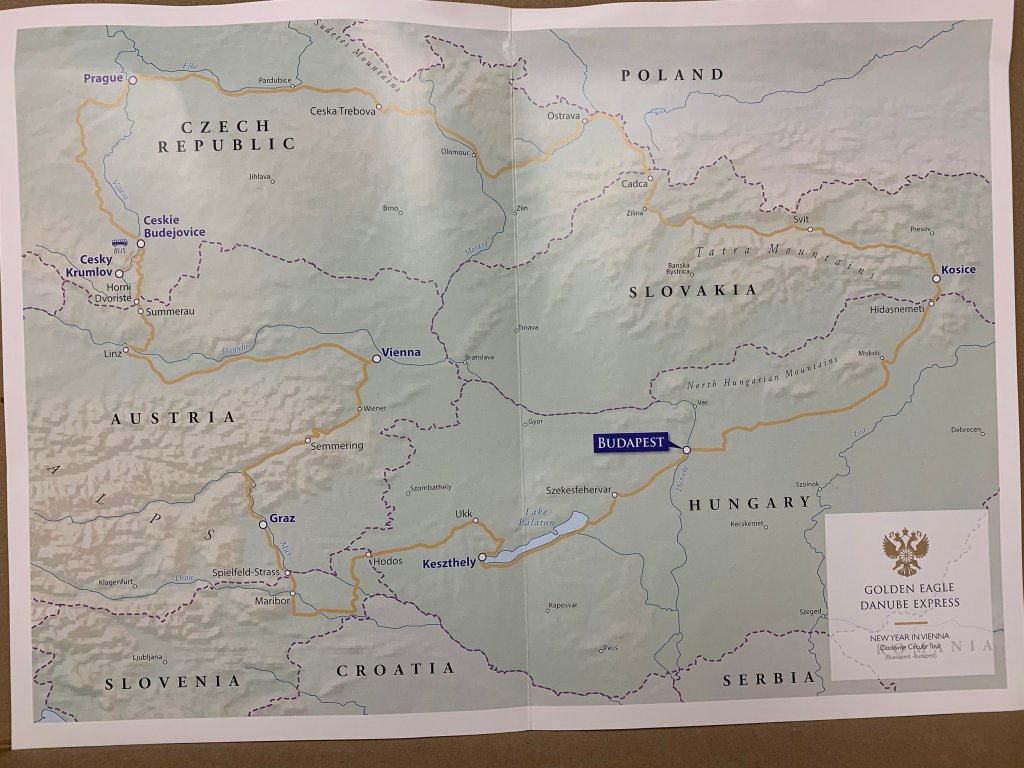
To encapsulate a trip with so many moving pieces, let’s take the itinerary from the Golden Danube Express website, add a brief commentary and a few images to visually spice each day; we will note and link those events have longer posts written elsewhere on this site.
The company web site is here: https://bit.ly/2EqwizC
Before we get into reviewing and commenting on the official itinerary, we need to thank E. Hardy and her team at the International Society of Railroad Travelers for providing us a great newsletter where we learned about the trip; and for taking care of all the details with ease and grace. Such good people!
While there are several in-depth postings on the Destinations page of OutspokenTraveler.com, here we will try to serve up the itinerary and bite-sized observations that embrace a key tenet of the OutspokenTraveler philosophy: embrace life and travel and be equal in praise and damnation. In this case, there is plenty of the former and little of the latter.
This trip, though expensive, can be accomplished for a variety of budgets. One money-related detail we liked was (almost) never having to reach for our wallets. The amazing Andrea, our head tour guide for the trip, removed money from the off-train tours which added a lot of wasted time and energy; she used this to make things easier — example, when we went into a coffee shop in the magical village of Cesky Krumlov, she just waved us to a corner of the cafe and said, “Order whatever you want.” Easy, and spoke volumes about how at every turn she, as prime representative of the company, made everything effortless.
To encapsulate a trip with so many moving pieces, let’s take the itinerary from the Golden Danube Express website, add a brief commentary and a few images to visually spice each day; we will note and link those events have longer posts written elsewhere on this site.
Having loved trains of all sorts all our lives, this 9-day tour of the Central Europe capitals and countryside was a true adventure. Riding a private train, one with its own piano player, Garbo, always present in the bar car playing Nina Rota’s theme from Amacord for us, was like some surreal dream carved from the early 20th century.
This is a once-in-a-lifetime experience. Other than the lack of internet (which was a gift in a backhanded way), there was not a bump or an problem: smooth and extremely professional. Only one shortcoming: not enough time on the train itself, and that is hardly a complaint.
DAY 1 BUDAPEST
HUNGARY
On arrivals day in Budapest, you will be met and transferred to the Four Seasons Hotel Gresham Palace for a two-night stay. Enjoy a welcome reception dinner in the elegant surrounds of this art nouveau landmark where you can meet your fellow travelers on this highly anticipated celebratory journey over the New Year holidays.
OutspokenTraveler: We write about the magnificent Gresham Palace, which houses the Four Seasons in another post here.
The hotel is housed in what is listed as a must-see of Top Ten buildings in Budapest. For ample reason. The art nouveau design is incomparable and can easily be overdone — it pervades architecture with disparate bas-reliefs, status, carvings, a high-use of stained glass — this was tasteful, selective and impressive. We arrived late for the greeting dinner and felt rushed; but we were quickly settled into a table, making our introductions and being served so we could catch-up to those already having desert. The entree was a welcome delight — shredded veal held in a rounded, flaky pastry, proving the hotel chef was masterful.
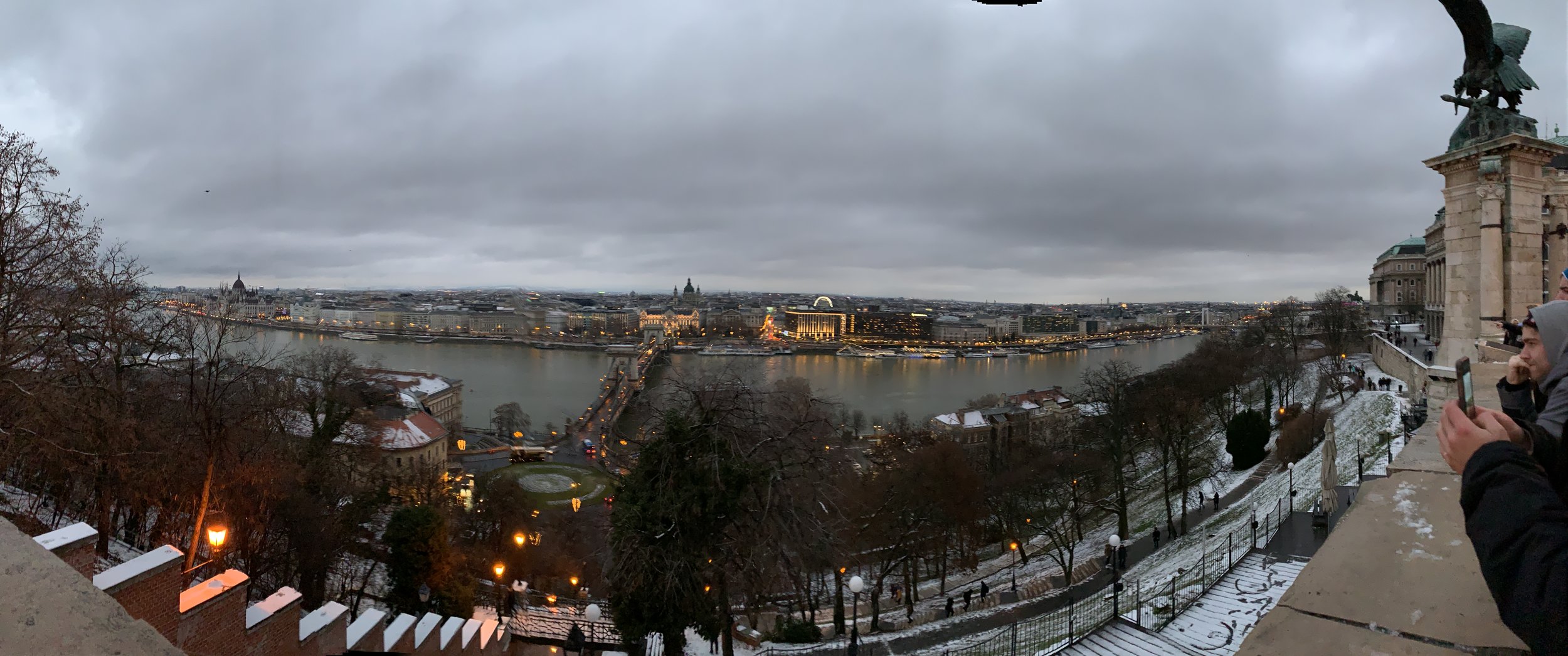
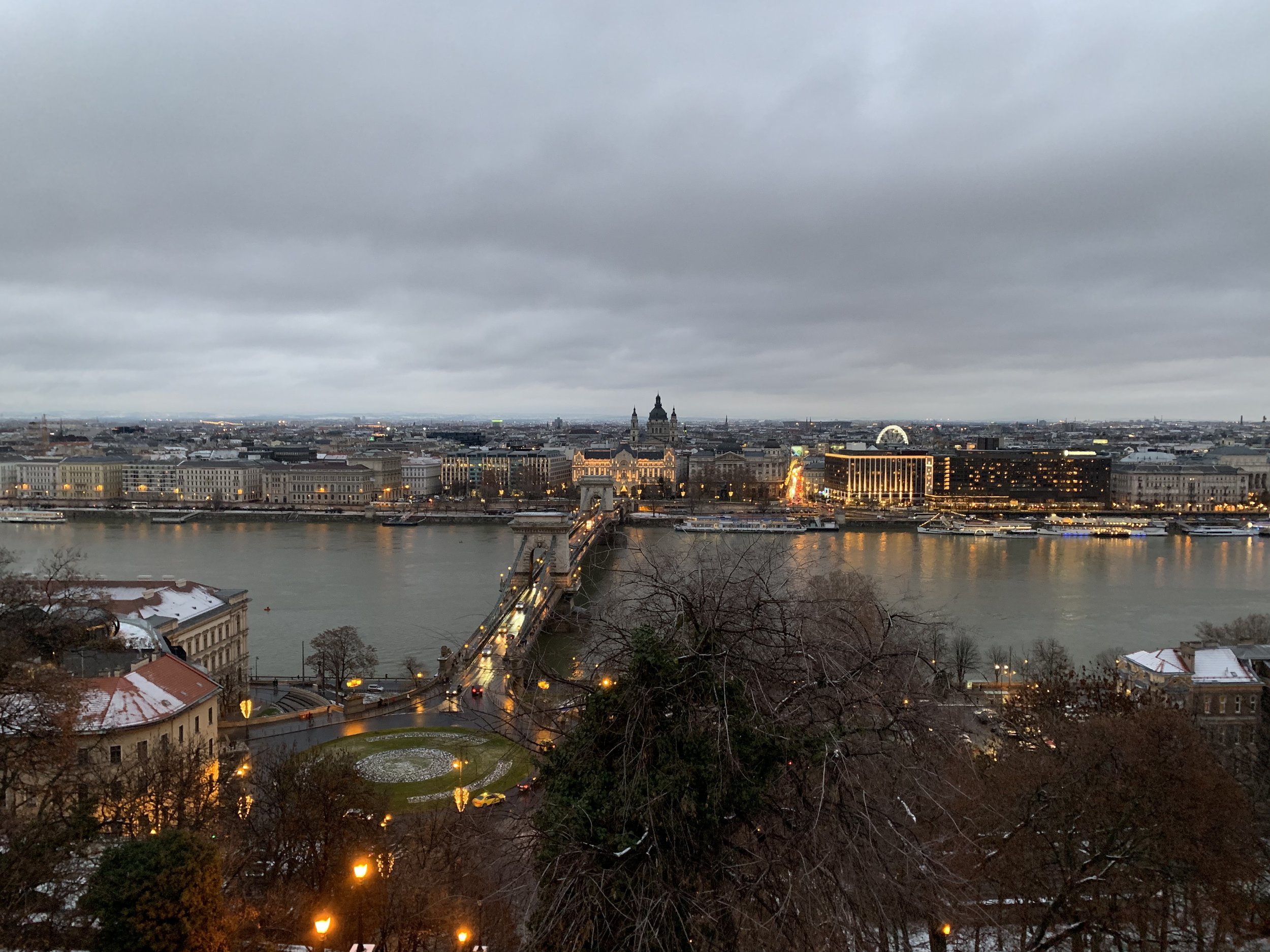
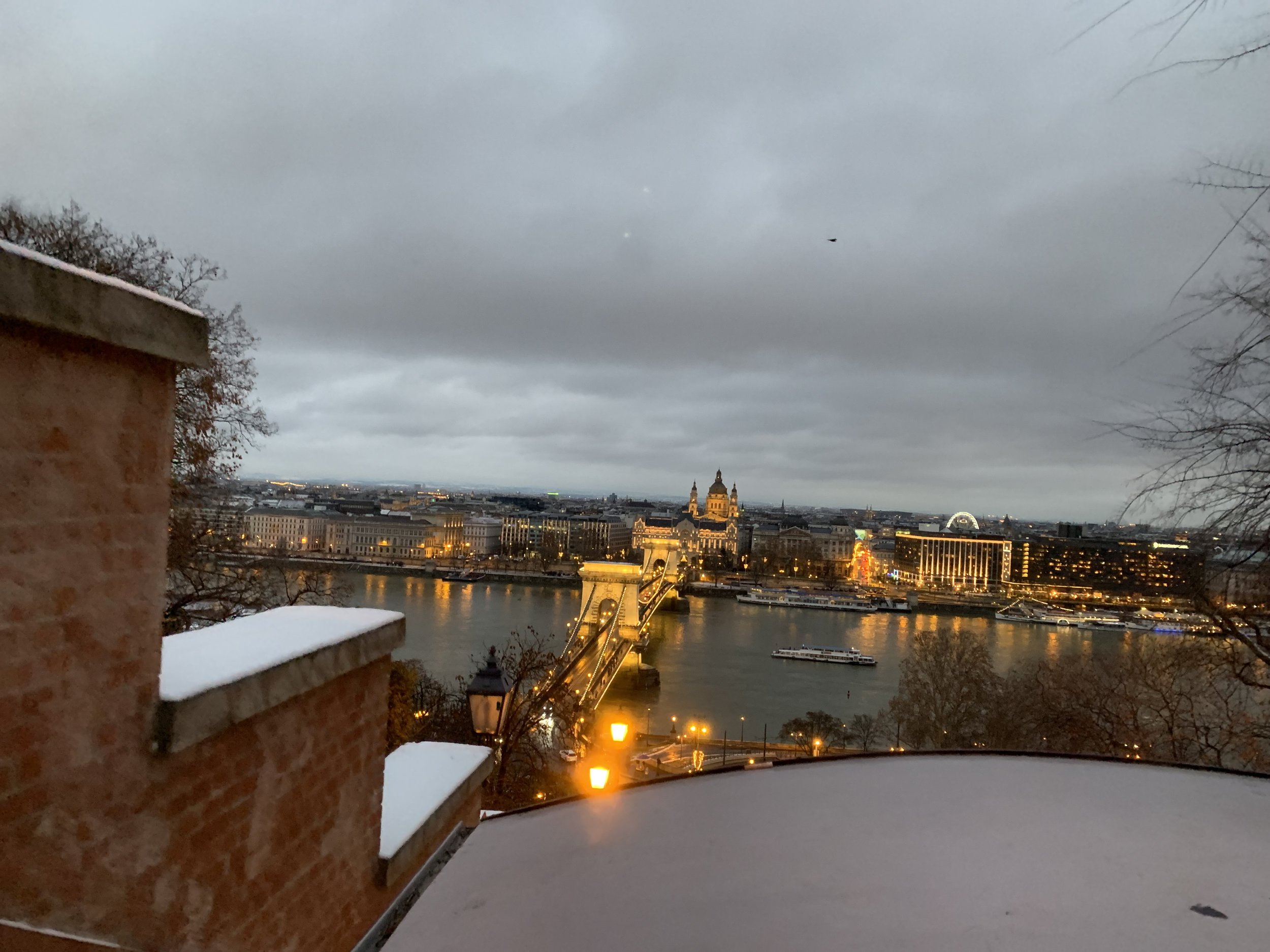
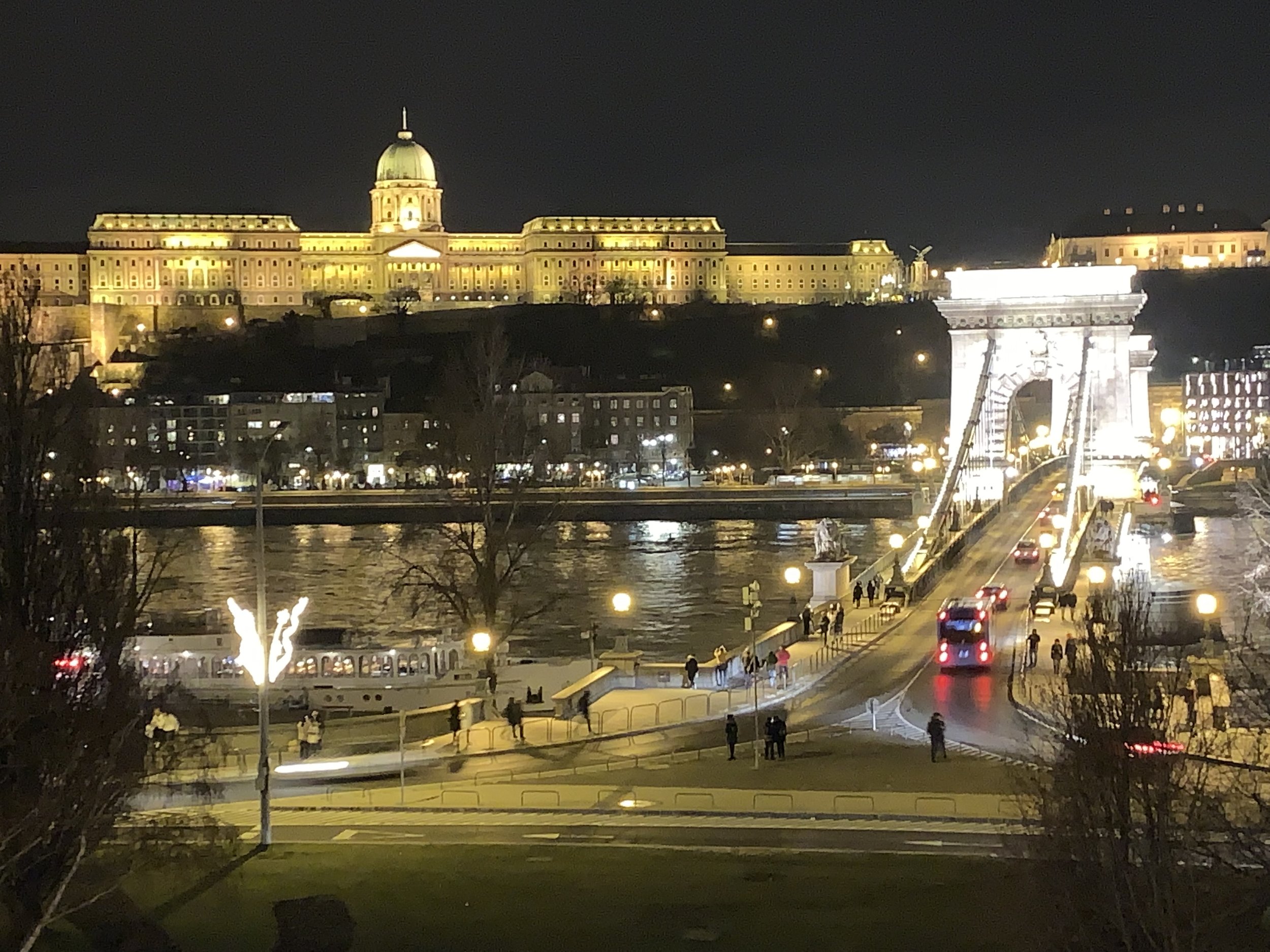
At dinner, we met George, our guide for Budapest, and Andrea, the main guide for the entire trip, whom, by the way, as we have noted, was simply brilliant in how she managed a very diverse group of ages, mobilities, personalities, ages and interests. As soon as we could, exhausted from jet lag, we went up to our room; but bed was not in the plans. Once in the room, facing the Danube and the edifice of the Buda side of the city, it took a while to tear ourselves away from the windows. This photo is from our window — and why you must ask for a room facing the river!
DAY 2 BUDAPEST
HUNGARY
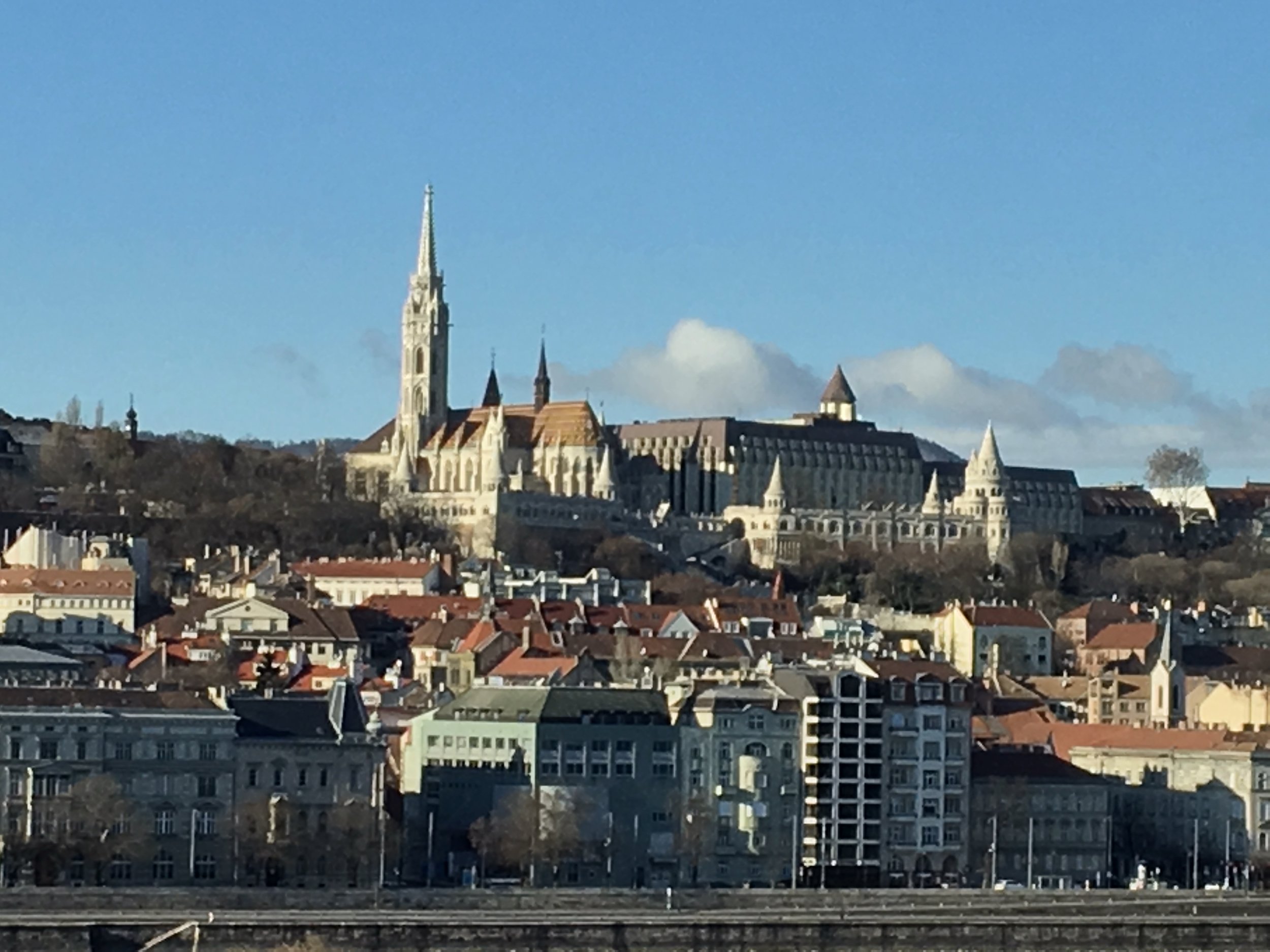
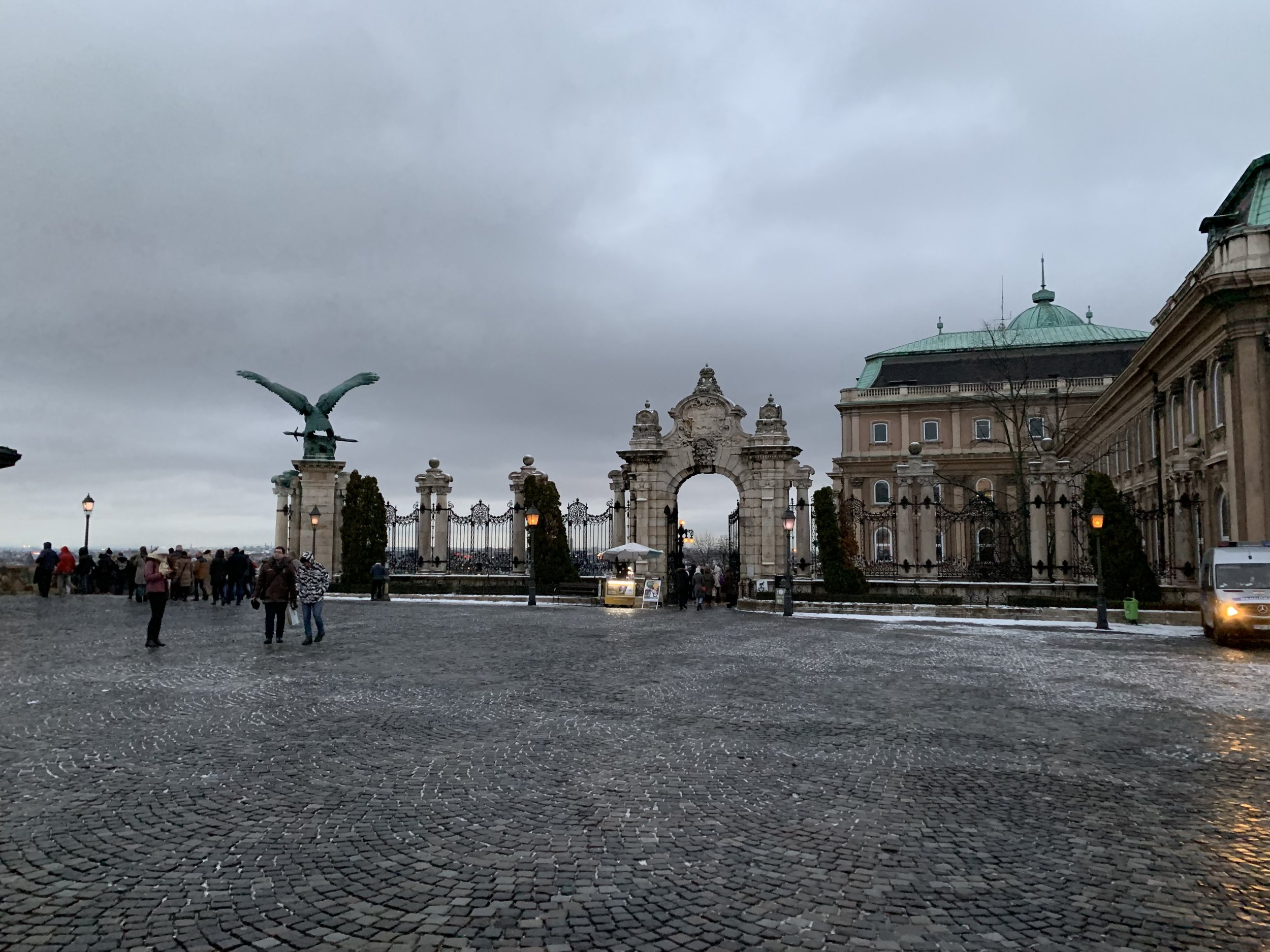
Budapest is actually two cities separated by the River Danube. The old city of Buda with the imposing Royal Palace, dominates the city with stunning views across the Danube to the commercial heart of Pest. On our first full day, our city tour includes the Royal Palace, St. Mathias Church and a panoramic view of the city from Gellert Hill. We will also see the Citadel, the Opera House, St Stephen’s Cathedral, Heroes Square and the City Park.
The rest of the day is at leisure where you can stroll through the many Christmas Markets scattered around the city. You may want to visit the historic Great Market Hall with its endless variety of delicious foods and wines or warm up and head to one of the city’s famous thermal baths for a rejuvenating Christmas dip.
OutspokenTraveler:what they promised in the day’s itinerary was only halfway met. It simply was too much. We ran out of time, to the point where the “free time” became a stroll through the nearby excellent Christmas Mart at St Stephen’s at dark before dinner.
But this is not a complaint: the day was fantastic in how by bus we danced through the city. What we did see was so worth it that any absence of activities was overlooked for the wonderment of what we did see!
Getting to the lobby and tour bus by 8:30 am was easy — so much to see! Ok, that’s a little lie — it was tough getting up early, but we soon realized that this meant we would beat the crowds. And yes, even a few days after Christmas, in bitter cold and even a few snow squalls, it was crowded.
This was a very full day, almost head-spinning but in a way that seems like each site you visit is only bettered by the next. The Royal Palace was atop the hill on the Buda side of the river. Having seen many palaces, this one was less ornate, more of an pre-Renaissance era. The one tale we do recall from George: one specific room where, during the battles over Catholicism versus Protestantism, two Catholics were thrown from the high windows only to land in a pile of horse manure and live. Guess that still counts as good luck unless you’re pulled out of one crap pile only to be executed!
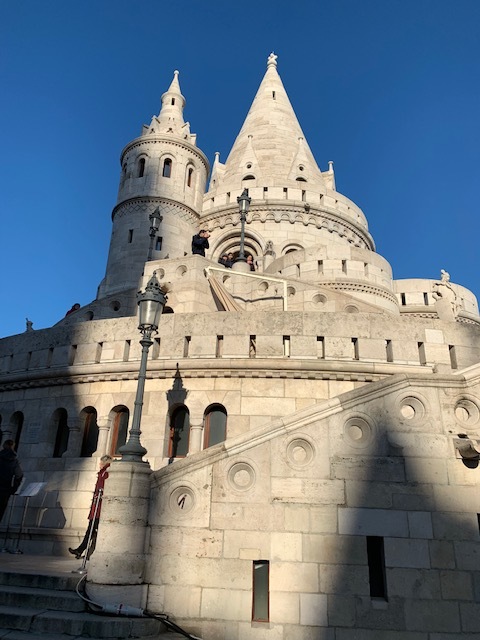
The Fisherman’s Bastion is where we had lunch; but the seven odd cylindrical towers, built in the late 19th century, bore an astounding resemblance of the Truli houses of Puglia, Italy. But of all sites we visited that day, two stand out.
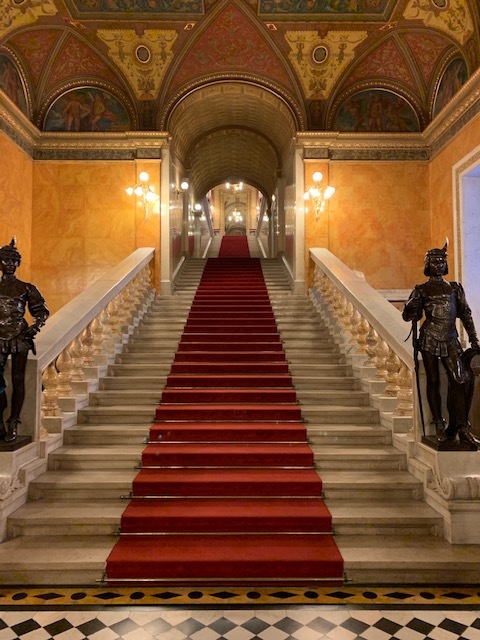
The Hungarian State Opera House, completed 1873: while it was disappointing to see this venerable building covered in material that spoke to a serious long-term renovation, we did get a tour and saw several interior highlights — such as the heavily gilded area where smoking and drinking occurred between acts or the many stairways and hallways lined with red carpet and more gold, gold, gold. One detail stood out —the staircase where only royalty were allowed to use to enter the venue, with a giant mirror at the top of the stairs so they could see how they looked.
Without a doubt, the best part was, at the end, they took us to an opulent, red-carpeted stairway and large hall, directed us to stand or sit in the steps, and surprised all of us with a private opera performance — regaled by a duet that sang some of the greatest arias and beautifully. The soprano was especially memorable. This was a complete surprise, but the first of several which made us realize it was a special aspect of the tour’s “magic” — specially planned moments to accent the day.
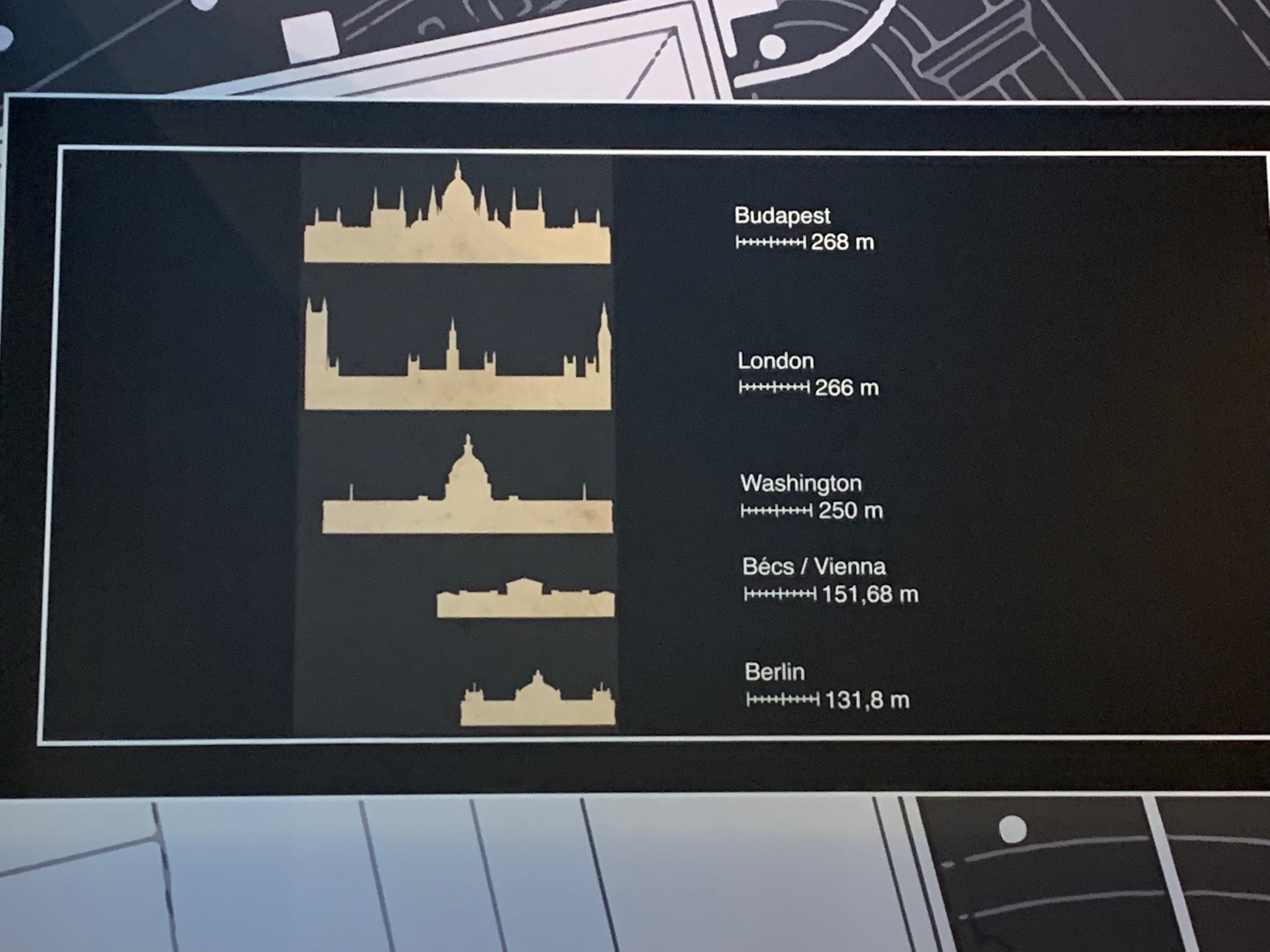
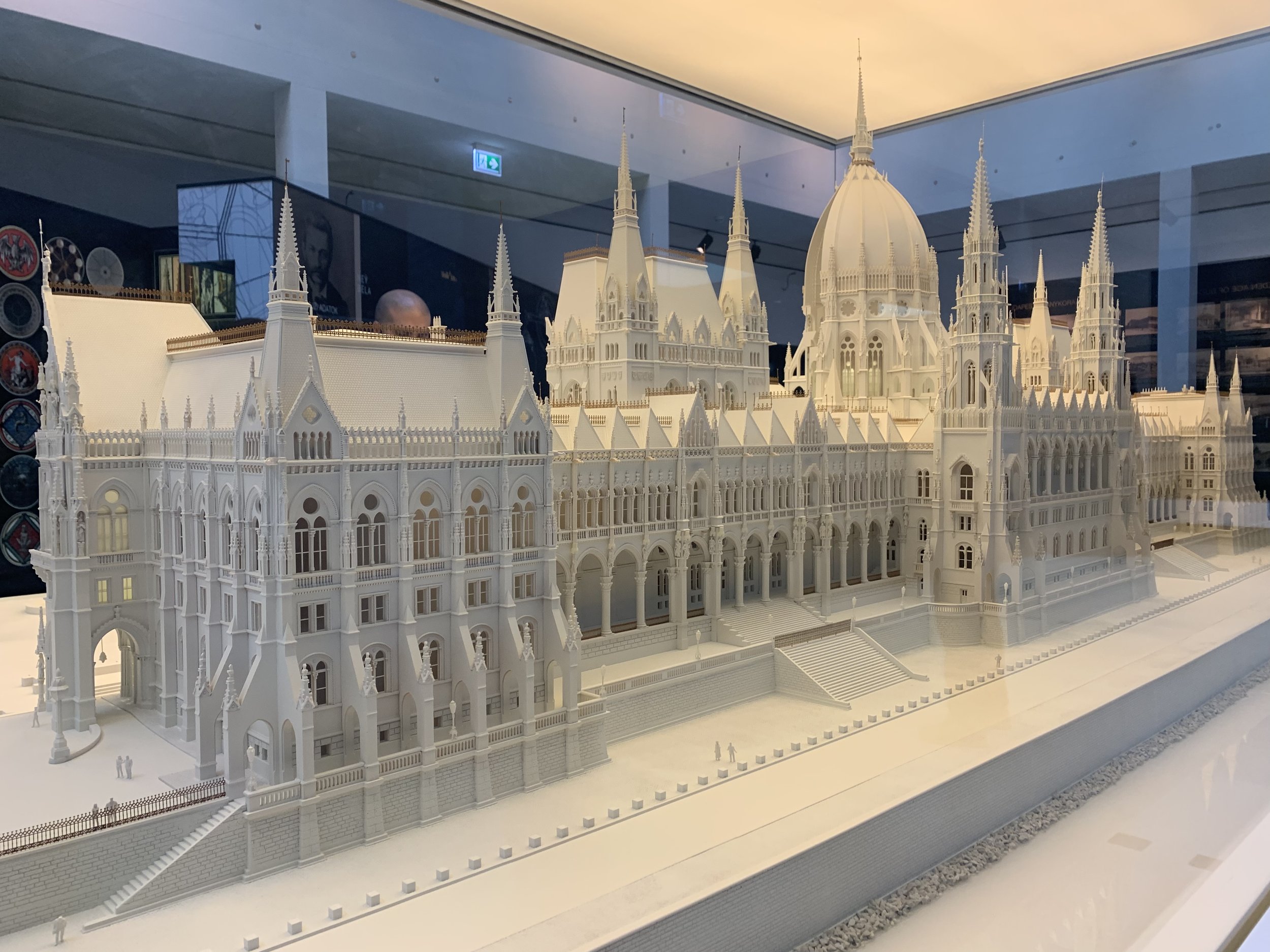
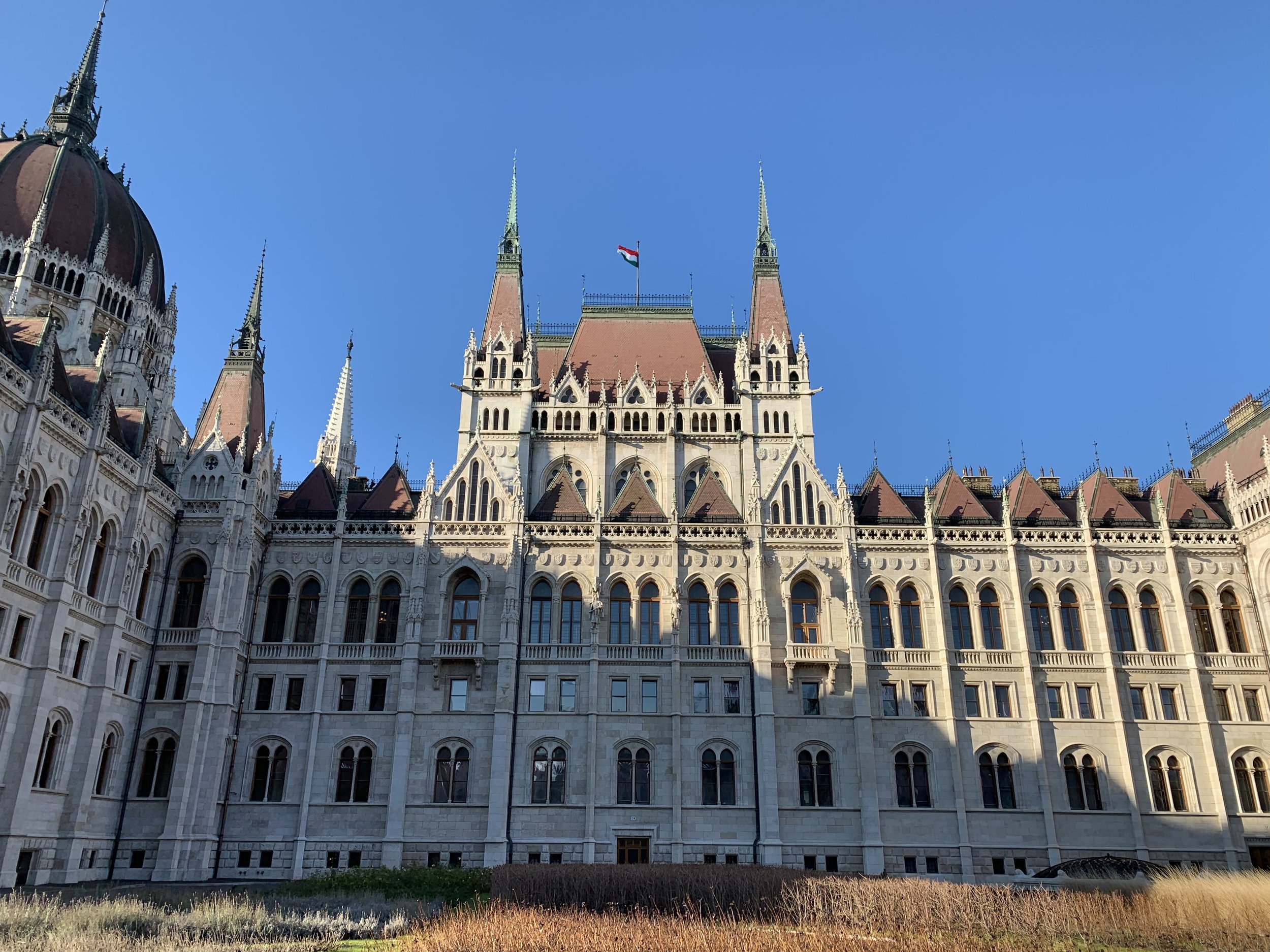
The National Assembly Building: This was the highlight of the day. The Hungarian National Assembly is the largest parliament in Europe. By far. It makes the great House, almost as long, look small.A gentleman who looked like a bodybuilder and a guard took us on a tour of main hallways, staircases and the actual assembly room.The building was again a pastiche of red carpets, gold, gold, gold…the gold dust of Empire.
The guide/guard made a point as we stood in the main dome of the building that it was 96 meters tall, and that 96 had a special meaning as a number to Hungarians. 896 a.d. was when the Magyars appeared in Hungary from the distant steppes of Asia; 1896 was when the building was completed to celebrate 1,000 years of history.
The veneer of the tour of this edifice was torn when the guide/guard made a snide comment about the assembly and the small number of opposition seats, almost with a sneer; it reminded me of the declination and erosion of a post-Soviet true Democracy occurring under their current leader, V Orban.
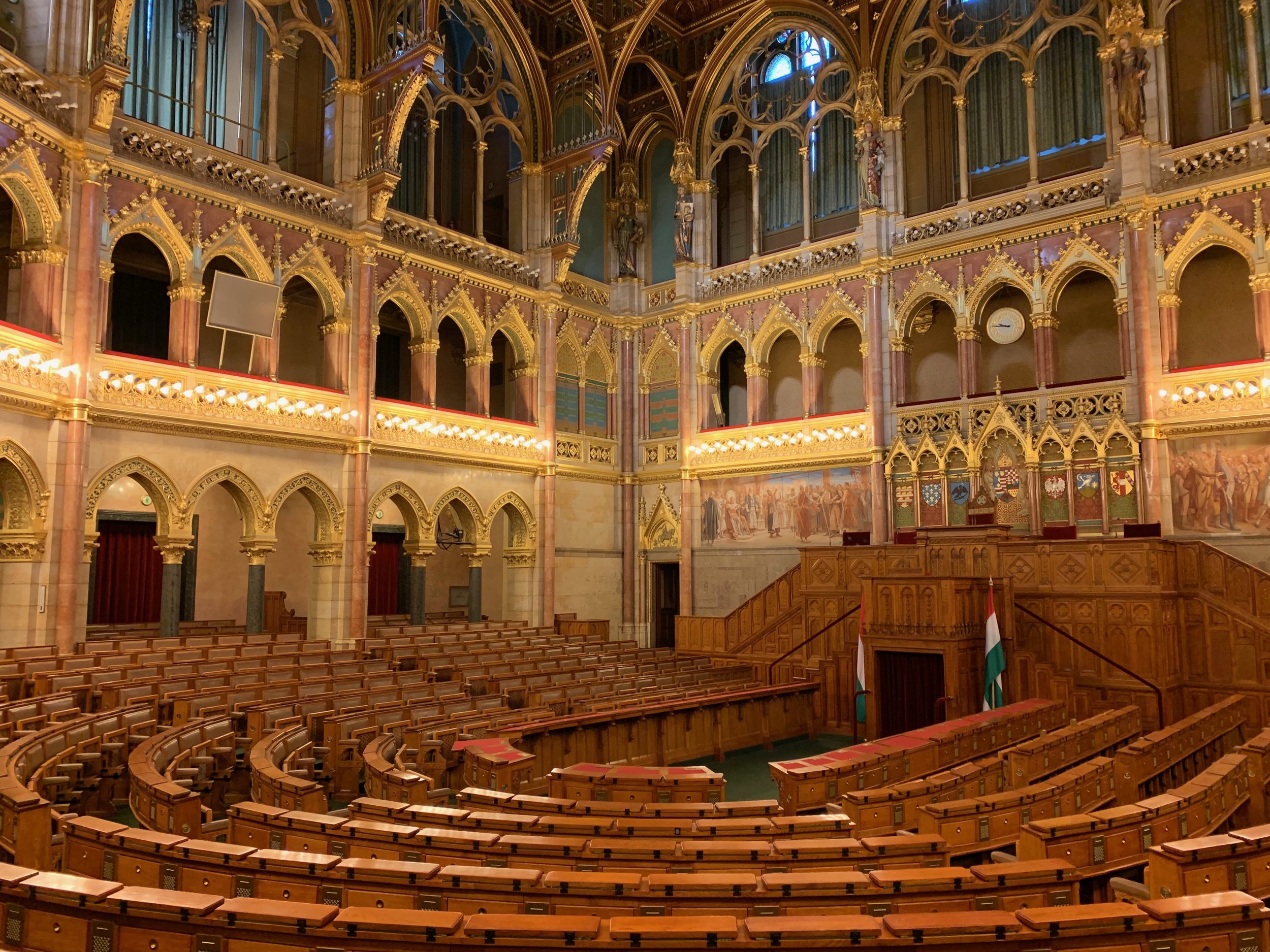
A more detailed post on our visit to the parliament: https://bit.ly/2TKph1W
As for St Stephen’s Cathedral, Heroes Square and the City Park: tour bus drive-byes, which was fine. What we saw was almost like having too much rich desert, our sense were full of beauty, majesty, a lost era.
That night we toured the wonderful Christmas Mart nearby and had dinner at the hotel restaurant, Kollazs; we ordered what looked (Goulash) like traditional meals, which both were excellent, and had very warm and friendly chat with the waitress.
DAY 3 KESZTHELY
HUNGARY
After breakfast we’ll transfer from our hotel to board the Golden Eagle Danube Express. After settling into your luxurious cabin, we’ll make our first journey through the winter landscapes of Hungary to Balaton Uplands National Park.
Emerging from the National Park we’ll arrive in Keszthely perched at the very western end of Lake Balaton. This picture-postcard town is filled with grand town houses and famously the site of Festetics Palace, a lavish baroque home fit for royalty. After a tour of the palace we’ll continue into Austria overnight by train.
OutspokenTraveler: Early morning found us on the bus, touring past the city’s oldest station, Victoria-looking, and into a train boneyard and park; old engines of all ages, playgrounds abound. When we turned a corner and found this traditional band playing for our send-off, with the train staff in white jackets serving champagne. Most of us were slightly agape by the whole scene, but in a way that made you smile as you boarded the train, walking onto a short red carpet before stepping up. Anticipation built.
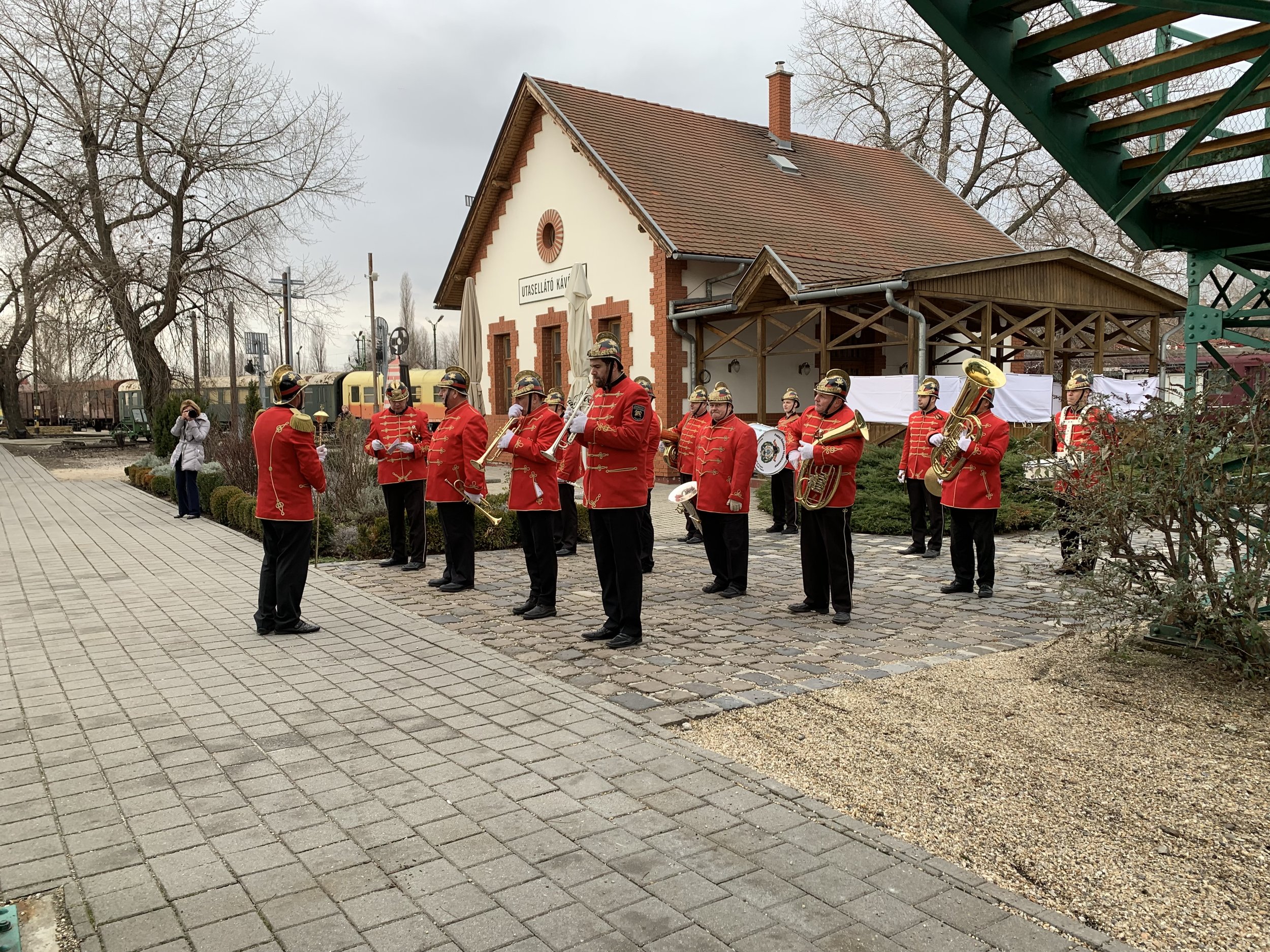
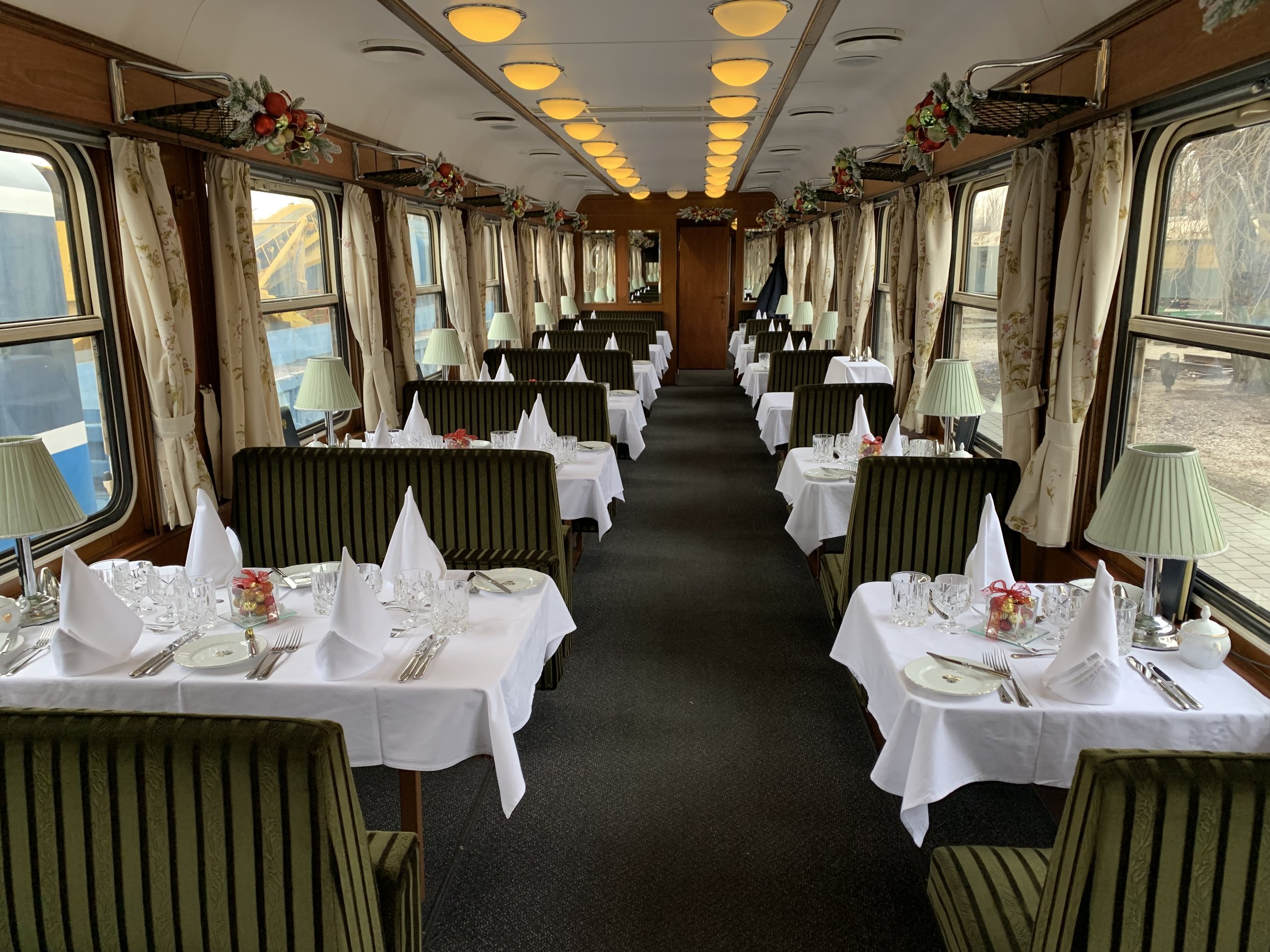
Red carpets were laid out at the base of the steps onto the train. We met the crew and staff. Walking through the bar car, then the dining, finally to the extremely comfortable cabin.
OutspokenTraveler: Perhaps it was the cold rain, with the slightly depressing low cloud ceiling rendering everything grey, but the ride along the very large Lake Balaton, but this was the least memorable day of the trip, cast a darker mood to the day.
Being on the train was wonderful, it just cruised along and gave us a few hours to unpack, have lunch, lounge a bit in the bar car. If we had known this was going to be the longest non-stop portion of the trip we might have spent more time in the bar car listening to the smooth fingers of Gabor work the stand-up piano.
Running close to Lake Balaton, one could see we were on the flat side and the opposite shore had small mountains. We learned that this was a big region for growing white wine grapes. But what was particularly noticeable was that we were passing a summertime recreational community, one that bore the calico mix of new buildings and houses, and old dilapidated Soviet-era construction.
After a soggy bus ride past the thermal baths — which looked quite inviting even under the low cloud ceiling and rain — we reached the Festetics Palace.
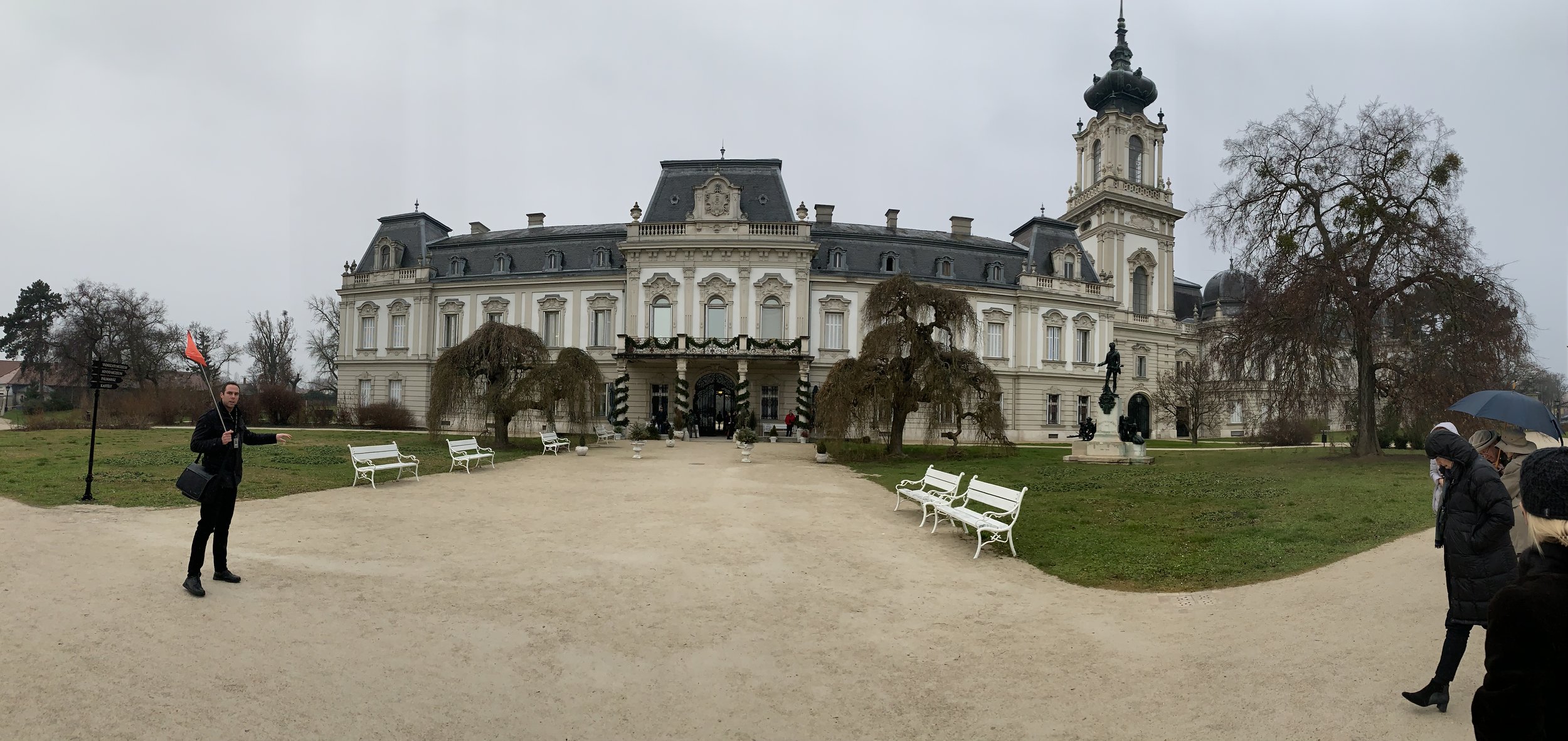

This palace is worth reading about, the history of it both fascinating and complex. One tale stood out of how a Nazi officer, highly literate, upon taking over the palace as his headquarters, realized the immense literary and historical value of the multi-story library and to prevent it from being looted, had it walled off from the rest of the palace. Reminds us all us how uplifting it is that in desperate times, certain individuals can rise beyond their assigned roles and perform brave acts that change history.
The photo below is a panorama trying to capture the immense number of volumes.
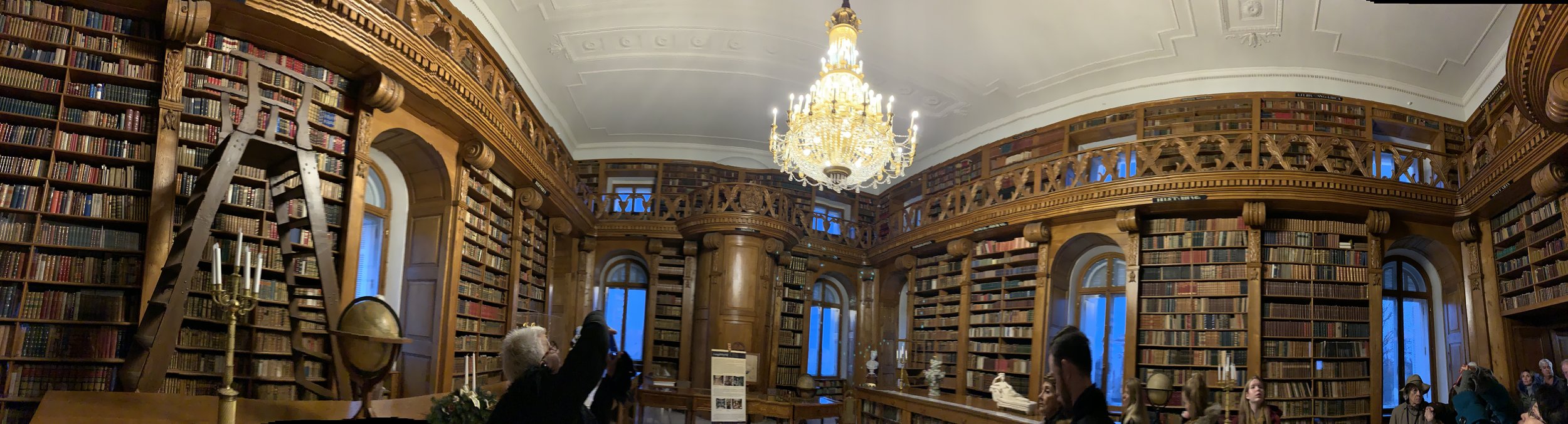
The palace tour was given by a lovely woman wearing traditional garb — an overflowing long white and blue dress.There does come a point where one can see too many palaces — and this was it. It was typical in its opulence and design, but for one detail: the library.
How do you know you have collected enough books? Whenyou find this one on the shelf:

The palace tour ended in a large, spare room where a gentleman gave us a long-winded wine tasting, a wide variety of mostly young white grapes. Travel+Leisure has a great article on the Hungarian wine industry.
DAY 4 NEW YEAR’S EVE IN GRAZ & VIENNA
AUSTRIA
Arriving into Austria this morning we begin our exploration of the fantastic city of Graz at the foot of the Austrian Alps. We will transfer by coach to the city centre and have a short walking tour of Graz’s range of renaissance courtyards and provincial baroque palaces. As part of our Freedom of Choice programme you can choose to take free time or enjoy a pumpkin seed oil tasting, complete with traditional, locally made bread and wine.
After a gourmet lunch on board the train we’ll continue to Vienna to begin our New Year’s Eve celebrations. This afternoon we will have the opportunity to join in with an atmospheric Viennese waltz lesson for the group. No experience necessary!
Tonight, a special New Year’s gala dinner will be served inside the beautiful City Hall, Rathaus Vienna accompanying a performance by the renowned Wiener Hofball Orchestra. Music and waltzing will take us through to midnight before enjoying incredible views of the fireworks from the city hall’s balcony.

OutspokenTraveler: Graz was a lot of fun; the tour guide described it as a college town, but in truth it was a sophisticated city of many disparate parts. The university area looked the as it should; the cathedral was beautiful but a bit gaudy, like many cathedrals.
The best was the old town with its painted and ornate buildings, some nearly 500-years-old, intact and added a great energy to the area — true, people were clearly preparing for the New Year and cheerful, but the walk through the old town center to a pumpkin seed tasting was relaxing and a pleasure to the eye and senses. It felt light and alive.
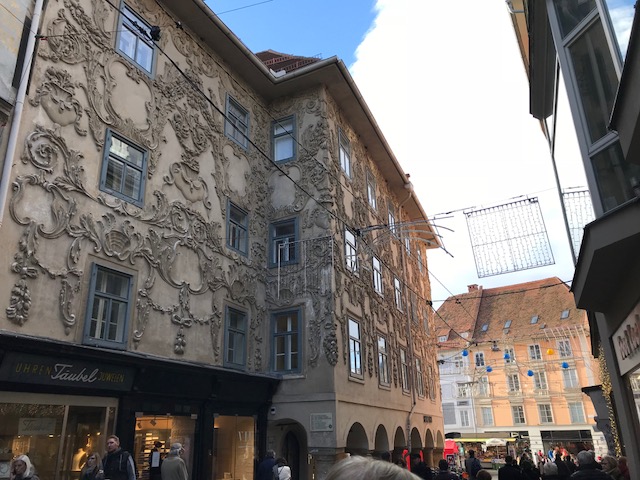
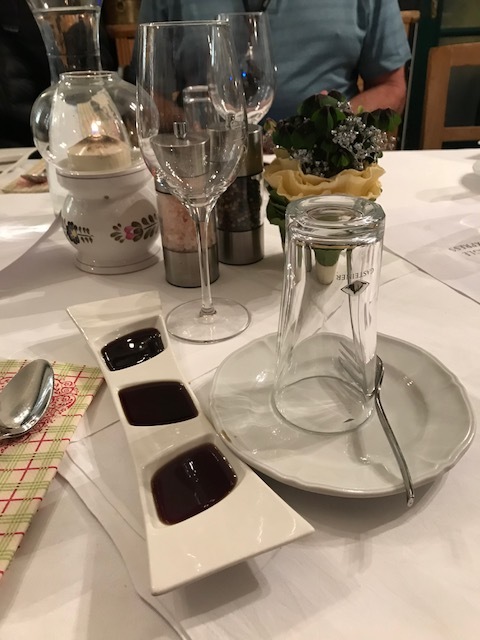
The pumpkin oil tasting was held in a very old structure, hidden as a restaurant in a old, tiny passageway. Pumpkin seed oil is quite unique, hard to describe because it hits the palate hard , ranging from smokey to strong — but always pumpkin!After tasting three varieties, we purchased a bottle for salads at home. Delightful stopover.
NEW YEAR’S IN VIENNA: OutspokenTraveler: while there were many moments that competed for the high-point experience of the trip, New Year’s in Vienna’s Rathaus city hall was a celebration of a caliber we had never experienced; it was the very height of Western Civilization’s definition of class, style, panache, posing, being seen and seeing others, all ensconced in a massive celebratory emotion of New Years. All ensconced in the magical music of composers like Strauss and Mozart. Massive ornate hall, flowing champagne, and the city orchestra and various waltzes, performers…a kaleidoscope, it almost made the room spin. A few pictures will say more than words can do justice.
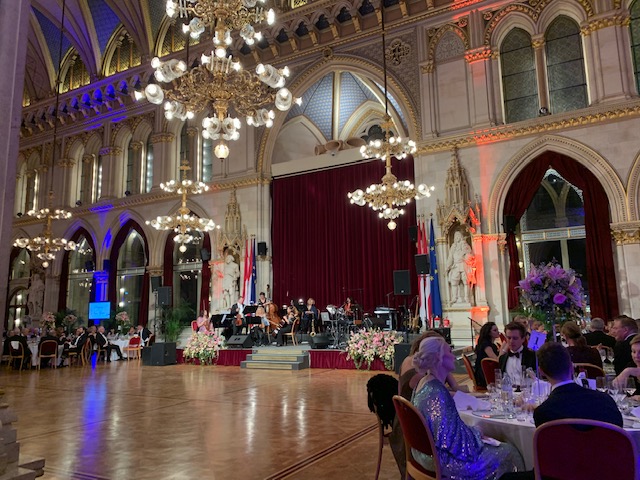
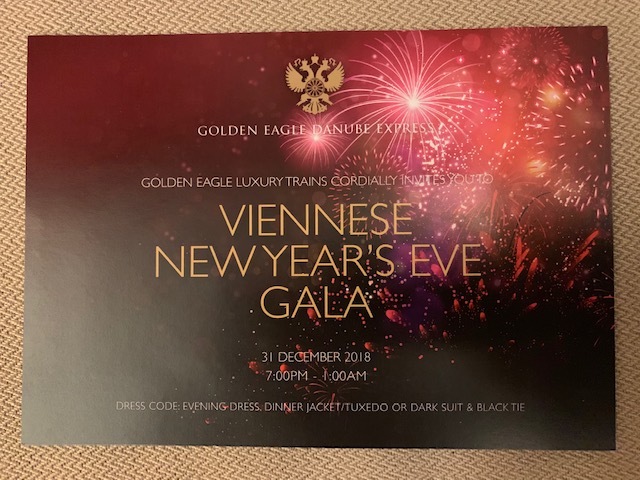


Once again, a New Year’s one can only imagine. We have a deeper post of this experience here.
DAY 5 NEW YEAR’S DAY IN VIENNA
AUSTRIA
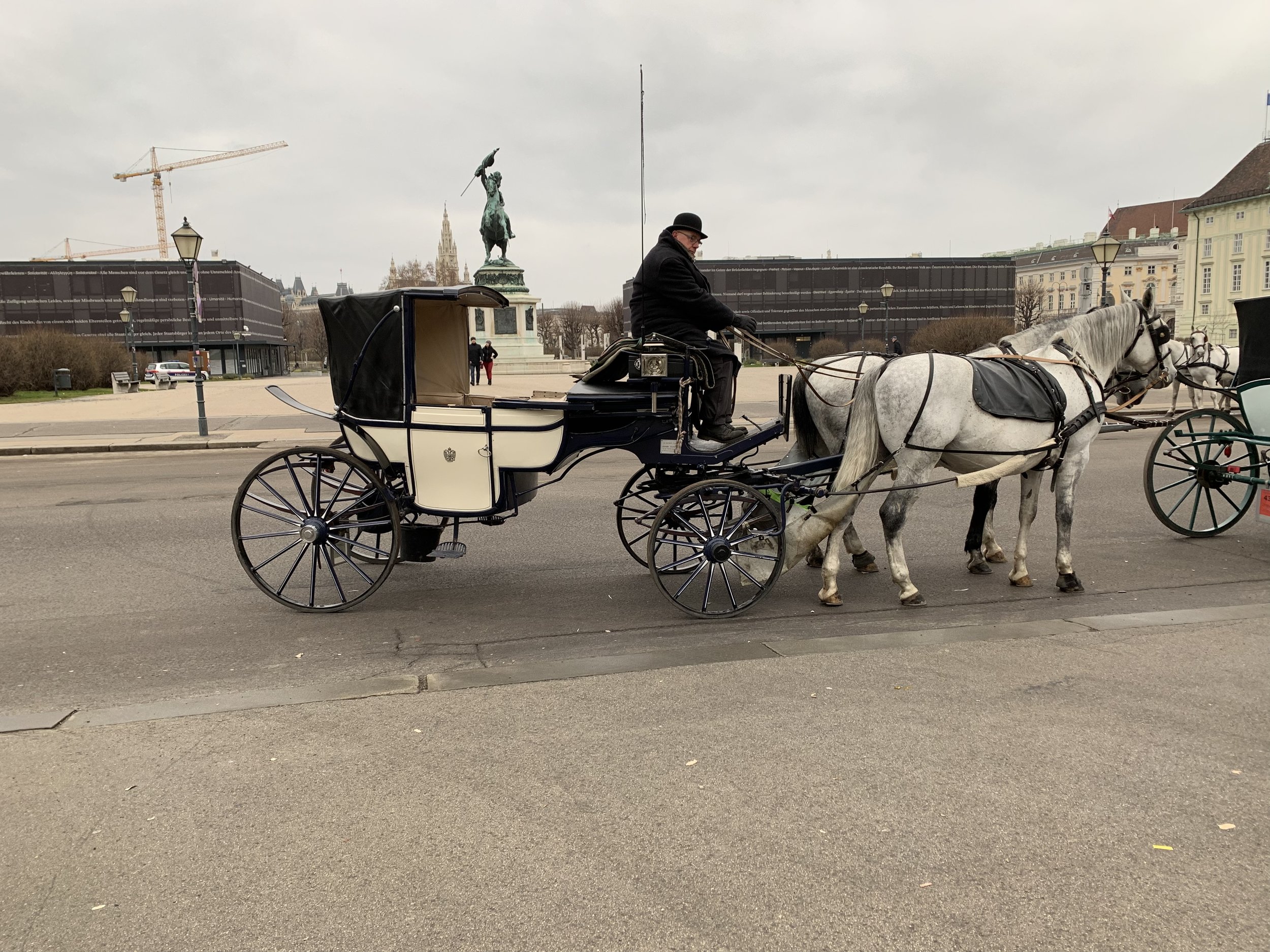
Happy New Year! This morning we will take a horse-drawn carriage ride along the cobbled streets to a local palais where we enjoy a celebratory brunch at the Palais Coburg, a stunning former Hapsburg Palace. From the Palais we’ll be able to take in the live transmission of the New Year concert from the Vienna Philharmonic Orchestra.
If you’d rather see more of the splendid Austrian countryside, as part of our Freedom of Choice programme, you will have the option to visit the delightful Schönbrunn Palace to see the city’s famous festive market which will be still be open to enjoy. Alternatively, you may wish to explore the monastery of Heiligenkreuz with us for a guided tour of its 12th Century grounds. You’ll also be able to hear the Stift Heiligenkreuz monks sing in unison for a very special and moving performance.
Later this evening, the group will reconvene on the train for dinner before leaving Austria for the Czech Republic.
These are separate solo posts that capture both New Years Day in Vienna and the Holy Cross monastery.
Suffice to say, even if you haven’t got enough sleep, to start the new year in a horse-drawn carriage through streets of Vienna, with all its regal architecture, is exciting and stupefying at the same time. The cobblestones rattle. The chilly air seeps in. You pass the bronze and granite monuments. The cold air rises as a cloud. You smell the horses.

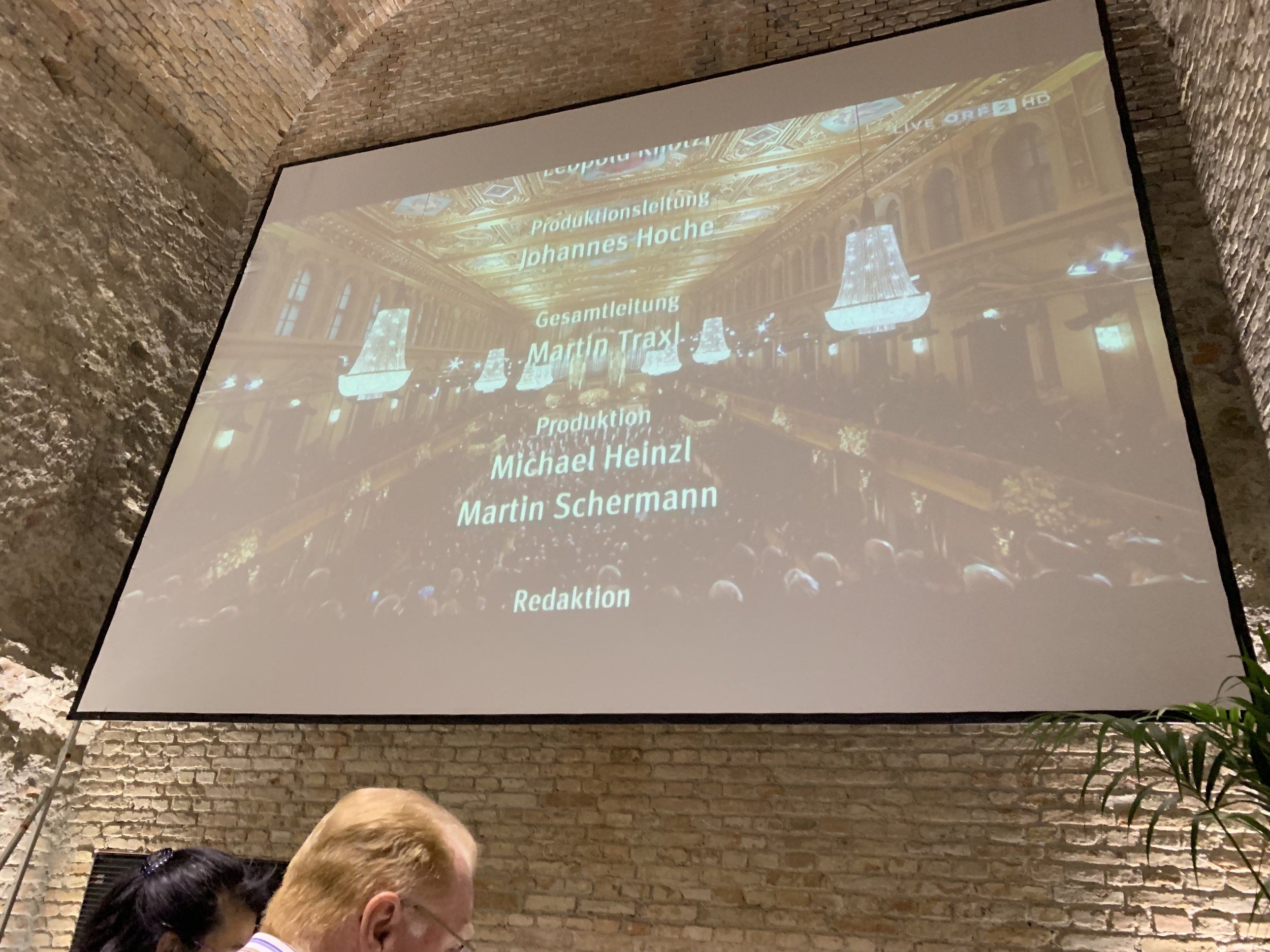
The brunch at the Coburg Palace was probably one of the most lavish we have ever seen. Everyone ate facing the giant screen telecasting the annual, national orchestra New Year’s day event. The orchestra was outstanding.
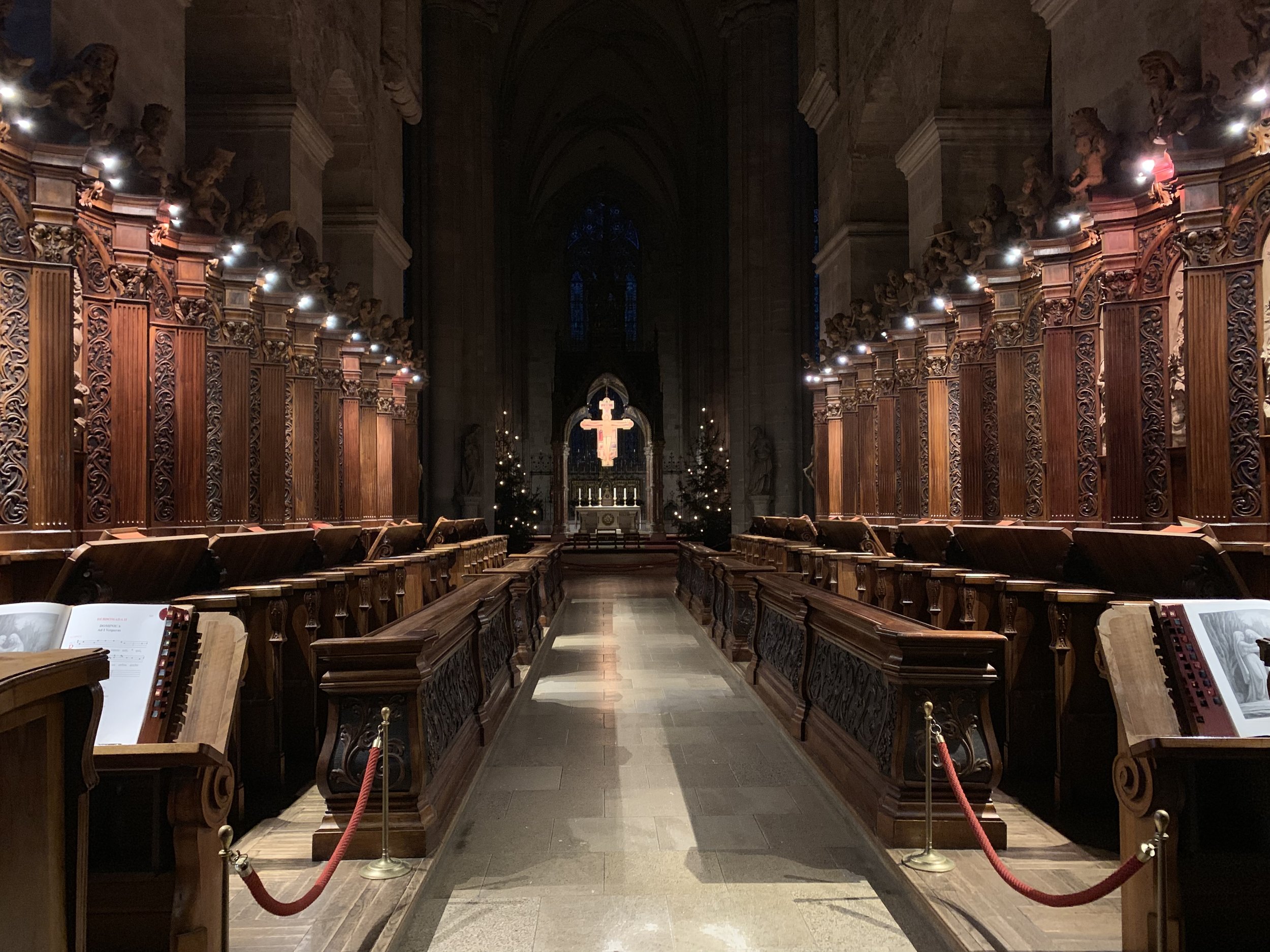
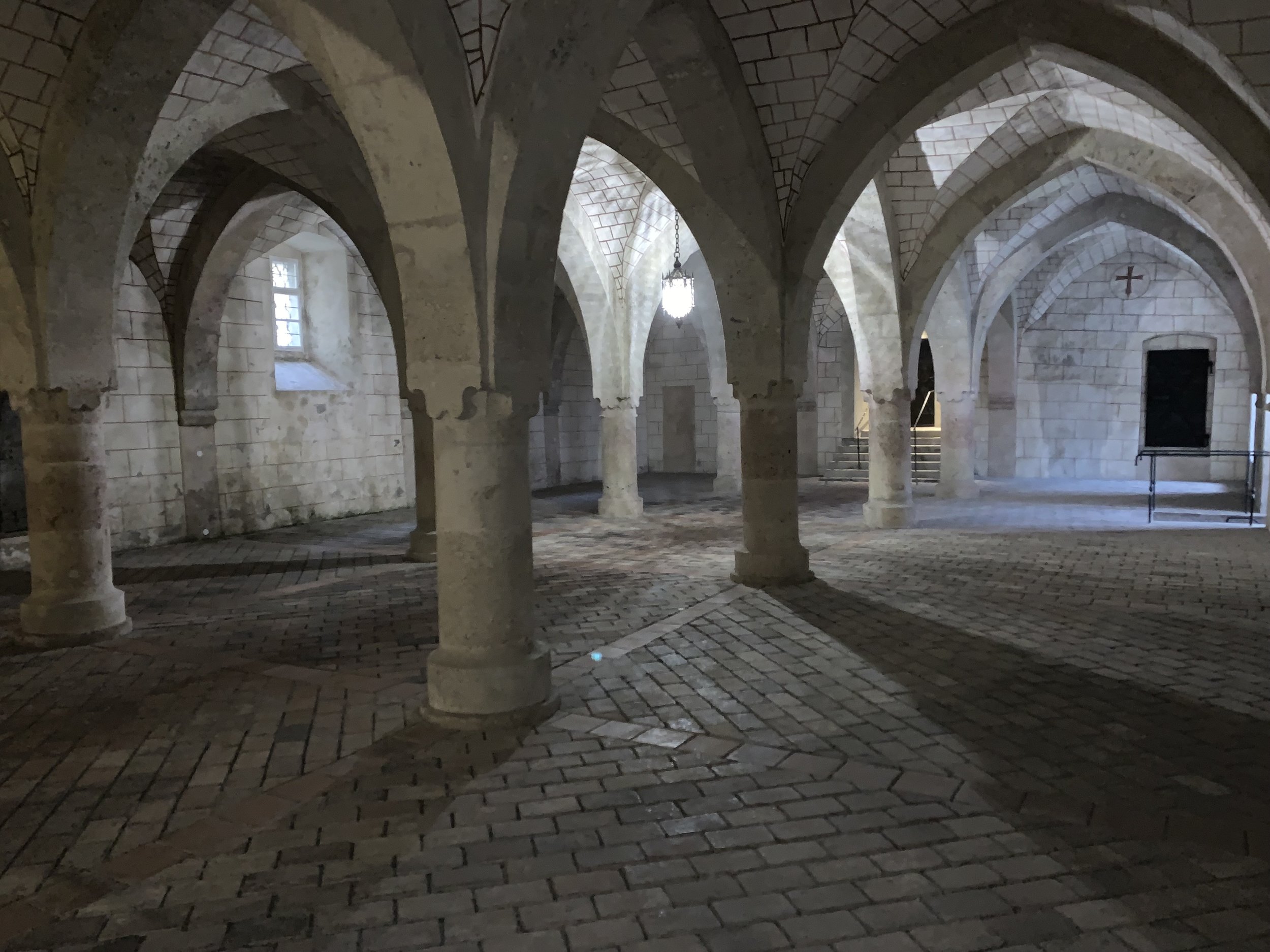
The 12th Century Holy Cross monastery, famous for its Gregorian chants, was very dark and very moving. A few of the images are haunting; being there on a cold, blustery day near sunset, added to the mood. The post is here.
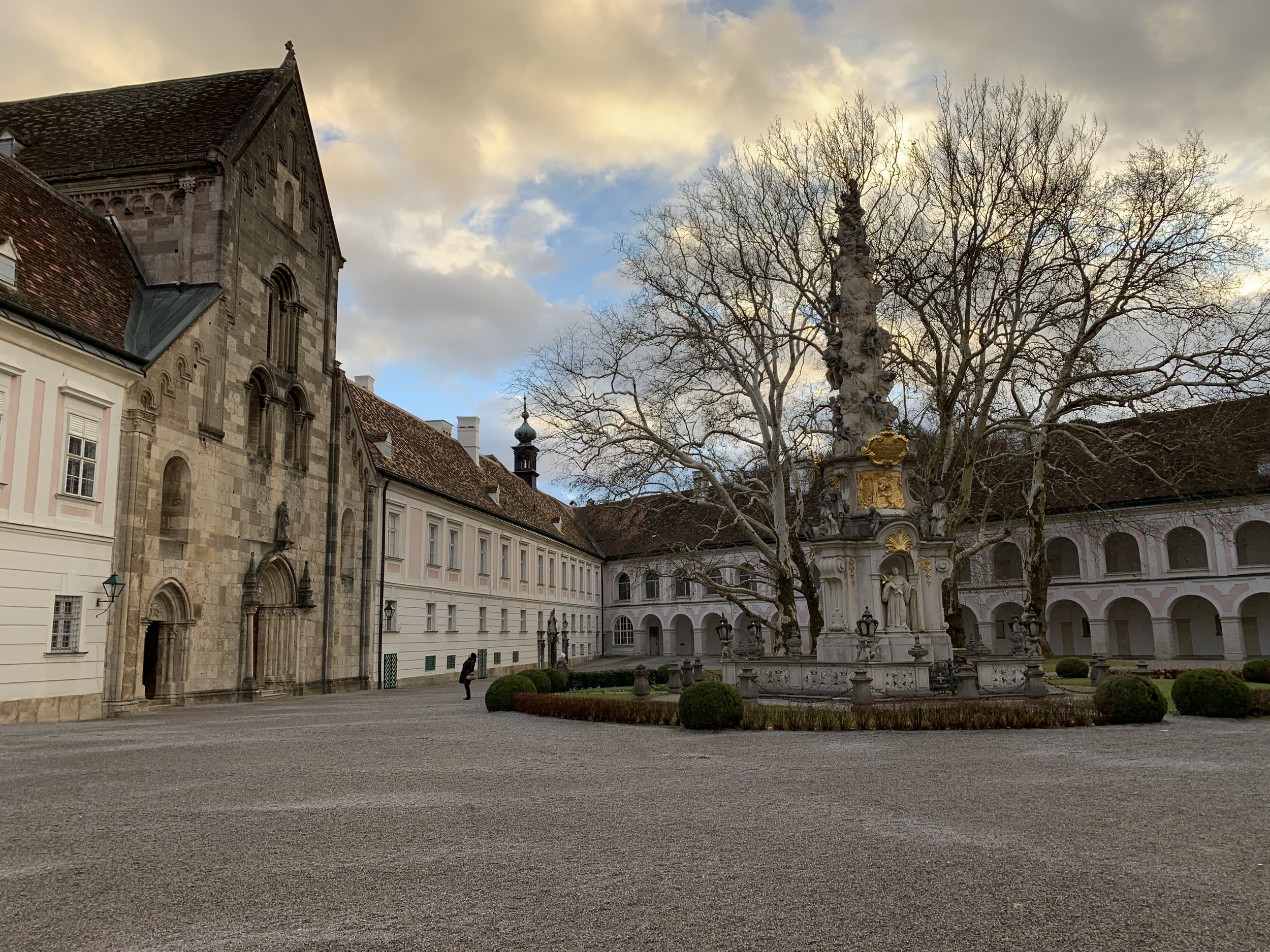
Few places stole your mood and hushed any sense of self or self-importance more than walking the empty, cold halls of the Holy Cross monastery, one of Europe’s oldest and active. It haunted our consciousness for days. We did not hear the monks sing, but we roamed alone in a place where life and death, piety and sacrifice whirled in the air.
DAY 6 CESKY KRUMLOV & PRAGUE
CZECH REPUBLIC
This morning we’ll begin our day in the stunning town of Cesky Krumlov, declared a UNESCO World Heritage destination. The town’s old town charm will be only enhanced by a dusting of snow and should make for a beautiful stop on our journey. A short introduction to the town will allow you to explore the town with allocated free-time. Perfect to grab a souvenir or two.
We’ll continue after a scenic lunch on board the train to Prague, one of the most beautifully preserved cities in Europe. Spanning the Vltava River and dominated by the 9th century Prague Castle, a stunning sight that can be seen almost anywhere in the city. Our introductory tour takes in the Old Town Square with its many historic buildings and Astronomical Clock, the historic 14th century Charles Bridge and the Jewish Quarter.
Later this afternoon we will return to the train to prepare ahead of the evening’s operatic performance at The Prague Karlin Theatre.
OutspokenTraveler: Cesky Krumlov epitomized the charm of a post-Renaissance village, living in the shadow of a massive grim castle. While we were there, a snow squall came upon us and it felt very Hansel and Gretel for a moment. While walking around was relaxing, there were many many stores and you could see that the town would be a madhouse of crowds in high season.
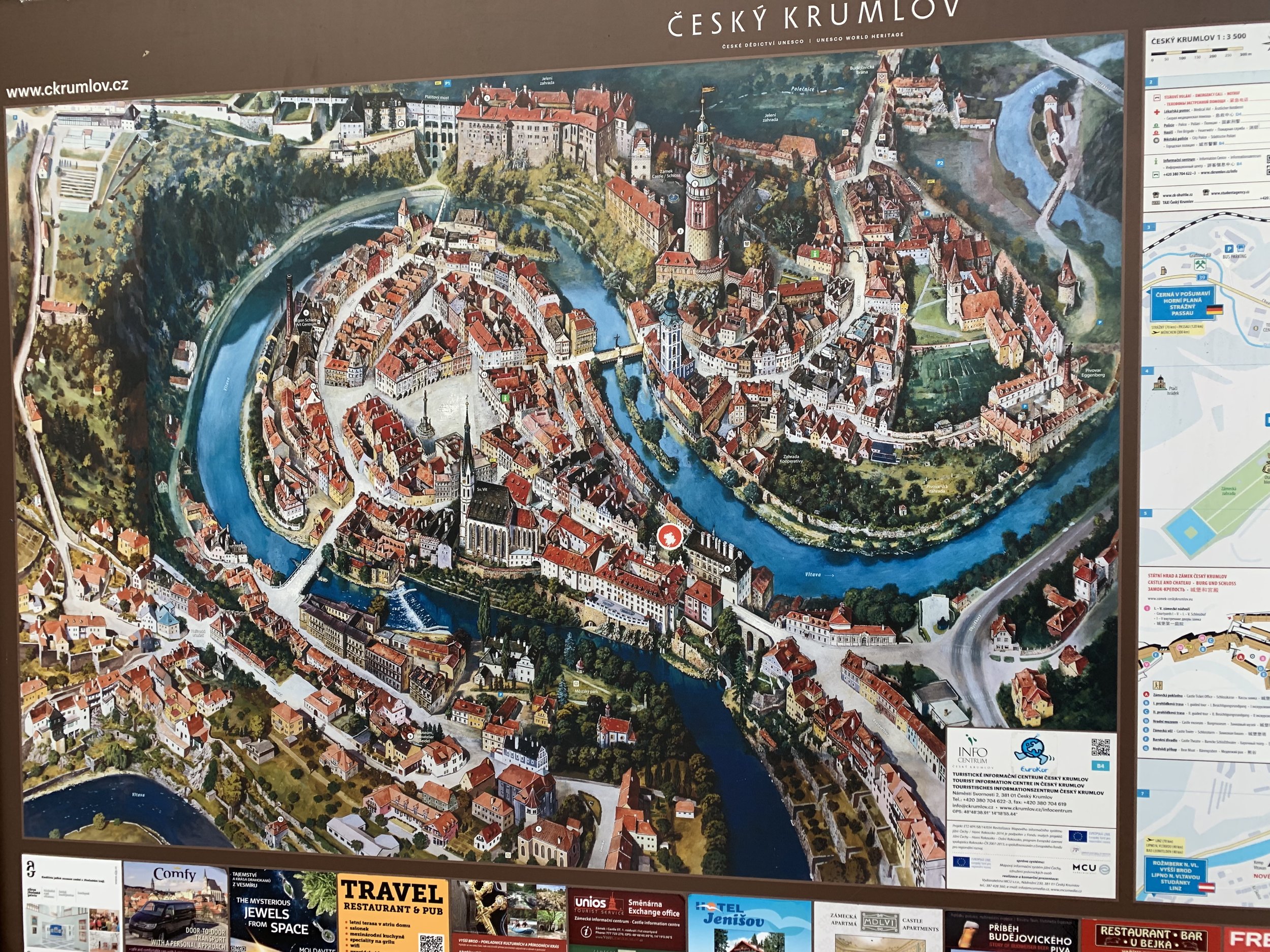
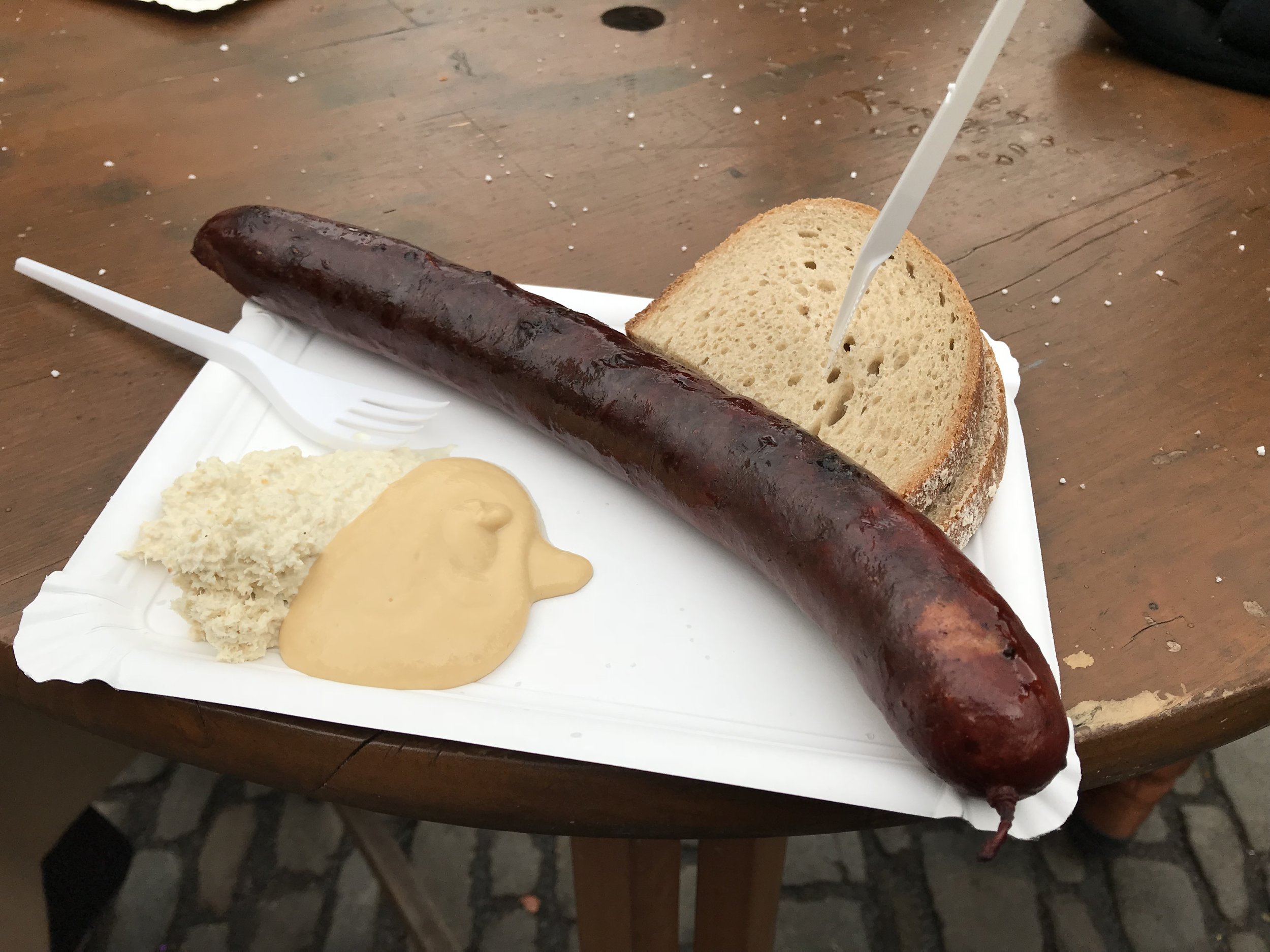
We ate lunch at a sausage stand left over from the Christmas mart. The massive sausage, the mustard and rye bread, the smiles and nods from locals we shared the standing table with, even a little snow couldn’t ruin a fun lunch.
DAY 7 PRAGUE
CZECH REPUBLIC
A full day to explore the city of Prague awaits today. We’ll begin with a vintage tram to travel through the city up the hill to Prague Castle and the Gothic St. Vitus Cathedral. The castle and its surrounding architectural gems occupy a hillside overlooking the city and river. Lunch will be served nestled in the architectural treasures of this ‘City of a Hundred Spires.’
The rest of the day is free for you to visit more festive markets or take in more of the iconic sites of the city all within walking distance of the station. Dinner will be served on board the train as we journey back into Hungary.

OutspokenTraveler: People have a deep love of Prague and we could see why. With our local guide, Nestor (who was a masterful tour professional filled with verve and charm and history) led us around town and regaled us with tales of Czech accomplishments and pain, death, sacrifice, war and Empire. All of which wrapped in the defiant, irreverent, Bohemian spirit. Nestor took us from afternoon to sunset from the cathedral, Jewish district, down the long hill, across the famous bridge and off to an early dinner. It was a lot of walking but fascinating; and the tour had carved out a piece of the cafe in a hotel for anyone to rest if it was too much.
We ended the tour back in the main square in time to catch the tolling of the famous astronomical clock from the 14th century.
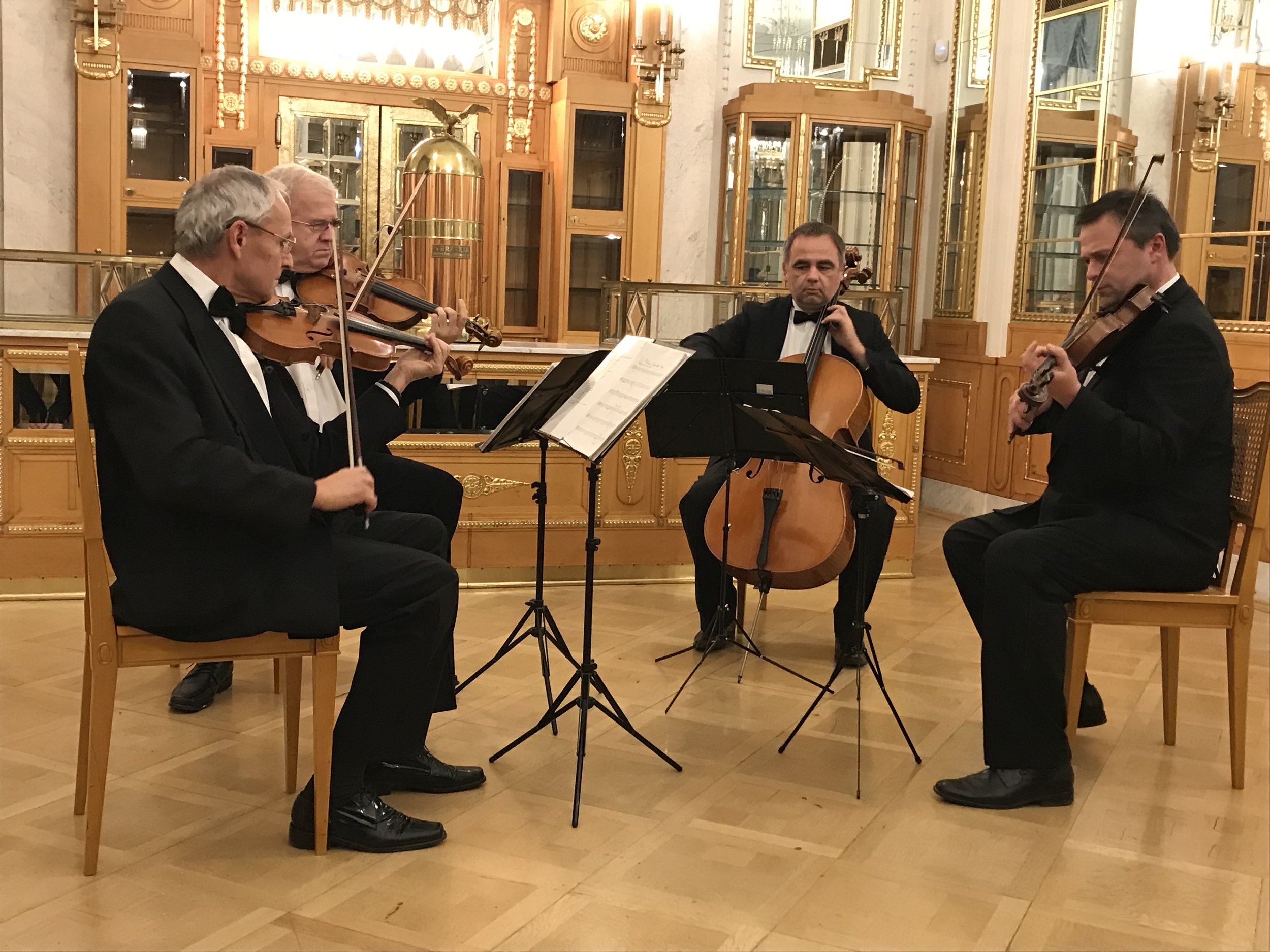
In the official itinerary, it mentioned a performance after dinner; we went into the music hall next door and to a small mirrored 19th century room where a string quartet played an enjoyable though odd program. (To go from Mozart to New York, New York was a bit much but to their credit they were excellent musicians who played with passion).
DAY 8 KOSICE
SLOVAKIA
We start our final day of touring in one of the lesser known gems of Central Europe, Kosice. The city was voted European Capital of Culture in 2013 and its medieval-come-cosmopolitan style is slowly drawing more visitors to this former cornerstone of Communist Czechoslovakia. We’ll take a highlights tour of the city, including the vast oval shaped central square, filled with relics from the 15th and 16th century.
This afternoon we’ll enjoy our final lunch on the train before arriving to Budapest. On our arrival evening in Budapest we’ll check back into the Four Seasons Gresham Palace before a celebratory farewell dinner toasting the success of the tour.
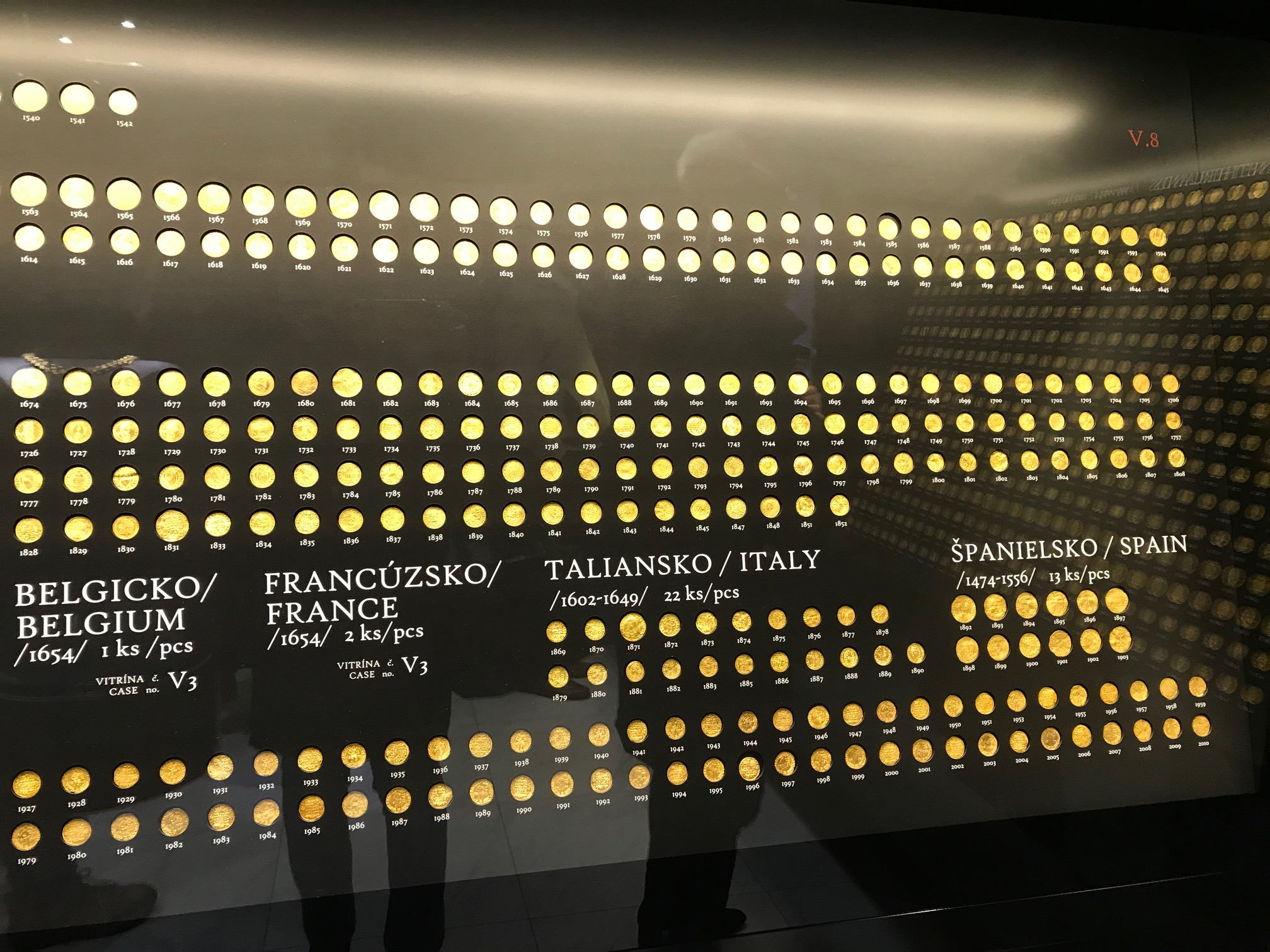
OutspokenTraveler: Kosice was a cold walking tour, with a few highlights: the architecture was beautiful and preserved,museum which held an unusual exhibit of an ancient coin treasury, and afterwards, a surprise jazz performance at a cafe. Then back to pack and get ready for evening arrival in Budapest.
As per the case, the end of the train trip was smooth and uneventful; after checking back into the Four Seasons, we went to Fausto’s for a fine Italian dinner with fabulous Hungarian wines. The owner of the Golden Danube Express joined us. Twenty-six people together in such a confined space and refined tour — well, we all felt very comfortable and all good things flowed at dinner.
All trips should end with the sense of loss, as fleeting as it may be. Not sadness, but loss that you now have to slip away from the near-mindfulness of travel to the repetitive nature of everyday life. Yet, given the sensory wealth of this train trip, what a flood of sites, sounds, foods, cultures and history to sort through!
Luckily, we had decided to stay two more nights in Budapest.
DAY 9 BUDAPEST
HUNGARY
Following breakfast on the final morning you will be transferred to the airport for onward flight departures. There is also an option to extend your stay in Budapest for additional nights to explore more of this fascinating city.
OuspokenTraveler:Staying two more days was well worth it; dealing with bitter winds, delightful food and people everywhere went it was just fun.
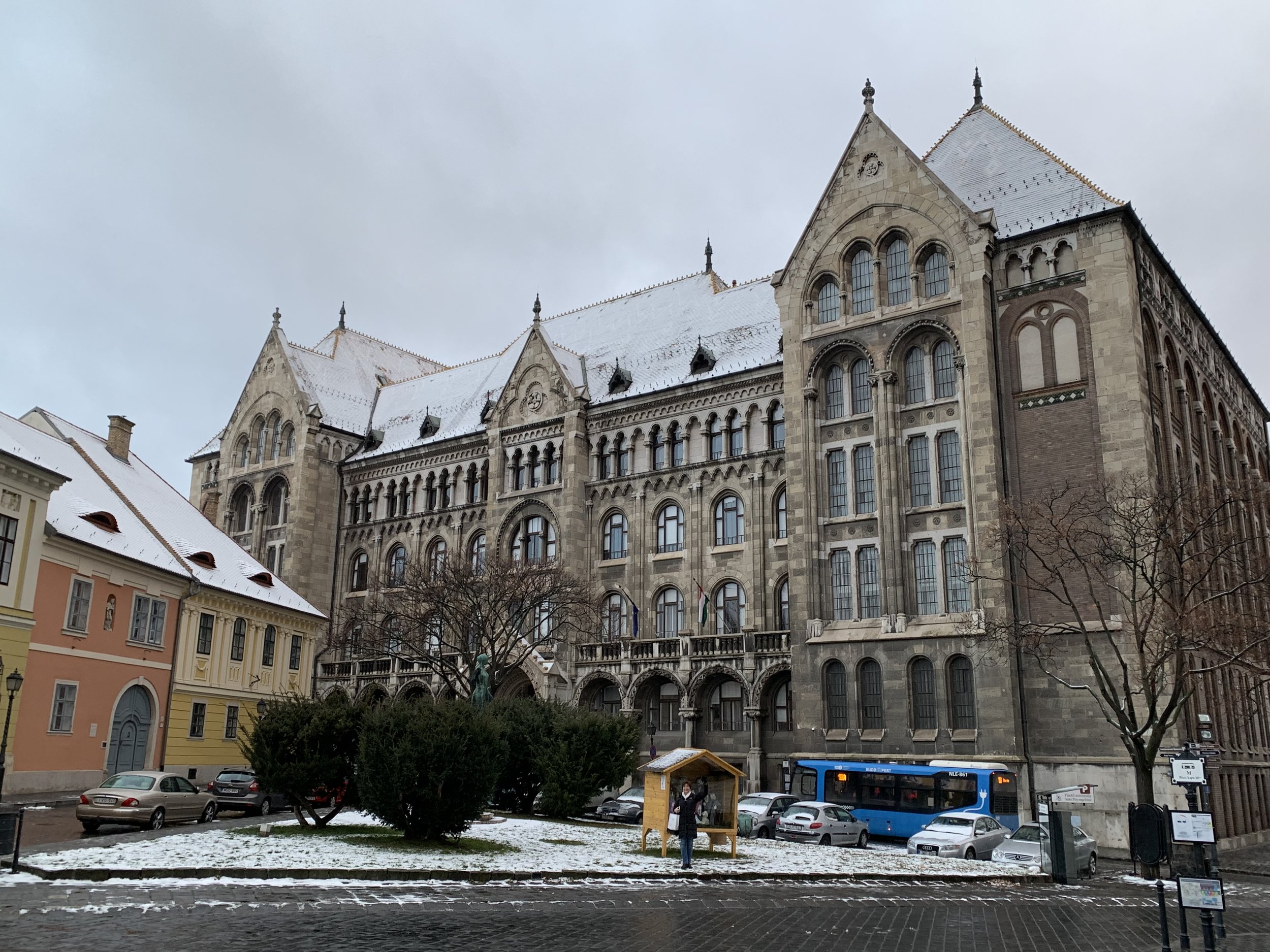
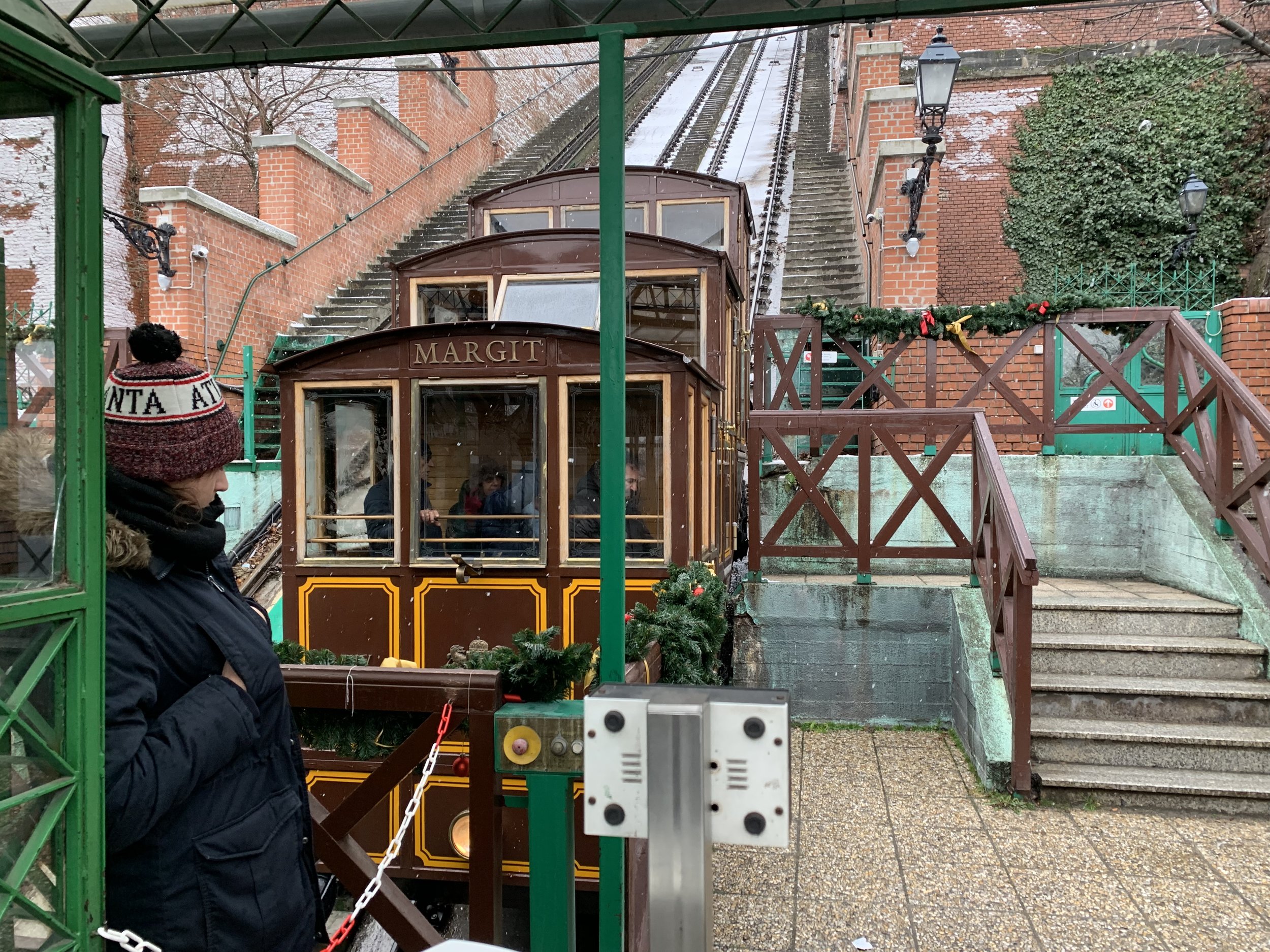
The city is unforgettable and large. The most memorable visit was crossing the river to Buda, and take the old tram up to the hilltop to tour the historical district.
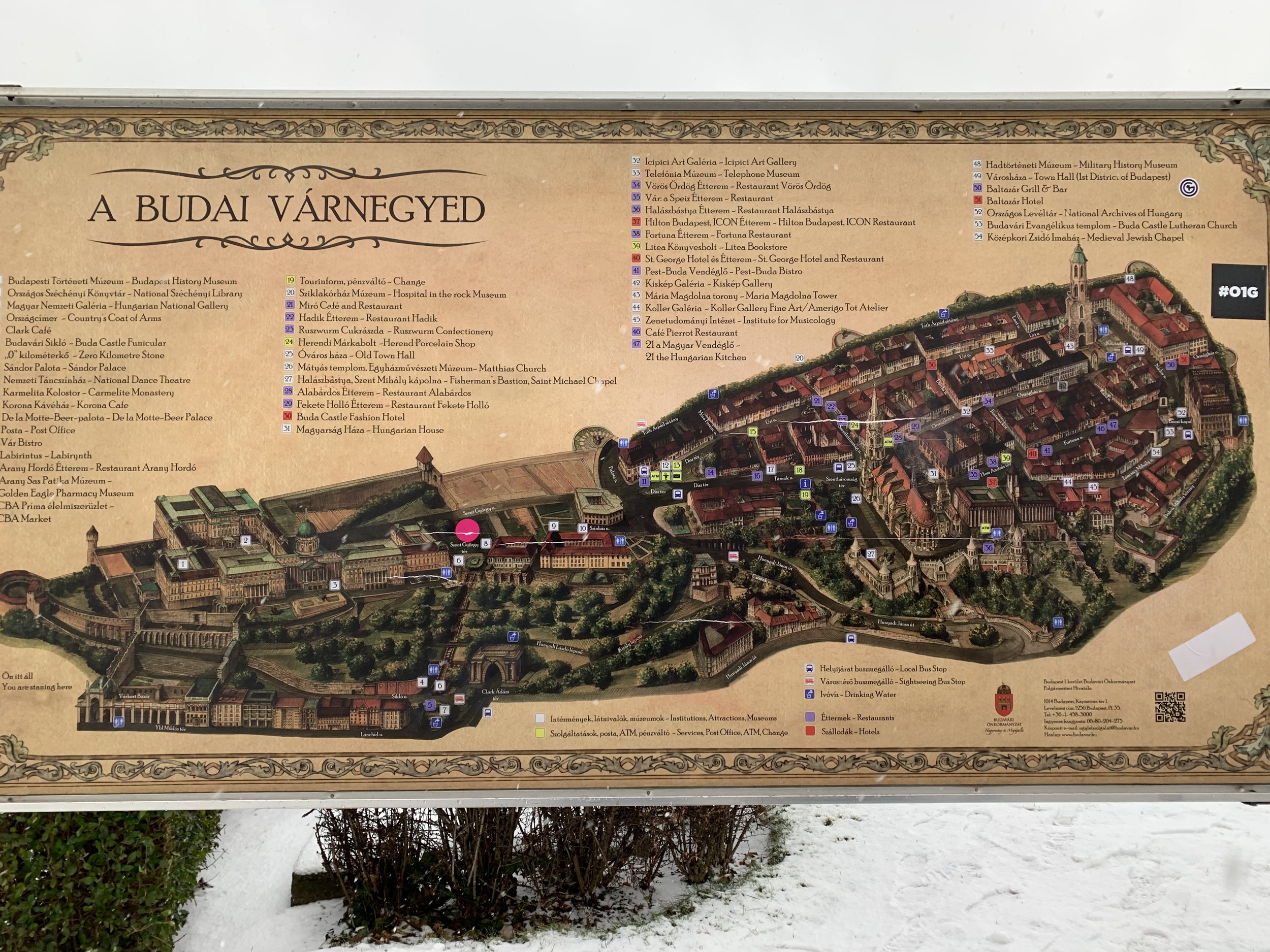
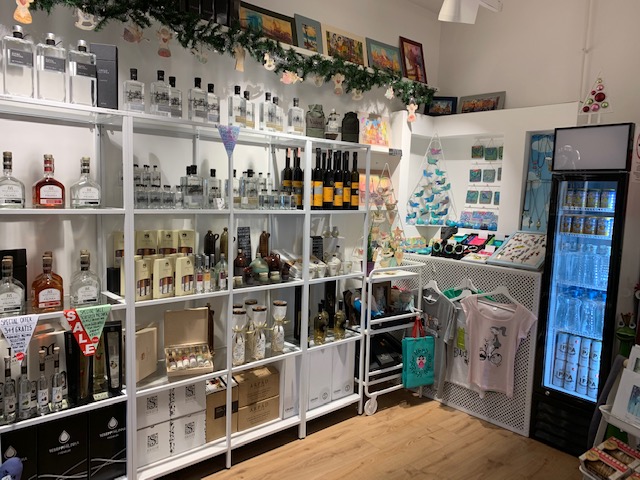
Once passed the tourist buzz, there were agreat smattering of unique local shops.The buildings were hundreds of years old and all maintained and charming. We ate an excellent lunch and ended up spending most of our time with one local store owner.
The day waned, and with it the cold stormed in, so we rushed back to the warmth of the Four Seasons Gresham Palace and off to our final dinner — review here — at the foie gras haven called Tigris.
How does one end such a long trip (and long posting!)? By being thankful for being able to have such an experience. Having been on several tours — QM2, Windstar, Classic Journeys — the Golden Eagle Danube Express was as deep and wide an experience as we have ever had. Elegant and luxurious, executed with grace in all details.
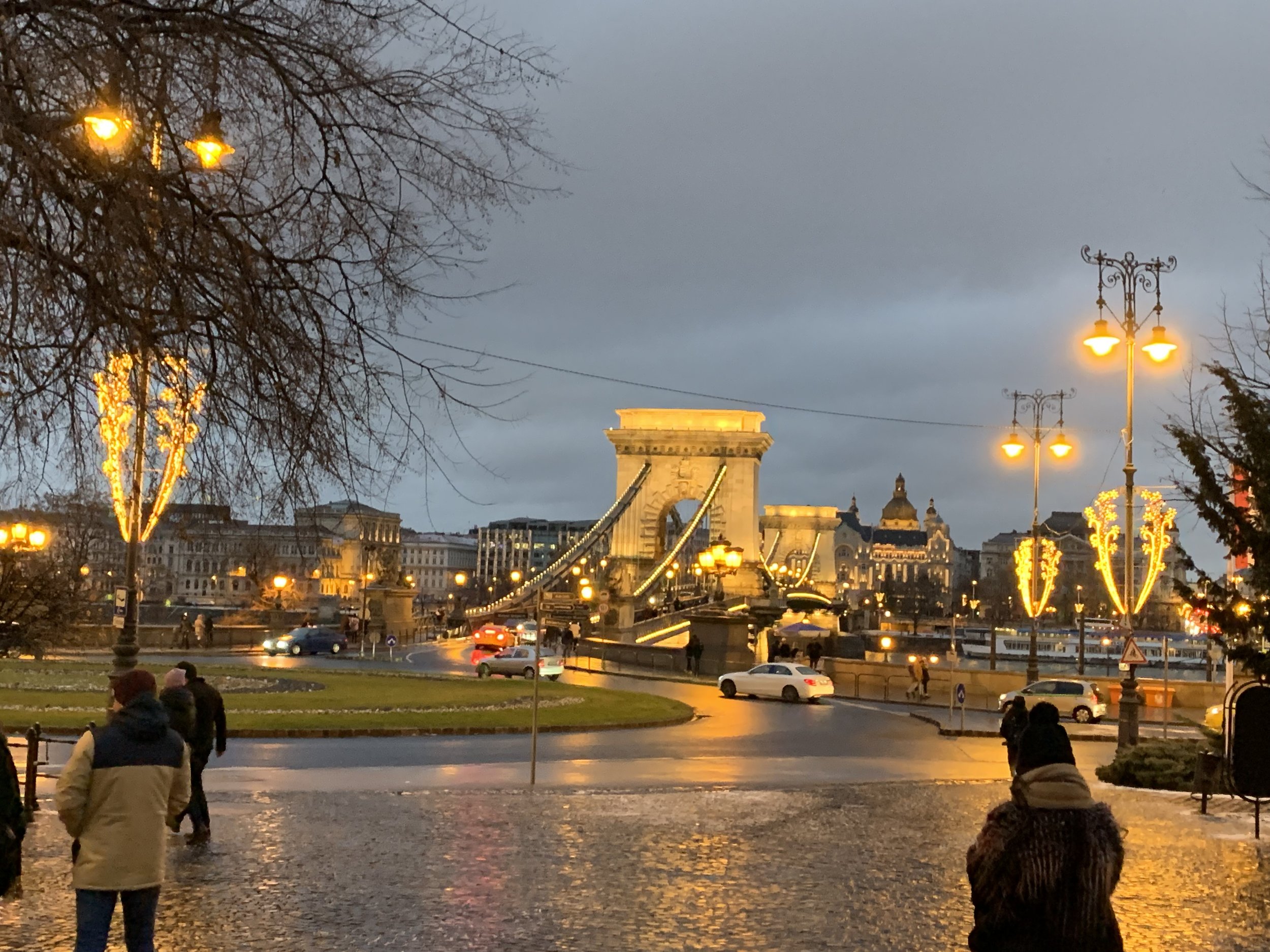
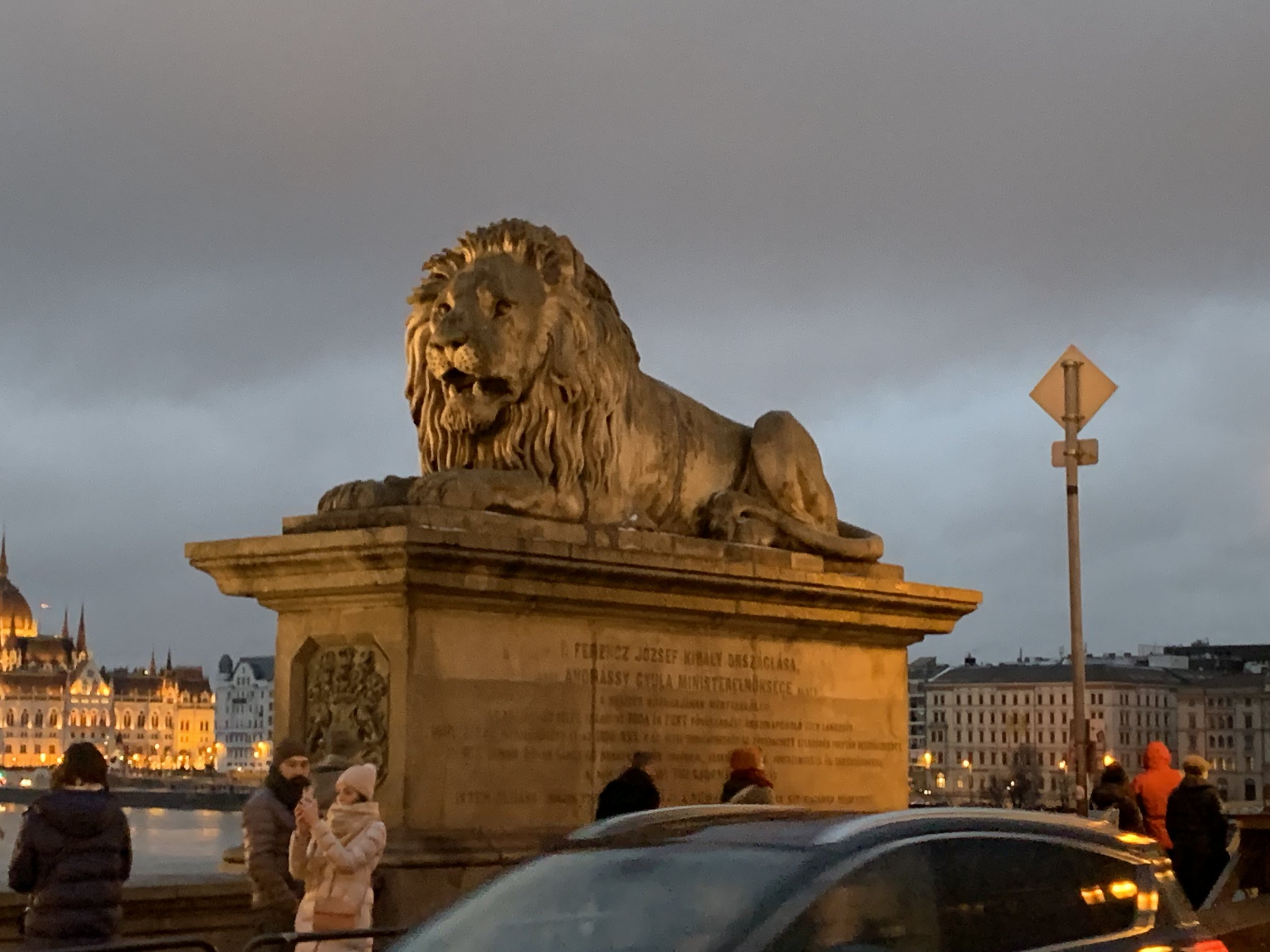
A special thanks to Andrea, the master guide of our train adventure. Let’s close with a range of photos from Budapest: