
Ostia Antica.
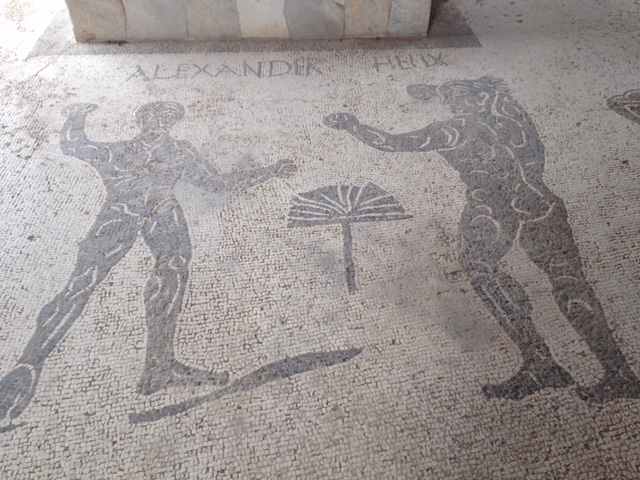
Rome is overwhelming in its magnificence but let’s admit it, it is just as overwhelming a city because of the tourist hordes. Everyone wants a piece of the magnificent beauty and history. Is there even an off-season?
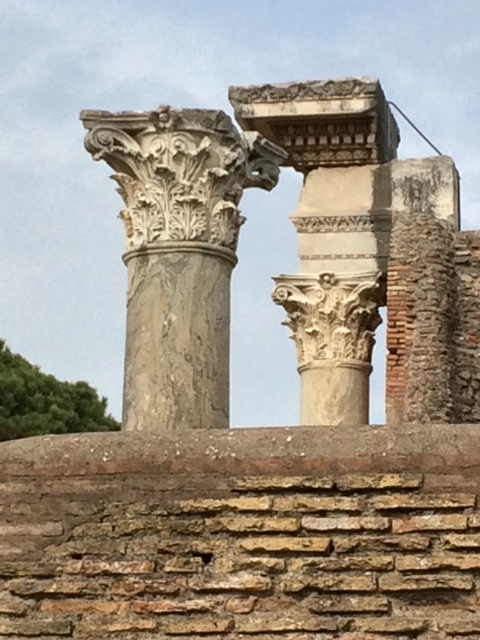
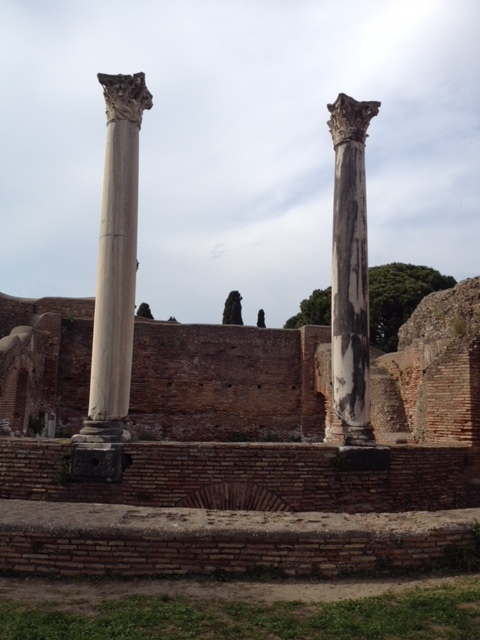
But imagine a place of intact frescoes, ornate mosaics, tall marble columns, buildings and avenues free to stroll upon. Full of the fragments of graceful frescoes dedicated to the sea and gods and ship. And whatever you see remains a mystery with no plaque or memorial, just how they lived in an ancient port that fed a great empire.
South of the city, after a thirty-minute local train ride, you will find the haunting and incredibly intact former port of Ostia Antica. Fifteen miles on a train south of Rome, you will find yourself having traveled millennia.
It is very easy to get there, as described by a Roman city guide: “…take the Roma Lido commuter train to Ostia Antica. Once at the station, all you have to do is follow the crowd. It is a 10-minute walk away. The train to Ostia costs 1,50 € (like any other one-way journey).” It was nice and simple and walking to the station you feel like a local.
The local train takes you close to the ocean and Rome’s nearest port; a few blocks walk through a residential neighborhood and the surprise is around the bend.
A simple ticket stand and parking lot offer an unassuming entrance to what is perhaps one of the most open and authentic ancient sites in all of Roman region.
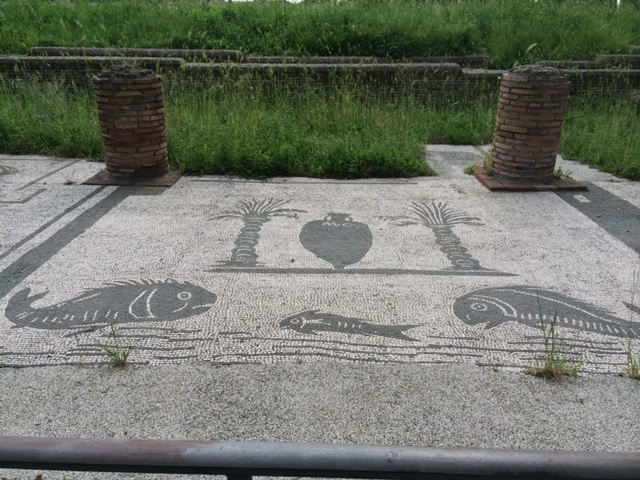
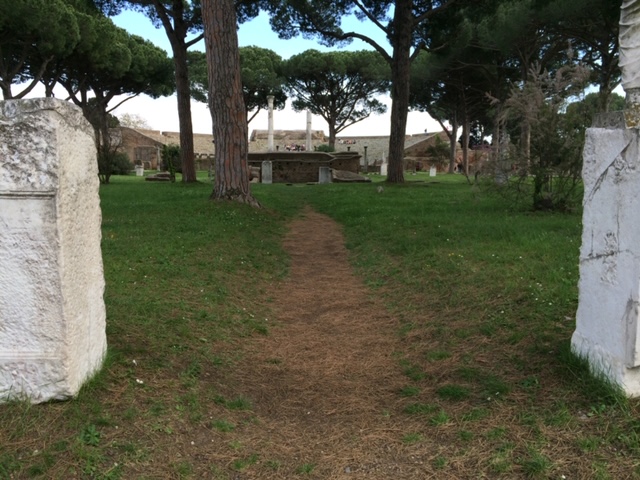
Having left Rome, the first thing that amazes you about Ostia Antica is how open and empty this ancient site is. Just as the sea retreated over hundreds of years leaving it abandoned, it still feels that way. The authenticity of the layout of craftsmen and their shops, the wide avenue for the transport of fish, takes you elsewhere.
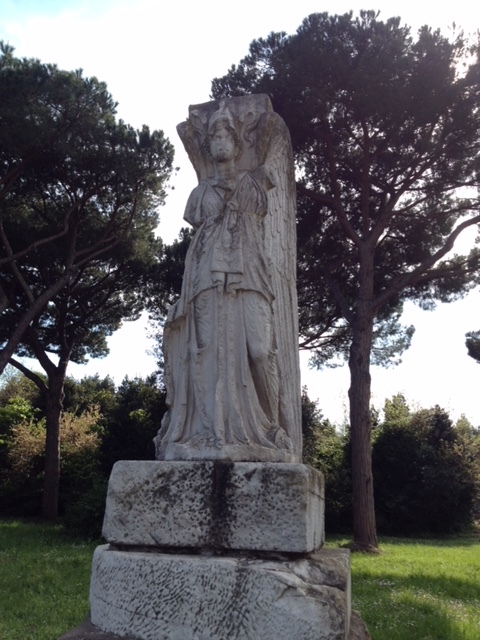
You are basically free to roam almost anywhere. There are few plaques or guides, which may annoy those who are as to what is what, but if you let that rigor go, and just take it in as it is, with little explanation, your imagination is free to soar.
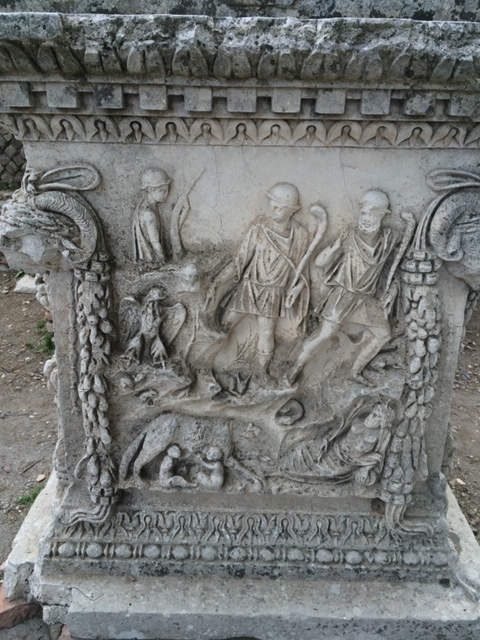
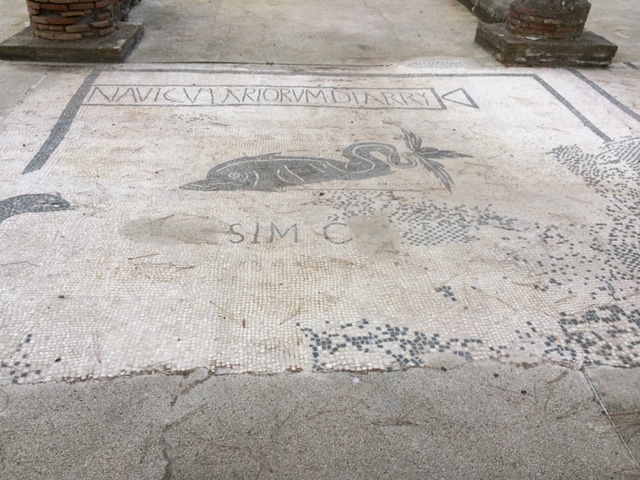
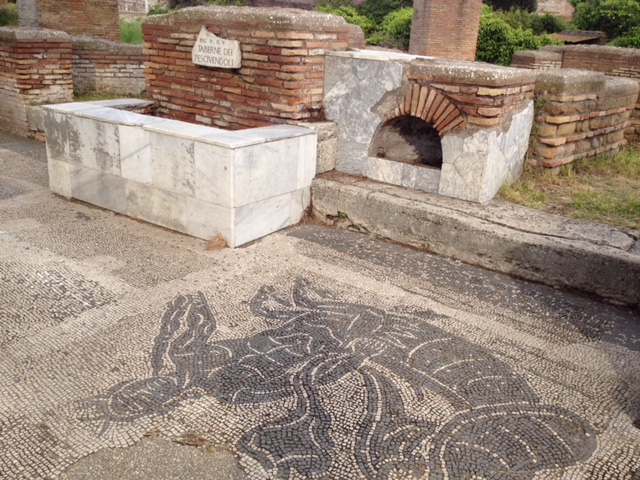
But the frescoes are what make a magical homage to the sea and port. The detailed frescoes and mosaics speak to a vitality of trade and a way of life that one can almost feel as you stroll freely among the buildings and lanes.
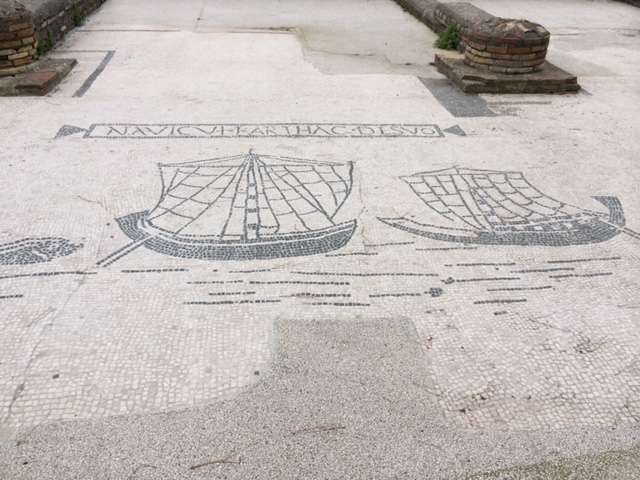
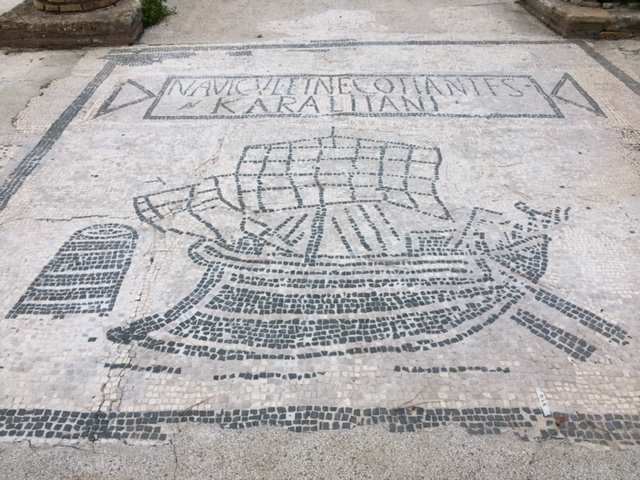
In having this freedom, you can truly explore, walk the paths of the seaman, the tradesman, the soldier, the craftsman or the priest, and pass over the tiled frescoes of ships placed into the marble, each denoting a different trader or fisherman.
Ostia Antica was originally, around 4th century BC, the main port of a mighty growing empire. But over the centuries, nature and tidal shifts had the sea slowly withdraw from this center of trade, until today when it is around three miles from the ocean. It grew in importance over the millennia, and even now the overgrown tiled paths, the main roadway and intact forum, the walls of many buildings, all serve to remind us of the glory of the commerce that empire’s demand. Eventually the port was abandoned and became a suburb for the rich.
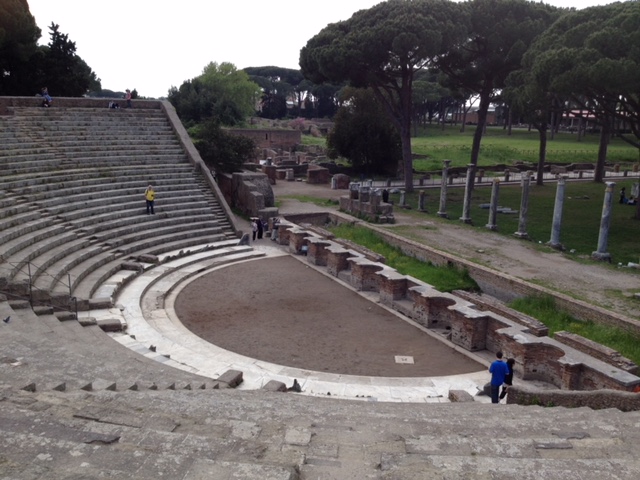
As you enter and pass a graveyard long ignored, you come upon a complete amphitheater, which as with all Roman and Greek theaters, one of you stands in one place and whispers pr says a word and it carries to the farthest corner. The acoustics of the ancient world were almost mystical.
Ostia Antica runs in one direction and is split and guided by a main road, a wide passage one can imagine filled with endless carts and goods, from fish to wine to whatever was in vogue as the empire grew in size, with its burgeoning appetite for the best of every conquered land.
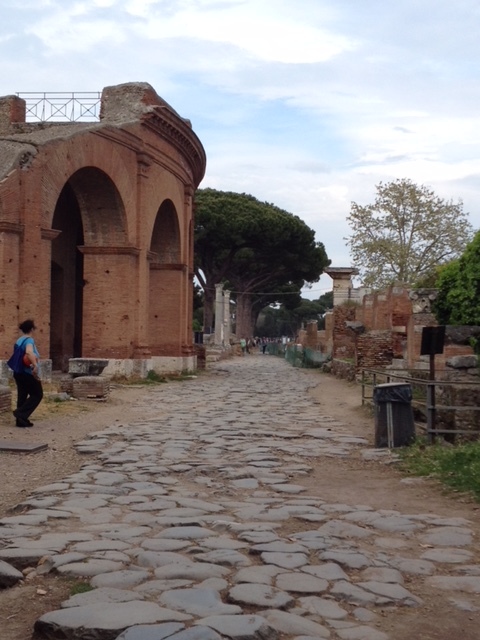
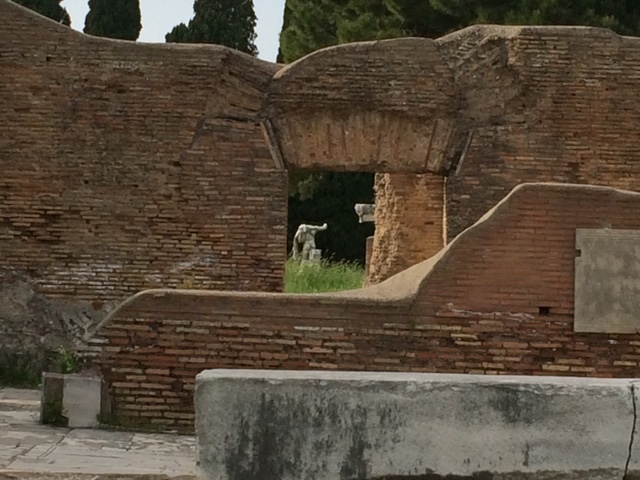
Smaller lanes run parallel to the main wide boulevard. It is wonderful that minus ropes or barriers, you can explore the alleys and smaller lanes where one can see the remnants of where traders each had a shop. An occasional fragment of a painted fresco on a wall, or step into a two-story building are left intact for you to stop and absorb the moment in time.
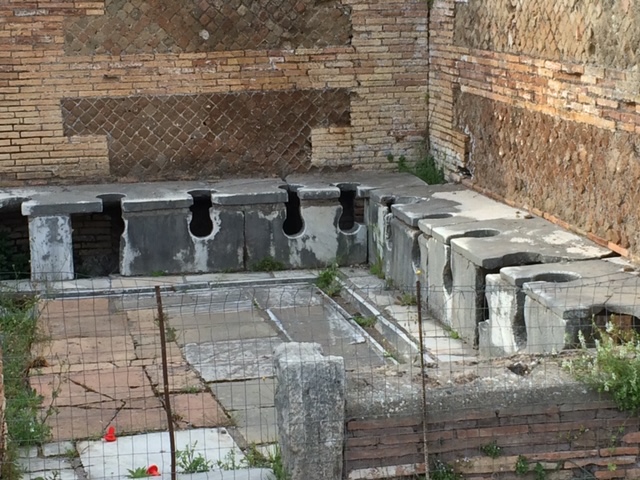
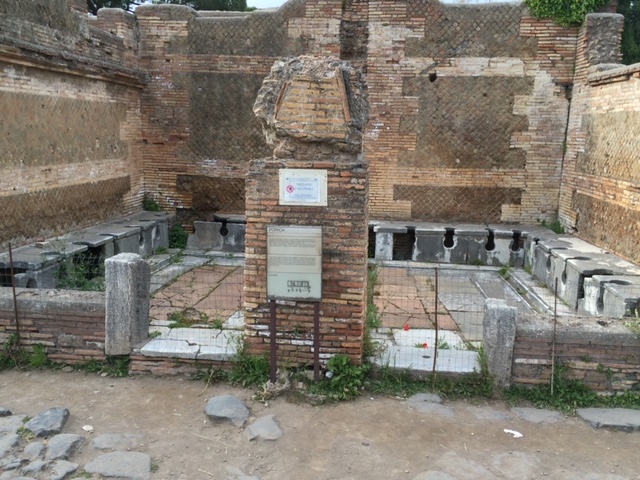
The Romans were known for their infrastructure and engineering — as odd as it may sound, their public bathrooms embody this; try and find the still visible site: the neat rows of marble seats with a fast-moving stream pumped through, it is an odd site for those used to the sanitized history tour, but demonstrative of how orderly and attentive to details that Romans were.
It is a place where one feels the history in the present; it does not feel so ancient as abandoned and yet still holding on. It is easy to imagine the barely controlled crowds, the smells and sounds of a port like this, a way station from the Mediterranean to the great glories of Rome.
After an afternoon stroll, it is an easy train return to the crowds and noise of Rome.
Look back as you leave. You can almost hear the shouting and cacophony — the traders and their barking of silver, gold, fish, oil in amphora vessels, wine, fruit, perfume…If you do it right, your visit will be moving, personal, contemplative and re-frame how you view the Roman Empire.
What is left is how not to ruin it or make it another merit badge in the Roman experience. Maybe we should not uncover such a treasure, so hidden in the open.
Take a break from Rome and go.
https://en.wikipedia.org/wiki/Ostia_Antica

 Outspoken Traveler
Leave a comment