
Stories of being lost can often be about being found — and in being found something human and magical emerges. On the way to visit my Irish relatives, I got lost in the Sperrin Mountains of Northern Ireland and found a tale of kindness and mirth with one Thomas McClary.
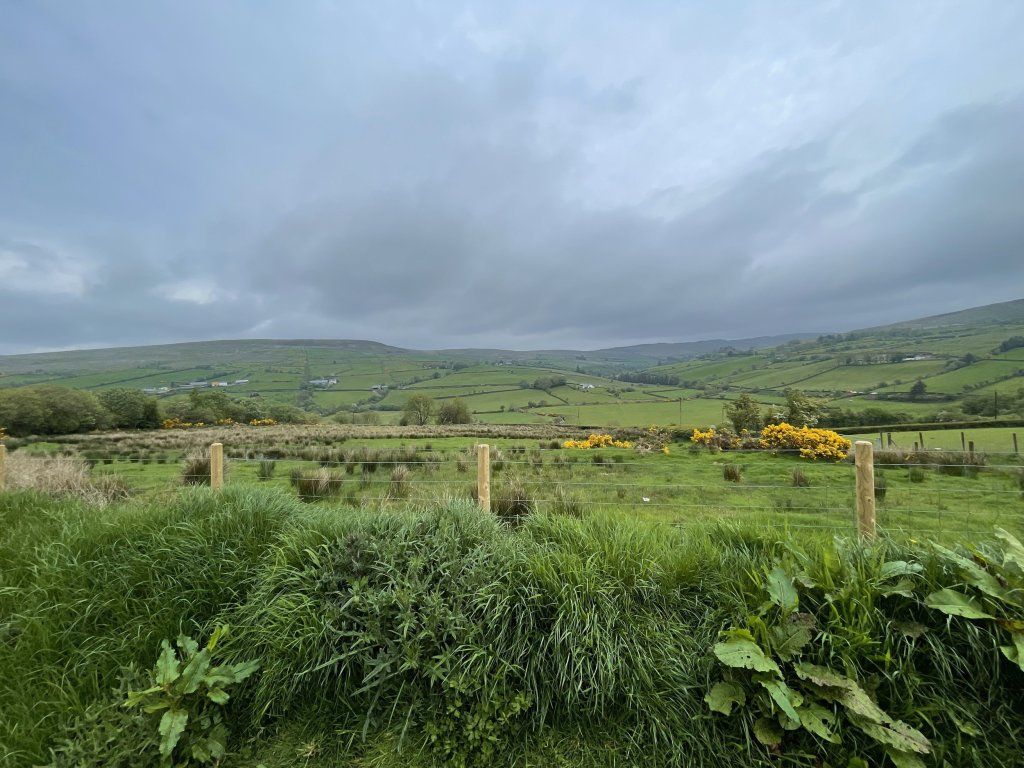
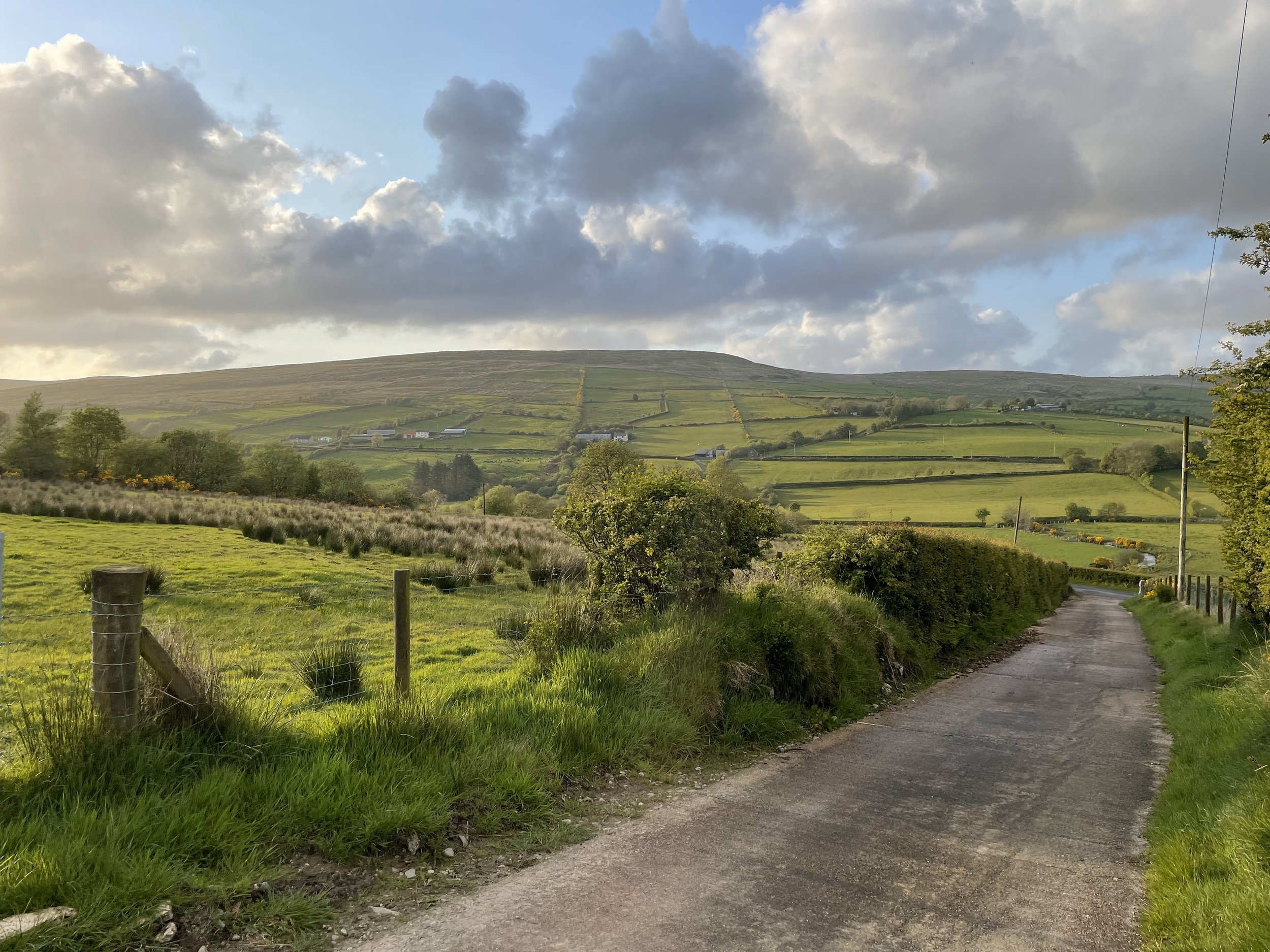
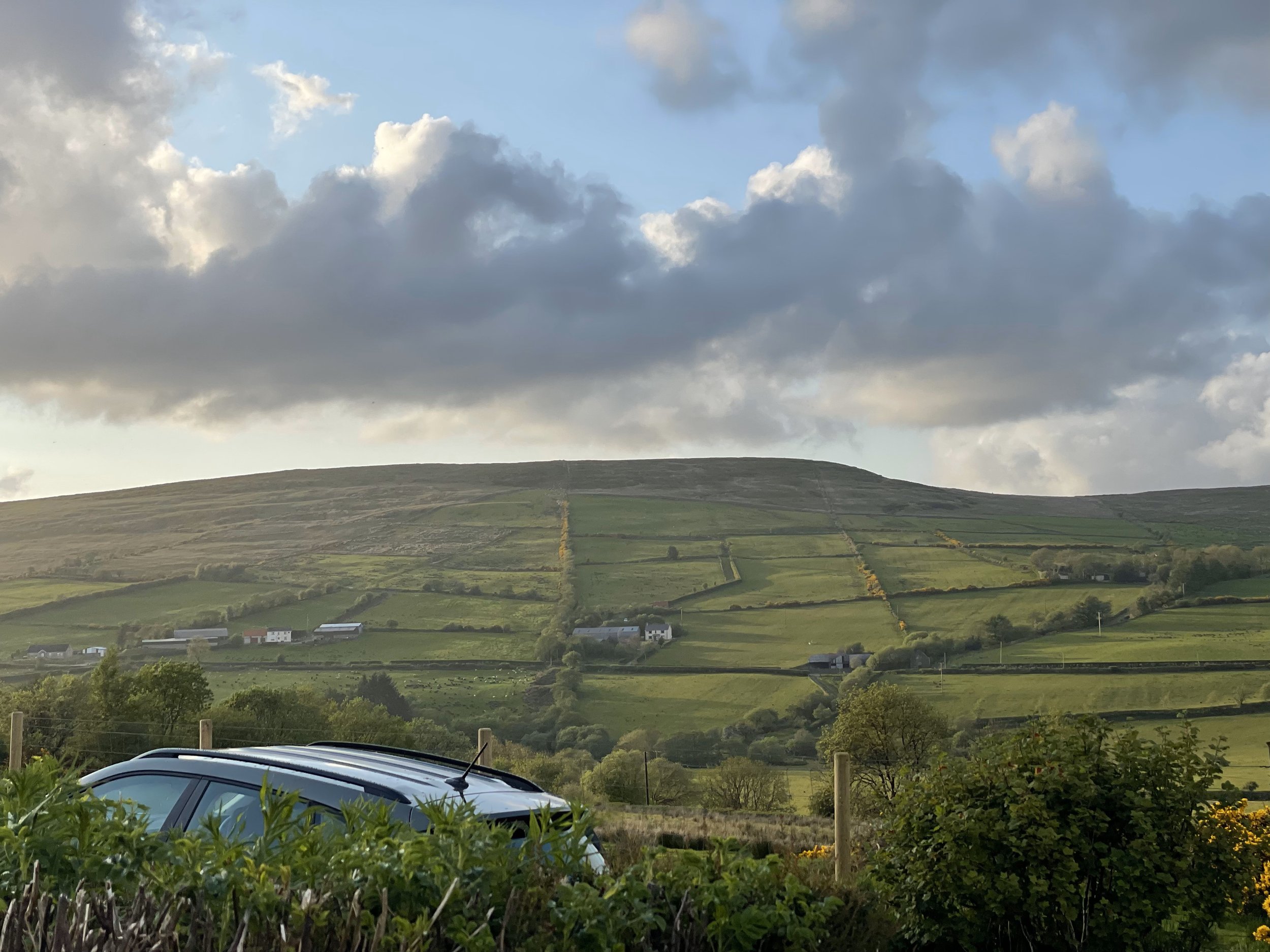
First, the Sperrin’s. They must be a secret that everyone has decided to keep. National Geographic called it one of the most beautiful places on Earth — and they were right. Truly, the most awe-inspiring fields and vistas I have seen in all of Ireland.
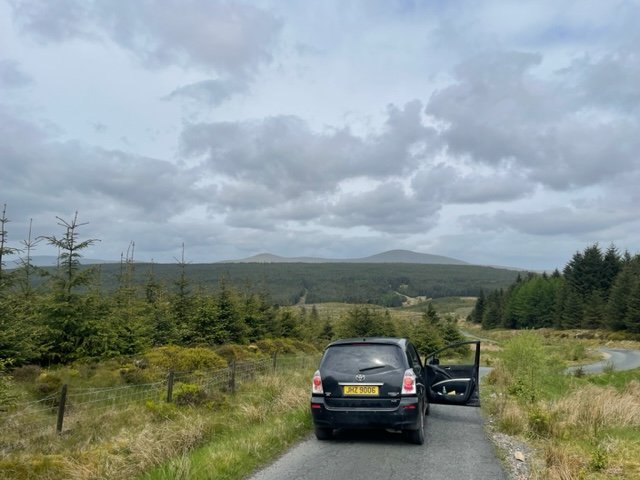
My plan was to go to the O’Neill family farm for lunch with Annie and Niall (ny-ale); I had last been in 2010. But the best-laid plans fell into the GPS trap: the most direct route to their house was 20 minutes. The seductive lure of providing the most direct route to a destination fooled me again. The sparsely populated Sperrin Mountains meant lanes with no names, pitted roads made more for carts than cars. Endless two-way, one-lane roads. The most direct route was the one the sheep took.
It’s worth noting, I knew nothing about the Sperrin Mountains — the clue to its remoteness should have been it being designated a Dark Sky area. It was hard to find detailed information online.
Going across this sheep and Angus cow-populated mountain pass would have been a challenge to any driver, except perhaps a local. As an aside, when I had shown a young woman at a flower shop in Omagh where I was heading, (getting flowers for my Aunt), she saw it and exclaimed, “Oh, if I had to drive those lanes I’d die!”
She had made a good point. It would be generous to call them roads, but they were.
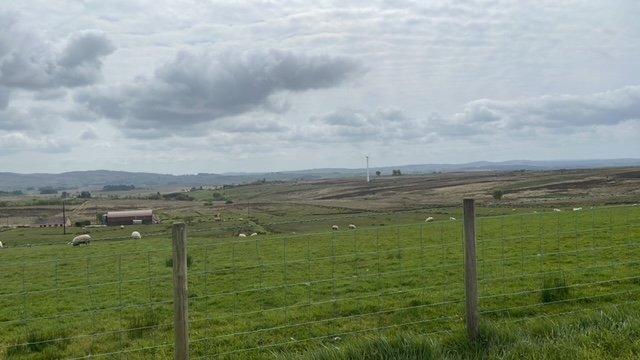
It was pure, raw countryside everywhere. Cattleguards, huge peat harvest machines. Valley after stunning rolling valley. Small forests and peat bogs. All of them competing for my attention while I slowly got lost, turning the car around a half-dozen times. No humans.
I was utterly lost. At a vista point, I got out and just stared. Know how the iPhone captures location? There was none. As late and lost as I now was for lunch, for some reason, I didn’t feel lost.
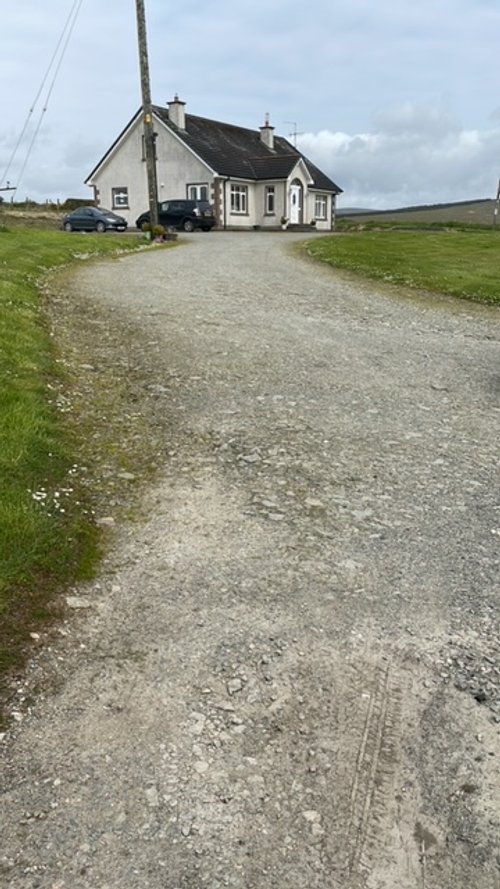
Backing down the unmarked lane by a rare house in the wilds, I had to wonder how they got the materials up here to build the house. I was at a loss for what to do. That is when I met the retired mechanic Thomas McClary (not sure why, but he spelled it for me). He walked up to my car and introduced himself, a portly man, with a stained shirt of a thousand wears but fewer washes.
“And you’d be?” he asked.
“My name is lost,” and we chuckled.
When I told him I was lost trying to get to my family farm in Claude. He didn’t hesitate: “ I have to go there today, so how about you follow me and I’ll get you there.” And then told me of a lifetime of rebuilding trucks and cars in the large shed nearby, with the graveyard of old cars and lorries as a visual testament to his labors. After a few minutes of chatting, he said if I waited for a few (I was already very late) he would be ready to go; then he invited me into his giant shed of cars and thousands of parts laying around. The car jack was elevated to showcase the car that was the focus of his labors. Showing off a 1964 car he was almost done restoring to its clunky stylish beauty, bought a slight smile to his round, ruddy face. “My son’s first car,” he said with pride.
Now on a rural time schedule, he told me more of his life; we lingered in the car shed and spoke of his health — touching the right side of his chest which I took to mean lungs, not heart — and early retirement. A lifetime of fixing trucks. Raising a family. Living in the mountains. Then he told me to wait a few while he said goodbye to his wife.
Coming out, he strolled back to my passenger window. “Are you scared of small roads?”
“No.” Truth be told, I was. But the fear had turned to a form of exhilaration as I grew more familiar with the scurrying motions, curves, animals, the dance of breaks and gas. You’d encounter sheep, farm equipment, and other potential surprises, but then the narrow roads would open up vistas and beauty I have never seen the likes of before.

“Well this is a tough road; we’re crossing the mountain so it may be the most beautiful ride of your life. Just follow me.”
And off he went, much faster than I was comfortable going: bumpy, pitted by bad weather and poor upkeep, cow-guards galore, roads more narrow than the narrowest road I had experienced, with every view of nature in the bare, granite, and green-laden hills of the Sperrin Mountains. At one point, he stopped and got out, and walked back to my car.
“Everything ok?” I asked.
“I just wanted to point out Sawel mountain —” and then he shared a tale of a plane crashing on a nearby mountaintop, and decades later, a relative, a daughter, hired a helicopter to go find her father’s remains. I asked and learned the crash was decades ago. He made it sound like it was yesterday. After he was done, he just strolled back to his car and took off. It was both sad and reverential but delightfully shared from a cupboard of old local tales.
Soon, signs of humans and stores and villages appeared — at Feeny I pulled over, the GPS having restored its fragile sanity and telling me the farm was ten minutes away. We both got out and shook hands as I thanked him profusely. “No bother, no bother,” he kept declaring.
I handed him my card with all my contact info and he let out a short laugh, “ I’ll have to call you just to tell stories.”
I hope he does.
More on the Sperrins: https://www.nationalgeographic.com/travel/article/off-grid-amid-northern-irelands-sperrin-mountains
 Outspoken Traveler
Leave a comment