
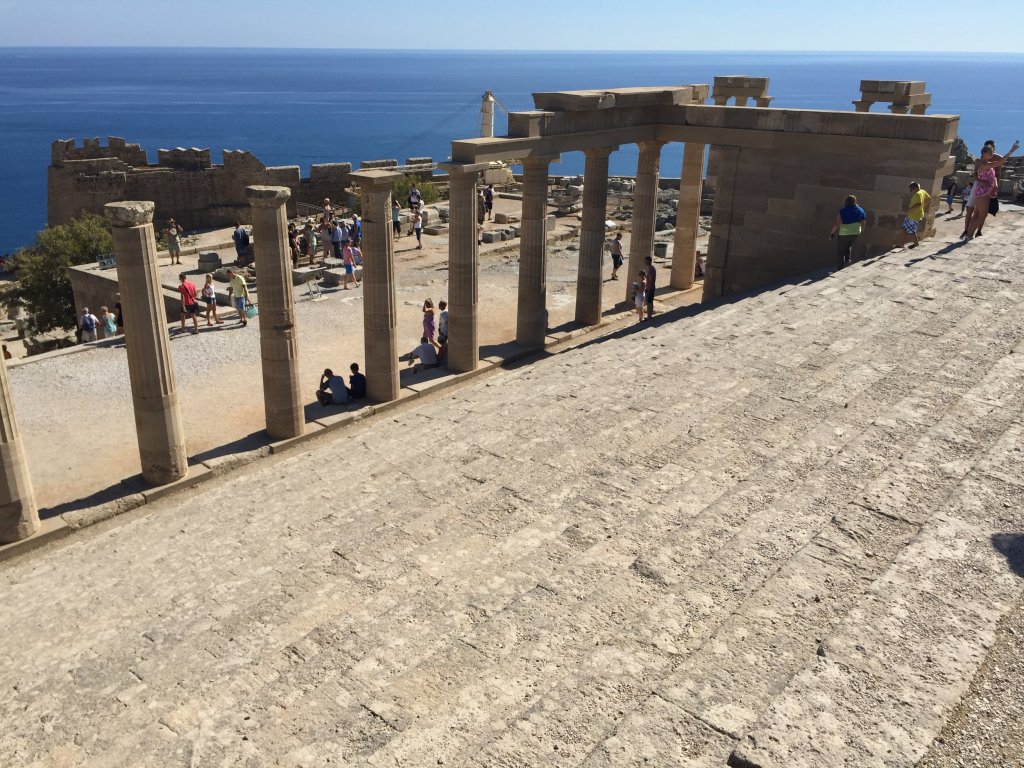

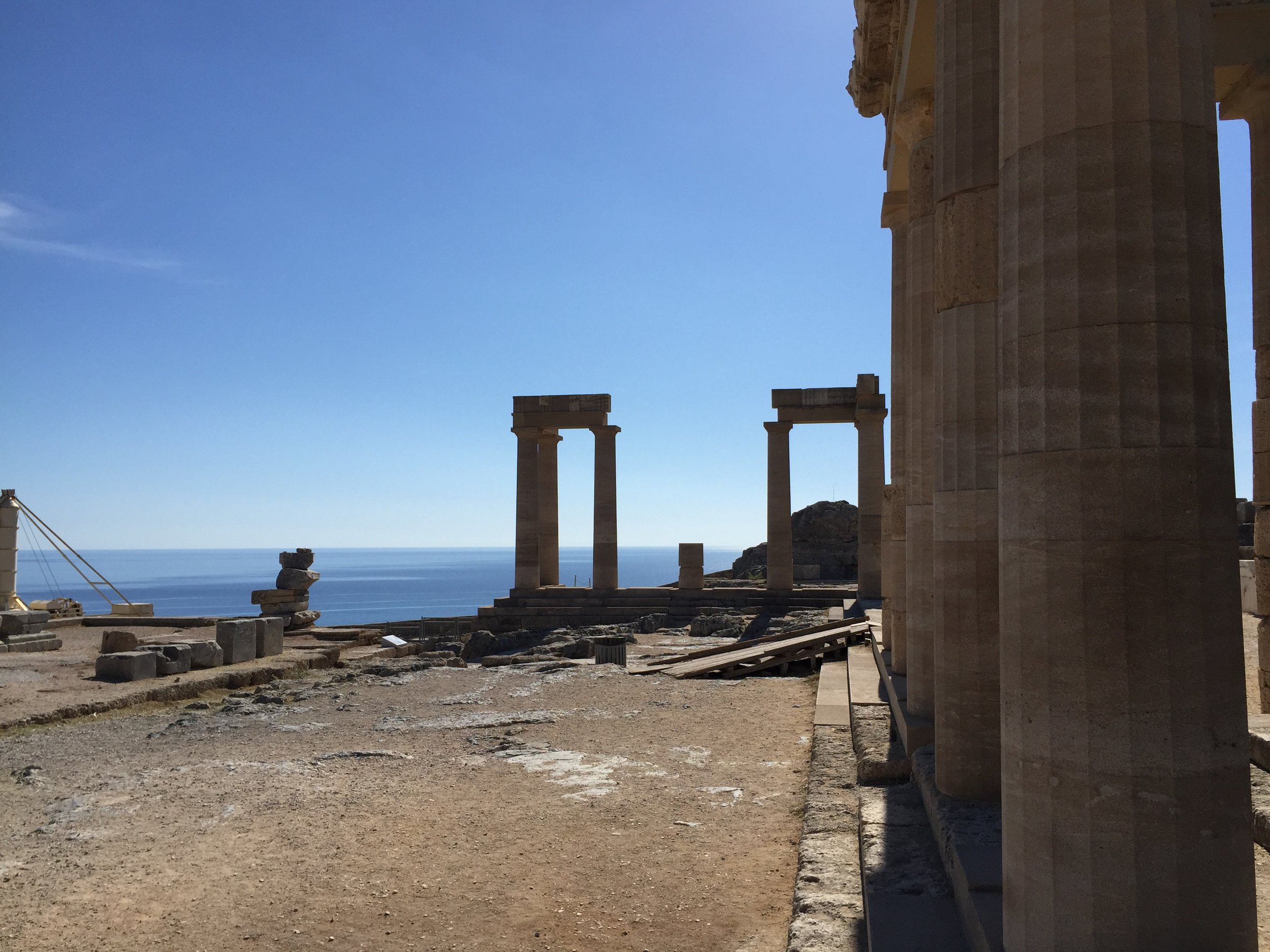
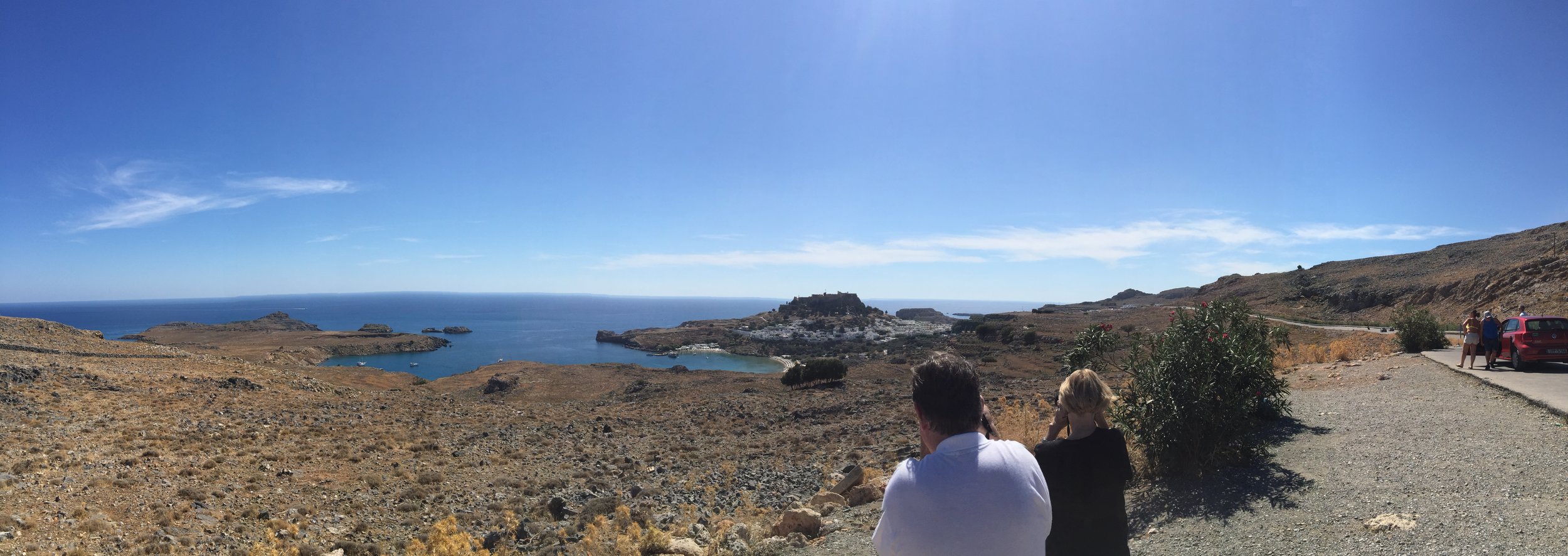
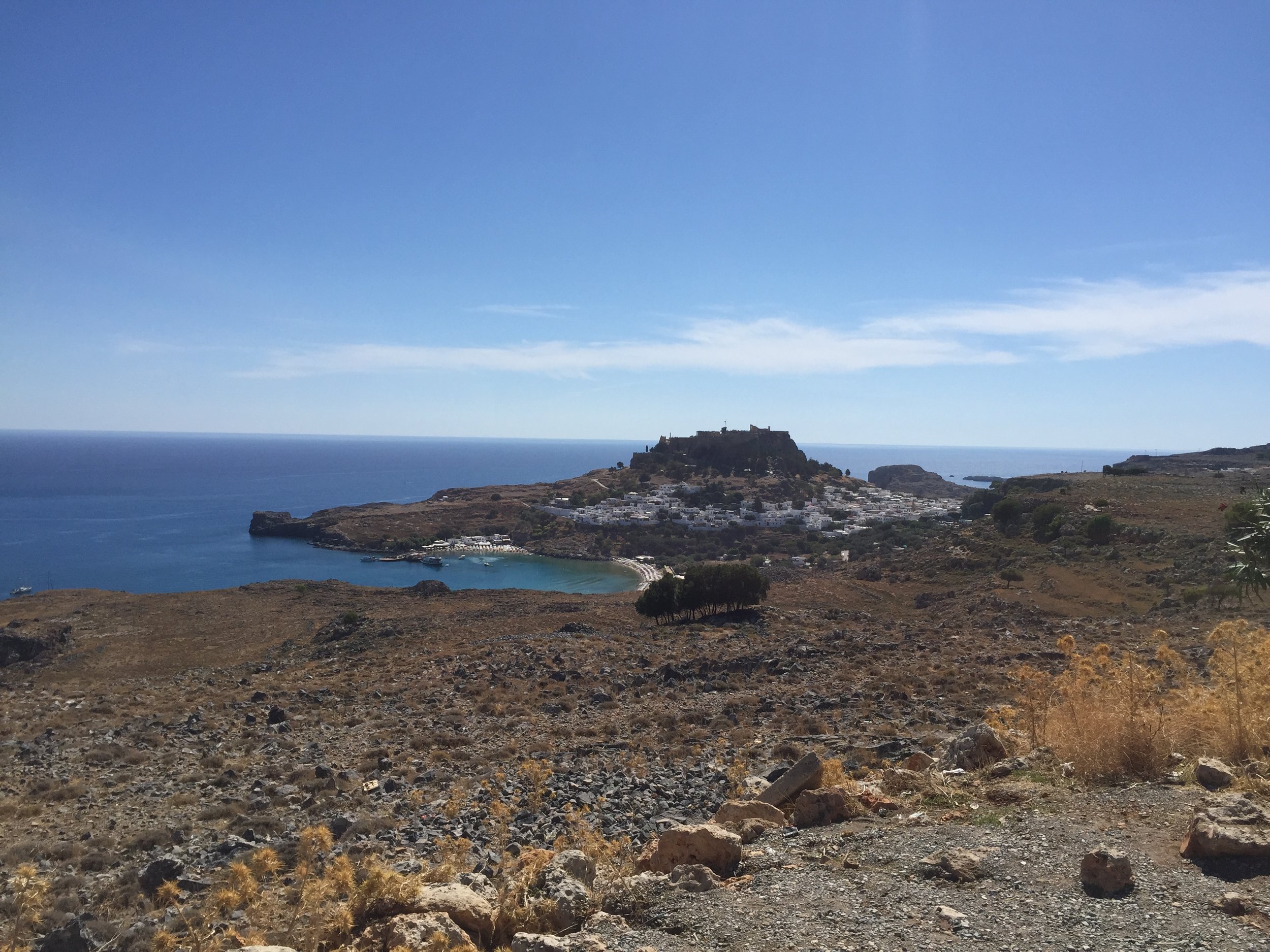
Humankind has always, throughout time, sought the high ground; this was always, and still is, considered a strategy for both war and peace. A most ancient example of this is on the Isle of Rhodes, in the cross section of the Aegean and Mediterranean seas. Atop a natural bluff and rocky outcropping, sits the wide natural plateau home of the mighty ruins of the Temple of Lindos. A perfect vista to take in the wide sea. A natural spot to establish or expand empires.
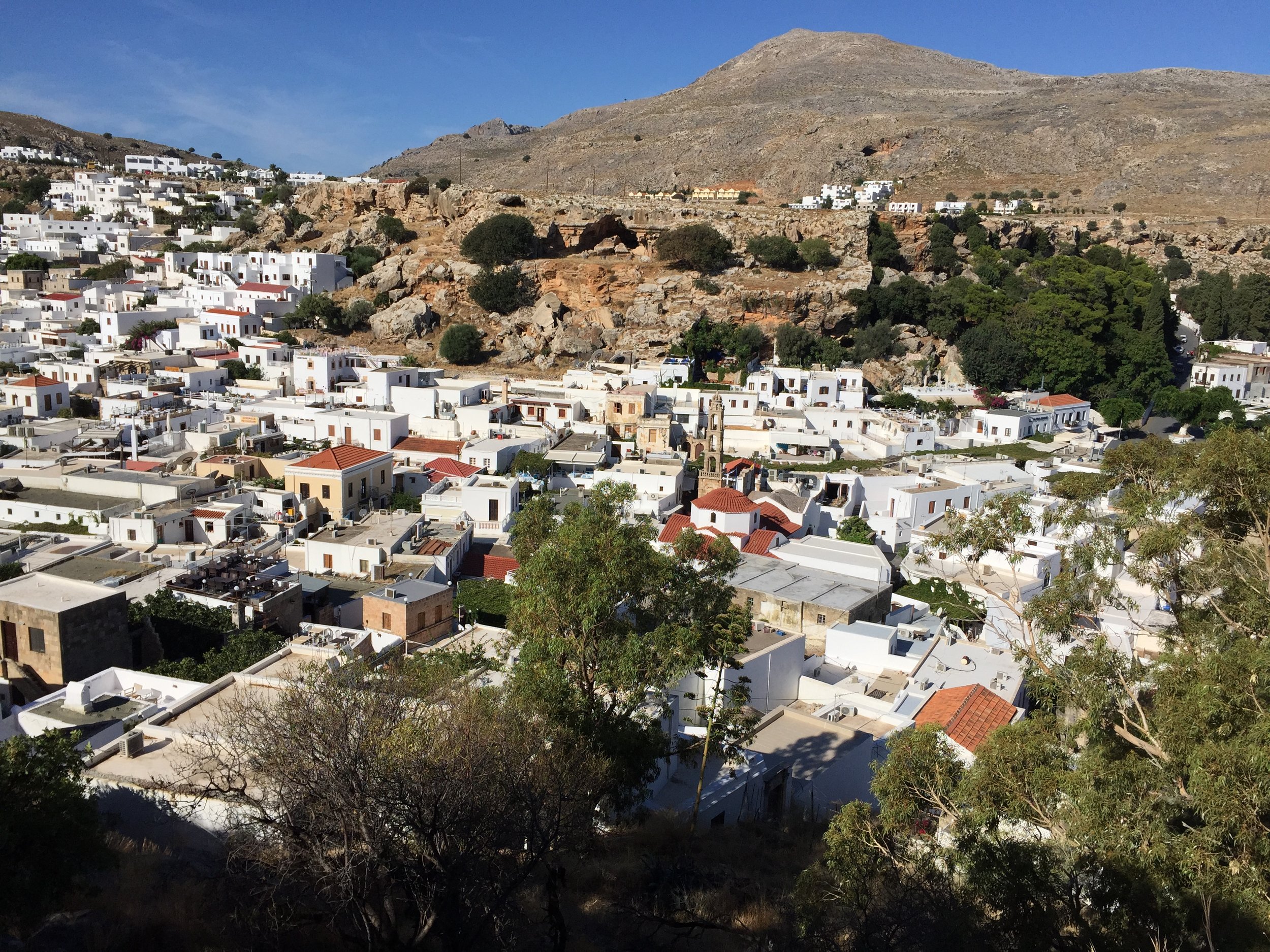
The Temple rises above a small fishing village of Charaki, with it’s white-washed homes and stores, crowded together, all nestled into a small valley. The Temple looms over the town. You follow a narrow, white stoned path littered by lace sellers and stalls. Older women cajole and gesture to consider their lacy wares. A church from 400 a.d. beckons, and women must keep their head and shoulders covered in respect. The walk to the temple is awash with the sites and sounds of this small town.
The walk to the ancient temple of Lindos is long. You move circuitously through the town then reach the long, hard to climb stairs, a final trial of exertion to show tribute to the mighty Temple of Lindos.
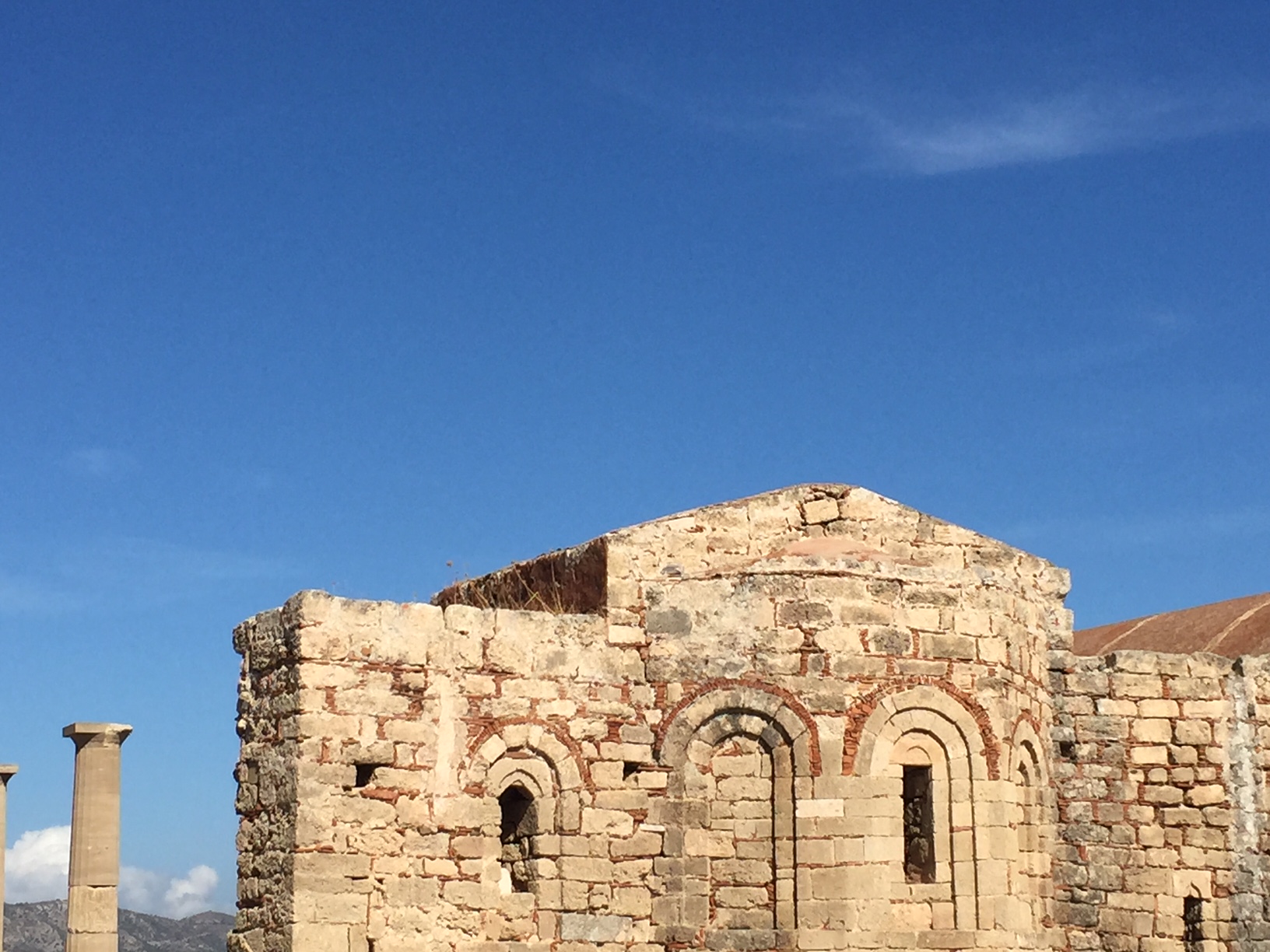
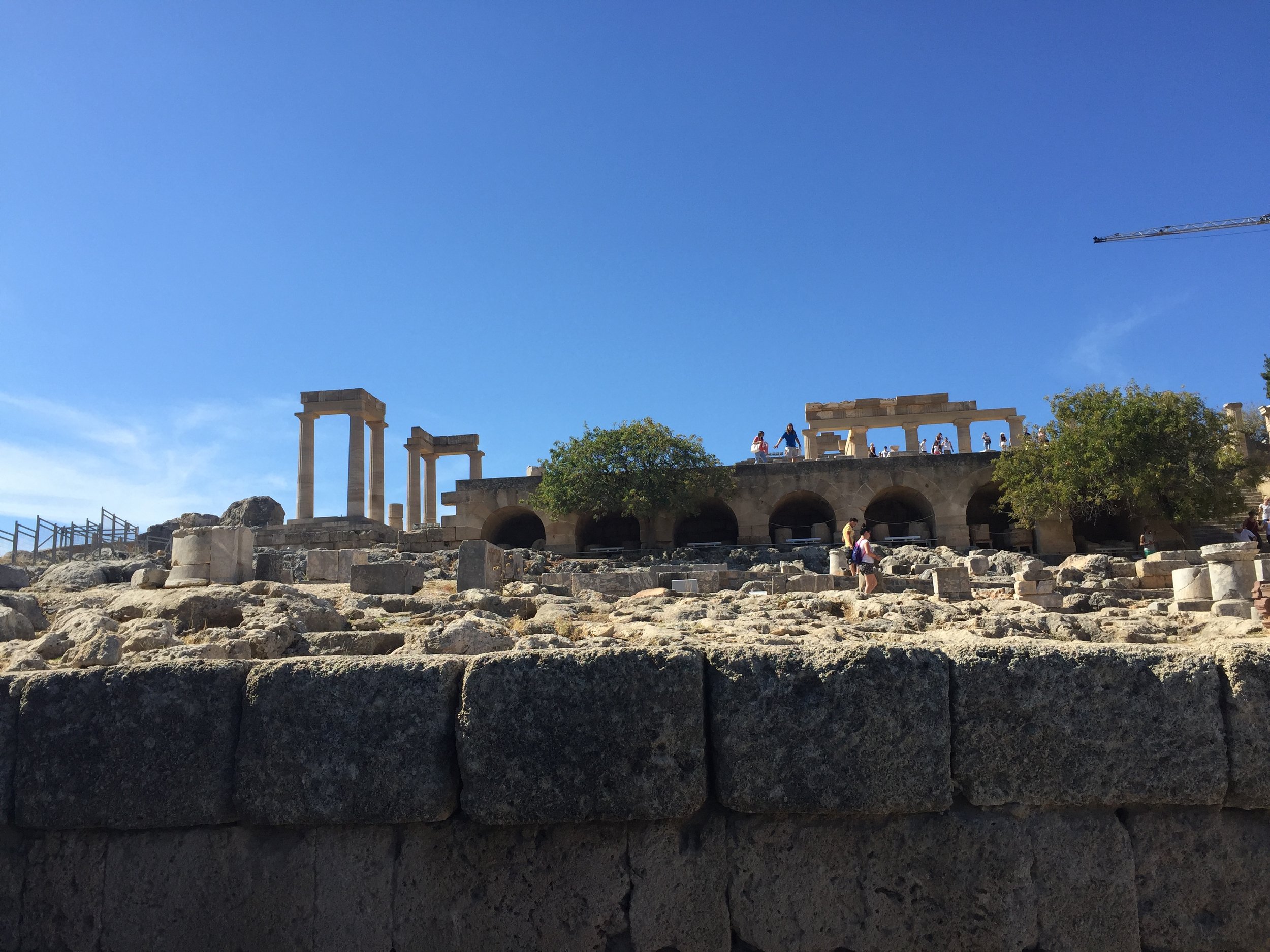
This ruin of half walls, broken lines of columns has been the crossroads of mans roots of western civilization, a place of wars and Gods and kings, pirates and conquerors fought, swapped, worshiped. While first founded in 10th century B.C., its height as a series of buildings, temple, acropolis, but mainly fortress, came around 300 B.C. when the temple of Athena was built. But you will also find the walls of a chapel to St Paul.
One can see the advantage Lindos owns; it is perfectly placed on a wide hill overlooking the Aegean Sea. Even in its semi-ruined state, when you reach the main plateau it is sobering. With the Greeks, Phoenicians, Romans and others having all made this a part of their empires, it is a jumble of history; this plateau and the structures and temples bore power we can barely imagine today.
How to take it in?

Move away from the tourists. Walk the plateau. Eye the columns. Breath the hot air and stand near the precipice which leads down to shallow pools and then the sea. Stand there and take a long, long gaze out to sea. You can almost see the waves of trireme ships coming to the shore below you. Are you preparing for battle? Worshipers? Trade? At the roots of history, with 3,000 years of change, these flagstones have probably has seen it all — after all this was the sea that carried Western civilization and a plateau, natural fortress and perch that anchored its spread through the Mediterranean.
Step back in time and the view makes one feel very lucky to see any danger coming, but then you realize, everyone wanted this Temple for their own. Trade was for life, conquest was a reality.
This is an amazing place, if you let it be.
On the way back, in the village, we bought my uncle a set of napkins and place mats, hand-crafted, fine, lacy white linen.


Leave a Reply